
Updated July 2026
Key Takeaways
- The lowest quote often omits critical specs — design pressure rating, NOA anchoring, and glass thickness.
- Vague quotes hide change orders: substrate repairs, buck framing, drywall patching can add thousands.
- Miami-Dade and Broward HVHZ rules are stricter than the rest of Florida — generic quotes miss this.
- Aluminum frames outperform vinyl in South Florida heat, UV, and hurricane conditions.
- Ask for the exact product series, NOA number, and a written scope of work before signing anything.
The Real Problem
Why the Cheapest Impact Window Quote Is Usually the Most Expensive Mistake
Three quotes arrive. One is $4,000 lower than the others. Here is what that number is not telling you.
The most dangerous trap in a cheap impact window estimate is not the price — it is what the price excludes: the product series number, the NOA anchoring schedule, and the scope items that get billed as change orders after you sign. When one contractor quotes a “Series 350” window, another quotes a “Series 200,” and a third says “impact-rated glass” with no series number at all, these are not equivalent products, and the price gap between them is not a savings — it is a transfer of cost from the estimate to your wallet after the job starts.
This article walks through the five most common traps hiding inside low-ball impact window estimates, what questions to ask before signing, and what a complete, transparent quote actually looks like.
South Florida Context
Miami-Dade and HVHZ Rules Change the Math Entirely
Miami-Dade County and Broward County sit inside the High Velocity Hurricane Zone (HVHZ) — the strictest building code jurisdiction in the United States. A product with a current Florida Product Approval (FL number) that covers HVHZ use is legal to install in Miami-Dade and Broward. A Miami-Dade NOA is an additional certification some products also carry; it is not required for the permit. These are different documents with different testing thresholds.
A window that passes Florida Product Approval may not carry a Miami-Dade NOA. If a contractor quotes you windows without specifying which approval applies to your address, that is the first trap. In the HVHZ, a window without a Miami-Dade NOA or a Florida Product Approval that covers HVHZ use will not pass inspection — and if it does not pass inspection, you own the cost of removal and reinstallation.
Separately, design pressure (DP) ratings matter by location. A home on a coastal lot in Miami-Dade may require a higher DP rating than an inland home in Palm Beach County. A quote that lists only “impact windows” without specifying the DP rating for your specific address is not a complete quote — it is a placeholder that can be repriced after the contract is signed.
The Five Hidden Traps
What Cheap Estimates Routinely Leave Out
Trap 1 — Vague Product Specs (Brand Name Without Series Number)
Quoting a brand name without the series number is meaningless for comparison. Take Mr. Glass: the Series 350 is a residential-grade window — it is explicitly not approved for condos, high-rise buildings, or commercial structures. The Series 200 (flagship single-hung) and Series 300 (flagship horizontal roller) are built to different tolerances, carry different DP ratings, and have a fundamentally different clip and balance system. A quote that says “Mr. Glass impact windows” could refer to either. Always ask for the exact series number and request the corresponding NOA or Florida Product Approval document.
Trap 2 — Wrong Glass Thickness for Your Code Situation
Impact glass comes in three common thicknesses: 5/16″ (builder grade), 7/16″ (standard mid), and 9/16″ (high-rise and heavy-duty). In coastal areas subject to Florida’s sea turtle lighting ordinance (“turtle code”), the compliance path depends on glass thickness: 9/16″ gray glass is automatically compliant; 5/16″ requires double-gray; 7/16″ gray is marginal and often requires an inspector call. These compliance paths reflect inspector guidance applied in Miami-Dade and Broward county projects and should be confirmed against the Florida Fish and Wildlife Conservation Commission (FWC) Marine Turtle Protection rules and the applicable Florida Building Code section for your specific address; flag for legal review if compliance is uncertain. A quote that does not specify glass thickness cannot guarantee code compliance at the time of inspection.
Trap 3 — NOA Anchoring Spacing Not Stated
Every Miami-Dade NOA specifies a maximum anchor spacing for the window frame into the substrate. If the installer uses wider spacing to speed up the job, the window is technically non-compliant even if the window itself is NOA-approved. This is an installation defect — not a product defect — and it will not show on a visual inspection unless someone pulls the actual NOA and counts fasteners. Low bids often compress labor, and compressed labor means faster anchoring, which means wider spacing. Ask for the NOA number and anchoring schedule before work begins.
Trap 4 — Hidden Change Orders (Bucks, Substrate, Drywall)
This is the most expensive trap. Many low estimates exclude:
- Buck framing: If the rough opening needs a pressure-treated wood buck installed before the window goes in, that is labor and material not typically in a stripped-down quote.
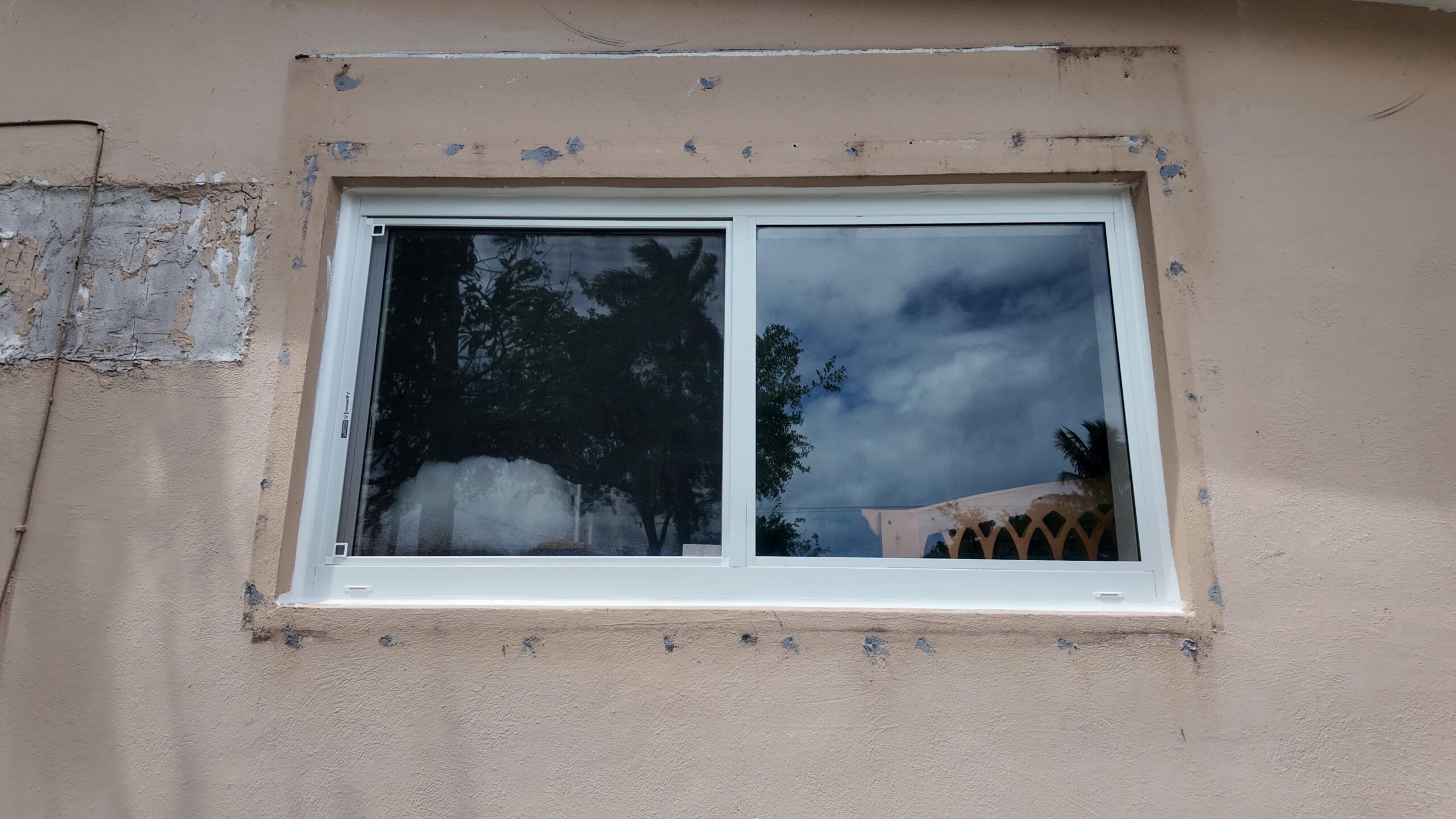
- Substrate repairs: Rotted sills, corroded lintels, and deteriorated concrete around the opening must be remediated before installation. If the quote does not explicitly include or exclude substrate repair, assume it is excluded.
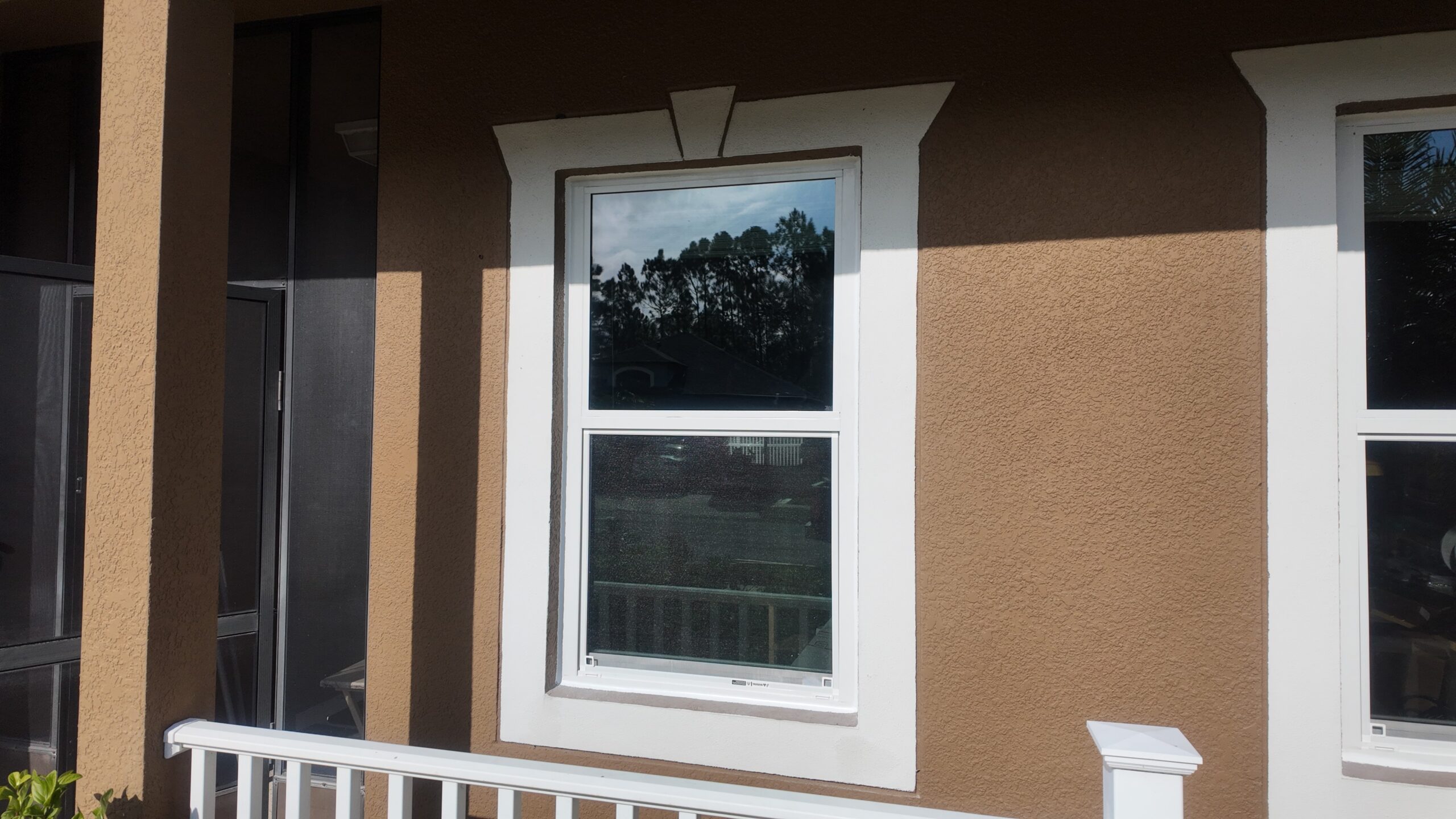
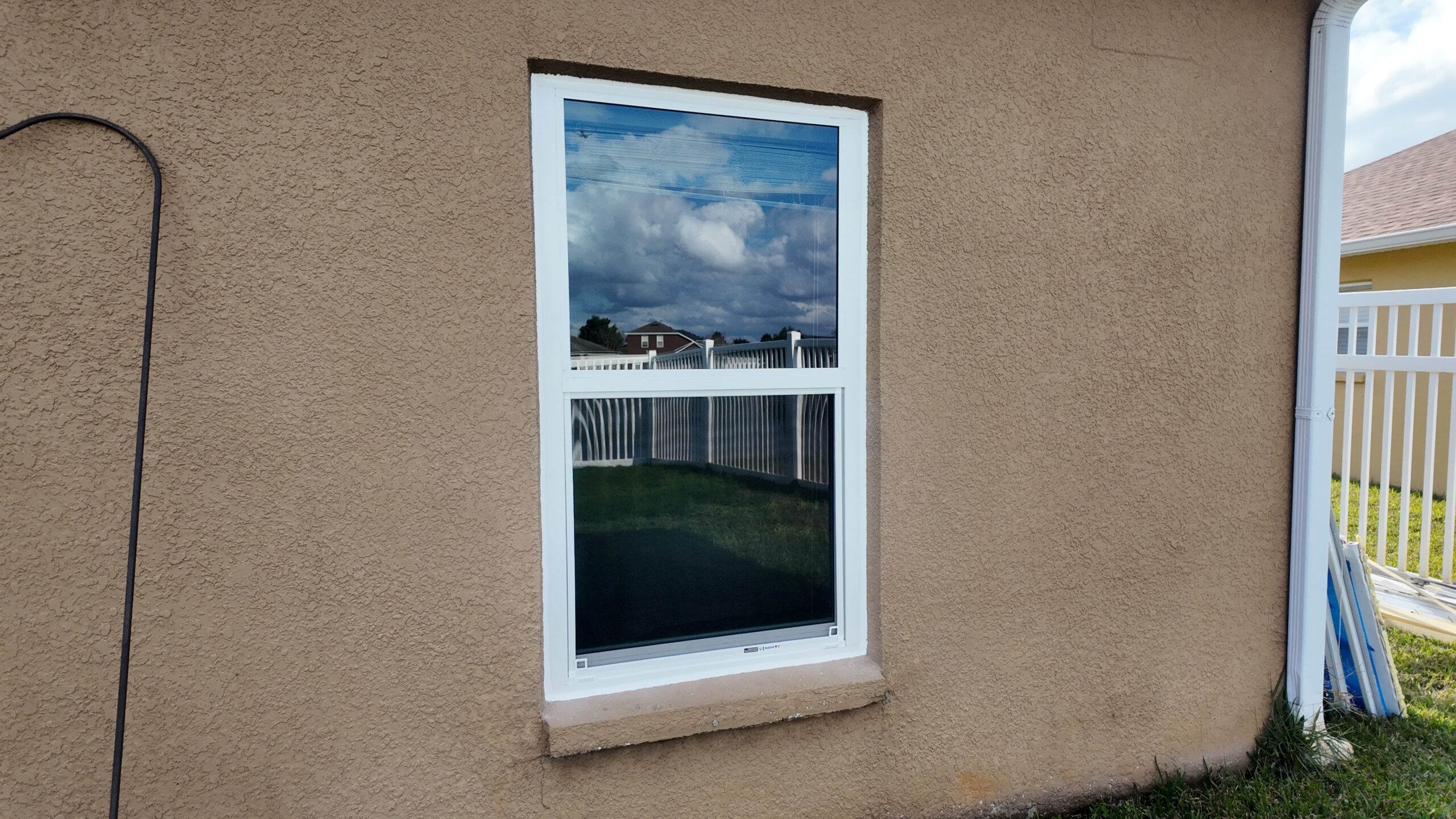
- Drywall and stucco patching: After installation, interior drywall and exterior stucco around the frame need to be patched and painted. Many low quotes stop at the window frame. You pay a separate contractor to finish.
A complete scope of work states what is included and what is not. If your quote does not specify these line items, ask the contractor to add them in writing before you sign.
Trap 5 — Frame Material Downgrade (Vinyl Pushed as Equivalent)
In South Florida’s coastal salt-air and HVHZ heat conditions, aluminum frames are the industry-standard choice for impact windows, as supported by the Florida Building Code HVHZ provisions and manufacturer technical guidance. Aluminum is more dimensionally stable in high heat and UV conditions, holds tighter tolerances at high design pressures, and has a longer track record in coastal salt-air environments. Some low bids substitute vinyl frames to hit a price point. Vinyl can create greater expansion-contraction cycling than aluminum in South Florida’s temperature range, which some manufacturers flag as a long-term seal concern. If a quote pivots to vinyl when you ask about price, ask specifically why aluminum is not being offered. For energy efficiency, thermally broken aluminum frames provide a meaningful upgrade without the long-term stability concerns of vinyl.
Side-by-Side Comparison
Complete Quote vs. Stripped-Down Quote — What You Are Actually Comparing
| Quote Element | Low-Ball Quote | Complete Quote |
|---|---|---|
| Product series number | Brand name only | Exact series (e.g., Mr. Glass Series 200) |
| Glass thickness | “Impact glass” | Specified (5/16″, 7/16″, or 9/16″) |
| DP rating by address | Generic “impact-rated” | DP rating matched to your building code zone |
| Miami-Dade NOA number | “Florida approved” | NOA number listed with anchoring schedule |
| Frame material | Unspecified or vinyl | Aluminum or thermally broken aluminum |
| Buck framing | Not mentioned | Included or explicitly excluded with cost |
| Substrate repair | Not mentioned | Assessed pre-contract; priced or excluded |
| Drywall / stucco patching | Not included | Stated as included or excluded |
| Permit and inspection | “Permit pulled by owner” or unclear | Contractor pulls permit; included in price |
When the Lower Quote Could Be the Right Choice
A lower quote is not automatically a trap. If two contractors are quoting the identical series, identical glass thickness, identical NOA, and the same written scope of work — and one is simply more efficient — the lower number can be legitimate. The issue is when the lower number is lower because the scope is narrower, not because the contractor is more efficient. Compare specifications first, price second.
Why License Breadth Matters Here
Structural Issues Don’t Stop at the Window Frame
A contractor authorized to handle structural modifications can address substrate, framing, and code-driven scope in-house — without stopping the job to call a separate specialist.
When a window opening reveals a rotted buck, a corroded lintel, or a structural deficiency that requires remediation before the window can be anchored to spec, a contractor authorized to handle structural modifications can assess and resolve that scope in-house. A window-only subcontractor who encounters that situation typically stops work, bills for what they did, and leaves you to find someone else for the structural portion. That stop-and-start dynamic is one reason change orders spiral on impact window jobs — the original contractor never had the authority or skill set to complete the full scope.
“Every cheap estimate I’ve ever seen leaves out the same three things: the anchoring schedule, the substrate condition, and what happens if the opening is not plumb. Those three items alone can add thousands to a job after it starts.”
Founder & President, Bigfoot Windows & Roofing
Product Guidance
What a Properly Specified Impact Window Quote Looks Like
Bigfoot installs Mr. Glass as our primary impact window line and ES Windows as a secondary option. Here is what a properly specified quote includes for a Miami-Dade single-family home:
- Series number: Mr. Glass Series 200 (single-hung) or Series 300 (horizontal roller) — not Series 350, which is residential-only and not suitable for high-rise or condo applications.
- Glass: 7/16″ or 9/16″ laminated impact glass with Low-E SB 70 coating for maximum heat rejection in South Florida conditions.
- Frame: Aluminum — not vinyl. For maximum energy efficiency, thermally broken aluminum frames are available.
- NOA: A valid Miami-Dade Notice of Acceptance number, with the anchoring schedule stated in the scope of work.
- Workmanship warranty: 10 years on installation. Mr. Glass carries a 10-year product warranty per Mr. Glass product documentation provided to Bigfoot at time of publish (effective October 2025).
- Coastal finish note: For homes within two miles of water, frames require a 2605 finish — not 2604 wood grain — to maintain the full 10-year product warranty.
You can explore your impact window options or review impact door specifications to understand how the same anchoring and NOA principles apply across all opening types.
What the Process Should Look Like
How a Transparent Impact Window Job Runs
| Phase | What Should Happen | Red Flag |
|---|---|---|
| Pre-contract site visit | Openings measured; substrate assessed; DP zone confirmed | Quote issued from photos only |
| Written scope of work | Series, glass, NOA, anchoring, buck, patching — all stated | One-line “impact windows installed” |
| Permit pulled by contractor | Permit in contractor’s name; NOA submitted to building dept. | “Owner permit” or permit not mentioned |
| Installation | Anchoring per NOA schedule; openings plumb before frame sets | Crew skips shimming to save time |
| Inspection | Inspector signs off; certificate of completion issued | “We don’t need an inspection for this” |
| Closeout | Drywall and stucco patched; site clean | Patching “not included” revealed post-install |
Ready to compare your existing quotes against a fully specified scope? Call Bigfoot Windows & Roofing and we will walk through your estimates line by line — no obligation.
Related Articles
Sources
- Miami-Dade County Building Department — Notice of Acceptance (NOA) database: miamidade.gov/building
- Florida Building Code, 8th Edition — High Velocity Hurricane Zone provisions
- Florida Department of Business and Professional Regulation (DBPR) — Contractor license verification: myfloridalicense.com
- Mr. Glass manufacturer product documentation — Series 200, 300, 350 specifications and NOA references (provided to Bigfoot at time of publish)
- Florida Fish and Wildlife Conservation Commission (FWC) — Marine Turtle Protection rules: myfwc.com/wildlifehabitats/wildlife/sea-turtle/lighting/
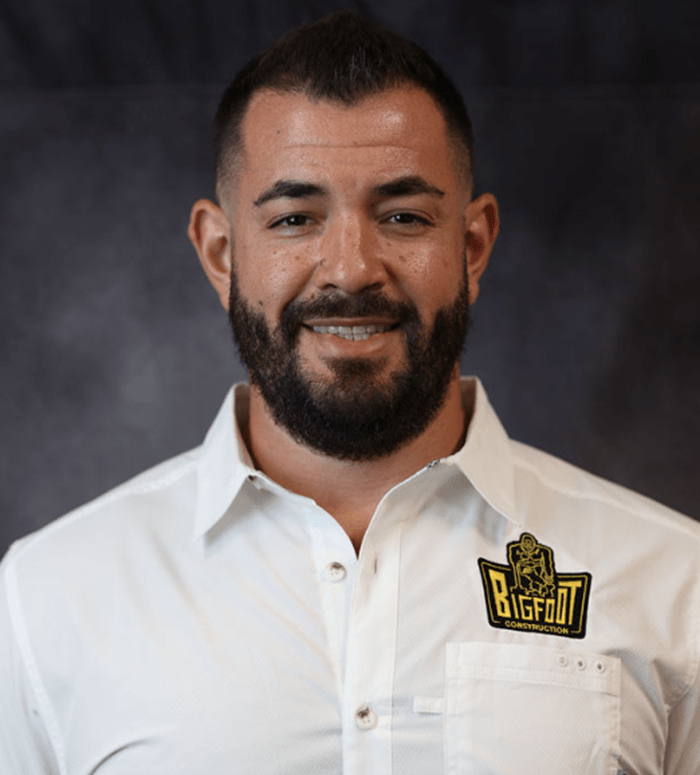
Written by Darryl Henry Rosenbaum, Founder of Bigfoot Windows & Roofing.
Darryl Henry Rosenbaum, doing business as Bigfoot Windows and Roofing, holds four active Florida licenses recognized by the Florida Department of Business and Professional Regulation (DBPR): Certified General Contractor (CGC1531370), Certified Residential Contractor (CRC1331693), Certified Roofing Contractor (CCC1333168), and Certified Specialty Contractor with a Glass & Glazing Specialty (SCC131153098).
Who We’re Not the Right Fit For
- Buyers who need the lowest number on paper, period. If the decision is purely the bottom line with no regard for product specs, NOA documentation, or written scope, Bigfoot is probably not the right contractor. We do not cut corners on anchoring schedules or permit compliance to win a bid.
- Large commercial or multi-family high-rise projects. Our primary focus is single-family and low-rise residential in South Florida. Large-scale commercial glazing projects have their own procurement and submittal process that we are not set up for.
- Homeowners who want PGT or other lines we do not carry. We install Mr. Glass and ES Windows. If you have a strong brand preference for a line outside our supply chain, we are not the right fit — and we would rather tell you that now than after you have signed.
- Projects where the homeowner wants to pull their own permit. Every Bigfoot installation is permitted in the contractor’s name, with full NOA submission to the building department. Owner-permit arrangements are not something we do.
Frequently Asked Questions
What are the most common hidden traps in cheap impact window estimates?
The five most common traps are: vague product specs (brand name without series number), unspecified glass thickness, no NOA anchoring schedule stated, excluded scope items like buck framing and drywall patching, and frame material downgrades from aluminum to vinyl. Each of these can add cost after the contract is signed.
How do I properly compare impact window quotes from different contractors?
Compare by specification, not by total price. Confirm each quote lists the exact product series, glass thickness, design pressure rating for your address, Miami-Dade NOA number (if in HVHZ), frame material, and what is included for substrate repair, buck framing, and interior/exterior patching. If two quotes match on all of those, then compare price.
What is a design pressure (DP) rating and why does it matter?
Design pressure is the structural load rating of a window — how much positive and negative wind pressure it can withstand without failing. In Miami-Dade and HVHZ, the required DP rating varies by building height, exposure category, and lot location. A window with a DP rating that is too low for your address will not pass inspection even if it carries a valid NOA.
What is NOA anchoring spacing and how can I verify it?
A Miami-Dade Notice of Acceptance specifies the maximum distance between fasteners when attaching the window frame to the substrate. If the installer uses wider spacing to work faster, the installation is non-compliant even if the window itself is approved. Ask for the NOA document number and the anchoring schedule in writing before work begins.
What are impact window change orders and how do I avoid them?
Change orders are additional charges added after a contract is signed, typically for scope items not included in the original quote. Common ones: buck framing, substrate or sill repair, drywall patching, and stucco repair. To avoid surprises, ask your contractor to explicitly state in writing whether each
of these items is included or excluded — with an estimated cost for exclusions.
Ready to get started? Get a free, no-pressure estimate from a licensed South Florida contractor.
Do you need a permit for hidden traps cheap impact window estimates in Miami-Dade or Broward?
Yes. Miami-Dade and Broward require permits and product approval documentation (a Miami-Dade NOA or a Florida Product Approval that covers HVHZ use) for impact window and door installations. A licensed contractor pulls the permit and schedules inspections.