
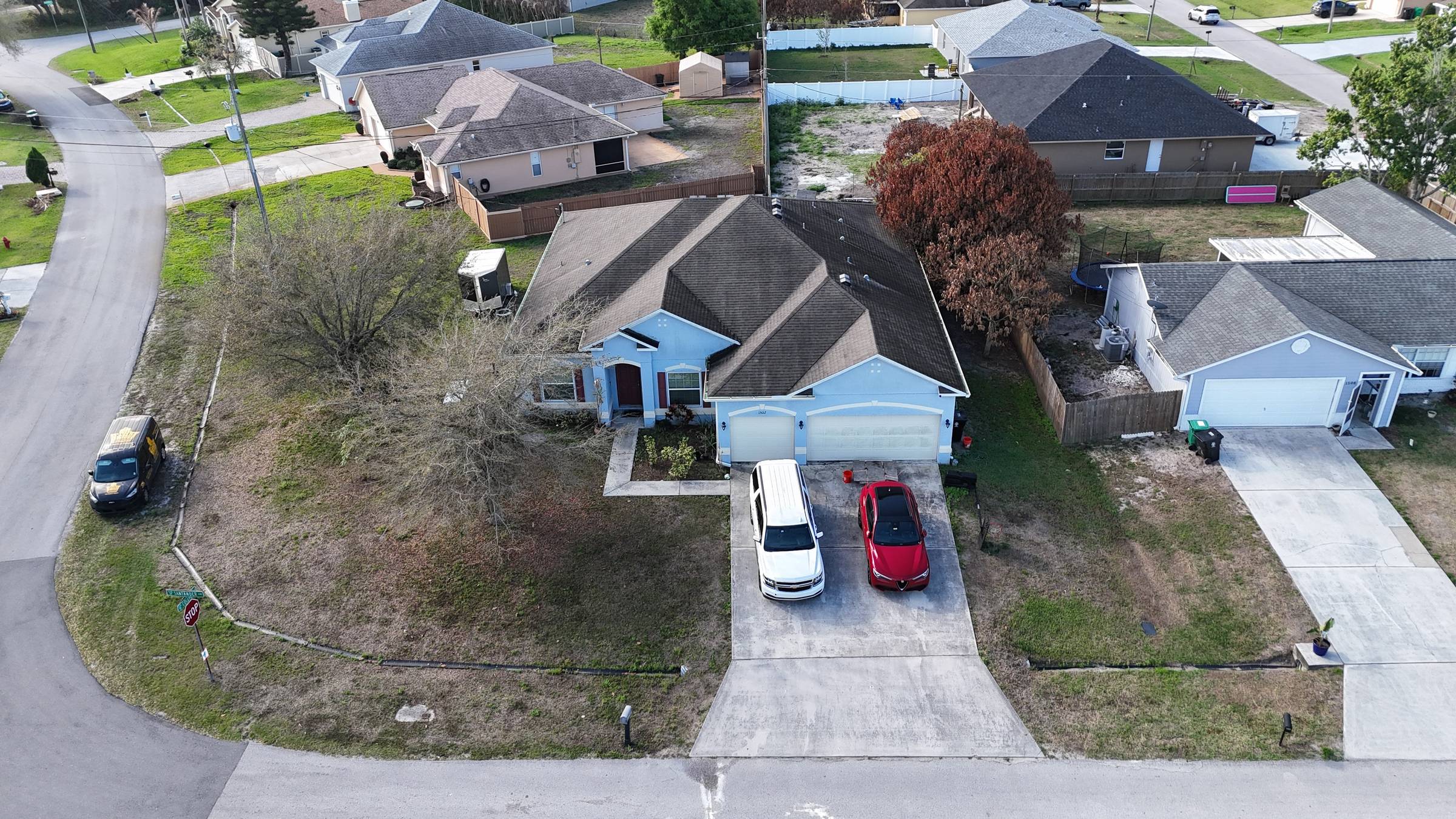
Hurricane roof straps—also called roof-to-wall connectors—are metal fasteners that anchor roof framing to the top of your wall plates, preventing the roof from lifting away in high winds. In Florida, they are required by code for all new construction and most re-roofing projects, and in Miami-Dade and Broward counties the High Velocity Hurricane Zone (HVHZ) rules mandate stricter connector ratings than anywhere else in the United States.
Key Takeaways
- Florida law requires hurricane-rated roof-to-wall connectors on every new roof and most qualifying re-roofs.
- Miami-Dade and Broward fall under HVHZ—the strictest connector standard in the U.S., requiring Miami-Dade NOA-rated hardware.
- Single-wrap, double-wrap, and clip connectors perform very differently in wind-uplift testing; connector choice must match your design pressure.
- A verified strap upgrade typically qualifies for a wind mitigation credit that can reduce your homeowners insurance premium.
- Pulling the permit and scheduling the structural inspection legally requires a contractor holding the right Florida license—not a handyman.
The Problem
Most South Florida Roofs Were Built Before Today’s Code—And Insurance Companies Know It
Older homes in Miami-Dade and Broward may have toenail connections instead of engineered metal straps. That gap is expensive when a storm arrives.
Walk into the attic of a South Florida home built before the late 1990s and you may find your rafters or trusses attached to the top plate with nothing but a few diagonal nails—a method called toenailing. Toenailing was standard practice for decades, but it provides far less uplift resistance than a metal connector. Hurricane Andrew in 1992 made that distinction catastrophic for tens of thousands of Miami-Dade homeowners.
After Andrew, Florida completely rewrote its building code. The 2001 Florida Building Code and subsequent updates require engineered metal connectors rated to specific uplift loads. The HVHZ provisions that apply to Miami-Dade and Broward go further, mandating products that hold a Miami-Dade Notice of Acceptance (NOA)—the most rigorous product-approval process in the country.
Today, Citizens Property Insurance and many private carriers in Florida conduct wind mitigation inspections that look directly at your roof-to-wall connection type. Homes with toenails or unrated clips pay significantly higher premiums than homes with verified, NOA-rated connectors. If you are planning a re-roof, this is the moment the law and your insurer both give you an incentive to upgrade.
Local Context
HVHZ, Miami-Dade NOA, and Why Your County Rules Are Different
The Florida Building Code is a statewide standard, but it explicitly carves out the High Velocity Hurricane Zone (HVHZ) covering Miami-Dade and Broward counties as a materially stricter code path. Outside HVHZ, a Florida Product Approval is generally sufficient for roof-to-wall connectors. Inside HVHZ, you need a Miami-Dade NOA—a separate testing and evaluation process administered locally that verifies performance under the specific wind loads these counties experience.
What does that mean practically? A connector that passes Florida Product Approval may not hold a Miami-Dade NOA. If your contractor installs a non-NOA connector in Miami-Dade or Broward, the installation will fail the building inspection. The permit cannot be closed, and your insurance carrier will not recognize the upgrade for wind mitigation credit purposes.
Palm Beach County sits just outside HVHZ and follows the standard Florida Building Code path, but local building officials still inspect for minimum uplift ratings. If you are in Palm Beach, confirm the specific design-pressure requirements with your building department or ask your contractor to pull that information during permit application.
For detailed information on Miami-Dade permit timelines, permit review at the Miami-Dade Building Department typically takes two to six weeks for standard residential roofing projects (per Bigfoot Windows & Roofing). Factor that lead time into your planning, especially before hurricane season.
Education
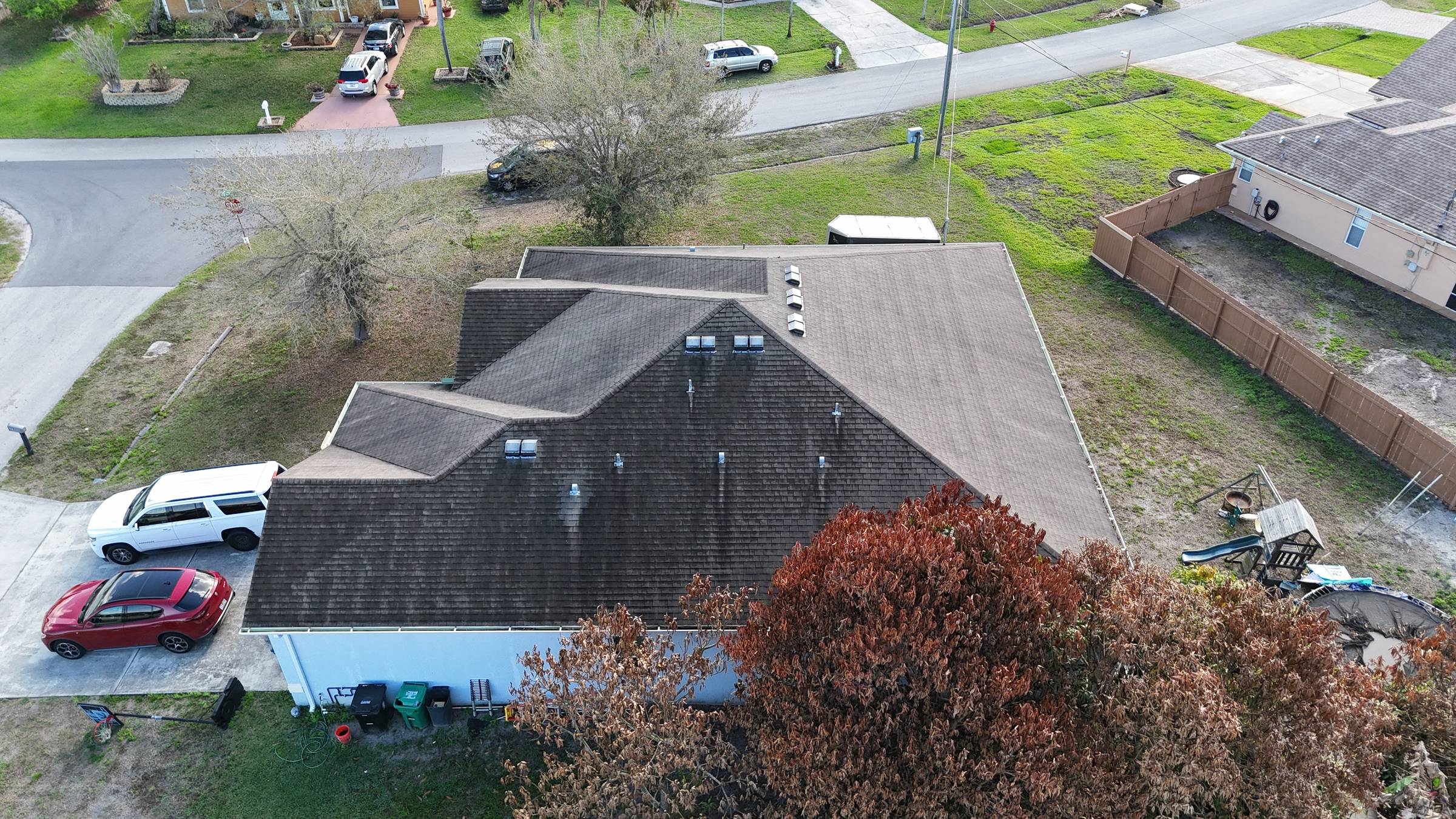
Single-Wrap vs. Double-Wrap vs. Clip Connectors: What the Difference Actually Means
Not all hurricane straps are created equal. The three main categories you will encounter on South Florida re-roofing projects each have distinct uplift ratings, installation requirements, and code implications.
| Connector Type | Uplift Resistance | Typical Use Case | HVHZ Eligible? |
|---|---|---|---|
| Toenail (legacy) | Lowest—well below modern engineered connector minimums; not tested to current standards | Pre-1994 construction; not compliant for new work | No |
| Clip (single) | Moderate—varies by product and NOA rating | New construction; some re-roof upgrades | Only if NOA-rated |
| Single-Wrap Strap | Higher—wraps over rafter or truss top chord | Re-roof upgrades; common HVHZ compliance path | Yes (with NOA) |
| Double-Wrap Strap | Highest—wraps both sides of rafter or truss | Extreme design-pressure zones; engineered plans may specify | Yes (with NOA) |
The connector type your home needs is determined by the uplift design pressure calculated for your specific roof geometry, roof pitch, wind exposure category, and geographic location. A contractor authorized to handle structural scope will identify that design pressure and specify the NOA-rated connector that meets or exceeds it. Do not let any contractor tell you a generic clip “meets code” without confirming the specific NOA number and the uplift rating it was tested to.
Re-roof trigger rule: Under the Florida Building Code, when a re-roofing project reaches a threshold that constitutes a significant scope (replacing roof covering over a qualifying percentage of the structure, or triggering a full structural review), the contractor is required to upgrade existing roof-to-wall connections to meet current code. This is not optional. If your roofer does not raise this issue on an older Miami-Dade home, ask directly whether a strap upgrade is required under the permit scope.
Comparison
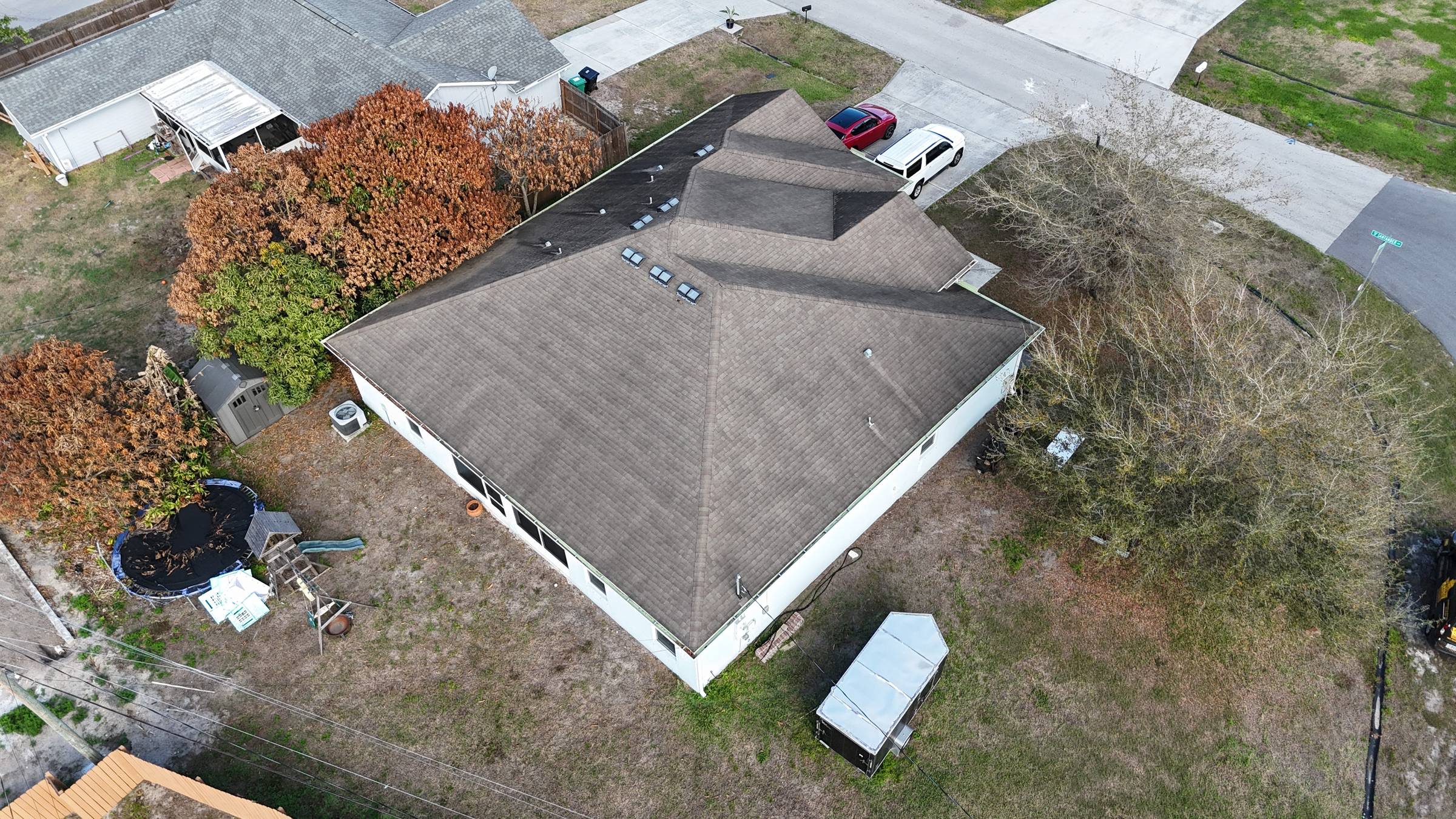
Toenails vs. Engineered Connectors: What Inspectors and Insurers Actually Look For
When a licensed inspector or wind mitigation professional examines your attic, they are completing Florida’s Uniform Mitigation Verification Inspection Form (OIR-B1-1802). The roof-to-wall connection field on that form directly affects your insurance premium. Here is how the connection types map to what gets reported.
| Connection Type | Wind Mit Form Category | Typical Insurance Impact |
|---|---|---|
| Toenails only | Weakest category | Highest premium; least mitigation credit |
| Clip (single NOA-rated) | Clips category | Moderate credit over toenails |
| Single-wrap strap (NOA-rated) | Single wraps | Stronger credit; widely accepted by carriers |
| Double-wrap strap (NOA-rated) | Double wraps | Maximum available credit for this category |
When the existing connection is the better fit: If your home was built after 2002 and already has NOA-rated connectors that meet current design-pressure requirements for your zone, there may be no code obligation and no meaningful insurance gain from adding a second layer of straps. A wind mitigation inspection will confirm what you have. Do not pay for an upgrade you do not need—get the inspection first.
Why It Matters Who Pulls the Permit
Structural Scope Requires the Right License
A roofing permit alone does not always cover structural modification of roof-to-wall connections. In Florida, that work touches general contracting scope.
“A lot of homeowners find out after the fact that their roofer wasn’t authorized to pull the structural scope on the strap upgrade. We handle both the roofing and the structural modification under one permit set—that’s why holding the right licenses matters.”
Darryl Rosenbaum
President, Bigfoot Windows & Roofing
Bigfoot handles hurricane strap upgrades and structural modifications as in-scope services under its Certified General Contractor license (CGC1531370), allowing structural work to be completed under the same permit set as the roofing project. That means one contractor, one permit, one inspection sequence—rather than coordinating a separate structural contractor who may not be familiar with how your specific roof system is framed. This kind of coherent, license-backed scope coverage is the structural advantage of working with a contractor who holds both roofing and general contracting credentials.
Product & Process
What a Strap Upgrade Project Actually Involves
A hurricane strap upgrade on a South Florida home follows a predictable sequence. Understanding each step helps you hold your contractor accountable and know what the building inspector will verify.
- Site assessment: The contractor inspects the attic framing, identifies the existing connection type, measures rafter or truss spacing, and determines the design-pressure requirement for your specific location and roof geometry.
- Product specification: The correct NOA-rated connector is selected. In Miami-Dade and Broward, this must carry a Miami-Dade NOA number. The specification is documented in the permit application.
- Permit application: The contractor submits to the local building department. In Miami-Dade, permit review for residential structural work typically runs two to six weeks. Structural modifications under the general contracting license scope are permitted here alongside the roofing scope where applicable.
- Installation: Connectors are installed per the NOA’s fastener schedule—nail gauge, nail count, and embedment depth are all specified. Deviation from the fastener schedule voids the NOA and fails inspection.
- Inspection: A building inspector verifies connector type, NOA compliance, fastener count, and fastener embedment. Only after this inspection passes can the permit be closed.
- Wind mitigation re-inspection: Once the permit is closed, schedule an updated wind mitigation inspection. The new connector type is documented on the OIR-B1-1802 form and submitted to your insurer for premium recalculation.
If you are also replacing your roof covering, this process can typically be folded into the roofing permit rather than requiring a separate structural permit—but only if your contractor holds the appropriate license to cover both scopes. Explore your options with our South Florida roofing pricing estimator to get a sense of how strap upgrades factor into overall project cost.
Insurance & Financing
Will Hurricane Straps Lower My Insurance Premium?
The honest answer: it depends on what you currently have and which insurer you are with. Upgrading from toenails to NOA-rated single-wrap or double-wrap connectors is one of the most impactful wind mitigation improvements a homeowner can make, because the roof-to-wall connection field on Florida’s wind mitigation form carries significant weighting in carrier pricing models.
Citizens Property Insurance and many private carriers operating in South Florida use the wind mitigation form results to apply credits to your premium. The credit for upgrading from toenails to wraps can be meaningful, but the actual dollar amount varies by carrier, your coverage amount, and your specific risk profile. We are not in a position to quote you a specific savings figure—your insurer or a licensed public adjuster can run that calculation once you have an updated wind mitigation report in hand.
On financing: if you are combining a strap upgrade with a full roof replacement, financing options including PACE may be available. PACE (Property Assessed Clean Energy) financing is paid through your property tax bill and does not require a traditional credit check. If you are financing both a roofing scope and a window scope, note that PACE requires separate applications for each trade—they cannot be combined into one application.
For the My Safe Florida Home grant program (up to $10,000 for qualifying homeowners), strap upgrades may qualify as a covered improvement. Visit mysafeflhome.com directly to check current eligibility and funding availability—program funding is appropriated by the legislature and can be exhausted mid-cycle.
Ready to find out what connector type your roof currently has and whether an upgrade makes sense?
Related Reading
More Roofing Guidance for South Florida Homeowners
Who We’re Not the Right Fit For
Bigfoot is a roofing and general contracting firm operating in South Florida under four active Florida licenses. We are proud to take on projects of any size—including a strap upgrade on a single-family home, a repair on one section of roof, or a full re-roof with structural modifications. That said, we are not the right fit for everyone:
- Homeowners who need a same-week emergency patch with no permit: Every strap upgrade we do is permitted. If you need unpermitted work completed in days, we are not the right contractor—and we would encourage you to reconsider working with anyone who offers that.
- Multi-unit commercial or condominium associations requiring a structural engineer of record: Strap upgrades on large commercial or high-rise structures require an engineer-of-record and a commercial general contractor scope that goes beyond our residential and light-commercial focus.
- Homeowners outside South Florida (Miami-Dade, Broward, Palm Beach): Our licensed crews operate in these three counties. If your property is further north or on the west coast of Florida, we are not the right geographic fit.
- Buyers who want a verbal quote with no site visit: Connector type, truss spacing, and design-pressure requirements vary house by house. We do not quote structural work without an on-site assessment.
Frequently Asked Questions
Frequently Asked Questions
Are hurricane roof straps required by law in Florida, and what does Miami-Dade code specifically mandate?
Yes. The Florida Building Code requires engineered roof-to-wall connectors on all new construction and most qualifying re-roofs statewide. In Miami-Dade and Broward counties, the High Velocity Hurricane Zone (HVHZ) provisions go further: connectors must hold a Miami-Dade Notice of Acceptance (NOA), the strictest product-approval standard in the country. A product with a current Florida Product Approval (FL number) that covers HVHZ use is legal to install in Miami-Dade and Broward. A Miami-Dade NOA is an additional certification some products also carry; it is not required for the permit.
What is the difference between a hurricane strap clip and a full wrap connector for Florida roofs?
A clip connector attaches to one side of the rafter or truss and does not wrap over the top. A single-wrap strap wraps over the top chord, and a double-wrap strap wraps both sides. Wrap connectors generally provide higher uplift resistance than clips and are typically required in design-pressure situations common in South Florida. The right choice depends on your calculated design pressure, not a generic preference.
Will adding hurricane roof straps lower my homeowners insurance in South Florida?
Upgrading from toenails to NOA-rated wrap connectors is one of the highest-impact wind mitigation improvements you can make, because the roof-to-wall connection field carries significant weight on Florida’s wind mitigation inspection form. The actual premium reduction varies by carrier, coverage amount, and your current risk profile. Get an updated wind mitigation inspection after the permit closes and submit it to your insurer for a premium recalculation.
Do I need a permit to install or upgrade hurricane roof straps in Miami-Dade County?
Yes, a building permit is required. Structural modifications to roof-to-wall connections fall under the Florida Building Code’s permit requirements. In Miami-Dade, permit review for standard residential structural work typically takes two to six weeks. A licensed contractor must pull the permit—this is not work a homeowner can self-permit for, nor can an unlicensed handyman legally perform it.
When does a Florida re-roof require upgrading existing roof-to-wall connectors to current code?
The Florida Building Code requires that a re-roofing project address roof-to-wall connections when the scope of work triggers a code-compliance review of the structural system. For older Miami-Dade and Broward homes with toenail connections, any substantial re-roof is likely to trigger an upgrade requirement. Ask your contractor to confirm the specific trigger threshold for your municipality and permit scope before signing a contract.
Can the same contractor handle both the roofing and the structural strap upgrade under one permit?
Only if the contractor holds both a Certified Roofing Contractor license and a Certified General Contractor license (or equivalent structural authority). Roofing-only licenses do not cover structural modification of roof-to-wall connections in Florida. Bigfoot handles hurricane strap upgrades in-house under its Certified General Contractor license (CGC1531370), allowing structural work to be completed under the same permit set as the roofing project.
Is there a grant or financing program available for hurricane strap upgrades in Florida?
The My Safe Florida Home program offers grants of up to $10,000 for qualifying homeowners, and strap upgrades may be an eligible improvement. PACE financing is also available for qualifying property owners and is repaid through the property tax bill. Check mysafeflhome.com for current funding availability, and speak with your contractor about which financing structures make sense for your project scope.
Schedule Your Free Estimate
Ready to get started? Request a free estimate — no phone call required.
Sources
- Bigfoot Windows & Roofing — Impact Windows Miami-Dade (Miami-Dade permit timeline, CGC1531370 structural scope): bigfootwindowsandroofing.com/impact-windows-miami-dade/
- Bigfoot Windows & Roofing — Roofing Warranty Florida (hurricane strap in-house scope): bigfootwindowsandroofing.com/roofing-warranty-florida-materials-workmanship/
- My Safe Florida Home Program: mysafeflhome.com
- Florida Department of Financial Services — Uniform Mitigation Verification Inspection Form OIR-B1-1802: myfloridacfo.com
Have questions about your roof’s connector type or what an upgrade would involve? Call Bigfoot Windows & Roofing at 786-886-2088 or request a free estimate online.