Key Takeaways
- A 3-point multipoint lock engages at three points simultaneously — top, middle, and bottom of the door slab.
- A single deadbolt only secures one point; the rest of the door slab can flex under wind pressure.
- Compression seals (activated by multipoint systems) are what keep wind-driven rain out — deadbolts alone do not compress them.
- You can lock impact French doors from the outside during hurricane evacuation, but only if your hardware includes a keyed exterior cylinder.
- For South Florida HVHZ homes, a half-secured French door in daily use is a real security and warranty exposure.
The Real Problem
Most Homeowners Treat One Lock as Enough
It is not — and in South Florida, the gap matters.
Here is a scenario that comes up regularly: a homeowner installs a beautiful set of impact-rated French doors and assumes the deadbolt handles security. The deadbolt is engaged every night. But the top and bottom of the active door slab are only held by a manual flush bolt — a small knob that gets skipped half the time because it is inconvenient.
In that configuration, two-thirds of the door frame engagement points are unsecured. Wind pressure in a storm does not care that the deadbolt is latched. It will find the gap at the top or bottom, and if the compression seal is not fully compressed, water will follow the air.
This is not a niche failure mode. It is the most common way impact French doors underperform: not because the product failed, but because the locking system was misunderstood or used inconsistently.
South Florida Context
HVHZ Rules and Miami-Dade Expectations
Miami-Dade County and Broward County sit inside the High-Velocity Hurricane Zone (HVHZ) — the strictest residential building code jurisdiction in the United States. Products installed here must carry a Miami-Dade NOA or a Florida Product Approval that covers HVHZ use. The NOA for any impact door specifies exactly how the door must be operated and latched for the tested performance to be valid.
When a Miami-Dade NOA lists a multipoint locking system as part of the tested assembly, using a single deadbolt instead does not just reduce performance — it voids the tested configuration. Your door may still be physically in place after a storm, but the installation may no longer conform to the tested product approval.
This matters for insurance claims, for permit final inspection, and for any wind mitigation credit you expect the door to earn. Insurers in South Florida are increasingly auditing installations. A door that was installed correctly but operated incorrectly may be treated as a non-conforming opening.
How It Works
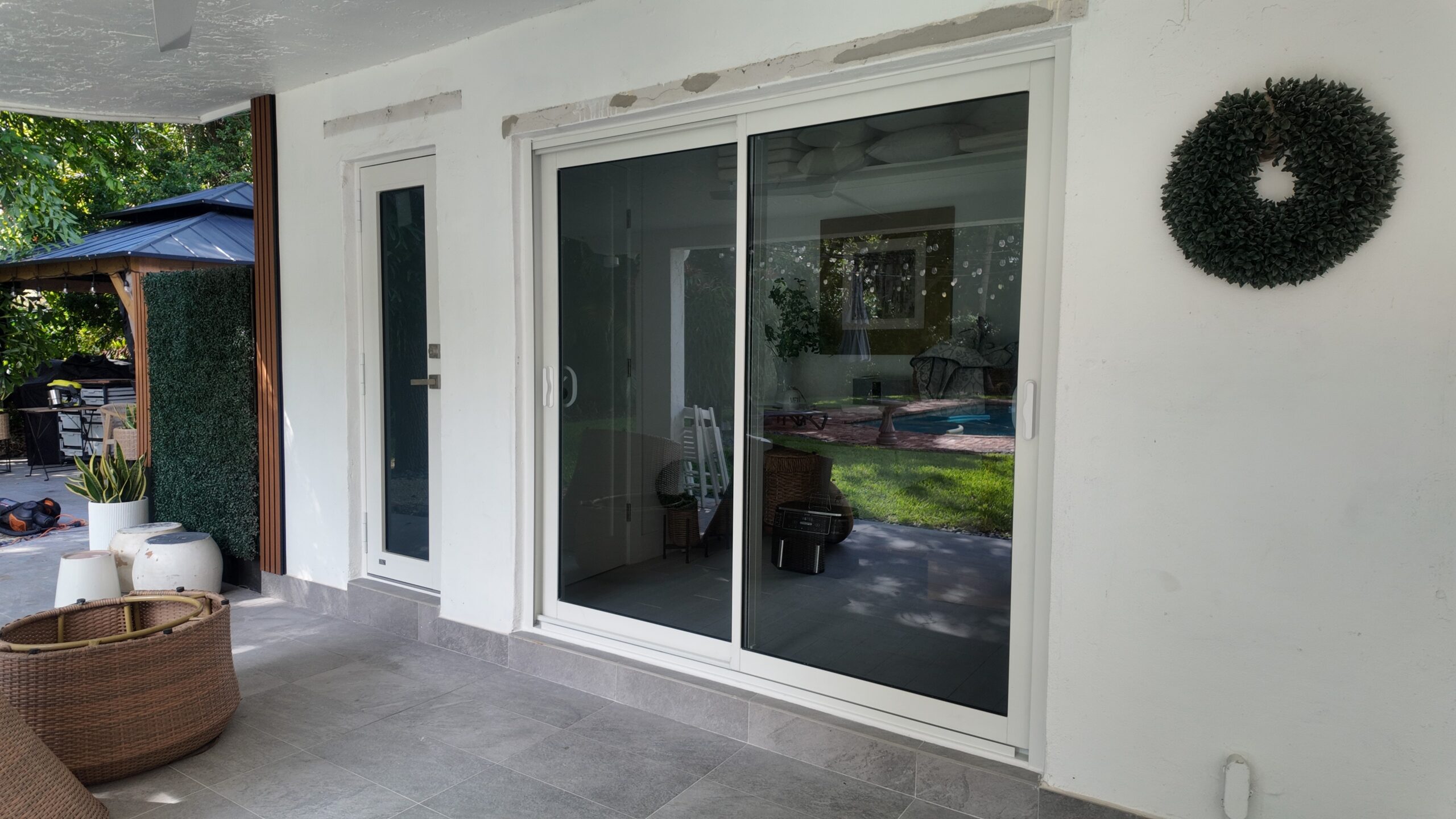
3-Point Multipoint Locks vs. Deadbolts — The Mechanics
Understanding what each system actually does to the door slab.
A 3-point multipoint lock uses a single handle or lever operation to simultaneously drive three locking points into the door frame: one at the center (where the deadbolt or latch lives), one at the top of the slab, and one at the bottom. The mechanism is typically a shoot-bolt system — vertical rods extend upward and downward when the handle is lifted or turned.
What this does beyond just locking: those three engagement points pull the door slab evenly into the frame gasket, compressing the compression seal uniformly from top to bottom. That uniform compression is what creates the weather barrier. It is what stops wind-driven rain from migrating around the slab edge. No compression = no seal = water intrusion regardless of how much impact glass you installed.
A manual deadbolt adds one bolt at the center of the door. It resists forced entry at that point. It does not move the top or bottom shoot bolts. It does not compress the seal at the head or sill. If your door also has manual flush bolts at the top and bottom, those bolts must be independently engaged — a separate action most people skip on a Tuesday morning when they are running late.
| Feature | Single Deadbolt | 3-Point Multipoint Lock |
|---|---|---|
| Locking points | 1 (center only) | 3 (top, center, bottom) |
| Compression seal activation | Partial (center only) | Full slab length |
| User steps to fully secure | 3 separate actions (deadbolt + 2 flush bolts) | 1 handle lift |
| Consistent daily use | Low — flush bolts often skipped | High — one motion covers all |
| Exterior key lockout for evacuation | Deadbolt only (top/bottom unlatched) | Full 3-point from outside (with keyed cylinder) |
| Miami-Dade NOA compliance | Depends on door spec — verify | Typically required by NOA |
The practical difference in daily use is significant. A multipoint system means one handle lift fully secures and seals the door. A deadbolt-only system means three separate manual actions — and two of those actions (the flush bolts) have no reminder, no visual cue, and no consequence until the storm hits.
Side by Side
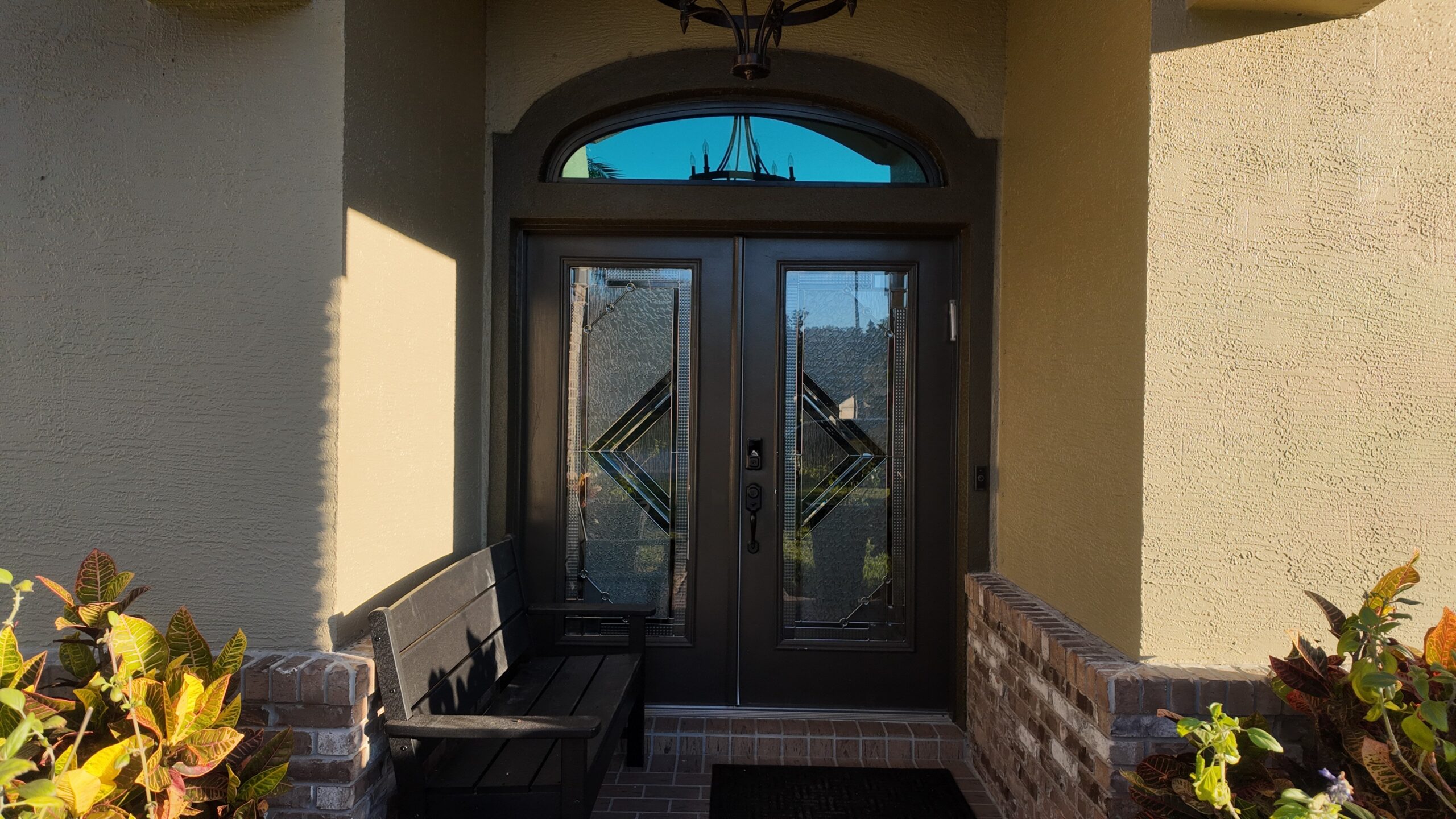
When Would a Deadbolt-Only Setup Ever Be Acceptable?
There is a narrow scenario: an interior French door that is not an exterior opening, not a weather barrier, and not subject to wind loading. For an interior room divider or a closet surround, a standard deadbolt is fine. But for any exterior-facing impact French door in a South Florida home — especially in HVHZ — a single deadbolt is not a compliant substitute for the multipoint system the door was designed around.
Some older retrofit installations used a deadbolt-only approach because the homeowner or installer wanted to reuse existing hardware. That approach saves money at installation and costs more in the long run: wind-driven rain intrusion, insurance complications, and the expense of re-hardware work later.
| Scenario | Recommended Locking System | Reason |
|---|---|---|
| Exterior French doors, HVHZ | 3-point multipoint | NOA compliance; compression seal; one-step security |
| Exterior French doors, non-HVHZ Florida | 3-point multipoint strongly preferred | Same seal and security benefit; FBC wind requirements apply |
| Interior French doors (no weather exposure) | Deadbolt or privacy set acceptable | No weather sealing needed; lower security threshold |
| Access by contractors/cleaning crews/pet sitters | Keyed multipoint exterior cylinder | Enables full lockout when vacating; reduces risk of partial re-latching |
Why It Matters Who Installs It
License Breadth Means One Accountable Contractor
A licensed contractor, not a lead aggregator.
When a French door installation requires a structural header modification — because the existing rough opening is not the right size, or because the framing around the old door was compromised — that work falls under general contractor scope. A window-only subcontractor may not hold the authorization to touch structural framing. That can leave you coordinating two separate contractors, two separate permits, and two separate inspections.
Darryl Henry Rosenbaum holds a Certified General Contractor license (CGC1531370) alongside the Glass & Glazing Specialty license (SCC131153098). That means structural framing adjustments, header work, and the door installation itself can be handled under one scope of work — one permit, one inspection, one point of contact. That is a structural advantage of license breadth, not a marketing claim.
“A French door that is half-latched is not an impact door — it is an opening. The multipoint system is not a premium feature. It is how the door actually works.”
Founder & President, Bigfoot Windows & Roofing
Product Guidance
What to Look for in Impact French Door Hardware
When evaluating impact French door hardware, focus on these four elements:
- Shoot bolt length and material: Longer shoot bolts engage deeper into the frame jamb. Stainless steel is preferred in coastal South Florida environments — salt air corrodes zinc and painted steel hardware faster than most homeowners expect.
- Exterior keyed cylinder: If you ever need to lock the door from the outside — whether during hurricane evacuation or simply leaving for a long trip — you need a keyed exterior cylinder that engages all three locking points. A deadbolt-only exterior cylinder leaves the top and bottom shoot bolts retracted.
- Handle mechanism quality: The handle is the sole interface for the multipoint system. A cheap handle with loose tolerances will fail to fully drive the shoot bolts after two to three years of use in South Florida heat. Ask for demonstrated operation before the installer leaves.
- Passive door coordination: French doors have an active leaf (the one you open) and a passive leaf (the fixed panel). The passive leaf typically uses its own flush bolts or an astragal-mounted bolt system. Those must also be engaged for the full frame to be secured. Some multipoint systems coordinate both leaves; others do not.
For homeowners using their French doors as a primary point of access — common on pool decks and covered lanais throughout Miami-Dade — daily operation consistency is the key variable. A multipoint system that requires one handle motion has a near-100% daily compliance rate. A system with three separate manual steps does not.
If you are also considering impact windows for the rest of the opening schedule, the hardware conversation is similar: compression seals and multi-point engagement matter for windows with sashes that must be fully latched to perform as tested. Consistent, correct latching is part of the tested assembly, not a recommendation.
Installation & Inspection
What the Process Looks Like
A typical impact French door installation in South Florida follows these stages:
- Pre-installation assessment: Measure the existing rough opening, assess the header and framing condition, confirm permit requirements with the local building department. In Miami-Dade, the product’s NOA number must be on the permit application.
- Permit pull and product order: The permit is pulled before any work begins. The door is ordered to the confirmed rough opening dimensions. Lead times vary — ask your contractor for current lead times at the time of your quote.
- Rough opening prep: If the existing framing needs modification — header replacement, buck framing, or sill adjustment — that work happens before the door arrives. Under a Certified General Contractor scope, structural framing work is part of the authorized installation rather than a separate subcontract.
- Door installation and hardware verification: The door unit is set, shimmed, and anchored per the NOA requirements. Hardware is installed and function-tested. Every locking point is cycled. The compression seal is checked for uniform contact across the full slab.
- Inspection and closeout: A final inspection by the building department closes the permit. The homeowner receives the inspection record. This is your documentation that the installation was completed to code.
If you would like to explore financing for a French door project, Bigfoot works with PACE financing options that allow the cost to be repaid through your property tax bill — no credit score impact, no prepayment penalty. Consult your CPA regarding any potential tax implications.
Have impact French doors and not sure if your locking system is fully compliant? We can walk you through it.

Written by Darryl Henry Rosenbaum, Founder of Bigfoot Windows & Roofing.
Darryl Henry Rosenbaum, doing business as Bigfoot Windows and Roofing, holds four active Florida licenses recognized by the Florida Department of Business and Professional Regulation (DBPR): Certified General Contractor (CGC1531370), Certified Residential Contractor (CRC1331693), Certified Roofing Contractor (CCC1333168), and Certified Specialty Contractor with a Glass & Glazing Specialty (SCC131153098).
Who We’re Not the Right Fit For
- Buyers seeking the lowest possible installation price: We do not cut corners on hardware, permitting, or NOA compliance. If the primary driver is the lowest bid, a different contractor may submit a lower number — and may skip the permit or use non-conforming hardware to get there.
- Homeowners who want a fast cash install without a permit: Every exterior door replacement in Miami-Dade requires a permit. We do not offer unpermitted installations. If a contractor offers to skip the permit to save time or money, that is a risk the homeowner carries, not the contractor.
- Projects requiring brands we do not carry: We install Mr. Glass and ES Windows impact door lines. If you have been quoted on a specific brand we do not stock, we may not be the right installer for that product.
- Buyers who want the project quoted and started same week: Permitting, product lead times, and inspection scheduling in South Florida take time. We will give you an honest timeline upfront — if you need a faster turnaround than the permit process allows, we cannot change that timeline, and neither can any compliant contractor.
Common Questions
Frequently Asked Questions
What is a 3-point locking system on impact French doors?
A 3-point multipoint lock drives three locking bolts simultaneously when you lift the door handle: one at the center of the door (the main latch or deadbolt), one at the top of the slab, and one at the bottom. This single action secures the full height of the door and compresses the weather seal uniformly. It replaces the need for separate manual flush bolts at the top and bottom of the door.
Are multipoint locks better than deadbolts for hurricane doors?
Yes, for exterior impact French doors. A deadbolt secures one point. A multipoint system secures three. More importantly, the multipoint system activates the compression seal across the full door height — which is what prevents wind-driven rain intrusion. In Miami-Dade and Broward HVHZ, many impact door NOAs require a multipoint system as part of the tested assembly. A deadbolt alone may not meet that specification.
How do impact French doors seal against wind-driven rain?
Impact French doors use a compression seal — a gasket that runs around the perimeter of the door slab. When the locking system is fully engaged, the slab is pulled tight into the frame, compressing that gasket uniformly. A 3-point multipoint lock compresses the seal at the top, middle, and bottom simultaneously. A single deadbolt only compresses the seal at the center, leaving the head and sill partially open to wind-driven water migration.
Can you lock impact French doors from the outside during evacuation?
Yes, if your hardware includes a keyed exterior cylinder that drives the full multipoint mechanism. Not all multipoint systems include this — some only allow the full 3-point engagement from the interior handle. If hurricane evacuation is a real scenario for your household, confirm before installation that the exterior cylinder drives all three locking points, not just the center deadbolt. Ask your installer to demonstrate exterior lockout before the job is closed out.
Do impact French doors improve home security?
Impact French doors use laminated glass that resists breakage from forced entry attempts, and a properly installed multipoint lock distributes engagement across three points of the frame rather than one. Both features raise the effort required for forced entry compared to a standard non-impact door with a single deadbolt. That said, no door is forced-entry proof — the frame, framing anchors, and surrounding wall construction all affect overall security.
What is a compression seal on a French door?
A compression seal is a rubber or foam gasket mounted on the door frame or slab edge. When the door is fully latched, the slab presses against this gasket, compressing it to create an air- and water-tight barrier. The seal only performs as designed when the door is fully locked at all engagement points. A door that is deadbolted but has retracted flush bolts at the top and bottom will have an incompletely compressed seal and is vulnerable to water intrusion in heavy rain or wind.
How do I know if my existing impact French doors are fully compliant?
Start by finding the Miami-Dade NOA number on the door label (usually on the hinge side of the frame or in the installation documents). Look up that NOA on the Miami-Dade product approval website and check the tested locking configuration. If your installed hardware does not match the NOA-tested assembly — for example, the NOA specifies a multipoint system and your door only has a deadbolt — the installation may not conform to the tested product approval. A licensed contractor can assess and document this for you.
Questions about your impact French door locking system? Call or request an estimate online.
Bigfoot Windows & Roofing serves Miami-Dade, Broward, and Palm Beach counties. Florida licensed: CGC1531370 · CRC1331693 · CCC1333168 · SCC131153098