
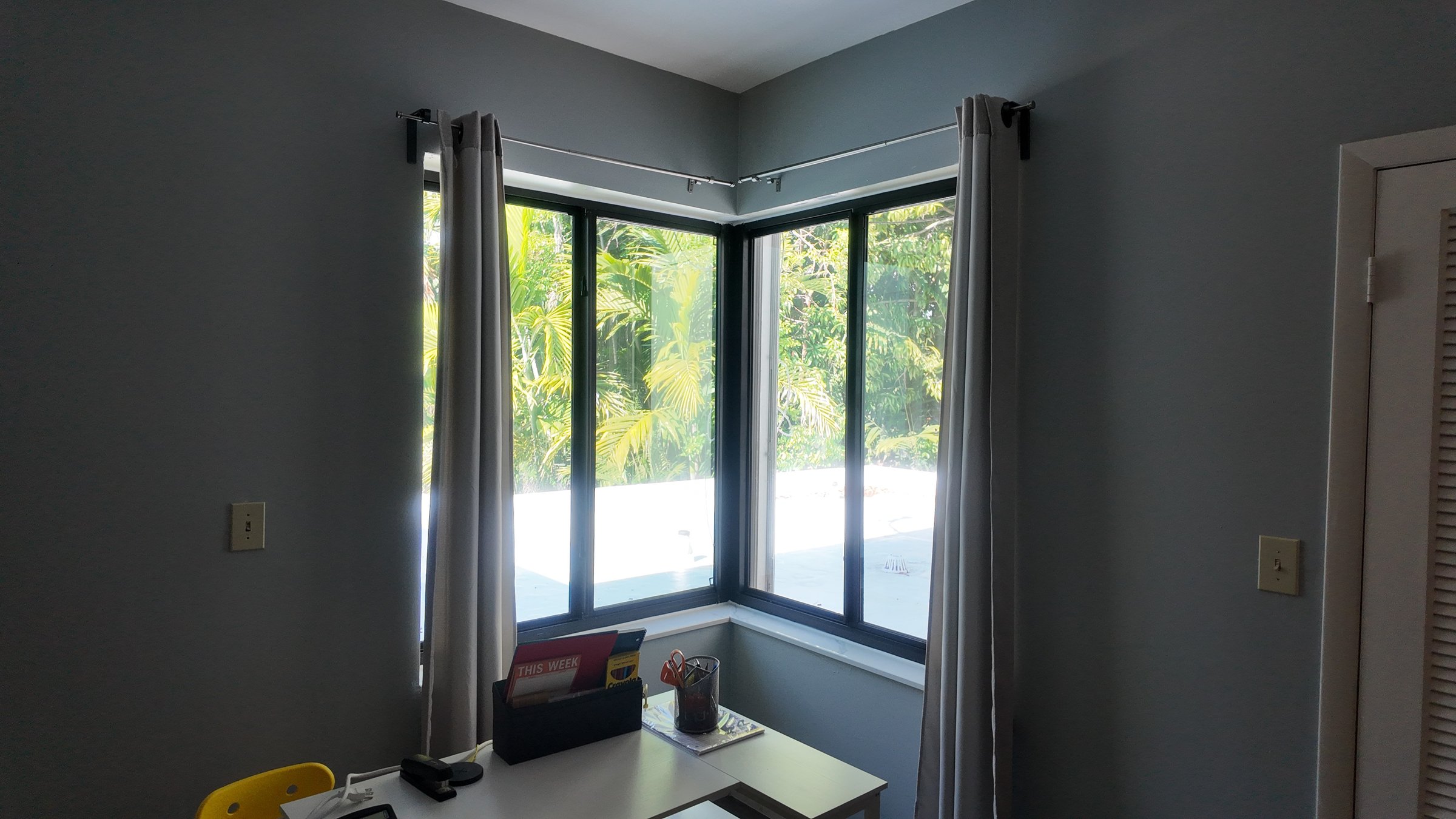
In Miami-Dade, the most practical financing options for impact window installation are PACE programs (repaid through your property tax), contractor-arranged payment plans, and personal home improvement loans. The right choice depends on your equity, credit profile, how long you plan to stay in the home, and the total project cost — which is often higher in Miami-Dade because HVHZ compliance requirements add permitting and product approval costs.
Key Takeaways
- Miami-Dade HVHZ rules require Florida Product Approval (and in some cases a Miami-Dade NOA) — this affects total project cost and therefore how much you need to finance.
- PACE financing is repaid through your property tax bill, requires no FICO score, and offers terms up to 20 years — keeping monthly payments lower.
- The My Safe Florida Home grant can provide up to $10,000 in matching funds, which reduces the amount you need to borrow.
- Insurance premium reductions after installing impact windows can meaningfully offset monthly financing costs — get an insurer quote before you lock in a loan term.
- Always verify your contractor holds the required Florida licenses through DBPR before signing any financing agreement.
The Real Problem
Why Picking the Wrong Financing Plan Costs You Twice
Most homeowners in Miami-Dade pick a financing plan based on whoever the contractor recommends on the day they sign. That is usually a mistake.
Here is what actually happens: you agree to a loan, then discover the HVHZ permit fees, product approval inspections, and structural work were not included in the quote. The financed amount comes up short. You either stop the project or take out a second loan at a worse rate. Understanding the real cost of an HVHZ-compliant installation — before you choose a financing vehicle — is the only way to avoid that situation.
Impact windows in Miami-Dade cost more than in non-HVHZ counties. The Florida Building Code requires all products installed in the High Velocity Hurricane Zone to hold either a valid Miami-Dade Notice of Acceptance (NOA) or a Florida Product Approval (FPA) that explicitly covers HVHZ. Not every product on the market qualifies. Products that do not qualify cannot be permitted, and unpermitted installations can trigger stop-work orders and fines. All of that affects the total amount you should plan to finance.
Miami-Dade & South Florida Context
Why HVHZ Compliance Changes Your Financing Math
Miami-Dade and Broward County sit inside the High Velocity Hurricane Zone — the strictest residential building code zone in the United States. When you replace windows here, the Florida Building Code requires:
- A valid NOA or Florida Product Approval covering HVHZ for every window and door product installed.
- Miami-Dade County permits pulled before installation begins — permit fees vary by scope.
- A post-installation inspection by a county inspector before the permit can be closed.
These requirements are non-negotiable. They also mean your project cost will typically be higher than equivalent work in Palm Beach County or inland areas. A rough directional range for impact window installation in Miami-Dade runs from roughly $800 to $1,200 per opening installed, depending on size, glass spec, frame type, and whether structural modifications (such as header resizing) are needed. On a whole-house replacement of 15 to 20 openings, that can put your total well above $15,000 — and sometimes above $30,000 on larger homes.
Why does this matter for financing? Because financing the wrong amount — either too little or with a term that does not match your budget — creates hardship mid-project. Before choosing a plan, get a written, itemized quote that includes all impact window costs, permit fees, and any structural scope that may be needed.
Your Financing Options Explained
The Main Financing Vehicles for Impact Windows in Miami-Dade
There are four realistic paths for most South Florida homeowners. Each has trade-offs.
| Financing Type | How It Works | Typical Term | Credit Required | Best For |
|---|---|---|---|---|
| PACE (e.g., RenewPACE) | Repaid through property tax assessment | Up to 20 years | Equity-based, no FICO | Homeowners with equity but limited credit access |
| Personal / Home Improvement Loan | Unsecured bank or credit union loan | 3–10 years | Good to excellent credit | Smaller projects; fast approval; no lien |
| Home Equity / HELOC | Secured against your home’s equity | 10–30 years | Good credit + equity | Large projects; lower interest rates |
| My Safe Florida Home Grant | State matching grant up to $10,000 | N/A — grant | Eligibility-based | Eligible homeowners who can stack with other financing |
PACE Financing: The South Florida Default for Many Homeowners
PACE stands for Property Assessed Clean Energy. In Florida, it is administered by programs such as RenewPACE. The core mechanic: the financing is secured by a lien on your property and repaid as an addition to your annual property tax bill. Because qualification is based on home equity and your property tax and mortgage payment history — not your FICO score — many Miami-Dade homeowners who would not qualify for a bank loan can access PACE financing.
A directional example: a $15,000 impact window project financed over 20 years at approximately 9.49% APR runs roughly $173 per month. That is a manageable monthly number for many households. Shorter terms mean higher monthly payments but less total interest paid. There is no prepayment penalty.
Important PACE details for Miami-Dade homeowners:
- PACE is a lien on your property — it transfers to new buyers if you sell unless paid off at closing. Disclose it to your real estate agent before listing.
- If you are financing both windows and a roof, roofing and window projects must be submitted as separate PACE applications — do not combine them in a single submission.
- PACE does not affect your credit score. Applying involves only a soft pull.
- The My Safe Florida Home grant (up to $10,000 matching, subject to program funding and appropriation) can be stacked with PACE financing — you use the grant to reduce the principal you finance.
For homeowners considering financing options for their full home hardening project, stacking a grant and PACE can significantly reduce the net monthly cost.
Personal and Home Improvement Loans
If your credit score is strong and the project is under $20,000, an unsecured personal loan from a bank or credit union may be the simplest option. No lien, no property tax complexity, and approval can happen in days. The trade-off: interest rates on unsecured loans are typically higher than HELOC rates, and terms are shorter (3–10 years), which means higher monthly payments.
Home Equity Loan or HELOC
If you have meaningful equity in your Miami-Dade home and a solid credit history, a home equity loan or HELOC will usually offer the lowest interest rate of any financing option. The trade-off is that your home is collateral — and the application process takes longer than PACE or personal loans.
Side-by-Side Comparison
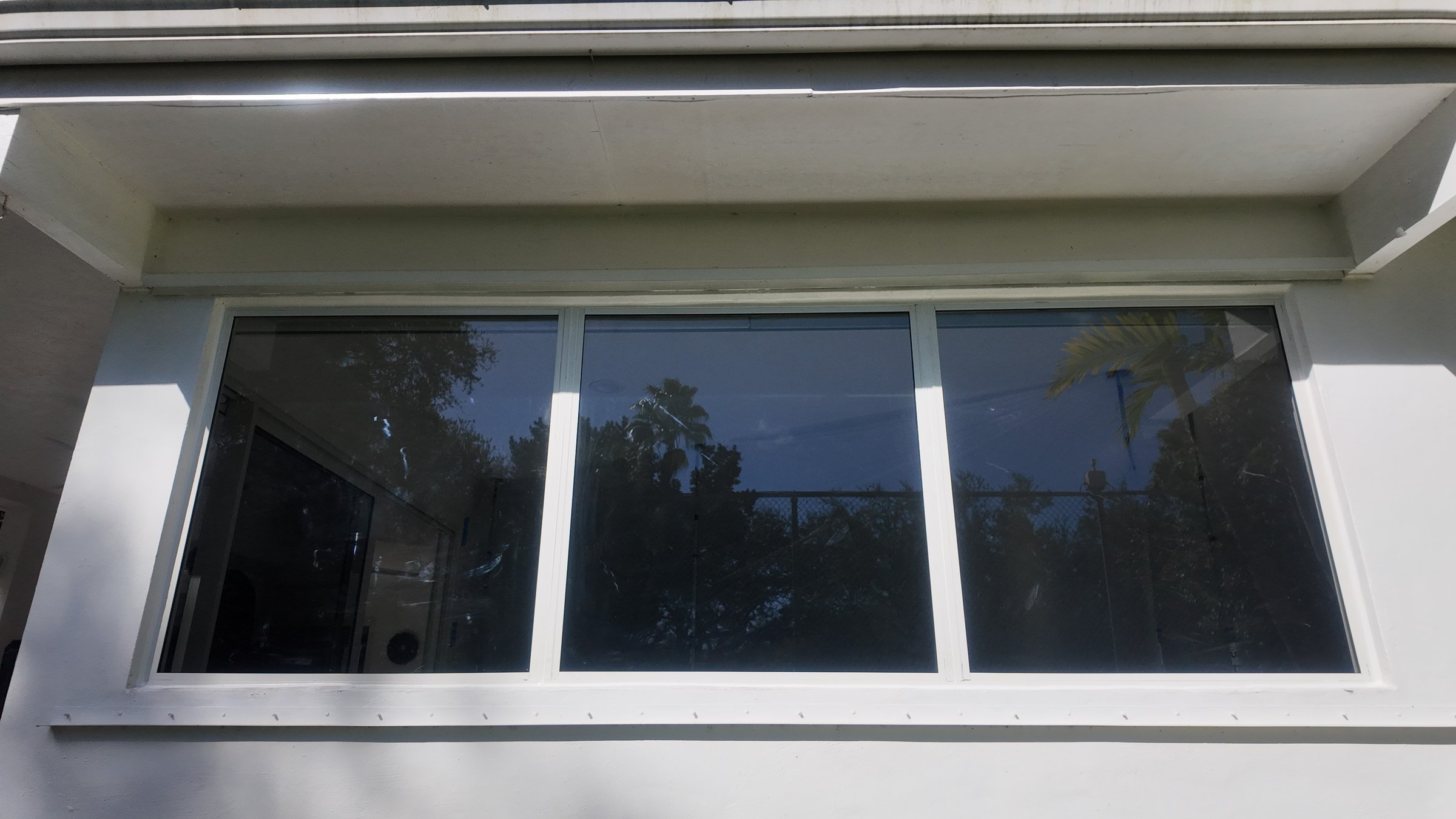
How the Financing Options Stack Up for a $20,000 Miami-Dade Project
| Factor | PACE (20-yr) | Personal Loan (7-yr) | HELOC (15-yr) |
|---|---|---|---|
| Est. Monthly Payment (directional) | ~$230/mo | ~$330/mo | ~$180/mo (variable) |
| Credit Score Required | None (equity-based) | Good–Excellent | Good–Excellent |
| Property Lien | Yes — tax assessment | No | Yes — 2nd mortgage |
| Application Speed | Days | Days | Weeks |
| Can Stack with Grant | Yes | Yes | Yes |
| Prepayment Penalty | None | Varies | Usually none |
Directional estimates only. Actual rates and payments depend on your lender, equity, and creditworthiness. Get written quotes before deciding.
Factor In Your Insurance Savings Before Choosing a Loan Term
This step is under-used and can genuinely change which plan makes sense. In Florida, law requires insurers to offer wind-mitigation credits for approved opening protection such as impact windows. In our experience, many South Florida homeowners see meaningful homeowners-insurance premium reductions after installing impact windows and obtaining a wind mitigation inspection. Actual reductions vary by insurer, policy, location, and home construction, and no specific figure can be guaranteed.
The practical move: before you sign your financing agreement, call your insurer and ask them to estimate your new premium with impact windows installed. If your premium drops by $100 or more per month, a shorter loan term becomes far more affordable — because the premium savings partially offset the higher monthly payment. If savings are modest, a longer term preserves monthly cash flow.
Why Contractor Credentials Matter in Financing
Vetting Your Contractor Before Signing Anything
A licensed contractor, not a lead aggregator — your financing agreement is only as secure as the contractor backing it.
Before you sign any financing agreement tied to a contractor, verify the contractor holds the required Florida licenses through the DBPR public portal at myfloridalicense.com. An unlicensed or improperly licensed contractor cannot pull permits in Miami-Dade — meaning your installation will not pass inspection, your lender has no licensed entity to enforce the contract against, and your investment is at risk.
For impact window work in Miami-Dade, the relevant license type is a Certified Specialty Contractor with a Glass & Glazing Specialty, or a Certified General Contractor or Certified Residential Contractor with authority to subcontract glazing work. Verify the license number matches the name on the contract, and confirm the license is active — not expired or under suspension.
Because Bigfoot holds a Certified General Contractor (CGC1531370) license in addition to our glazing specialty, we can coordinate structural scope — such as header resizing or hurricane strap upgrades — in-house without requiring a separate GC to oversee the window work. That matters for financing because it prevents scope gaps that create change-order surprises mid-project.
“We tell every homeowner: know your total number before you pick your financing plan. Include permits, structural work, and the inspection. An itemized quote protects you.”
President, Bigfoot Windows & Roofing
What You’re Financing
Understanding the Product Behind the Price Tag
What you choose to install affects both your total financed amount and the downstream benefits (insurance credits, energy savings) that offset your payments. For South Florida HVHZ installations, Bigfoot installs Mr. Glass impact windows as our primary product line. All standard Mr. Glass series carry Florida Product Approval; the Series 2500T door additionally carries a Miami-Dade NOA. For standard window series, Mr. Glass holds Florida Product Approval — not a Miami-Dade NOA — which is an important distinction for HVHZ projects. We confirm the applicable approval path for every opening before finalizing a proposal.
Glass spec also affects your financed amount. Impact glass thickness generally ranges from 5/16" (builder grade) to 7/16" (standard residential) to 9/16" (high-rise and heavy-duty applications). We recommend SB 70 Low-E glass as our standard specification — in South Florida’s cooling-dominated climate, the low-E coating reduces solar heat gain that your air conditioning must overcome. For whole-house replacements, the equivalent Climate Guard 6227 spec is available as a complimentary upgrade.
For homes within two miles of saltwater: your door’s aluminum frame should use the 2605 coastal finish. Specifying a 2604 wood-grain finish in a coastal zone can void the manufacturer’s 10-year product warranty — a cost you do not want to discover after you have already financed the project.
To explore what impact windows cost for your specific home, use our online estimator to get a directional number before your in-home quote.
How the Process Works
From Quote to Permit to Closed Inspection: What You’re Actually Paying For
Understanding the steps helps you understand the costs that should be in your financed amount.
- In-home consultation and itemized quote. We measure every opening, confirm product eligibility against the applicable Florida Product Approval or NOA, identify any structural scope (such as header work or hurricane strap upgrades that fall within GC scope), and produce a written, itemized quote. This is the number your financing should cover.
- Permit application. We pull the permit with Miami-Dade County before any work begins. Permit fees vary by scope and county schedule — they should be in your written quote, not an add-on surprise.
- Manufacturing and scheduling. Mr. Glass windows are fabricated to order. Lead times vary; we will give you a current estimate at the time of your quote.
- Installation. Our crews install. For any structural modifications within the scope of our Certified General Contractor license, that work is handled in-house — no separate contractor needed.
- County inspection. A Miami-Dade inspector closes the permit. You want this step completed — an open permit can complicate a future sale and some lenders will not close on a home with open permits.
- Wind mitigation inspection (optional but recommended). A licensed wind mitigation inspector documents your new opening protection on the OIR-B1-1802 form. Your insurer uses this to calculate your new premium. Market rate for this inspection is typically $75–$300 — a small investment for the potential premium reduction it can unlock.
Ready to get a written, itemized quote that includes permits, product approvals, and any structural scope?
Or call us directly: 786-886-2088
Who We’re Not the Right Fit For
- Homeowners who need the absolute lowest upfront price and are willing to skip permits. We pull every permit required by Miami-Dade County. We are not the right fit if you want unpermitted work to save on permit fees — those savings become liabilities when you sell or file an insurance claim.
- Buyers looking for financing through a specific bank or credit program we do not partner with. We work with PACE financing through RenewPACE and can point you toward the My Safe Florida Home grant program. If you need a specific lender or credit product, you will arrange that independently and pay us directly — which is completely fine, but worth knowing upfront.
- Projects requiring specialty commercial glazing or high-rise condo work. The Mr. Glass Series 350 is a residential-only product — not appropriate for condominiums, high-rise buildings, or commercial applications. If your project is a condo or high-rise, we will tell you that clearly and help you understand what product class you need.
- Homeowners who want to start without a written, itemized quote. We do not do verbal estimates. Every project gets a written scope before any financing application is submitted. If that process feels slow, a different contractor may suit your timeline — but we believe it protects you.
Frequently Asked Questions
What financing options are available for impact window installation in Miami-Dade?
The main options are PACE programs (repaid through your property tax with no credit score requirement), personal or home improvement loans, home equity loans or HELOCs, and the My Safe Florida Home matching grant (up to $10,000, subject to funding and eligibility). Many Miami-Dade homeowners combine a grant with PACE to reduce the total amount they finance. The best option depends on your equity, credit profile, and how long you plan to remain in the home.
Can I use a PACE loan to pay for impact windows in South Florida and is it worth it?
Yes. PACE financing is available for impact window installations in Miami-Dade and the rest of South Florida. It is worth considering if you have home equity but limited access to traditional credit, because qualification is equity-based rather than FICO-based. The trade-off: PACE places a lien on your property that must be disclosed when you sell. On a $15,000 project over 20 years at approximately 9.49% APR, the payment runs roughly $173 per month — a directional figure; confirm current rates with the PACE administrator.
How much do impact windows cost in Miami-Dade and how does that affect how much I need to finance?
A directional range for HVHZ-compliant impact window installation in Miami-Dade is roughly $800 to $1,200 per opening installed, depending on size, glass spec, frame type, and whether structural work is needed. A whole-house replacement of 15 to 20 openings can total $15,000 to $30,000 or more on larger homes. Get a written, itemized quote that includes permit fees and any structural scope before choosing a financing amount — under-financing mid-project is a common and avoidable problem.
Will my homeowners insurance discount help pay off my impact window loan faster?
Potentially, yes. Florida law requires insurers to offer wind-mitigation credits for approved opening protection such as impact windows. In our experience, many South Florida homeowners see meaningful premium reductions after installing impact windows and completing a wind mitigation inspection. Actual reductions vary by insurer, policy, location, and home construction, and no specific figure can be guaranteed. Before you lock in a loan term, ask your insurer for a revised premium estimate — savings can make a shorter term more affordable than it appears.
What should I look for in a financing plan offered by a window contractor in Florida?
Verify the contractor is licensed through DBPR before signing anything. Look for a written, itemized quote that includes permit fees, product approval costs, and any structural scope — not just the window price. Confirm the financing terms in writing: interest rate, loan term, prepayment penalty (if any), and whether a lien is placed on your property. Ask whether the contractor can coordinate PACE applications and whether the My Safe Florida Home grant is available for your project.
Does the My Safe Florida Home grant apply to impact window installations?
Yes. Impact windows and doors are qualifying mitigation improvements under the My Safe Florida Home program. Eligible homeowners may receive a matching grant of $2 in state funds for every $1 they contribute, up to a maximum state contribution of $10,000, subject to legislative appropriation and available program funding (as of September 2026). The grant can be stacked with PACE financing — use the grant to reduce principal and finance the remainder. Verify current eligibility and funding availability at mysafeflhome.com before applying.
Do I need a permit for impact window replacement in Miami-Dade and does that cost go into the financed amount?
Yes, permits are required for every impact window installation in Miami-Dade — no routine replacement is exempt under the Florida Building Code. Permit fees vary by scope and are set by the county fee schedule. A legitimate contractor includes permit fees in the written quote. Those fees can and should be included in any financed amount. Installing without a permit is not a cost-saving option — it creates an open permit liability that can surface during a home sale or insurance claim and potentially require the work to be redone.
Schedule Your Free Estimate
Ready to get started? Request a free estimate — no phone call required.
Sources
- My Safe Florida Home program grant terms — mysafeflhome.com/faqs-2/
- RenewPACE Florida financing overview — renewfinancial.com
- Florida DBPR contractor license verification — myfloridalicense.com
- Bigfoot Windows & Roofing impact windows cost guide — bigfootwindowsandroofing.com/impact-windows-cost-south-florida/
- Florida Division of Emergency Management wind mitigation booklet — floridadisaster.org
Get a written, itemized quote before you choose a financing plan.
We cover permits, product approval, and any structural scope in every proposal — no surprises mid-project.
Prefer to talk first? Call 786-886-2088.