Impact Windows · Cost Transparency
Last updated: July 2026 by the Bigfoot Windows & Roofing editorial team.
Key Takeaways
- A quoted price rarely includes permits, NOA documentation, or engineering letters.
- Stucco repair, window bucks, and frame finishing after install often add hundreds per opening.
- Disposal of old windows and mobilization fees are real line items — ask before you sign.
- Custom sizing premiums can significantly increase cost over standard rough openings.
- Lowball quotes frequently resurface as add-ons once work has already started.
The Real Problem
Why Does the Final Price Never Match the Quote?
South Florida homeowners face a pattern that repeats constantly in this industry.
You get a quote for impact windows. The number looks reasonable. You sign. Then, somewhere between the permit office and the final inspection, new charges appear — permit fees, a stucco patch here, a window buck there, a disposal charge you never heard of. By the time the job is done, the real total is 15–40% higher than what was on the original page.
This is not always intentional deception. Sometimes it is a contractor who prices only what they can control and leaves everything else as a verbal “we’ll figure it out.” Sometimes it is a salesperson motivated to get a signed contract at any cost. Either way, you — the homeowner — absorb the gap.
This article names every cost category that routinely disappears from impact window quotes in Miami-Dade, Broward, and Palm Beach County, explains why each one exists, and tells you how to ask about each one before you sign anything.
South Florida Context
Why Hidden Costs Are Worse in the HVHZ
Miami-Dade and Broward operate under the strictest building code in the United States.
The High Velocity Hurricane Zone (HVHZ) — Miami-Dade and Broward counties — imposes code requirements that do not exist anywhere else in the country. Every impact window or door installed in this zone must carry a Miami-Dade NOA or a Florida Product Approval that covers HVHZ use. The product must be tested, approved, and documented. The installation method must match the NOA exactly.
That compliance infrastructure costs money. Permits cost money. Third-party inspections sometimes cost money. Engineering letters — required when a window opening is modified structurally — cost money. None of these are optional in the HVHZ. They are code requirements. The question is whether your quote includes them or treats them as extras.
In Palm Beach County, which sits just outside the HVHZ, the requirements are slightly different but the same pattern holds: permits are required, Florida Product Approval (FPA) documentation must be on file, and finishing work after the window is set is still your problem unless the contract says otherwise.
The Hidden Cost Breakdown
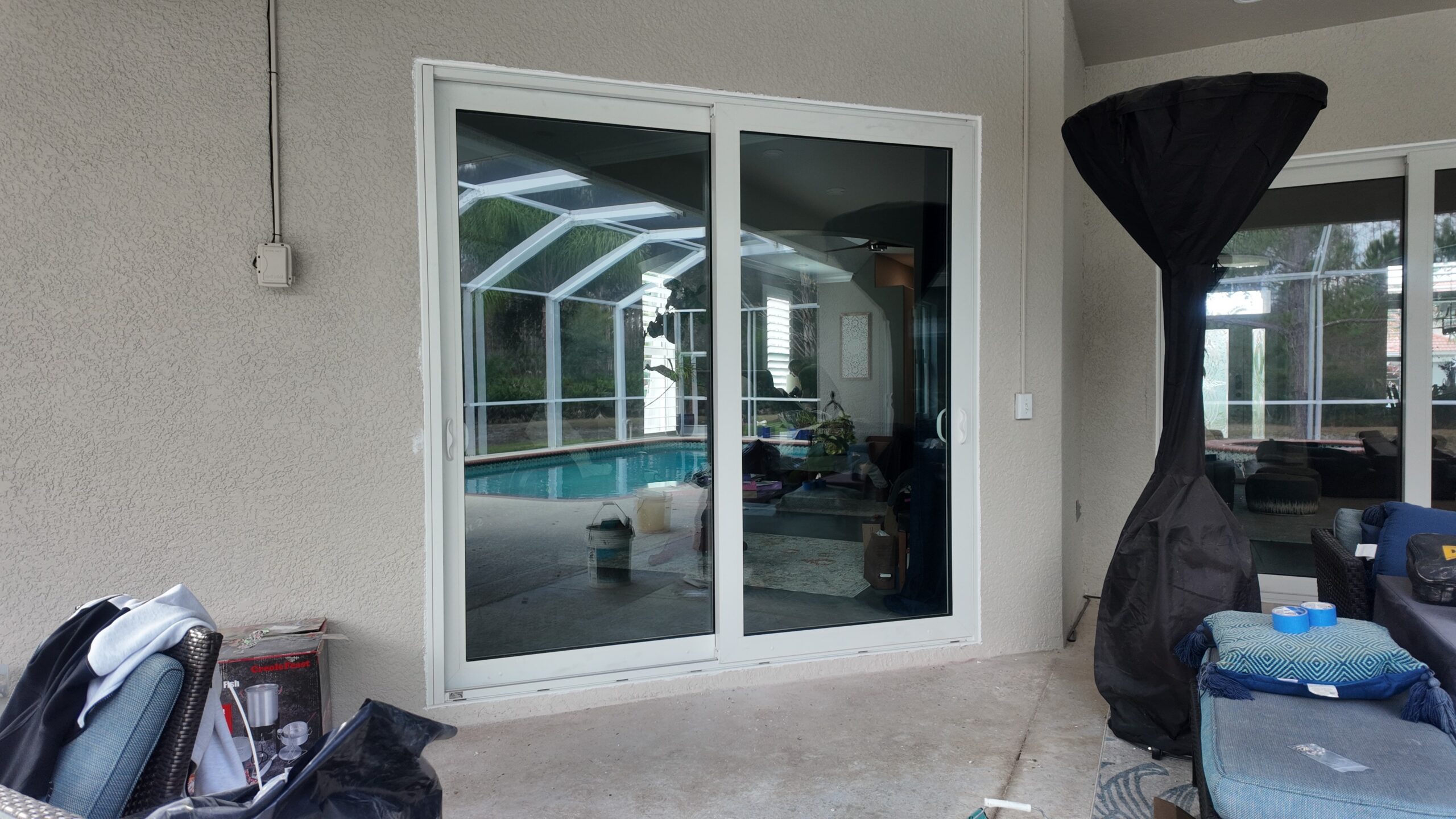
Every Fee Category That Disappears From Impact Window Quotes
Here is what to ask about — line by line — before you accept any proposal.
1. Permit Fees
Every impact window installation in South Florida requires a building permit. The fee is set by the municipality and is calculated based on project value, number of openings, or a flat schedule — depending on where you live. In some Miami-Dade municipalities, permits for a full-home window replacement run several hundred dollars. In others, they reach into the low thousands. Contractors who quote “installed price” and leave permits as a pass-through are not quoting you the real number.
What to ask: Is the permit fee included in this quote? Who pulls it? Is it a fixed amount or an estimate?
2. NOA / Florida Product Approval Documentation
In the HVHZ, every product needs a Miami-Dade NOA or a Florida Product Approval that covers HVHZ use. Outside the HVHZ, Florida Product Approval (FPA) is required. Some contractors charge a separate documentation fee to compile and submit the required product approval paperwork to the building department. This is usually a small line item — but it should be disclosed, not added after you sign.
3. Engineering Letters and Structural Modifications
If any window opening needs to be resized — made larger or smaller — a licensed engineer may need to sign off on the structural modification. In wood-frame homes, that is often straightforward. In CBS (concrete block) construction common throughout Miami-Dade, modifying an opening can require cutting concrete, reinforcing the lintel, and having an engineer certify the work. That engineering letter alone can cost $300–$800 or more per affected opening, and the structural work itself is a separate labor and material cost.
A contractor authorized to coordinate multi-trade scope — including structural modifications — can handle this under one contract rather than forcing you to find a separate engineer or sub after the fact. That coordination has real value when you are dealing with HVHZ inspections.
4. Window Bucks
A window buck is a pressure-treated wood or PVC frame that gets installed inside a rough concrete or masonry opening before the impact window goes in. In South Florida’s CBS construction, bucks are required for a correct installation — they give the window something to anchor to and allow the fins to be fastened properly. Many quotes assume the existing bucks are intact and reusable. When they are rotted, missing, or the wrong dimension, new bucks add both material and labor cost. Depending on window size, a new buck can add $50–$200 per opening in materials alone before labor.
5. Stucco and Exterior Finish Repair
Once an old window comes out and a new one goes in, there is almost always a gap between the new frame and the existing stucco or siding. Patching, refinishing, and painting that gap is called “stucco finish work” or “buck-and-stucco.” Most window installation quotes stop at the window itself. Stucco repair is typically excluded and billed separately — or left to you to hire a stucco contractor after the fact.
On a full-home replacement of 20 windows, stucco patching costs can easily run $1,000–$4,000 depending on the condition of the existing stucco, the finish type, and whether painting is included. Ask your contractor: Who is responsible for the exterior finish after installation? Is that in this quote?
6. Disposal and Debris Removal
Your old windows have to go somewhere. Hauling and disposing of old aluminum frames, glass panels, and associated hardware is a real cost — dumpster fees, labor to break down and load, and tipping fees at the disposal facility. Some contractors include this. Many do not. On a 15–20 window job, disposal can add $200–$600 if it is not in the original price.
7. Mobilization Fees
A mobilization fee covers the cost of getting a crew, equipment, and materials to your job site. It is more common on smaller jobs (1–3 windows) where the per-window economics do not absorb travel and setup costs. On large whole-home projects it is usually baked in. Either way — ask whether it is a separate line item.
8. Custom Sizing Premiums
Standard rough opening sizes allow contractors to use off-the-shelf or stock window units. The moment your opening is non-standard — an odd width, a non-rectangular shape, an arched or specialty configuration — the window must be custom-fabricated. Custom units cost more and take longer to manufacture. Lead times can extend from 2–4 weeks (stock) to 8–14 weeks (custom). That delay affects your project schedule and may affect your insurance timeline if you are replacing due to storm damage. Make sure your quote specifies whether each unit is stock or custom.
| Hidden Cost Category | Typical Range | Included in Most Quotes? |
|---|---|---|
| Permit fees (municipal) | $150–$1,500+ (project-dependent) | Often excluded or estimated low |
| Window bucks (new) | $50–$200 per opening (materials) | Rarely included unless inspected first |
| Stucco / exterior finish repair | $1,000–$4,000 (full home) | Almost always excluded |
| Engineering letter (structural mod) | $300–$800+ per opening | Excluded unless scope confirmed |
| Disposal and debris removal | $200–$600 (full home) | Sometimes excluded |
| Mobilization fee | $150–$400 (small jobs) | Sometimes excluded on small jobs |
| Custom sizing premium | 15–35% over standard unit price | Only if spec’d as custom from the start |
| NOA / FPA documentation fee | $75–$250 | Variable — ask contractor |
Quote Comparison
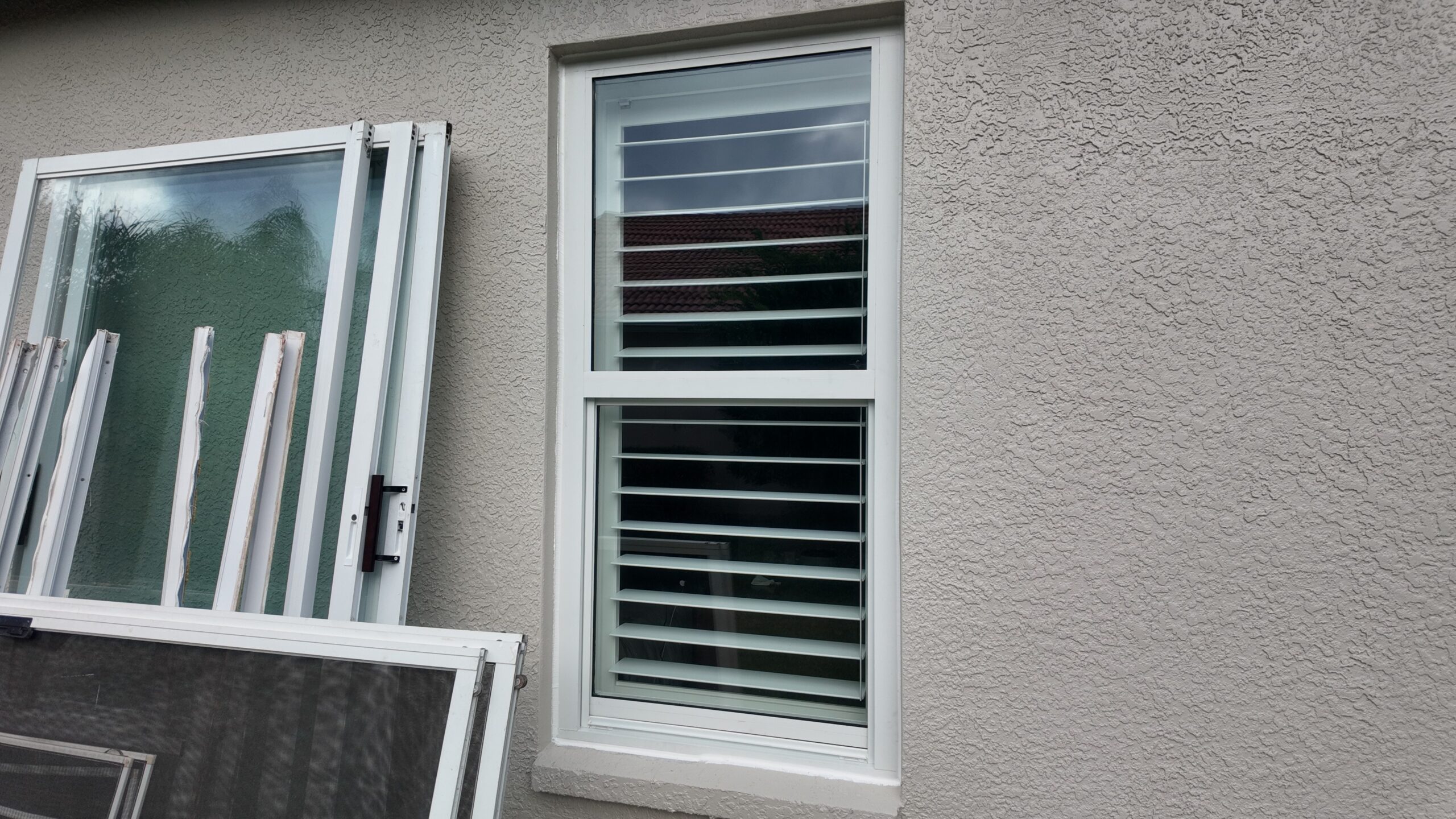
Full-Cost Quote vs. Lowball Quote: What You’re Actually Comparing
Two quotes on the same job can look very different — until you add up what is missing from the lower one.
| Line Item | Lowball Quote | Transparent Full-Cost Quote |
|---|---|---|
| Windows (materials + labor) | ✓ Included | ✓ Included |
| Permit fee | “Pass-through” — billed later | ✓ Fixed or capped estimate included |
| NOA / FPA documentation | Not mentioned | ✓ Disclosed |
| Window bucks (if needed) | “We’ll see when we get there” | ✓ Pre-inspected and quoted |
| Stucco finish repair | Not included | ✓ Scoped or excluded in writing |
| Disposal / debris removal | Not mentioned | ✓ Included or clearly excluded |
| Engineering letter (if applicable) | Not mentioned | ✓ Flagged if openings are non-standard |
| What you know at signing | The best-case number only | The realistic total cost range |
The lower number on page one of the lowball quote is not the real price — it is a starting point designed to get you to sign. The transparent quote may look higher upfront, but it is competing on the actual number, not a partial one.
When you compare proposals for impact window installation, ask each contractor to confirm in writing which of the above categories is included and which is explicitly excluded. Any contractor who cannot answer that question clearly is not ready to quote your job.
Why This Matters
A Licensed Contractor, Not a Lead Aggregator
Scope clarity starts with who is actually responsible for the whole job.
Florida licensed: CGC1531370 · CRC1331693 · CCC1333168 · SCC131153098
“The quote should tell you the real number — not the number that gets you to sign. If a contractor can’t tell you upfront whether stucco repair, bucks, and permits are in or out, that’s information.”
Darryl Rosenbaum
President, Bigfoot Windows & Roofing
What We Install
Why the Product Choice Affects Your Total Cost
Frame material, glass spec, and series level all drive the final installed price.
At Bigfoot Windows & Roofing, we primarily install Mr. Glass aluminum impact windows. We recommend aluminum frames for South Florida for a straightforward reason: aluminum has a longer track record in HVHZ heat, humidity, salt air, and hurricane-force wind than other frame materials. For homeowners concerned about energy efficiency, thermally broken aluminum frames — which include a thermal barrier between the interior and exterior faces of the frame — address heat transfer without sacrificing structural performance.
Glass specification also affects price in ways that are not always explained at the point of sale. The three common glass thicknesses in South Florida are 5/16" (builder-grade), 7/16" (standard mid-grade), and 9/16" (high-rise and heavy-duty applications). Upgrading glass thickness does not change the frame depth — a common misconception — but it does change the unit price. The Mr. Glass Series 1000 sliding glass door, for example, comes standard with 9/16" glass; that is part of the specification, not an upgrade you pay extra for after the fact.
Low-E glass coatings also vary. SB 70 is our primary recommendation for South Florida — it provides the strongest heat block and carries a dark green hue. Climate Guard 6227 is spec-equivalent and is available as a free upgrade on whole-house replacements. Understand which glass spec is in your quote before you compare prices across proposals — two quotes on “impact windows” may be quoting very different products.
For impact door replacements, the same logic applies: product line, glass thickness, hardware grade, and swing configuration all affect price, and none of those details should be left vague in a written proposal.
The Process
How a Transparent Impact Window Job Actually Works
From first visit to final inspection — here is what an honest process looks like.
- On-site measurement and scope inspection: Every opening is measured. Existing bucks are checked for rot or damage. The exterior stucco condition is noted. Non-standard openings are flagged.
- Written proposal with inclusions and exclusions clearly stated: Permit fee handling is disclosed. Stucco work is either included in scope or explicitly excluded in writing. Disposal is addressed.
- Permit application: The contractor pulls the permit. Product approval (NOA for HVHZ, FPA elsewhere) is submitted to the building department.
- Window fabrication lead time: Stock units: 2–4 weeks. Custom or specialty units: 8–14 weeks. Your contractor should give you a realistic timeline at contract signing, not after you have already paid a deposit.
- Installation: Old windows removed, debris managed, bucks installed or replaced as needed, new impact windows set and anchored per NOA installation method.
- Inspection and close-out: Building department inspection is scheduled. Certificate of completion issued. Permit closed. Wind mitigation documentation available for your insurance carrier.
If you are financing the project, PACE financing options allow the cost to be repaid through your property tax bill — no bank loan, no credit score impact. The rate is approximately 9.49%, and a 20-year term produces the lowest monthly payment. Note: roofing and window projects must be filed as separate PACE applications.
Get a Quote That Shows You the Real Number
No lowball opener. No surprise add-ons after you sign. We itemize every cost category upfront — permits, bucks, stucco scope, disposal, and custom sizing.
Who We’re Not the Right Fit For
We want to be honest about where we are not the best match for your project:
- You need one or two windows replaced tomorrow. We prioritize full-scope projects. If you need a single emergency replacement on a very short timeline, a company that specializes in small-run installs may serve you better.
- You are comparing on price alone and the lowest number wins. Our proposals include permit handling, product documentation, and clear scope statements. That transparency means our number may be higher than a quote that leaves everything out. If a lower upfront number is the decision factor regardless of what is in or out of scope, we are probably not the right fit.
- Your project requires licenses we do not hold. We hold licenses for general contracting, residential construction, roofing, and glass and glazing. We do not hold electrical, plumbing, or HVAC licenses. If your project is primarily one of those trades, you will need a specialist.
- You are outside our service area. We serve Miami-Dade, Broward, and Palm Beach counties. Projects outside South Florida are not something we take on.
Frequently Asked Questions
What are the hidden costs of impact windows?
The most common hidden costs are permit fees, window bucks (pressure-treated frames inside the rough opening), stucco and exterior finish repair after installation, debris disposal, mobilization fees on small jobs, engineering letters for structurally modified openings, and custom sizing premiums when windows are non-standard dimensions. None of these are automatically included in a base installation quote — ask your contractor to confirm each one in writing before you sign.
Why is my impact window quote lower than the final price?
Quotes that show only the window cost and basic labor leave out permit fees, documentation, finish work, and disposal — all of which are real job costs. Once work begins, those items get added. A transparent proposal defines what is included and what is excluded in writing so you know the realistic range before work starts, not after.
Do impact windows need stucco repair after installation?
Almost always, yes. Removing an old window leaves a gap between the new frame and the existing exterior stucco or siding. Patching and finishing that gap is called stucco finish work. Most window installation quotes exclude it. On a full-home replacement, stucco patching can add $1,000–$4,000 depending on condition, finish type, and whether painting is included. Ask your contractor: is exterior finish repair in this contract or not?
What is a window buck and why does it cost extra?
A window buck is a pressure-treated wood or PVC frame installed inside the concrete or masonry rough opening before the impact window goes in. In Miami-Dade’s CBS (concrete block) construction, bucks are required for a correct, code-compliant installation. If existing bucks are rotted, missing, or the wrong size, new ones are needed. Material cost is roughly $50–$200 per opening. Contractors who quote without inspecting existing bucks often discover the issue after work starts.
Are impact window permit fees included in installation quotes?
Not always. Permit fees in South Florida are set by each municipality and vary by project size and value. Some contractors include a fixed or capped permit estimate; others pass the fee through as an add-on after signing. Ask specifically: is the permit fee in this quote? If so, is it a fixed amount or an estimate that could increase? Get the answer in writing before signing anything.
How do I compare impact window quotes fairly?
Ask each contractor to state in writing whether these are included or excluded: permit fees, NOA or Florida Product Approval documentation, window bucks (if needed), stucco finish repair, debris disposal, engineering letters for any modified openings, and custom sizing premiums. A lower upfront number that excludes most of these items is not cheaper — it is incomplete. Compare full-scope totals, not opening-page numbers.
Can I finance impact windows to cover the full installed cost?
Yes. PACE financing allows qualifying Florida property owners to finance impact window projects through their property tax bill rather than a bank loan. It does not require a credit score impact and carries no prepayment penalty. The rate is approximately 9.49%. A 20-year term produces the lowest monthly payment — a $15,000 project runs roughly $173/month at that term. The My Safe Florida Home grant (up to $10,000) can stack with PACE financing for eligible applicants. Consult your CPA regarding any potential tax considerations.
Sources
- Florida Building Code, 8th Edition — High Velocity Hurricane Zone (HVHZ) requirements for fenestration products.
- Miami-Dade County Building Department — Notice of Acceptance (NOA) product approval process.
- Florida Department of Business and Professional Regulation (DBPR) — License verification: CGC1531370, CRC1331693, CCC1333168, SCC131153098.
- Florida SB 293 — Prohibiting HOA restrictions on impact-resistant windows and metal roofing.

Ready for a Quote That Shows You the Whole Picture?
We itemize every cost category — permits, bucks, stucco scope, and disposal — before you sign. No surprises after the contract is executed.