
Quoted $6,500 for Roof Straps? | Bigfoot Windows & Roofing
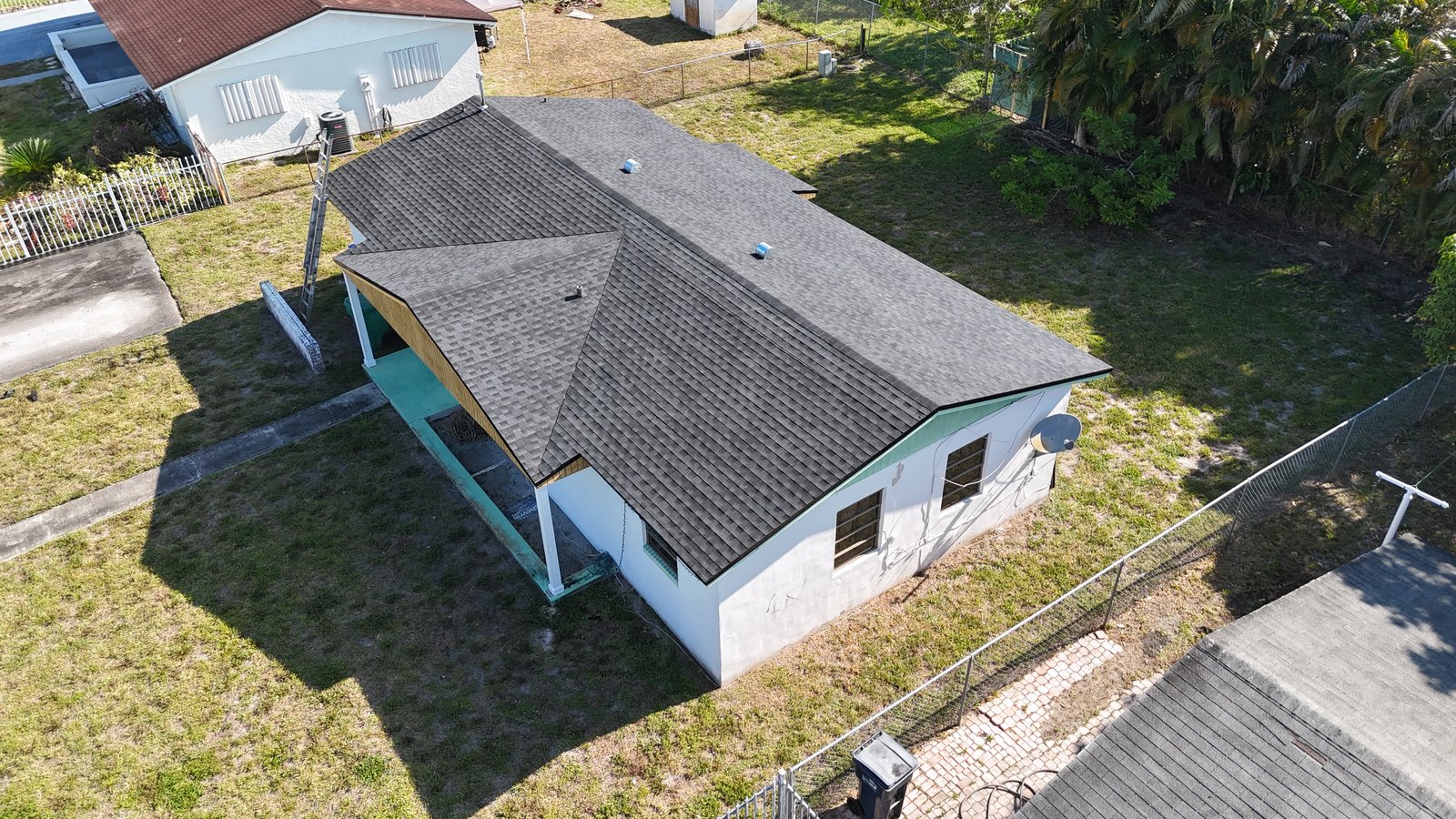
Hurricane roof strap retrofit costs in Miami-Dade and Broward typically range from $1,500 to $4,500 for a standard single-family home, depending on attic access, connector type, roof framing condition, and HVHZ permit requirements. A quote of $6,500 is not automatically a scam — but it warrants a closer look at what is actually included and whether the contractor is properly licensed to pull a permit.
Updated August 2026
Key Takeaways
- Typical retrofit cost in South Florida is $1,500–$4,500; $6,500 is on the high end but not impossible for complex jobs.
- HVHZ (Miami-Dade and Broward) requires specific connector types, a permit, and a post-installation inspection — always verify these are included.
- Any contractor pulling a structural permit for strap work must hold a Certified General Contractor or Certified Residential Contractor license — verify on DBPR before you sign.
- Proper installation and a wind mitigation inspection (OIR-B1-1802) can meaningfully reduce your homeowners insurance premium.
- Storm-chaser tactics after hurricane season are common in South Florida — no permit, no license, and vague scope are the primary red flags.
The Problem
Why Homeowners Are Getting Wildly Different Quotes for the Same Job
Hurricane strap retrofits are one of the most misquoted roofing services in South Florida. Here is why.
After a storm or a Citizens Insurance renewal notice, tens of thousands of South Florida homeowners are told they need hurricane straps — or that their existing connectors are inadequate. Then the quotes come in: one contractor says $1,800, another says $3,200, and a third hands you an invoice for $6,500 with almost no line-item detail. Which number is real?
The honest answer is: all three could be legitimate, or any one of them could be padding. The range exists because the legitimate cost drivers are real — attic access difficulty, connector specification, framing condition, and permit fees in the High-Velocity Hurricane Zone (HVHZ) all genuinely affect price. But the range also creates a wide window for contractors who know homeowners have no benchmark to push back against.
This article breaks down what the work actually involves, what you should expect to pay, and the specific red flags that separate a legitimate higher quote from an inflated one.
South Florida Context
HVHZ Rules Change What Hurricane Strap Work Actually Involves
Miami-Dade and Broward are not just stricter — they are a different category of code compliance.
Florida Building Code Section 1609 governs wind load requirements statewide, but the High-Velocity Hurricane Zone (HVHZ) — which covers Miami-Dade and Broward counties — imposes materially stricter requirements than the rest of Florida. That includes the type of connector required, the installation method, and the mandatory permit-and-inspection process.
In the HVHZ, a roof-to-wall connection retrofit is a structural modification. It requires a permit from the Miami-Dade Building Department or the applicable Broward municipality. The permit triggers a plan review and a post-installation inspection by a licensed inspector. No permit, no inspection — no valid wind mitigation credit on your OIR-B1-1802 form.
That permit-and-inspection requirement is also why the work costs more here than in Palm Beach County or further north. The permit fee alone varies by jurisdiction and scope. A contractor who skips the permit is not just cutting corners — they are handing you a liability: an unpermitted structural modification that an insurer or future buyer can void.
Cost Education
What Legitimate Hurricane Strap Retrofit Costs Actually Look Like
Here is the honest breakdown — not a number pulled from a flyer, but the actual cost drivers.
There is no single correct price for a hurricane strap retrofit. The following table shows the factors that drive cost legitimately, and the typical directional range each adds. These are market-level directional estimates — your final price depends on a site assessment, not a phone quote.
| Cost Driver | What It Affects | Typical Range Impact (directional) |
|---|---|---|
| Number of connectors required | Each truss or rafter tail needs its own connector | Per-connector labor & hardware cost multiplied by rafter count |
| Attic access & clearance | Low-pitch roofs or small attic hatches require more labor time | Can add $300–$900 vs. easy-access attics |
| Connector type (H2.5A, double-wrap, clip) | HVHZ often requires a double-wrap or rated clip; H2.5A is the minimum in many non-HVHZ zones | Hardware cost varies; HVHZ-rated connectors cost more |
| Miami-Dade / Broward permit & inspection | Mandatory in HVHZ; adds real cost but is non-negotiable for insurance credit | Permit fees vary by jurisdiction; plan for this line item |
| Wood condition (truss/rafter damage) | Rot, insect damage, or prior improper fastening requires remediation before strap installation | Can add scope and cost; should be itemized separately |
| Number of structures / roof sections | Hip roofs and multiple roof planes add connector count | Scales with rafter/truss count |
A standard single-family home in Miami-Dade with good attic access, sound framing, and a straightforward hip roof will generally fall between $1,500 and $3,000 for a complete permitted retrofit. Difficult attic access, damaged wood, a complex roof configuration, or an unusually high rafter count can legitimately push a quote toward $3,500–$4,500. A quote approaching $6,500 is not automatically fraudulent — but at that price level, you should be able to see an itemized breakdown that accounts for every dollar.
As a contractor authorized to coordinate structural modifications under the Certified General Contractor (CGC1531370) license, Bigfoot is able to handle strap work as part of a broader roofing or structural scope without requiring homeowners to manage multiple separate contractors. That can simplify permitting and inspection coordination, particularly when framing remediation is needed alongside the strap installation.
| Scenario | Typical Directional Range | Key Variables |
|---|---|---|
| Standard single-family, easy attic access, sound wood | $1,500 – $3,000 | Rafter/truss count, connector type |
| Typical Miami-Dade HVHZ job, permitted | $2,000 – $4,000 | HVHZ connector spec, permit fee, inspection |
| Complex access, partial wood remediation needed | $3,500 – $4,500+ | Remediation scope, additional labor |
| Quote of $6,500 with no itemization | Investigate — ask for line-item breakdown | Should be justifiable by scope; if not, get a second opinion |
Red Flags vs. Legitimate Quotes
How to Tell the Difference Between a Fair Quote and a Scam
Not every high quote is fraud — but these signals separate legitimate contractors from storm chasers.
| Signal | Legitimate Contractor | Red Flag |
|---|---|---|
| License verification | Provides license number; verifiable on DBPR lookup at myfloridalicense.com | Cannot produce a license number, or number does not match DBPR records |
| Permit | Pulls a permit from Miami-Dade or local authority having jurisdiction | Says permit is optional, unnecessary, or not included in the price |
| Itemized quote | Breaks down connector count, hardware type, labor, permit fee, and inspection | Single lump-sum with no breakdown; refuses to explain line items |
| Post-installation documentation | Provides permit card, inspection approval, and supports wind mit form completion | Cannot tell you how your wind mitigation inspection will be documented |
| Sales pressure | Allows time for you to verify their license and get a second opinion | “Today only” pricing; references a storm that just passed; unsolicited door knock |
The single fastest verification step: take their license number and look it up at myfloridalicense.com. A contractor pulling a structural permit in Florida must hold at minimum a Certified Residential Contractor or Certified General Contractor license. If the DBPR lookup shows a different license type — or no matching record — do not sign anything.
Why License Type Matters Here
Structural Work Requires the Right License — Not Just a Roofing License
A licensed contractor, not a lead aggregator — and the license scope matters for this specific type of work.
“When we quote strap work, we pull the permit, we itemize the connector spec, and we coordinate the wind mit inspection so the homeowner actually gets the insurance credit they paid for. That is what the job is supposed to look like.”
Founder & President, Bigfoot Windows & Roofing
Hurricane strap installation sits at the intersection of roofing work and structural modification. A Certified Roofing Contractor license covers roof covering and roof system work. But when the scope includes structural framing remediation — replacing damaged rafter tails, sistering lumber, or addressing code-deficient connections — the work may require a Certified Residential Contractor or Certified General Contractor license depending on scope and jurisdiction. Bigfoot holds all four active Florida licenses, which means structural scope does not require a second contractor and a second permit application.
Connector Types
What Type of Hurricane Strap Is Actually Required in the HVHZ?
Not all connectors are equal — and the HVHZ has specific requirements that affect both cost and wind mitigation credit.
The term “hurricane strap” is used loosely by homeowners and contractors alike. The hardware category is more precisely called a roof-to-wall connector, and the specific type required depends on your roof framing, wall type, and jurisdiction.
- H2.5A single strap — the minimum connector in many non-HVHZ Florida jurisdictions; may not satisfy HVHZ requirements depending on design pressure and framing configuration.
- Double-wrap connectors — wrap around and fasten to both sides of the rafter or truss, providing higher uplift resistance; commonly required or preferred in HVHZ applications.
- Clips and plates — used when clearance is limited or framing geometry prevents a wrap connector; must be rated for the design-pressure requirements of the specific opening.
Your wind mitigation inspection form (OIR-B1-1802) has a specific field for roof-to-wall connection type. The category assigned on that form directly affects the wind mitigation credit your insurer applies. A job done with an under-rated connector that passes visual inspection but does not match the form’s requirements is a problem waiting to surface at renewal or claim time. Verify with your inspector that the connectors installed match what will be documented on the 1802 form.
For South Florida homeowners pursuing financing options for larger renovation scopes that include strap work alongside roofing or window replacement, Bigfoot can structure the quote to align with available PACE or conventional financing. Strap-only jobs are typically small enough to finance conventionally or out of pocket.
The Process
What a Legitimate Hurricane Strap Retrofit Looks Like, Step by Step
Knowing the correct process gives you a checklist to evaluate any contractor’s proposal.
- Site assessment and framing inspection — a qualified contractor enters the attic, counts rafter or truss tails, checks wood condition, and determines the connector type required for the specific framing and HVHZ design-pressure requirements. No site visit = no reliable quote.
- Permit application — in Miami-Dade and Broward, a permit is required for structural modification. The contractor submits drawings or scope documents to the building department. Permit fees vary.
- Installation — connectors are installed per the approved scope, with the correct fastener count and embedment for the connector’s rated capacity. Documentation of the hardware spec (brand, model, load rating) should be available.
- Building department inspection — an inspector from the authority having jurisdiction verifies the installation before the permit is closed. This is your independent verification that the work was done to code.
- Wind mitigation inspection — after the permit closes, you schedule a separate licensed wind mitigation inspector to complete the OIR-B1-1802 form. This form goes to your insurer and is the document that generates the premium credit. Some contractors facilitate this; others leave it to you. Ask upfront.
- Insurance submission — submit the updated 1802 form to your insurer or broker. Citizens Insurance and most private carriers apply wind mitigation credits at renewal or upon submission of an updated form.
If a contractor’s proposal skips steps 2, 3’s documentation, or 4 — those are not minor omissions. They are structural failures in the process that will cost you more later.
Not sure if your quote is fair? We offer a no-pressure estimate with a full line-item breakdown and license verification up front.
Or call directly: 786-886-2088
Related Reading
More South Florida Roofing Guides
Related Articles
Who We’re Not the Right Fit For
Bigfoot approaches every strap job with a permit, a licensed crew, and itemized documentation. That process has real cost and lead time. Here is when we are honestly not your best option:
- You need it done in 48 hours, no permit. If your situation demands that a contractor skip the building department, we are not the right fit. We pull permits on structural work — always. A contractor who skips that step is leaving you exposed.
- Your budget is firmly under $1,200 for a full retrofit. A permitted, inspected hurricane strap retrofit on a South Florida home has real cost floors driven by permit fees, licensed labor, and HVHZ connector specs. If the budget is below that threshold, a legitimate full retrofit is likely not achievable, and we would rather tell you that than take your money for incomplete work.
- You only want documentation for insurance without actual installation. Wind mitigation credits require real, inspected work. We do not generate paperwork for work that was not done.
- You are outside our service area. We serve Miami-Dade, Broward, and Palm Beach counties. If your property is further north or in a different region, we are not positioned to serve you well.
Frequently Asked Questions
Frequently Asked Questions
How much should hurricane roof straps cost to install in Miami-Dade?
A typical permitted retrofit in Miami-Dade runs between $1,500 and $4,000 for a standard single-family home. Difficult attic access, damaged framing, or an unusually high rafter count can push the cost higher. Any quote above $4,500 should come with a clear line-item breakdown explaining what justifies the additional scope. A $6,500 quote is not automatically a scam, but it needs documentation to back it up.
Are roof-to-wall connectors required by the Florida Building Code in the HVHZ?
Yes. Florida Building Code Section 1609 governs wind-load requirements, and the HVHZ — Miami-Dade and Broward counties — imposes stricter connector and installation requirements than the rest of Florida. New construction must meet these standards. Retrofit requirements depend on the scope of work being permitted, but any structural permit in the HVHZ will trigger review under the current code requirements.
How do I verify a South Florida roofing contractor is licensed?
Go to myfloridalicense.com and search by the contractor’s name or license number. A contractor pulling a structural permit must hold at minimum a Certified Residential Contractor or Certified General Contractor license. A Certified Roofing Contractor license alone may not cover all structural scope depending on the work. If the DBPR lookup shows no matching record or a different license type, do not sign the contract.
Will installing hurricane straps lower my homeowners insurance in Florida?
Proper installation, followed by a licensed wind mitigation inspection and submission of an updated OIR-B1-1802 form, can meaningfully reduce the wind portion of your homeowners premium. The actual credit depends on the connector type documented on the form, your insurer, and your current rating. Citizens Insurance and most private Florida carriers recognize wind mitigation credits. I have seen customers reduce premiums significantly after a combination of strap upgrades, a new roof, and a wind mit inspection — but specific savings vary.
Do roof strap installations require a permit in Miami-Dade County?
Yes. In Miami-Dade and Broward counties, a roof-to-wall connector retrofit is a structural modification and requires a permit from the local building department. The permit triggers a plan review and a post-installation inspection. Without a closed permit and inspection, the work cannot be properly documented on your wind mitigation form, and you will not receive the insurance credit the job is supposed to generate.
What is the difference between an H2.5A strap and a double-wrap connector?
An H2.5A is a single-sided strap that fastens to one face of the rafter or truss tail — the minimum connector in many non-HVHZ Florida jurisdictions. A double-wrap connector wraps around the rafter and fastens to both sides, providing higher uplift resistance. HVHZ applications often require double-wrap or rated clip connectors. The connector type installed determines which category is recorded on your wind mitigation form, which directly affects your insurance credit.
Can I use PACE financing or a grant to pay for hurricane strap installation?
The My Safe Florida Home grant program offers matching funding of up to $10,000 for qualifying wind-mitigation improvements — roof-to-wall connections are an eligible upgrade. PACE financing is typically structured for larger scopes, but strap work combined with a roofing project may be financeable under PACE. Confirm eligibility and current program funding at mysafeflhome.com. Consult your CPA regarding any potential tax treatment — we do not provide tax advice.
Schedule Your Free Estimate
Ready to get started? Request a free estimate — no phone call required.
Sources
- Florida Building Code, Section 1609 — Wind Loads (floridabuilding.org)
- Florida Department of Business and Professional Regulation — License Lookup (myfloridalicense.com)
- My Safe Florida Home Program — Grant Eligibility and Funding (mysafeflhome.com)
- OIR-B1-1802 Uniform Mitigation Verification Inspection Form — Florida Office of Insurance Regulation
- Florida Wind Mitigation Booklet — Florida Division of Emergency Management (floridadisaster.org)
Get a Straight Answer on Your Quote
Not Sure if Your $6,500 Quote Is Legitimate? Ask Us.
We will give you a line-item estimate, verify what connector spec your home needs under HVHZ code, and walk you through the permit process. No pressure, no storm-chaser tactics.
Or call Bigfoot Windows & Roofing at 786-886-2088