Roof Replacement Cost In Miami-Dade County | Bigfoot Windows & Roofing (Miami-Dade)
Updated June 2026
Key Takeaways
- Miami-Dade roof replacement typically costs $12,000–$35,000+ depending on size, material, and HVHZ requirements.
- The High-Velocity Hurricane Zone (HVHZ) mandates stricter product approvals and wind-load engineering — raising both material and labor costs.
- Flat roofs, tile, and metal each carry different price bands; material choice is the single biggest cost driver.
- Permit fees, decking replacement, and structural tie-down upgrades (hurricane straps) are common add-ons that surprise homeowners.
- A Certified General Contractor can handle structural scope — rotted decking, hurricane strap installs — in the same contract as your roof.
The Problem
Why Is Roof Replacement So Expensive in Miami-Dade?
Most roofing quotes in Miami-Dade are higher than national averages — and there are real reasons why.
If you have gotten a roof replacement quote in Miami-Dade and wondered why the number is higher than what you see online, you are not being overcharged — you are in one of the most demanding roofing markets in the country. Miami-Dade sits inside the High-Velocity Hurricane Zone (HVHZ), a designation that triggers stricter product approval standards, mandatory engineering compliance, and more rigorous inspection checkpoints than anywhere else in Florida.
Beyond HVHZ, South Florida adds its own cost multipliers: salt air corrosion accelerates underlayment and decking degradation, extreme UV and heat cycles stress membrane systems faster than in northern climates, and the labor market reflects the technical demand of doing the work correctly under Florida Building Code scrutiny.
This article gives you honest price ranges, explains every major cost driver, and helps you understand what you are actually paying for — so you can compare quotes with confidence.
Local Context
HVHZ and the Florida Building Code: What They Mean for Your Roof Price
Miami-Dade County enforces the Florida Building Code with HVHZ supplements. Every roofing product used on a permitted job must carry a Miami-Dade Notice of Acceptance (NOA) or a Florida Product Approval. These approvals are not automatic — manufacturers must submit products through independent lab testing at specific wind-speed and pressure ratings.
What that means for cost: not every tile, shingle, or membrane qualifies for use in the HVHZ. Contractors who do not operate regularly in Miami-Dade sometimes import materials that fail the NOA check and have to reorder mid-project. Working with a contractor who already knows which products are approved saves time, change orders, and headaches.
Permit fees in Miami-Dade vary by project size but are a real line item — budget $500–$1,500 for permit costs alone on a standard residential reroof, though your contractor should pull and price the permit as part of their proposal. Learn more about how roofing services in South Florida are structured under these requirements.
Cost Breakdown
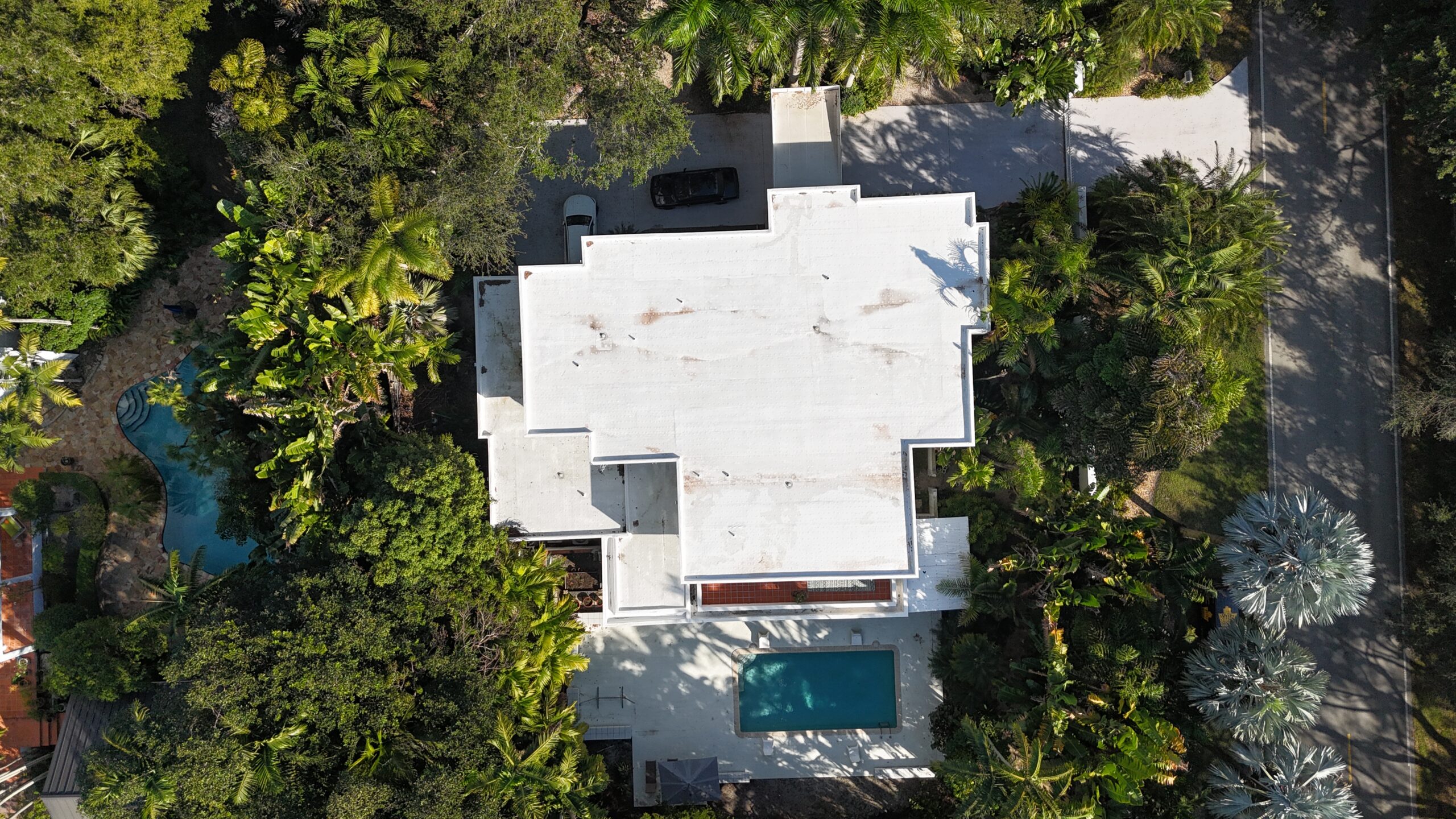
Roof Replacement Cost Ranges in Miami-Dade County
Ranges below are directional estimates based on typical residential projects in the Miami-Dade market. Your actual quote will depend on the variables listed in the table that follows.
| Roof Type | Typical Size Range (sq ft) | Estimated Cost Range | Notes |
|---|---|---|---|
| Flat / Modified Bitumen | 1,000–2,500 | $8,000–$18,000 | Common on Miami-Dade CBS homes; membrane quality varies widely |
| Concrete / Clay Tile | 1,500–3,500 | $18,000–$40,000+ | Labor-intensive; requires engineered attachment in HVHZ |
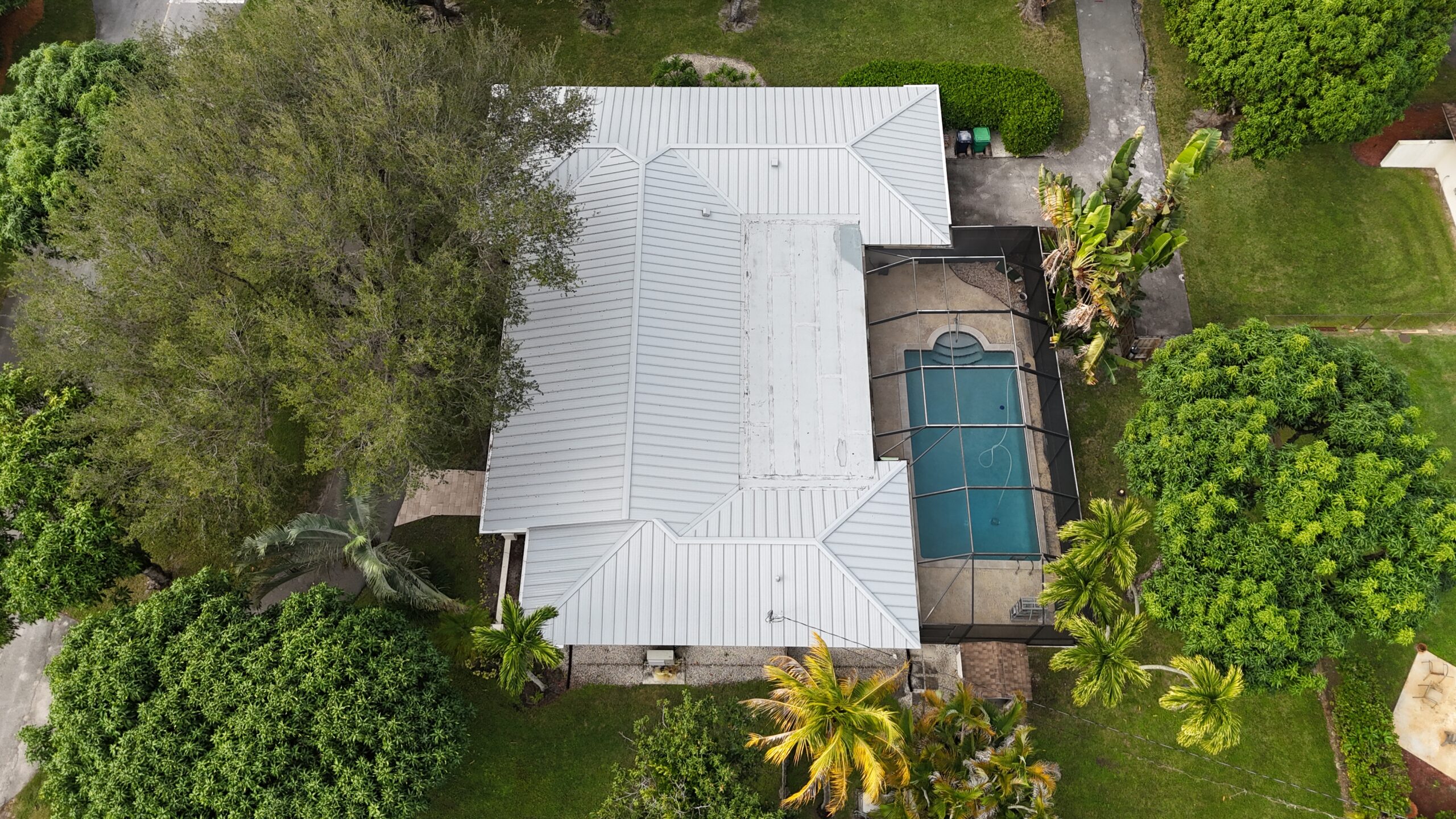
| Metal (Standing Seam) | 1,200–3,000 | $16,000–$35,000 | Long lifespan; strong HVHZ performance; higher upfront cost |
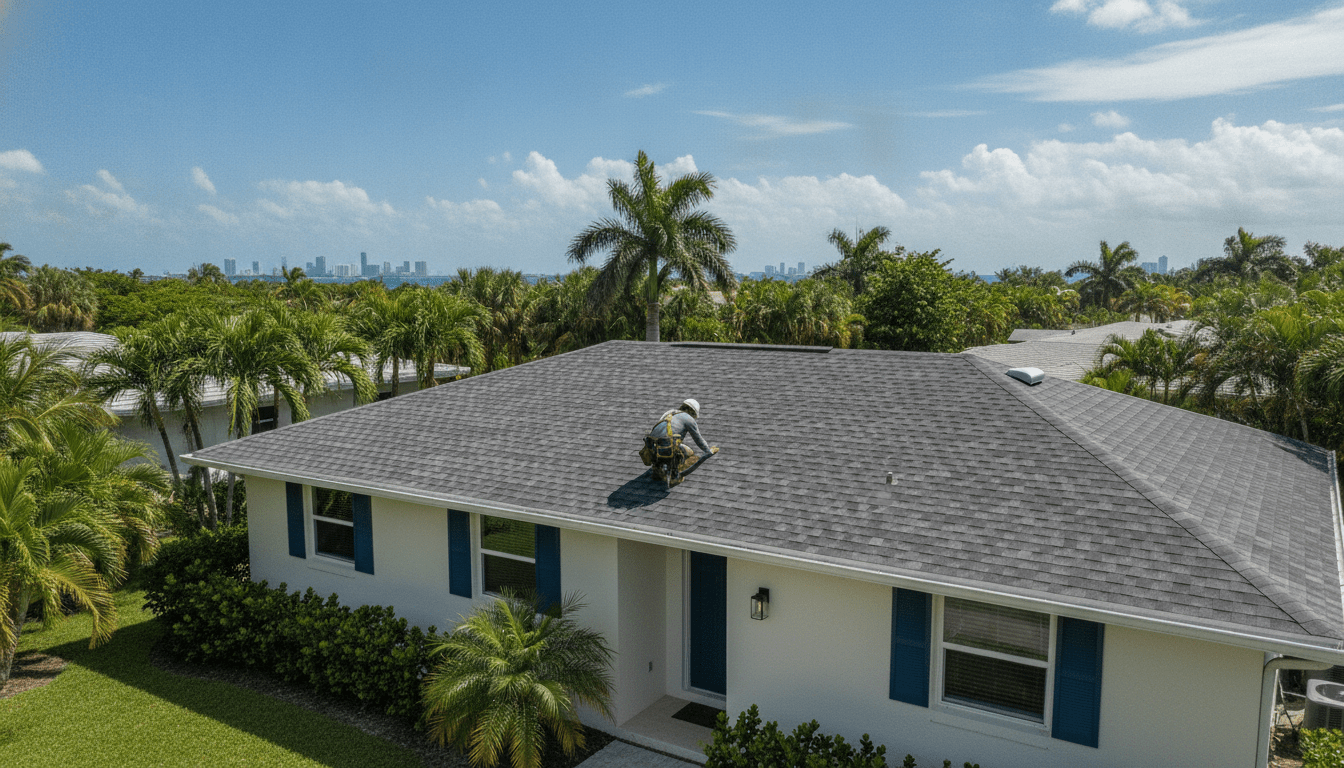
| Architectural Shingle | 1,200–2,800 | $10,000–$22,000 | Must carry Miami-Dade NOA; less common on newer builds |
These ranges assume a full tear-off and replacement including underlayment, flashing, and permit. They do not include structural repairs. If your decking shows rot or your rafters need sistering, expect additional costs — which is why a pre-sale inspection matters before any contract is signed.
| Cost Driver | Typical Add-On Range | Why It Matters in Miami-Dade |
|---|---|---|
| Decking replacement (per sheet) | $75–$150 per sheet | Salt air and moisture degrade OSB and plywood faster |
| Hurricane strap installation | $1,500–$4,500 | Required when decking is opened; code-mandated in many Miami-Dade re-roofs |
| Fascia / soffit repair | $500–$3,000 | Often corroded in coastal South Florida homes |
| Permit fees | $500–$1,500 | Miami-Dade Building Department; varies by valuation |
| Skylight resealing / replacement | $400–$1,800 each | Must be HVHZ-rated; common oversight in basic quotes |
If structural repairs are discovered once your existing roof is removed — a common scenario in older Miami-Dade homes — a contractor holding a Certified General Contractor (CGC1531370) license can authorize and execute those structural modifications in the same project scope. That means no subcontracting the structural work to a third party and no gap in accountability between the roofing crew and the framing repair. Florida licensed: CGC1531370 · CRC1331693 · CCC1333168 · SCC131153098.
Material Comparison
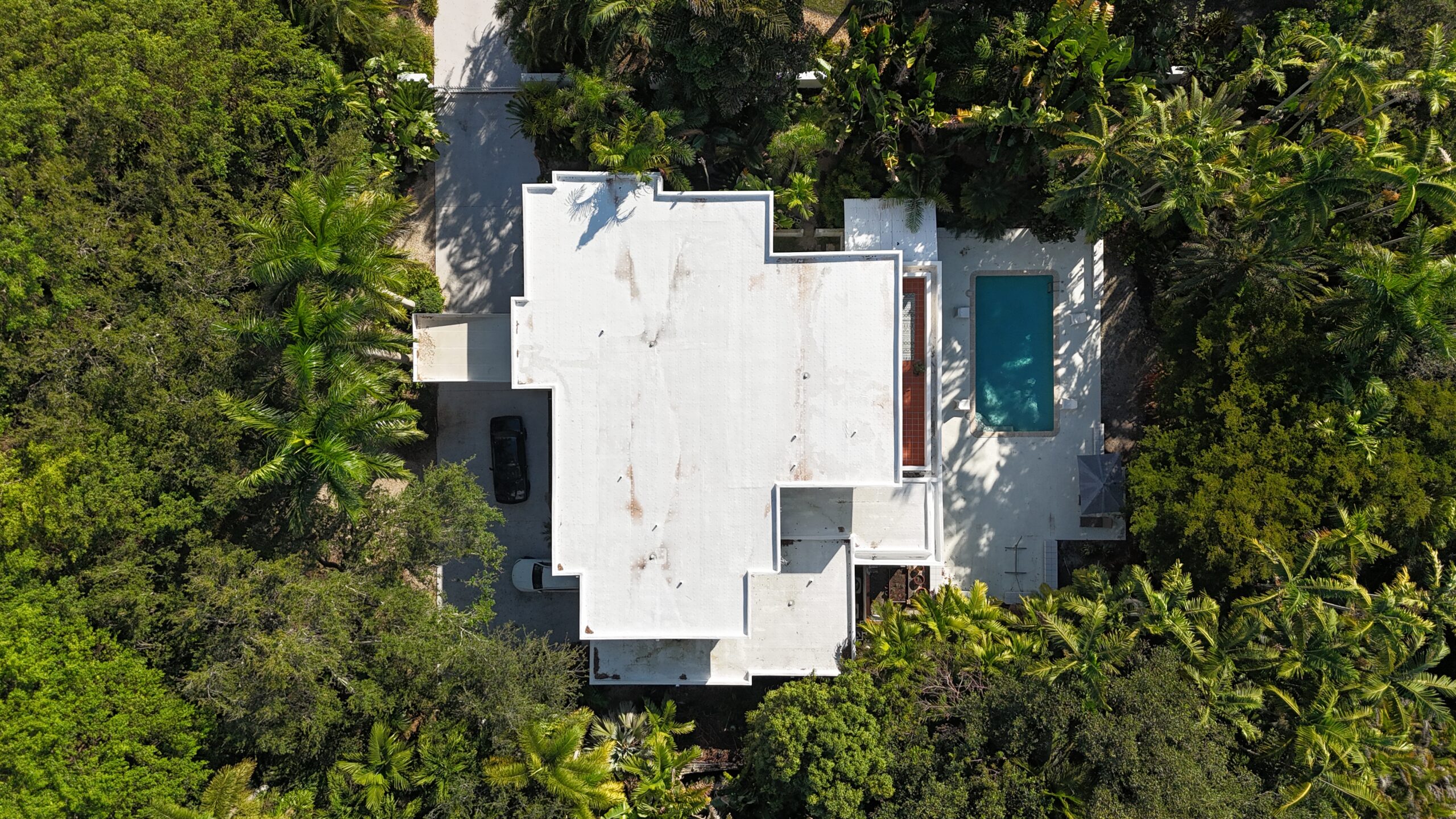
Which Roofing Material Makes Sense for Miami-Dade Homes?
There is no universal right answer — but there are clear trade-offs for South Florida conditions.
| Material | HVHZ Performance | Lifespan (South FL) | Relative Cost | Best For |
|---|---|---|---|---|
| Concrete / Clay Tile | Excellent (with engineered clips) | 30–50 years | High | CBS construction; insurance premium reduction potential |
| Metal Standing Seam | Excellent | 40–70 years | High | Long-term owners; minimal maintenance |
| Modified Bitumen (Flat) | Good (product-dependent) | 15–25 years | Moderate | Flat or low-slope roofs common in Miami-Dade |
| Architectural Shingle | Moderate (NOA required) | 15–25 years | Lower | Budget-conscious reroof; shorter ownership horizon |
When shingles may be the better fit: If you are selling within five years and need a code-compliant reroof at the lowest feasible cost, architectural shingles with a valid Miami-Dade NOA can accomplish that. They are not the premium performer in a hurricane, but when installed correctly with proper underlayment and nailing patterns, they meet Florida Building Code minimums.
When tile or metal is worth the premium: If you plan to stay in the home for ten or more years, the higher upfront cost of tile or standing-seam metal tends to deliver lower long-term cost-per-year, reduced maintenance calls, and — depending on your insurer — potential premium reductions. Ask your insurer before you choose your material. Financing options may help spread the upfront cost of a premium material choice.
Verified Credentials
A Licensed Roofer and General Contractor — Not a Lead Aggregator
Your roof quote comes directly from a licensed contractor, not a third-party referral service that resells your information.
“In Miami-Dade, the roof replacement process is more technical than most homeowners realize. We walk through the permit, the NOA requirements, and what we found under your old roof — before any surprises show up on an invoice.”
Darryl Henry Rosenbaum
President, Bigfoot Windows & Roofing
The Process
What Happens During a Miami-Dade Roof Replacement
- Inspection & estimate: A full roof evaluation identifies material condition, decking integrity, flashing, fascia, and any structural concerns. This is where scope is defined — not discovered mid-job.
- Permit application: Your contractor submits to the Miami-Dade Building Department. Product NOAs are verified at this stage. Timeline varies — plan for one to three weeks in most cases.
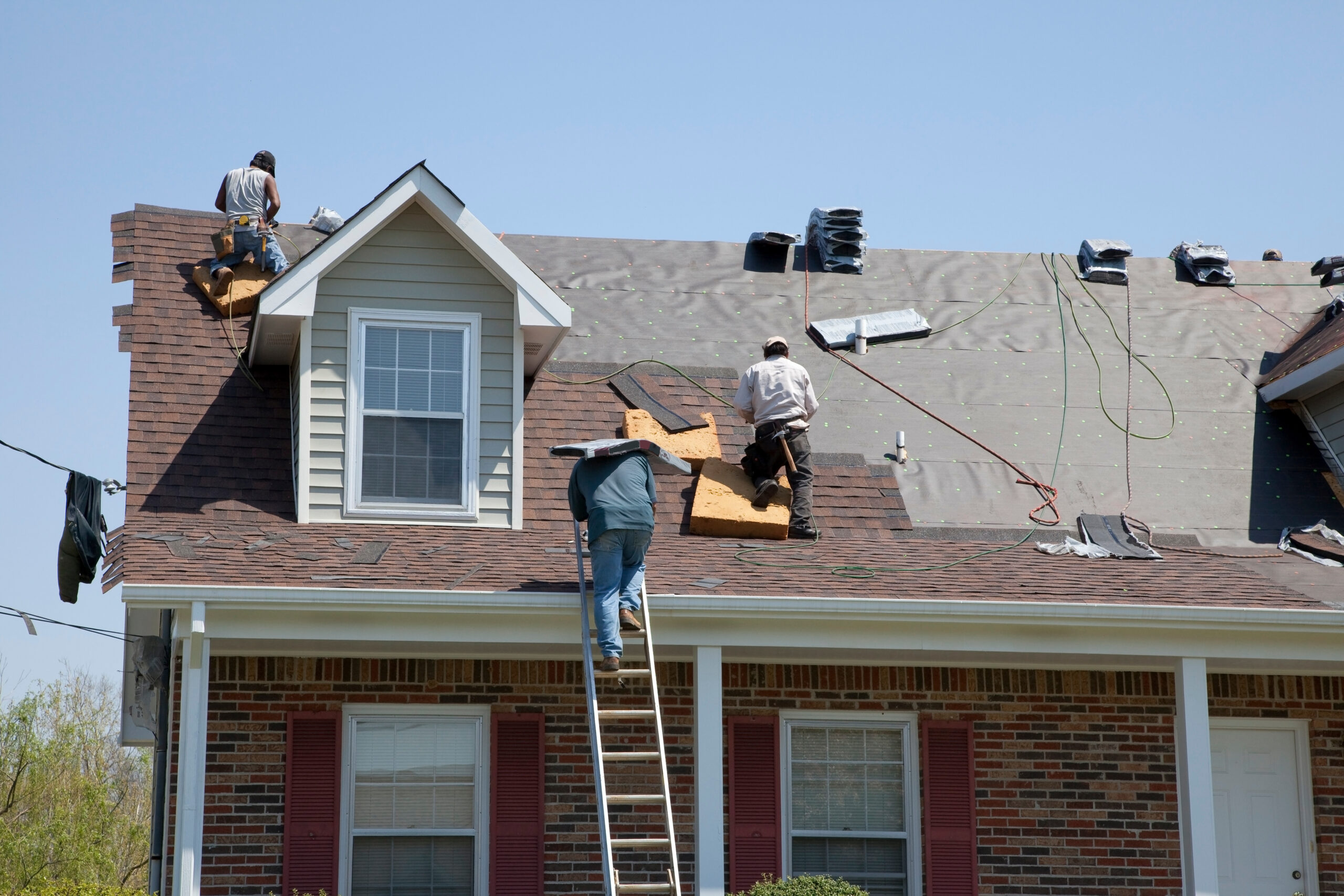
- Tear-off & deck inspection: Once the existing material is removed, decking is inspected. Any rotted or damaged sheets are replaced before new underlayment goes down. Hurricane straps are verified or installed if code requires it — a scope item that falls under general contractor authority, not just roofing.
- Installation: New underlayment, approved roofing material, and all flashing, edge metal, and penetration seals are installed per the approved plans and HVHZ requirements.
- Final inspection: Miami-Dade Building Department inspects before the permit closes. Your contractor handles scheduling and corrects any flagged items. You receive a closed permit — not just a finished-looking roof.
If you need impact windows or impact doors installed alongside a roof replacement, coordinating those scopes under one contractor simplifies the permit process and reduces scheduling conflicts.
Get a Straight Roof Replacement Quote — No Runaround
Serving Miami-Dade, Broward, and Palm Beach. Call or request online.
Related Reading
More Resources for South Florida Homeowners
Who We’re Not the Right Fit For
- Lowest-bid-only shoppers: If your only criteria is the cheapest number on the page, we are probably not your contractor. HVHZ-compliant materials and properly closed permits cost more than non-compliant shortcuts. We will not compete on price by cutting corners on product approvals or inspections.
- Projects outside our service area: We serve Miami-Dade, Broward, and Palm Beach counties. If your property is north of Palm Beach or outside South Florida, we are not the right regional fit.
- Emergency-only patch jobs with no interest in a full scope review: If you need a quick tarp or a single-day patch and do not want anyone assessing the rest of the roof, a roofing handyman may be a faster solution. We invest time in understanding the full condition before proposing work.
- Homeowners who have already signed with another contractor: We are happy to give you a second opinion before you sign, but we do not compete for mid-project takeovers except in documented failure situations.
Frequently Asked Questions
What is the average roof replacement cost in Miami-Dade County?
Most Miami-Dade residential roof replacements fall between $12,000 and $40,000 depending on material, roof size, and whether structural repairs are needed. Flat roofs on smaller CBS homes tend to be on the lower end; concrete tile or metal on larger homes sits at the higher end. Get an itemized quote — not just a per-square number — so you can compare accurately.
Why does roofing cost more in Miami-Dade than in other parts of Florida?
Miami-Dade sits inside the High-Velocity Hurricane Zone (HVHZ). Every roofing product must carry a Miami-Dade Notice of Acceptance (NOA). Engineering requirements for wind-load attachment are stricter than in central or north Florida. Permit inspections are more rigorous. These requirements protect your home — but they add real cost to compliant work.
Are hurricane straps required when I replace my roof in Miami-Dade?
Often yes. Under the Florida Building Code, when decking is opened during a reroof, inspectors frequently require verification or installation of hurricane straps that meet current wind-resistance standards. This is a structural scope item. A contractor holding a Certified General Contractor license can handle it without hiring a separate structural subcontractor.
How long does a Miami-Dade roof replacement take?
Physical installation typically takes two to five days for a standard residential roof. The permit process adds one to three weeks before work begins. Factor in time for your contractor to order NOA-approved materials, which may have longer lead times than standard products. Total timeline from signed contract to closed permit is commonly four to eight weeks.
Does my homeowner’s insurance cover roof replacement in Miami-Dade?
Coverage depends on your policy, the age of your roof, and the cause of damage. Storm damage is often covered; age-related wear typically is not. Florida insurers have tightened roof coverage requirements significantly in recent years. Review your policy before signing a contract, and be cautious of contractors who promise to handle your insurance claim without first reviewing your policy language with you.
What roofing materials are approved for the HVHZ in Miami-Dade?
Products must hold a Miami-Dade Notice of Acceptance (NOA) or Florida Product Approval for the specific application. Approved materials include qualifying concrete tile, metal roofing systems, modified bitumen membranes, and certain architectural shingles. Your contractor should provide the NOA number for every primary material used on your project — not just confirm it verbally.
Sources
- Florida Building Code, 8th Edition — Chapter 15 (Roof Assemblies) and HVHZ provisions: floridabuilding.org
- Miami-Dade County Product Control — Notice of Acceptance (NOA) search portal: miamidade.gov/productcontrol
- Florida Department of Business and Professional Regulation (DBPR) — License verification: myfloridalicense.com
Ready to Get a Real Number for Your Roof?
Request a detailed, itemized estimate — or call us directly. We serve Miami-Dade, Broward, and Palm Beach.