
Choosing a Roofing Contractor in South Florida | Bigfoot Windows & Roofing
Updated June 2026
Key Takeaways
- Always verify a Florida roofing contractor’s license on the DBPR website before signing anything.
- Miami-Dade and Broward Counties are designated High-Velocity Hurricane Zones — stricter material and installation standards apply here than almost anywhere else in the U.S.
- A product with a current Florida Product Approval (FL number) that covers HVHZ use is legal to install in Miami-Dade and Broward. A Miami-Dade NOA is an additional certification some products also carry; it is not required for the permit.
- Permits are legally required for most roof replacements in South Florida — a contractor who suggests skipping permits is a red flag.
- Post-storm, unlicensed storm chasers flood the area — knowing how to vet a contractor quickly can save you thousands.
- Metal, tile, and GAF architectural shingles are the three dominant material categories in South Florida; each has a distinct cost range and code pathway.
The Problem
Why Hiring the Wrong Roofing Contractor in South Florida Is a Costly Mistake
This market has unique hazards — both meteorological and contractual.
South Florida homeowners face a roofing market unlike any other in the country. The combination of near-constant UV exposure, salt air, hurricane-season storms, and one of the strictest building code jurisdictions in North America — the High-Velocity Hurricane Zone (HVHZ) — means that a roofing decision here carries real financial and structural consequences.
When a storm rolls through Miami-Dade or Broward County, unlicensed contractors and out-of-state storm chasers arrive within days, offering fast turnarounds and cash deals. Some disappear after collecting a deposit. Others install materials that don’t meet HVHZ code, leaving homeowners with a roof that fails inspection or, worse, fails in the next storm. The Florida Department of Business and Professional Regulation (DBPR) reports a consistent spike in contractor-fraud complaints following named storms.
The good news: the licensing system in Florida is actually very strong, and verification takes about two minutes online. The checklist in this article walks you through exactly what to check, what questions to ask, and how to compare materials in a way that makes sense for this specific market.
Local Context
HVHZ, NOA, and the Florida Building Code: What Makes South Florida Different
Miami-Dade and Broward operate under the strictest residential roofing code in the continental United States.
What Is the High-Velocity Hurricane Zone?
The HVHZ designation covers Miami-Dade and Broward Counties. It was established after Hurricane Andrew (1992) exposed catastrophic gaps in residential construction standards. Under the Florida Building Code, roofing systems installed in the HVHZ must meet requirements that go well beyond the statewide baseline — covering wind-uplift resistance, fastener patterns, underlayment specifications, and material approval.
Palm Beach County follows the standard Florida Building Code, which is still rigorous, but not as demanding as HVHZ. If your home is in Miami-Dade or Broward, your contractor must be familiar with HVHZ-specific installation methods — not just general Florida code.
What Is a Miami-Dade Notice of Acceptance (NOA)?
A Miami-Dade NOA is a product approval issued specifically for the HVHZ. It is not the same as a Florida Product Approval (which covers the broader state). For a roofing product to be legally installable in Miami-Dade or Broward, it must carry a Miami-Dade NOA or a Florida Product Approval that covers HVHZ use — meaning it has been tested and approved to withstand the wind speeds and pressure cycles the HVHZ code demands.
When vetting a contractor, ask whether the products they propose carry current NOAs. A contractor who can’t answer that question — or who says Florida Product Approval is sufficient for Miami-Dade — is missing a fundamental piece of local code knowledge.
Permitting in South Florida
Roof replacements in Miami-Dade, Broward, and Palm Beach Counties almost always require a permit. In the HVHZ, permit and inspection requirements are particularly detailed. A permit creates a legal record that the work was completed to code, which matters for:
- Insurance claims: Insurers may deny claims on non-permitted work.
- Wind mitigation inspections: A new roof triggers a wind mitigation inspection that can reduce your annual homeowners insurance premium — but only if the work was permitted and inspected correctly.
- Resale: Unpermitted work can complicate or block a property sale in Florida.
Any roofing contractor who suggests skipping the permit to save time or money is a serious red flag. Walk away.
Secondary Water Barrier Requirements
As of the 2023 Florida Building Code update (effective 2024), direct-to-deck peel-and-stick underlayment is now permitted statewide, including the HVHZ. A full-deck peel-and-stick application qualifies as a secondary water barrier, which can trigger a discount on your Citizens Insurance or private homeowners policy. Traditional 30-lb felt does not qualify as a secondary water barrier — a distinction worth understanding before you accept a proposal that specifies felt.
How To Verify
How to Check If a Roofing Contractor Is Licensed and Insured in Florida
Two minutes of online verification can save you from a six-figure mistake.
Step 1: DBPR License Lookup
Go to the Florida DBPR online license search at myfloridalicense.com. Search the contractor’s name or company name. You’re looking for a Certified Roofing Contractor license (license type CCC). A Certified license is valid statewide. A Registered license is only valid in the county where it was issued — for HVHZ work, you want Certified.
Check that the license status shows as current (not expired, suspended, or revoked). Write down the license number and confirm it matches what’s on the contractor’s proposal or business card.
Step 2: Workers’ Compensation
In Florida, roofing contractors with employees are required to carry workers’ compensation insurance. Ask for a current Certificate of Insurance (COI) for workers’ comp. Call the insurer to verify it hasn’t lapsed. If a worker is injured on your property and the contractor lacks workers’ comp, you could face liability.
Step 3: General Liability Insurance
Ask for a COI showing general liability coverage — typically a minimum of $1 million per occurrence for residential roofing. This covers property damage that could occur during the job.
Step 4: Confirm the Contractor Pulls Their Own Permits
In Florida, the licensed contractor of record is the person legally responsible for pulling the permit and overseeing the work to code. If a contractor wants you to pull the permit yourself (owner-builder), they are effectively disclaiming legal responsibility for code compliance. This is not standard practice on a professionally contracted job — it’s a red flag.
| Verification Step | Where to Check | What You Want to See |
|---|---|---|
| Roofing License (CCC) | myfloridalicense.com (DBPR) | Certified Roofing Contractor, current status |
| Workers’ Comp | Certificate of Insurance (COI) | Active policy, current dates |
| General Liability | Certificate of Insurance (COI) | ≥ $1M per occurrence, current dates |
| Permit Pull | Ask directly | Contractor pulls — not owner-builder |
| NOA / Product Approval | Ask for product NOA numbers | Valid Miami-Dade NOA (for HVHZ work) |
| Physical Address | DBPR + Google | Verifiable local office, not just a P.O. box |
Avoiding Post-Storm Scams
After any named storm makes landfall near Miami-Dade or Broward, unlicensed contractors and storm chasers arrive fast. Common red flags:
- Requires a large cash deposit before any permit is pulled
- Cannot provide a license number that verifies on DBPR
- Pressures you to sign an Assignment of Benefits (AOB) agreement immediately
- Offers a price that seems dramatically lower than every other bid — without explaining why
- No local address, no verifiable office, appeared in the neighborhood after the storm
Florida law (§489.147, F.S.) restricts contractor solicitation after a declared state of emergency. Knowing these warning signs is your first line of defense.
Material Comparison
Best Roofing Materials for South Florida: Tile, Metal, and Shingles Compared
Each material has a distinct code pathway, cost range, and performance profile in the HVHZ.
| Material | Installed Cost Range (per sq) | Lifespan (South Florida) | HVHZ Product Approval Required? | Best For |
|---|---|---|---|---|
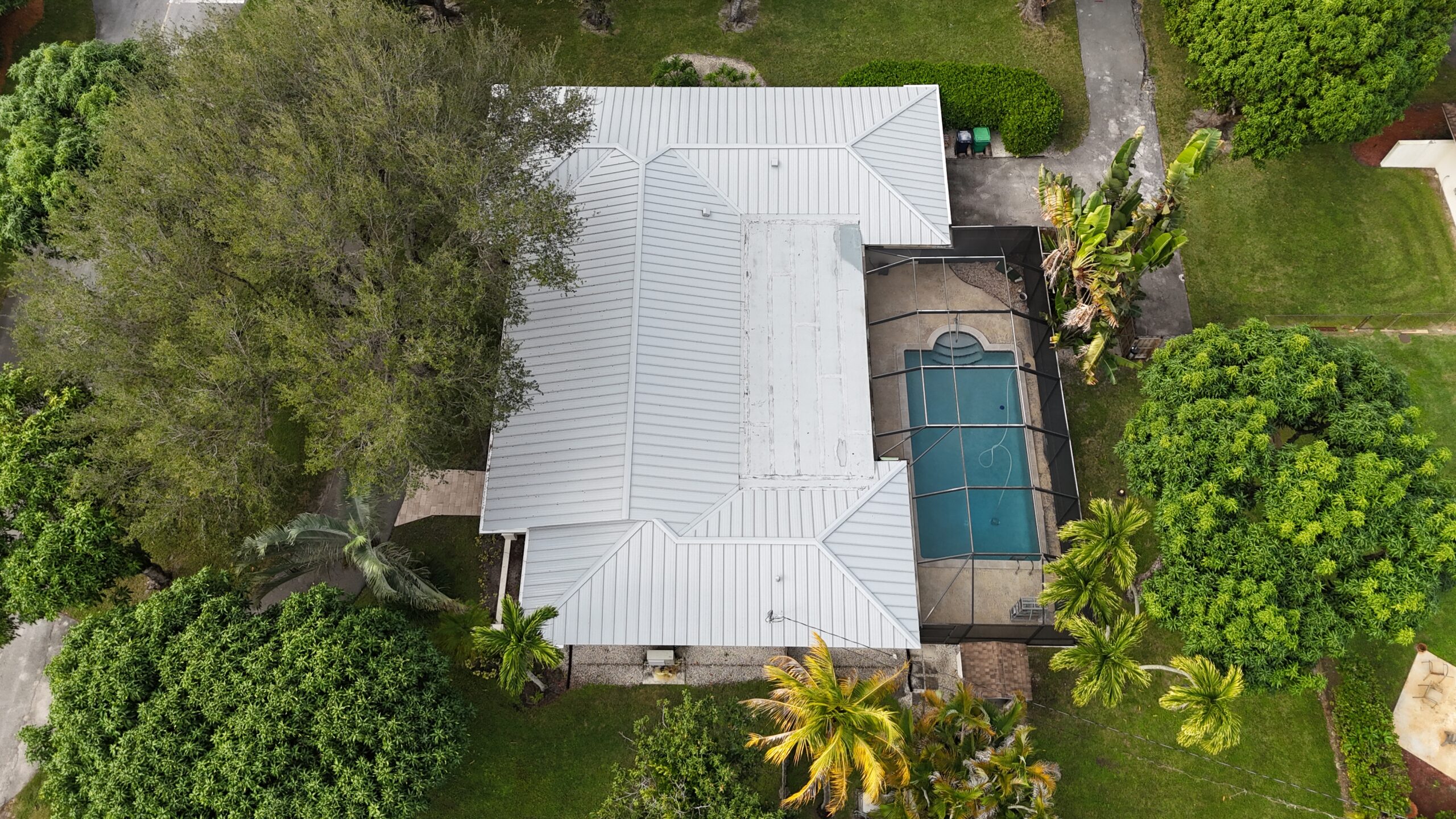
| Standing Seam Metal | $1,050 – $1,300/sq | 40–70 years | Yes | Long-term value, wind resistance, insurance savings |
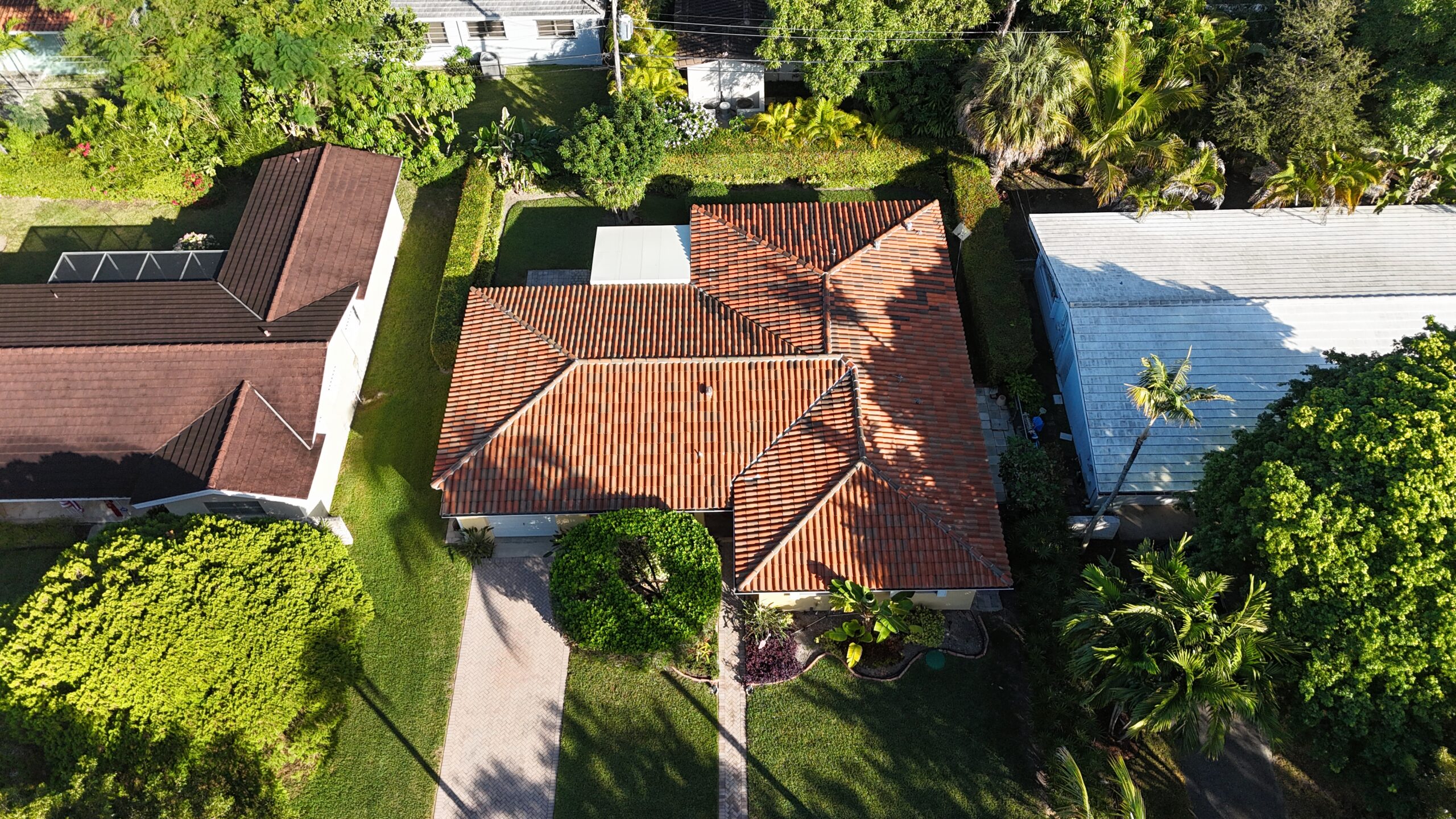
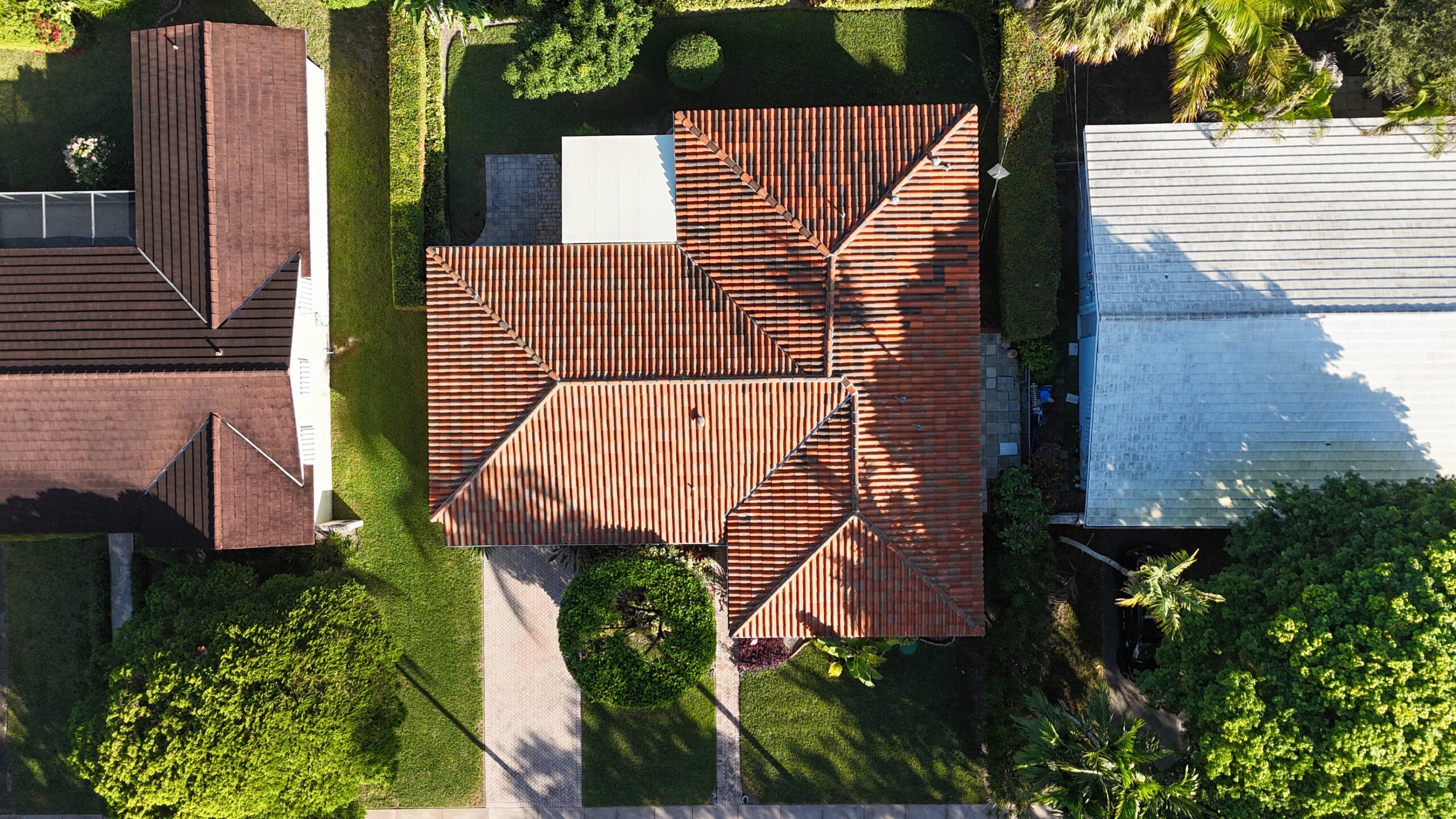
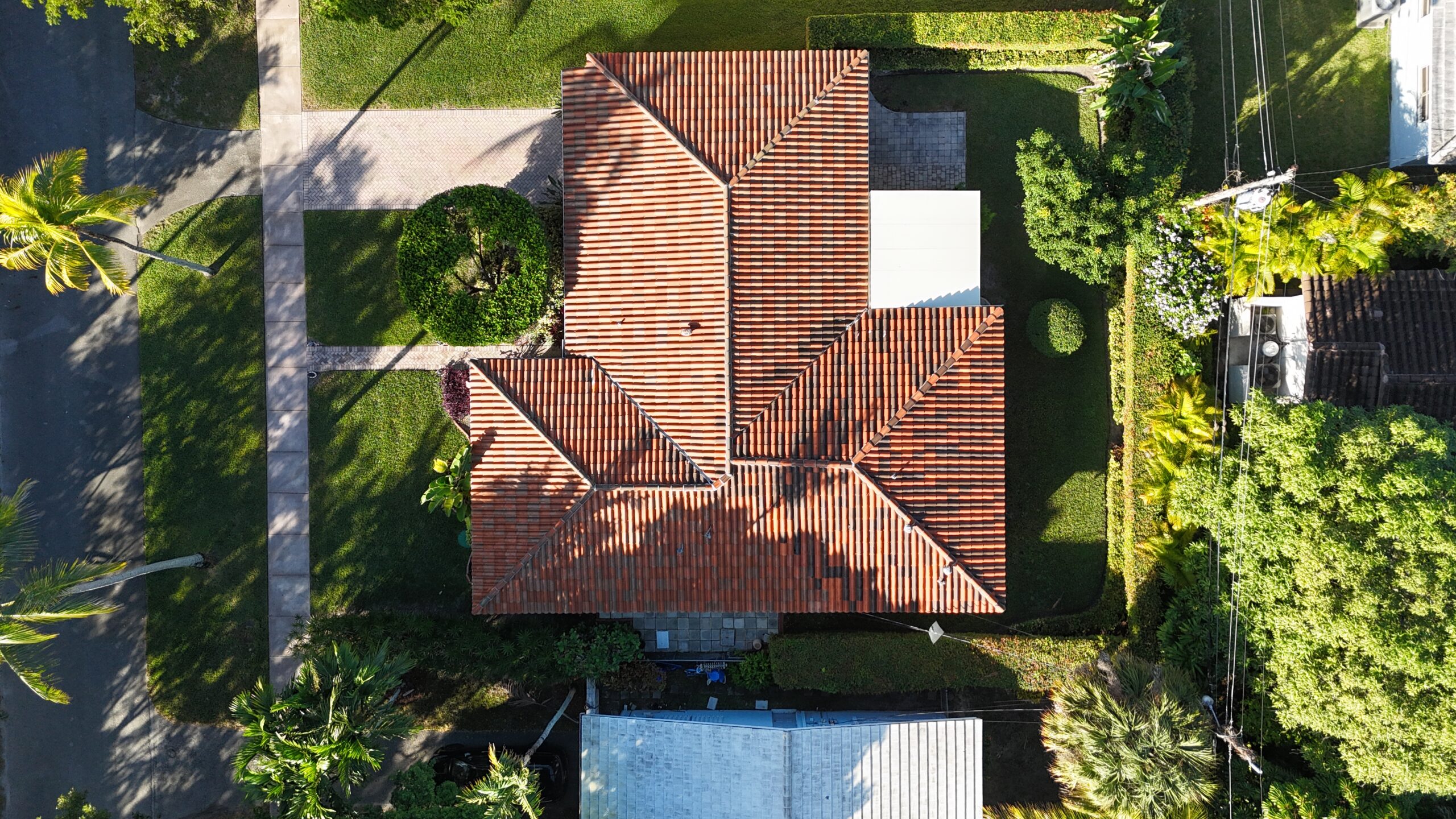
| Concrete / Clay Tile | $1,000 – $1,350/sq | 30–50 years | Yes | Traditional look, HOA compliance, durability |
| GAF Architectural Shingle | $750 – $850/sq | 12–15 years (South FL) | Yes | Budget-conscious replacement, shorter-term ownership |
| Flat / TPO Membrane | $800 – $1,400/sq | 15–25 years | Yes | Low-slope roofs, commercial-style residential |
| Stone-Coated Metal Tile | $1,175 – $1,400/sq | Lifetime (manufacturer) | Yes | Tile aesthetics with metal performance |
Cost ranges are per 100 sq ft installed and reflect typical South Florida market conditions as of mid-2026. Your actual cost will depend on roof size, complexity, removal of existing material, and any structural work required. Use our roofing cost estimator to get a project-specific range.
Standing Seam Metal Roofing
Metal roofing — specifically standing seam — has become the dominant choice for long-term value in South Florida. We install Englert or Metal Alliance panels fabricated from 24-gauge Galvalume or aluminum, roll-formed on-site so each panel runs one continuous piece from eave to ridge with no horizontal seams. That matters in a hurricane: horizontal seams are a water infiltration point under high wind-driven rain.
The clip system is critical. The manufacturer’s approved clips, installed at the spacing its product approval specifies, allow the panel to thermally float — preventing the oil-canning and buckling common with nail-strip systems. Nail-strip metal is cheaper upfront but will show cosmetic buckling in South Florida’s heat and is not equivalent from a performance standpoint.
Warranty terms come from the panel manufacturer on your project (Englert or Metal Alliance) and are listed on your proposal. A new metal roof typically triggers a wind mitigation inspection result that meaningfully reduces homeowners insurance premiums. I have seen customers go from high annual premiums to a fraction of that after a metal roof, wind mitigation inspection, and policy review — specific savings vary by insurer and coverage level, but the pattern is consistent.
Concrete and Clay Tile
Tile is the dominant aesthetic in South Florida HOA communities. Concrete tile (Saxony 900 flat is the most popular concrete tile in this market) and barrel tile (Barcelona profile is the most common in Southeast Florida) both carry Miami-Dade NOAs when installed per manufacturer specification.
Tile installation method matters significantly for wind resistance. Foam-set installation (Poly Set adhesive) achieves 180 mph wind resistance in testing; mechanical fastener installation typically tests to 160 mph. For HVHZ, confirm your contractor is proposing an installation method with a current NOA that covers the wind speeds in your zone.
One comparison worth noting: Westlake / Unified Steel stone-coated metal tile carries no named storm or saltwater exclusion clauses in its warranty. Some competing tile warranty documents do carry those exclusions — a meaningful difference in a market where named storms are a regular occurrence.
GAF Architectural Shingles
Shingles are the most affordable entry point for roof replacement in South Florida, but context matters. In this climate — intense UV, humidity, and storm exposure — architectural shingles realistically last 12 to 15 years. That’s shorter than the national average because South Florida’s conditions accelerate aging.
We install GAF and hold GAF Certified Plus certification, which makes the System Plus warranty available: 50 years non-prorated, covering shingles, labor, tear-off, and accessories. GAF’s Layer Lock shingles feature a 1.81-inch nail line (significantly wider than pre-2020 designs) and the Wind Proven warranty — which carries no maximum mph cap and is not voided by a named storm making landfall in your county. That last point is a meaningful difference from competitors that cap coverage at 130 mph or void it if a named storm hits the county.
For homeowners with shorter time horizons or tighter budgets, shingles can be the right answer. For homeowners planning to stay 20-plus years, metal or tile typically offers better long-term economics. Explore your full roofing options to compare what fits your situation.
Flat / TPO Roofing
Many South Florida homes have a flat or low-slope section. TPO membrane is the standard material for these areas. The cost range is wide ($800–$1,400/sq) because it depends heavily on whether tapered insulation is needed for drainage, whether a Dens Deck cover board is specified, and the membrane thickness. This is an area where scope matters significantly — get proposals that itemize these components.
Why It Matters Who Holds the License
License Breadth Changes What a Roofing Contractor Can Legally Do On Your Home
A licensed contractor — not a lead aggregator — is the person legally responsible for your project.
Most roofing contractors hold a single Certified Roofing Contractor license. That’s appropriate for a straight roofing project. But South Florida homes frequently surface structural issues during a roof replacement — rotted rafters, failing hurricane straps, or decking that doesn’t meet current code. A Certified Roofing Contractor alone cannot legally perform that structural work. If your contractor discovers hurricane strap deficiencies during your tear-off, they have two options: stop work and bring in a separate contractor, or ignore the issue.
A contractor who also holds a Certified General Contractor license can address structural modifications, hurricane strap upgrades, and code-driven structural scope in-house, under a single permit and a single point of accountability. That is a structural difference in how a project is managed — not a marketing claim.
Florida licensed: CGC1531370 · CRC1331693 · CCC1333168 · SCC131153098
“When we tear off a roof and find compromised hurricane straps or rotted rafter tails, we handle it. We don’t stop the job and tell you to find another contractor. That’s what holding a general contractor license actually means in practice.”
Bigfoot Windows & Roofing
Products We Install
Roofing Products Bigfoot Windows & Roofing Installs — and Why
Every product we install carries a current Miami-Dade NOA or a Florida Product Approval that covers HVHZ use for HVHZ work.
Product selection is not arbitrary. In the HVHZ, we only install products with a current Miami-Dade NOA or a Florida Product Approval that covers HVHZ use. Here is what we work with across the major categories:
- Shingles: GAF (Certified Plus). System Plus warranty available — 50 years non-prorated, Wind Proven unlimited mph.
- Standing Seam Metal: Englert or Metal Alliance. 24-gauge Galvalume or aluminum, Kaner multi-coat paint, manufacturer-approved clip system, roll-formed on-site.
- Metal Tile (Stone-Coated): Westlake / Unified Steel. No named storm or saltwater exclusion. 50-year and Lifetime warranty options.
- Concrete / Clay Tile: Westlake Saxony 900 (flat), Barcelona (barrel) — most popular profiles in Southeast Florida.
- Flat / Low-Slope: TPO membrane systems, with tapered insulation and Dens Deck cover board where the scope requires it.
We do not install products with known high callback rates. Our selection is based on performance in this specific climate over time, not on price point or distributor relationships.
If you have financing questions, we offer PACE financing through Renew Financial — paid through your property tax bill, not a conventional loan. Rates are approximately 9.49%, and a 20-year term gives the lowest monthly payment. There is no prepayment penalty. If you are eligible for the My Safe Florida Home grant (up to $10,000), that can stack with PACE financing. Learn about roofing financing options before your estimate appointment.
The Process
What the Roofing Process Looks Like in South Florida
From first call to final inspection — what to expect at each stage.
- Estimate and Scope: A field visit to measure the roof, identify the existing system, and document any visible damage or structural concerns. We provide a written proposal itemizing material, labor, permit, and any structural scope.
- Permit Application: We pull the permit with the local building department (Miami-Dade, Broward, or Palm Beach, depending on your address). Permit timelines vary by jurisdiction — Miami-Dade can run longer than Broward. We track it.
- Material Ordering and Scheduling: Materials are ordered once the permit is approved. Lead times for custom metal panels (Englert or Metal Alliance roll-forming) differ from shingles and tile — we communicate the timeline before the job starts.
- Tear-Off and Deck Inspection: Existing roofing is removed. The deck is inspected for rot, soft spots, and fastener pullout. Any structural issues found at this stage — including hurricane strap condition — are documented and addressed before new roofing is applied.
- Underlayment and Installation: Secondary water barrier (peel-and-stick where specified) is applied first. Then the primary roofing system is installed per NOA requirements.
- Final Inspection: The building department inspector signs off. We coordinate the inspection and ensure it closes before the job is considered complete.
- Wind Mitigation Inspection: If you want to pursue an insurance premium reduction, a licensed wind mitigation inspector evaluates the completed roof. We can recommend inspectors but do not perform this inspection ourselves (it must be independent).
Ready to Get a Roofing Estimate?
We serve Miami-Dade, Broward, and Palm Beach Counties. Use our online estimator or call directly.
Related Articles
More Roofing Resources for South Florida Homeowners
Related Articles
Who We’re Not the Right Fit For
Not every homeowner is a good match for Bigfoot Windows & Roofing, and we’d rather be upfront about that than waste your time.
- You need the lowest possible price, full stop. We are not the cheapest option in South Florida. We pull permits, use NOA-approved products, carry full insurance, and don’t cut corners on HVHZ installation. If the only criteria is price, there are contractors who will beat our number — usually by skipping one or more of those things.
- You need a roofing-only contractor with narrow scope. Our approach suits homeowners whose projects may involve structural scope alongside the roofing work. If your job is a clean, straightforward shingle replacement on a structurally sound roof, a smaller single-trade shop may serve you just as well and potentially faster.
- You’re in a county we don’t currently serve. We work in Miami-Dade, Broward, and Palm Beach Counties. If your property is outside that service area, we are not the right call.
- You want to skip the permit. We don’t do that. Every replacement job we take gets permitted. If that timeline doesn’t work for you, we understand — but it’s not negotiable on our end.
- You have a very small repair job. We focus on replacements and significant repairs. For minor patch repairs, a smaller repair-only roofing company may be more cost-effective and available sooner.
Frequently Asked Questions
What should I look for in a roofing contractor in Miami-Dade County?
Verify a current Certified Roofing Contractor (CCC) license on the DBPR website, confirm active workers’ comp and general liability insurance via COI, and ask whether the contractor pulls their own permits. A product with a current Florida Product Approval (FL number) that covers HVHZ use is legal to install in Miami-Dade and Broward. A Miami-Dade NOA is an additional certification some products also carry; it is not required for the permit. A local physical address and verifiable project history in the HVHZ are additional positive signals.
How do I check if a roofing contractor is licensed and insured in Florida?
Search the contractor’s name or license number at myfloridalicense.com (the DBPR online portal). Look for a Certified Roofing Contractor (CCC) license showing current status. Then request a Certificate of Insurance for both workers’ compensation and general liability, and call the insurer directly to confirm the policies are active. This takes about ten minutes and is the most reliable way to verify before signing anything.
What are the best hurricane-resistant roofing materials for South Florida?
Standing seam metal is the strongest performer for wind resistance and longevity in the HVHZ — panels run eave to ridge with no horizontal seams, and the clip system allows thermal movement without buckling. Concrete and clay tile installed with foam adhesive (Poly Set) tests to 180 mph. GAF architectural shingles with the Wind Proven warranty have no mph cap and no named-storm exclusion. All three require current Miami-Dade NOAs or a Florida Product Approval that covers HVHZ use for legal HVHZ installation.
Do I need a permit for roof repair or replacement in Miami?
Yes. Roof replacements in Miami-Dade County require a permit. Significant repairs generally require one as well. A permit creates a legal record of code-compliant work, which matters for insurance claims, wind mitigation inspections, and property resale. Any contractor who suggests skipping the permit is a red flag — this is not a legally optional step in South Florida.
What is the Florida Building Code’s impact on roofing in HVHZ areas?
The High-Velocity Hurricane Zone (covering Miami-Dade and Broward) requires roofing systems to meet stricter wind-uplift, fastener, underlayment, and material standards than the rest of Florida. A product with a current Florida Product Approval (FL number) that covers HVHZ use is legal to install in Miami-Dade and Broward. A Miami-Dade NOA is an additional certification some products also carry; it is not required for the permit. Installation methods are tightly specified, and inspections are more detailed. Contractors must understand HVHZ-specific code pathways, not just general Florida Building Code requirements.
How long does a roof replacement take in South Florida?
Most residential roof replacements take two to five days of physical installation once materials are on-site. The total project timeline — including permit approval, material lead time, and final inspection — is typically three to six weeks. Miami-Dade permit timelines can run longer than Broward. Custom metal panel jobs have longer material lead times than shingle or tile jobs. Your contractor should give you a realistic schedule before work begins.
Will a new roof lower my homeowners insurance in Florida?
A new permitted roof typically triggers a wind mitigation inspection, which evaluates features like roof shape, deck attachment, and secondary water barrier. Strong results can produce meaningful premium reductions — the actual amount depends on your insurer, coverage level, and specific inspection results. Specific savings vary widely; I have seen customers reduce premiums substantially after a metal roof and wind mitigation inspection combined with policy shopping. Consult your insurer for your specific situation.
Can an HOA in Florida prevent me from installing a metal roof?
No. Florida Senate Bill 293 prohibits HOAs from blocking homeowners from installing metal roofing or impact windows. Your HOA can regulate color and style to maintain neighborhood appearance, but it cannot prohibit the material category outright. If your HOA is pushing back on a metal roof, reference SB 293 — this is settled Florida law.
Sources
- Florida Department of Business and Professional Regulation (DBPR) — License Verification: myfloridalicense.com
- Miami-Dade County Product Control — Notice of Acceptance (NOA) database
- Florida Building Code (8th Edition, 2023) — Chapter 15, Roof Assemblies and Rooftop Structures
- Florida Statute §489.147 — Prohibited Practices Regarding Assignments of Benefits
- Florida Senate Bill 293 (2023) — HOA Restrictions on Roofing Materials and Impact Windows
- GAF — Wind Proven Limited Warranty documentation
- Westlake / Unified Steel — Stone-Coated Metal Tile Warranty documentation
Get a Written Roofing Estimate — No Pressure, No Surprises
We serve Miami-Dade, Broward, and Palm Beach Counties. Start with our online estimator or call us directly at 786-886-2088.