Professional Roofing Services in Miami-Dade County | Hurricane-Rated Roofing Solutions
Updated June 2026
Key Takeaways
- South Florida roofs must meet Florida Building Code and Miami-Dade NOA requirements — not just national minimums.
- High Velocity Hurricane Zone (HVHZ) rules apply throughout Miami-Dade and Broward counties; material choices are restricted by code.
- Roof replacement typically requires a permit in every South Florida county — no permit means no final inspection and potential insurance problems.
- Cost varies widely by material, roof size, tear-off layers, and structural condition — expect a real range, not a flat number.
- A Certified General Contractor (CGC1531370) can address structural issues, hurricane straps, and code-driven scope in a single contract without hiring a second contractor.
The Problem
Why South Florida Roofing Is Different From the Rest of the Country
Your roof faces conditions most national roofing guides ignore entirely.
A roof that passes code in Atlanta or Houston will not pass inspection in Miami-Dade County. South Florida sits inside the High Velocity Hurricane Zone (HVHZ) — a designation under the Florida Building Code that imposes stricter wind uplift, fastening, and material-approval requirements than anywhere else in the continental United States. Every roofing product installed in Miami-Dade must hold a current Miami-Dade Notice of Acceptance (NOA), a product-level approval that goes beyond standard national testing.
On top of code requirements, South Florida homeowners face salt-air corrosion, year-round UV exposure, and a hurricane season that runs June through November. A roof that was not installed to those standards is not just a comfort issue — it is a liability when the next named storm arrives.
Local Context
Miami-Dade, Broward & Palm Beach: What Each County Requires
Permit requirements, NOA standards, and inspection workflows vary by jurisdiction.
All three South Florida counties require a building permit for roof replacement. In Miami-Dade and Broward, HVHZ rules are fully enforced — every product must carry a Miami-Dade NOA or a Florida Product Approval that includes HVHZ testing data. Palm Beach County follows the Florida Building Code wind-load requirements for its coastal zones, though specific permit timelines and inspection cadences differ from Miami-Dade’s process.
If your home was built before 2002, the Florida Building Code may require secondary water barrier installation (known as the “peel-and-stick” layer) as part of any full replacement. Homes in flood zones may have additional elevation requirements that affect roofline and soffit work. None of this is optional — a roof that fails the final inspection cannot receive a certificate of occupancy update and may trigger issues with your homeowner’s insurance policy.
Working with a contractor authorized to coordinate multi-trade scope — including structural framing, hurricane-strap upgrades, and code-driven sheathing repairs — means you do not need to hire a separate contractor when the inspection uncovers something beyond the surface layer. Explore the full roofing services Bigfoot provides across South Florida.
Material Education
Which Roofing Materials Are Approved for HVHZ in South Florida?
Not every material you see advertised nationally can legally be installed in Miami-Dade County.
| Material | HVHZ Approved? | Common Use in South Florida | Key Consideration |
|---|---|---|---|
| Concrete Tile | Yes — with NOA | Very common — residential & HOA | Heavy; requires verified roof deck capacity |
| Clay Tile | Yes — with NOA | High-end residential | Heavier than concrete; longer lifespan |
| Modified Bitumen / Flat (TPO, SBS) | Yes — with NOA | Flat roofs, townhomes, commercial | Most common flat-roof solution in South Florida |
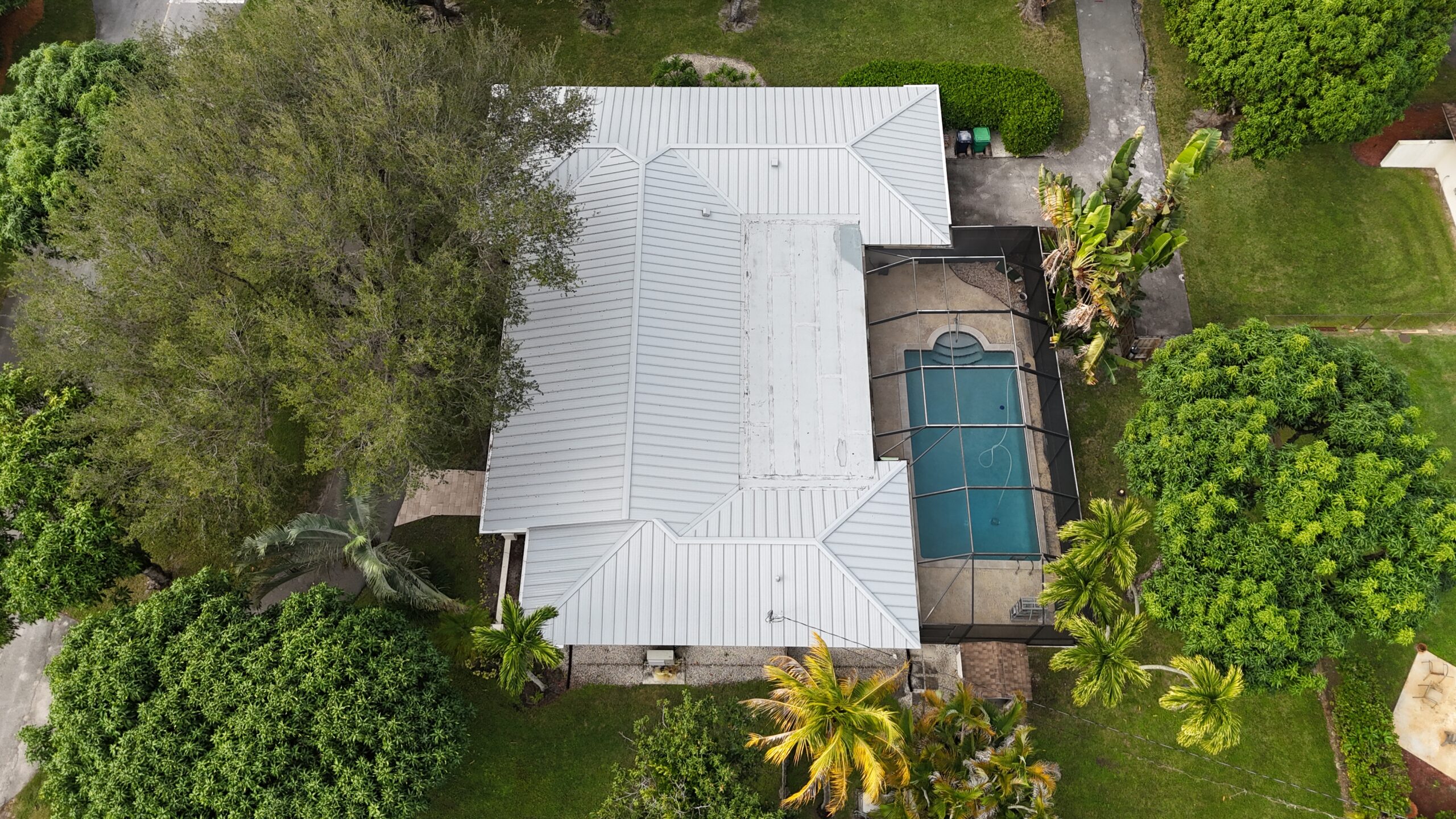
| Metal Roofing | Yes — with NOA | Growing adoption; durable | Standing seam performs well in high-wind zones |
| Asphalt Shingles | Limited — must be NOA-listed | Less common than tile in Miami-Dade | Must meet 130+ mph wind rating for HVHZ |
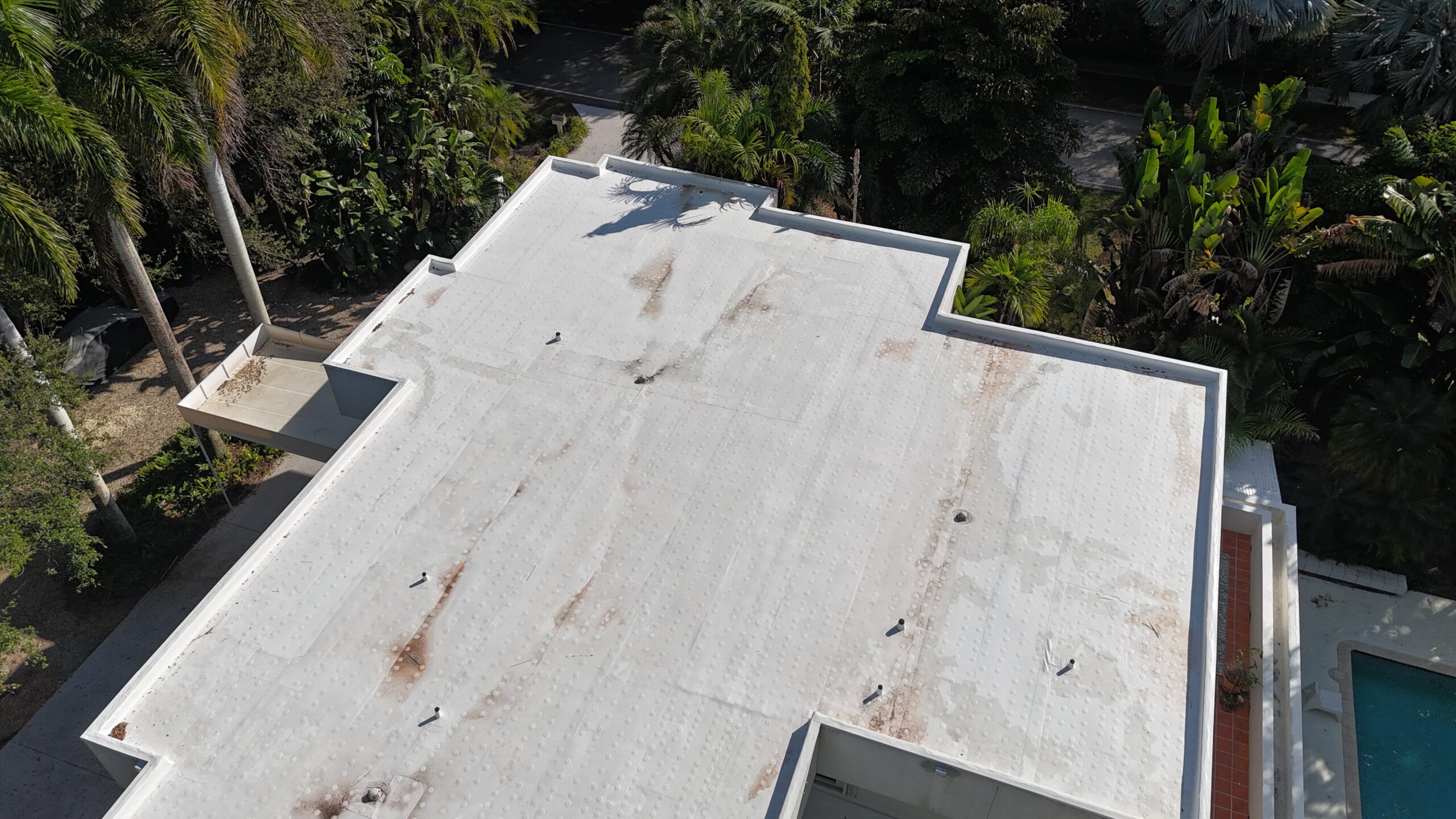
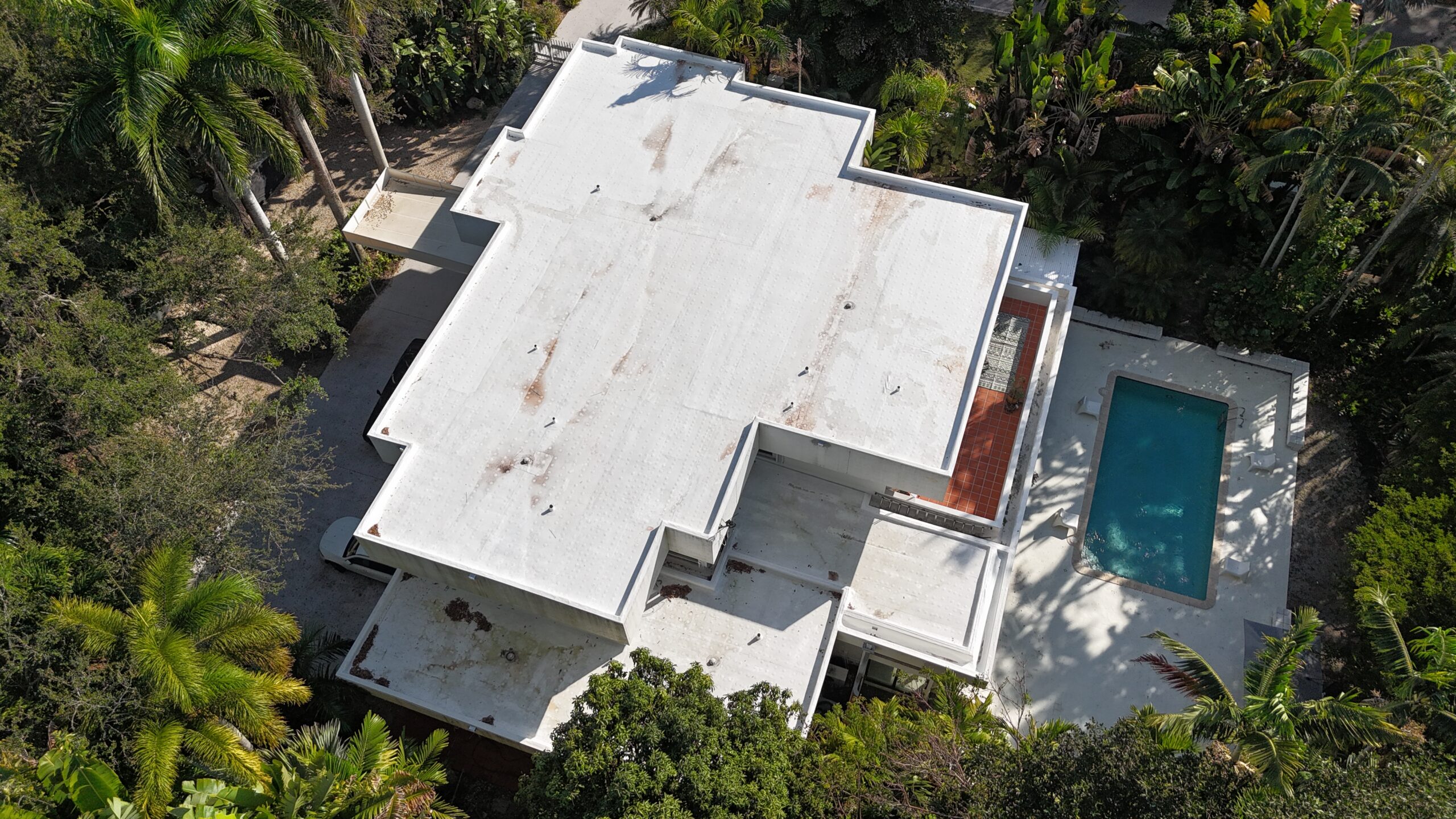
Flat roofs are extremely common throughout Miami-Dade and Broward Counties — in townhomes, CBS (concrete block) homes, and commercial properties. Modified bitumen, TPO, and built-up roofing (BUR) systems all have NOA-listed options for HVHZ installations. If your home has a flat section, be sure your contractor quotes a system with a current Miami-Dade NOA, not a generic national spec sheet.
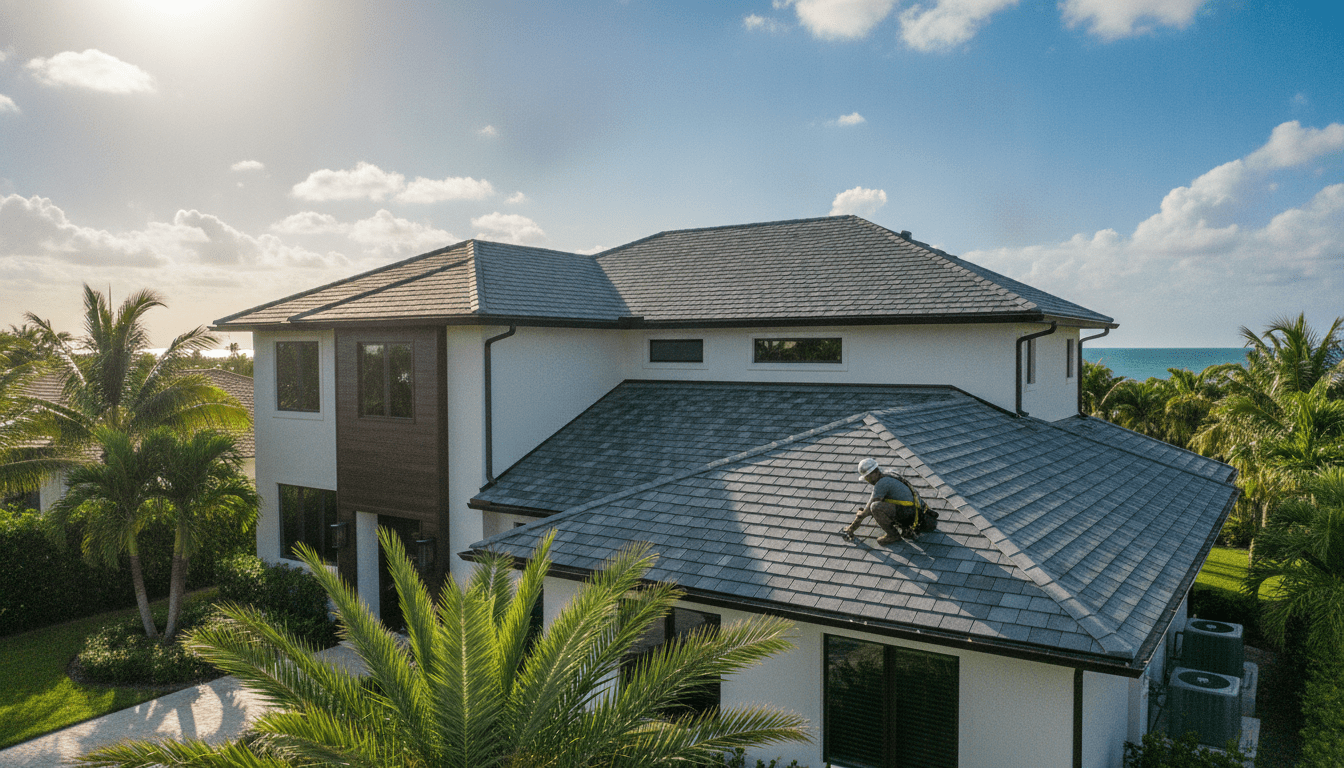
Tile remains the dominant choice for residential pitched roofs in South Florida. Whether you are repairing or replacing, tile re-installation over an aging or damaged deck is a multi-step process: deck inspection, secondary water barrier, new battens if required by code, and then tile setting — each step subject to inspection.
Comparison
Roofing Contractor Types: What Each Can Handle
Not every contractor licensed to put shingles on a roof is authorized to fix what they find underneath.
| Contractor Type | Roofing Surface | Structural Repairs | Hurricane Straps | Multi-Trade Coordination |
|---|---|---|---|---|
| Roofing-Only Contractor | Yes | No (must subcontract) | No (must subcontract) | Fragmented — separate contracts |
| Certified General Contractor + Certified Roofing Contractor | Yes | Yes — in-house | Yes — in-house | Single contract, coherent scope |
| Handyman / Unlicensed | No — not legal for permit-required work | No | No | No |
When a roofing inspection reveals rotted deck sheathing, failed hurricane straps, or compromised trusses, a roofing-only contractor must stop work and bring in a second contractor — or worse, ask you to sign a separate contract mid-project. A contractor holding both a Certified Roofing Contractor (CCC1333168) and a Certified General Contractor (CGC1531370) license can handle structural modifications, hurricane strap installation, and code-driven structural scope in a single coordinated contract. That is a structural advantage grounded in license breadth — not a marketing claim.
When a Roofing-Only Contractor May Be the Better Fit
If your project is a straightforward surface repair — replacing a few tiles, patching a small flat-roof blister, or resealing flashing — a roofing-specialist contractor may complete that scope faster and at lower cost. The multi-license structure Bigfoot carries is most relevant when there is meaningful risk of finding structural or code issues under the surface, which is common on South Florida homes built before 2002 or on properties with known storm history.
License & Credentials
A Licensed Contractor, Not a Lead Aggregator
Four active DBPR licenses. One point of contact. Work performed under permit.
“Every roof we install gets pulled with a permit and goes through final inspection. That’s not optional — it’s the baseline standard for any South Florida home.”
President, Bigfoot Windows & Roofing
Florida licensed: CGC1531370 · CRC1331693 · CCC1333168 · SCC131153098
Cost Guidance
How Much Does Roof Replacement Cost in Miami-Dade County?
There is no honest flat number — but there are real cost drivers you can evaluate before calling anyone.
| Cost Driver | Why It Matters in South Florida |
|---|---|
| Roof size (squares) | Base material and labor volume — drives the floor of the estimate |
| Material type (tile vs. flat vs. metal) | Concrete tile systems cost more to install than modified bitumen flat systems |
| Number of tear-off layers | Miami-Dade code limits layers; multiple tear-offs add labor and disposal cost |
| Deck condition | Rotted or cracked sheathing discovered mid-job adds scope — common in pre-2002 homes |
| Hurricane strap upgrades | Often required to bring older homes to current Florida Building Code wind-load standards |
| Permit and inspection fees | Vary by county and municipality — always included in a legitimate South Florida estimate |
| Secondary water barrier | Required on full replacements in Miami-Dade for homes built before the current code cycle |
What does not meaningfully change the price: the color of your tiles, minor soffit paint, or which day of the week the crew shows up. Contractors who omit permit fees from their initial quote are not giving you a complete picture — always ask whether the estimate includes pulling the permit.
If budget is a consideration, explore roofing financing options — spreading the cost over time does not change code requirements, but it can make a compliant, fully permitted replacement more accessible.
The Process
What Happens From Estimate to Final Inspection
- On-site estimate: Roof measurements, deck condition review, material options, and scope discussion — including whether structural repairs are likely based on age and condition.
- Permit application: Submitted to the applicable county or municipal building department before work begins. NOA-compliant product selection is locked at this stage.
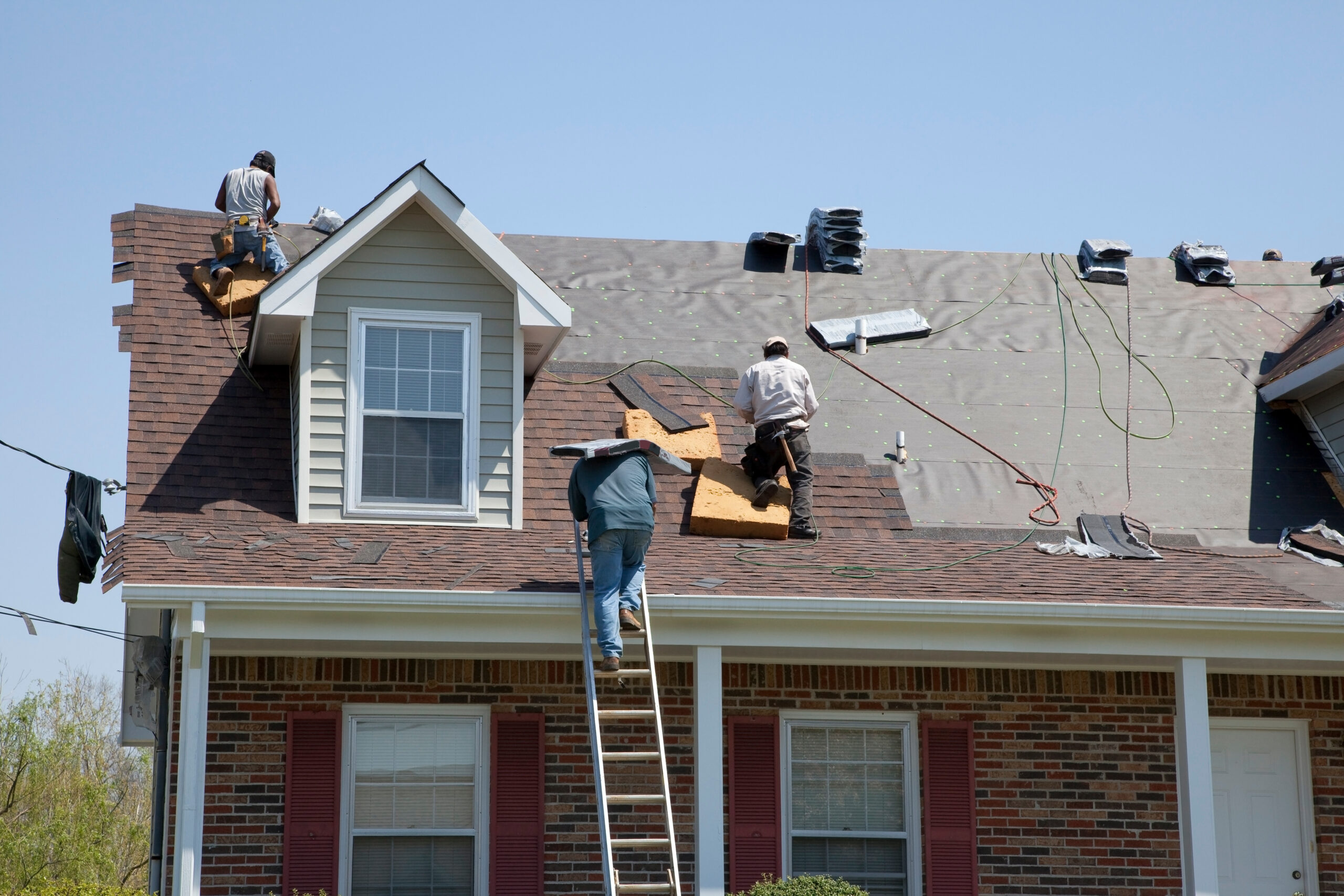
- Tear-off and deck inspection: Existing material removed; deck assessed for rot, cracking, or code deficiencies. Scope adjustments documented and communicated before proceeding.
- Hurricane strap and structural work (if required): Completed under the general contracting license scope — no second contractor, no delay waiting for a separate crew.
- Installation: Secondary water barrier, battens (if applicable), then the finish material — tile, flat system, or metal — installed per NOA specifications.
- Final inspection: County inspector verifies the installation meets Florida Building Code and HVHZ requirements before the permit is closed.
If your project also includes impact windows or doors, coordinating both scopes under a single permit pull is structurally cleaner than managing two separate contractors on your property simultaneously.
Ready to get an honest roof estimate for your South Florida home?
Related Reading
More Roofing & Storm Protection Resources
Who We’re Not the Right Fit For
- Homeowners who need only minor repairs under $500: A small tile replacement or minor patch may be handled faster and at lower cost by a roofing-specialist company that focuses exclusively on small repairs. We are set up for full replacements and complex scope.
- Projects where permits are seen as optional: We pull permits on every project requiring them. If you have been quoted by a contractor who offered to skip the permit to save money, that is a different business model than ours — and one that creates insurance and resale risk for you.
- Homeowners outside our service area: We serve Miami-Dade, Broward, and Palm Beach Counties. Projects further north or outside South Florida are outside our operational footprint.
- Buyers looking for the lowest possible bid regardless of NOA compliance: If the primary decision criteria is price with no regard for Miami-Dade NOA certification or HVHZ code compliance, we are not the right contractor. We will not install non-compliant materials to win a bid.
Frequently Asked Questions
What roofing materials are approved for High Velocity Hurricane Zones in South Florida?
Materials must carry a Miami-Dade Notice of Acceptance (NOA) to be installed legally in the HVHZ. Approved options include concrete tile, clay tile, standing-seam metal, modified bitumen, TPO flat systems, and certain NOA-listed asphalt shingles rated for 130+ mph winds. Generic national products without Miami-Dade NOA documentation cannot be used — your inspector will flag them.
Do I need a Miami-Dade NOA for my roof replacement?
Yes, if your home is in Miami-Dade or Broward County (both HVHZ jurisdictions). Every roofing product — tiles, underlayment, flat-roof membranes — must hold a valid Miami-Dade NOA or a Florida Product Approval that includes HVHZ test data. Your contractor should provide NOA documentation for the specific products being installed before work begins.
How much does roof replacement cost in Miami-Dade County?
There is no honest flat number. Cost depends on roof size, material type (tile vs. flat vs. metal), number of tear-off layers, deck condition, and whether structural repairs or hurricane-strap upgrades are needed. Permit and inspection fees are always part of a legitimate South Florida estimate. Request a site-specific estimate — phone quotes without a roof inspection are not reliable in this market.
What permits do I need for roof replacement in South Florida?
A building permit is required for full roof replacement in Miami-Dade, Broward, and Palm Beach Counties. The permit triggers a series of inspections — typically a dry-in inspection after underlayment and a final inspection after finish material. Skipping the permit is illegal, voids many manufacturer warranties, and can create problems when you file an insurance claim or sell the home.
How do I file an insurance claim for hurricane roof damage in Florida?
Document damage with photos immediately after the storm. Contact your insurer to open a claim before doing any permanent repairs. A licensed contractor can provide a written damage assessment to support your claim — but the final coverage decision is made by your insurer and, if needed, a licensed public adjuster. We can provide documentation of scope and condition; we cannot guarantee specific insurance outcomes.
What is the Florida Building Code requirement for roofing?
The Florida Building Code (FBC) sets minimum wind-load, fastening, and material-approval standards for all roofing. In HVHZ areas, requirements are more stringent: secondary water barriers are required on full replacements, fastening patterns are specified, and every product must have HVHZ-rated approval. The FBC is updated on a three-year cycle; always confirm which code edition your county is currently enforcing with your permit office.
How long does roof replacement take during hurricane season?
A typical South Florida roof replacement takes two to five days of active installation, but total project time depends on permit approval timelines (which vary by jurisdiction and season), material availability, and inspection scheduling. During peak storm-damage periods, permit offices and inspectors can be backlogged. Starting the permit process before active storm season reduces scheduling risk.
Do I need impact windows with my new roof in South Florida?
A new roof does not automatically require impact window replacement — these are separate permits and scopes. However, if your windows are not already impact-rated, some insurers offer premium reductions when both the roof and openings meet current standards. Coordinating both projects under one contractor can simplify scheduling and reduce the number of active permits on your property simultaneously.
Sources
- Florida Building Code, 8th Edition — Residential Volume, Chapter 9 (Roof Assemblies) — floridabuilding.org
- Miami-Dade County Product Control — Notice of Acceptance (NOA) search portal — miamidade.gov/productcontrol
- Florida Department of Business and Professional Regulation (DBPR) — Contractor license verification — myfloridalicense.com
- Florida Division of Emergency Management — Hurricane season preparedness resources — floridadisaster.org
Get a permit-ready, NOA-compliant roofing estimate for your South Florida home.