
What to Expect When Replacing Impact Windows & Doors | Bigfoot Windows & Roofing
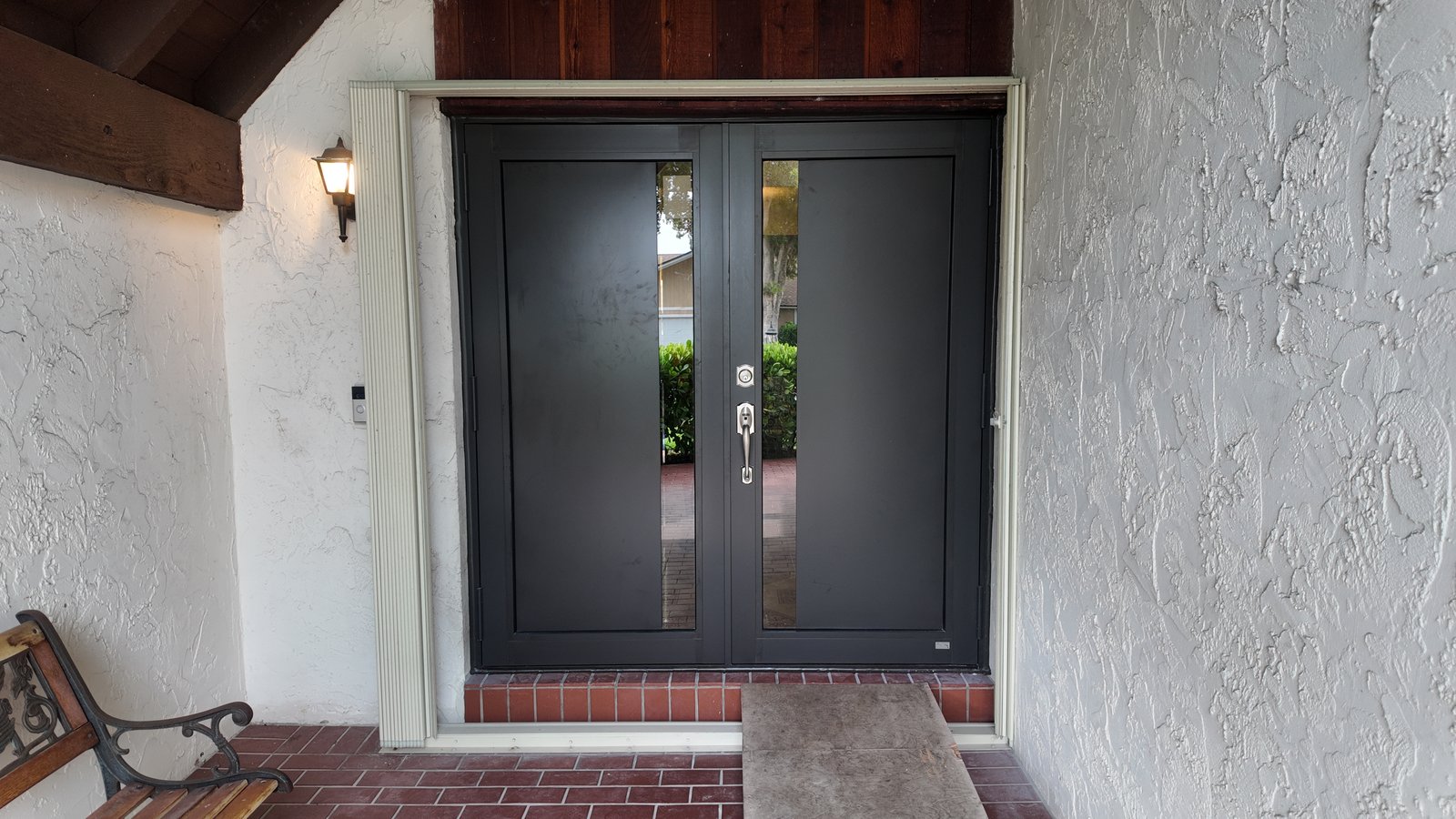
Replacing impact windows and doors in South Florida typically takes 8 to 16 weeks from signed contract to final inspection. That range includes product ordering, permit review by the Miami-Dade Building Department (which typically runs two to six weeks for standard residential projects), installation, and one or two scheduled inspections — all required steps you cannot skip in the High-Velocity Hurricane Zone.
Updated September 2026
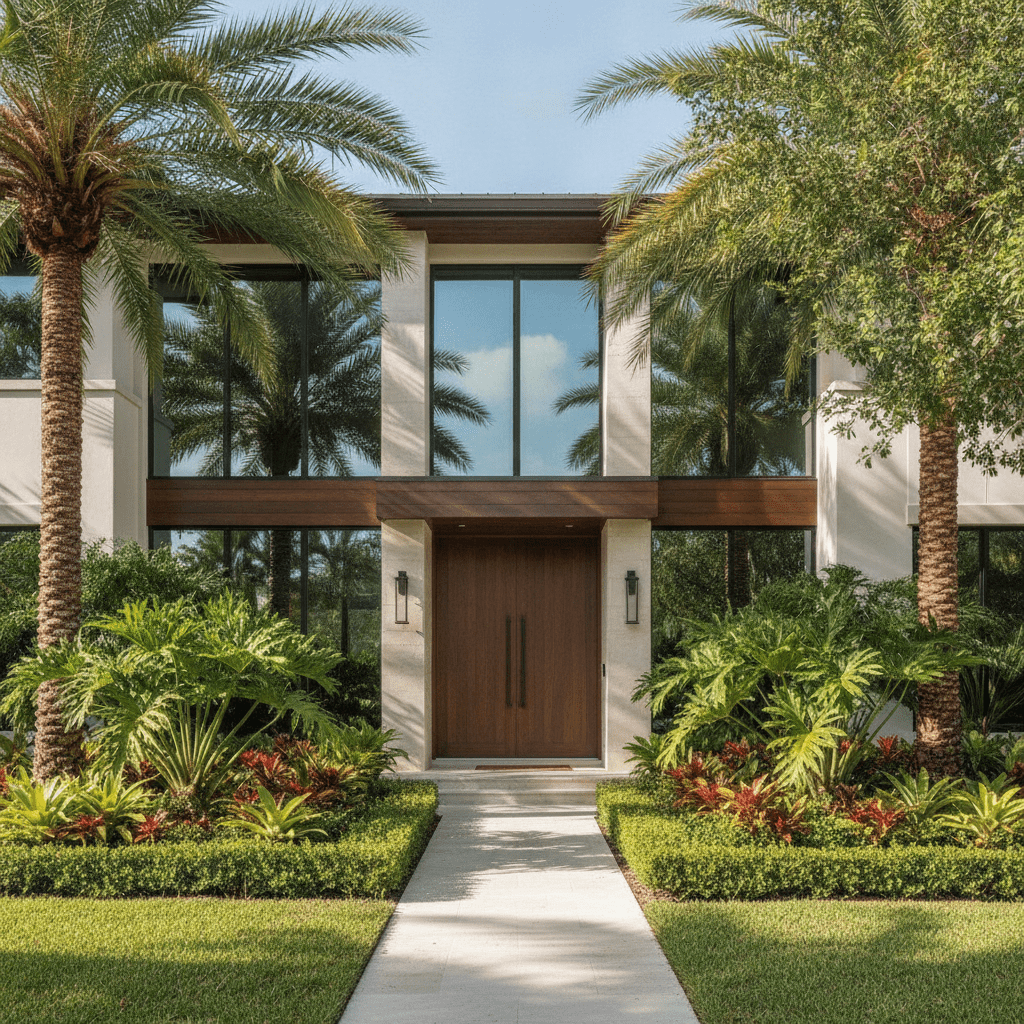
Key Takeaways
- Miami-Dade and Broward operate under HVHZ — the strictest residential building code in the United States. Every replacement window must carry the correct approval documentation.
- Permit review through the Miami-Dade Building Department typically takes two to six weeks; full project timelines generally run 8–16 weeks for most homes.
- A Miami-Dade Notice of Acceptance (NOA) is an additional certification some products carry; a current Florida Product Approval (FL number) covering HVHZ use is sufficient for permitting.
- HOA coordination must begin before you sign a contract — approval timelines vary widely and can add weeks to your schedule.
- Bigfoot handles structural scope (header resizing, hurricane strap upgrades) under its Certified General Contractor license (CGC1531370), so you do not need a separate contractor when the opening requires structural work.
The South Florida Reality
Why Impact Window Replacement Is More Involved Here Than Anywhere Else
Miami-Dade and Broward are not like the rest of the country — and the process reflects that.
Homeowners who move to South Florida from other states often expect impact window replacement to work the way it does back home: pick a product, schedule installation, done. That is not how it works here. Miami-Dade and Broward counties sit inside the High-Velocity Hurricane Zone (HVHZ), which carries the strictest residential building code jurisdiction in the United States per the Florida Building Code.
What that means practically: every window and door you install must carry documented product approval for HVHZ use, a permit must be pulled and reviewed before a single frame is touched, and an inspector from the county building department must sign off after installation. Skipping any step — or hiring a contractor who does not understand the difference between an NOA and a standard Florida Product Approval — creates real exposure: permit violations, failed inspections, and products that may not count toward your wind mitigation report.
Understanding the process before you sign a contract saves time, money, and frustration. This guide walks you through every stage, from product vetting to final inspection, using the real sequence Bigfoot follows on every South Florida job.
HVHZ Context
Miami-Dade NOA vs. Florida Product Approval — What You Actually Need
The distinction matters at the permit counter and on your wind mitigation report.
Two types of product documentation appear in impact window conversations: a Miami-Dade Notice of Acceptance (NOA) and a Florida Product Approval (FL number). Homeowners frequently confuse them, and some contractors use the terms interchangeably. They are not the same thing.
A Florida Product Approval is issued by the Florida Building Commission and covers the product’s compliance with the Florida Building Code, including HVHZ provisions when the approval explicitly covers that use. A current Florida Product Approval with HVHZ coverage is sufficient for permitting in Miami-Dade and Broward — you do not need an NOA for the permit itself.
A Miami-Dade NOA is an additional certification issued by the Miami-Dade County Product Control Division. It confirms the product has undergone Large Missile Impact testing under TAS 201 and received Miami-Dade County Product Control approval. Some products carry both; some carry only the Florida Product Approval. Either path can satisfy the permit requirement as long as the HVHZ coverage is documented. What matters is that your contractor verifies which approval your proposed product holds and confirms it covers your specific opening’s design pressure — not just that an approval document exists.
| Documentation Type | Issued By | Required for HVHZ Permit? | What It Confirms |
|---|---|---|---|
| Florida Product Approval (FL#) | Florida Building Commission | Yes, when HVHZ use is covered | FBC code compliance including HVHZ provisions |
| Miami-Dade NOA | Miami-Dade Product Control Division | Not required (but acceptable) | TAS 201 Large Missile Impact testing + county product control approval |
| Both FL# and NOA | Both agencies | Yes | Dual-path compliance; strongest documentation |
Step-by-Step Process
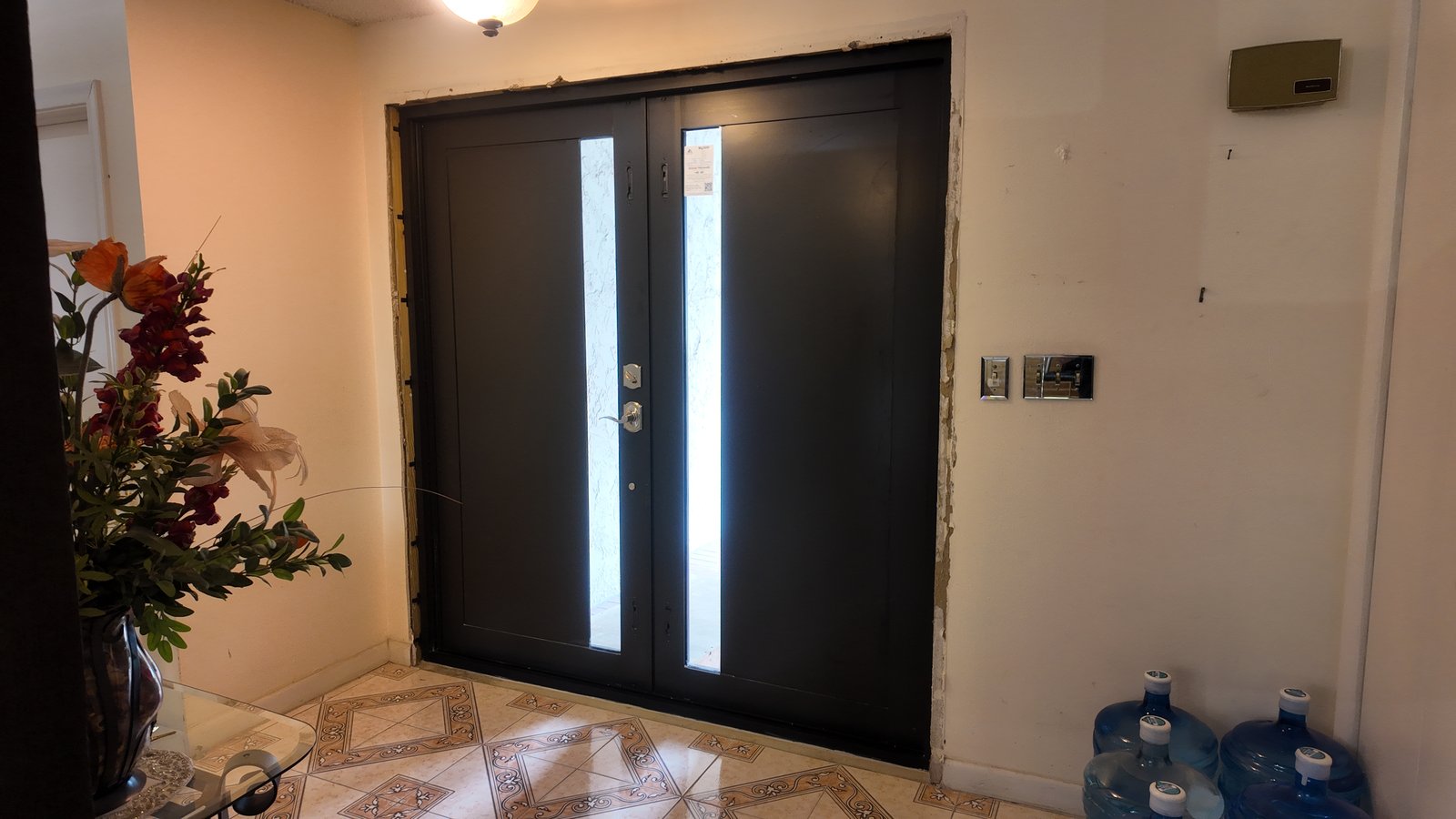
The Real South Florida Impact Window Replacement Timeline
Eight to sixteen weeks is the honest range — here is where the time goes.
The process follows a predictable sequence. Understanding each stage helps you set accurate expectations with your family, your HOA, and your schedule.
| Stage | Who Handles It | Typical Duration |
|---|---|---|
| 1. Site measure & product selection | Contractor | Roughly 1–3 days (in our experience) |
| 2. HOA approval (if required) | Homeowner + contractor support | 2–6 weeks (varies by HOA) |
| 3. Permit application submission | Contractor | Typically 1–3 days after HOA approval clears |
| 4. Miami-Dade Building Dept. review | Miami-Dade DPRD | 2–6 weeks (standard residential) |
| 5. Product fabrication & delivery | Manufacturer / distributor | Generally 3–8 weeks (runs parallel to permit review) |
| 6. Installation | Contractor | 1–5 days (home size varies) |
| 7. Rough-in inspection (if required) | Miami-Dade inspector | Typically scheduled 1–2 weeks out from request |
| 8. Final inspection & sign-off | Miami-Dade inspector | Typically scheduled 1–2 weeks out from request |
One important note on timing: Bigfoot cannot guarantee installation within two weeks of contract signing — county permitting, material delivery logistics, and inspection scheduling in Miami-Dade all operate on county-controlled timelines that no contractor can compress (per bigfootwindowsandroofing.com). Any contractor who promises a two-week turnaround for a permitted HVHZ job is not being straight with you.
Hurricane season scheduling matters too. Orders placed in late spring tend to encounter supply chain pressure as installers across South Florida rush to close out projects before peak storm season. If you are planning a replacement, earlier in the calendar year generally means a smoother schedule.
Bigfoot also handles structural scope that comes up during the opening inspection — impact window projects in older South Florida homes sometimes reveal undersized headers or missing hurricane straps. Because Bigfoot holds a Certified General Contractor license (CGC1531370), those structural modifications can be addressed under the same permit set rather than requiring a separate contractor and a second permit pull. This keeps the project moving on a single timeline instead of two.
What Triggers Structural Scope
When Your Opening Needs More Than Just a New Frame
Older homes and condo conversions in Miami-Dade regularly surface structural conditions during permit review.
Not every impact window replacement is a straightforward swap. Homes built before 1994 — the year Miami-Dade adopted post-Hurricane Andrew code changes — frequently have single-ply headers, no hurricane straps, or openings sized for jalousie frames that do not match modern impact window dimensions. When the permit drawings flag a structural condition, two things happen: the permit scope expands, and a general contractor license (not just a specialty license) is required to execute the work.
Bigfoot performs header resizing and hurricane strap upgrades as in-house services under its Certified General Contractor license (CGC1531370). That matters because a contractor holding only a glazing or roofing license cannot legally perform structural modifications — they would need to subcontract that scope, which adds cost, coordination delays, and a second contractor on your project. When structural scope and window installation are handled by the same licensed entity, the permit set is unified, accountability is clearer, and the inspection sequence is simpler.
Why License Breadth Matters
A Licensed Contractor Accountable for the Full Scope
Licensed contractor, not a lead aggregator. All four trades under one roof.
“When a permit inspector finds a structural condition at rough-in, the last thing you want is to stop the job and bring in a second contractor. We carry the GC license specifically so that does not happen to our customers.”
President, Bigfoot Windows & Roofing
Product Selection
What to Look for in an HVHZ-Approved Impact Window
Frame material, glass spec, and approval documentation all matter before you order.
For South Florida homes, aluminum frames are the recommended choice. Aluminum has a longer track record than vinyl in HVHZ heat, salt air, and UV exposure — the conditions that define coastal Miami-Dade and Broward (per Bigfoot Windows & Roofing, 2026). If energy efficiency is a priority, thermally broken aluminum frames add a thermal barrier that reduces heat transfer without the durability tradeoffs of vinyl in this climate.
On glass, the standard mid-range option is 7/16" laminated glass. For high-rise or openings with elevated design pressure requirements, 9/16" glass is the appropriate spec. Bigfoot’s standard recommendation for South Florida is SB 70 Low-E glass for heat block. For whole-house replacement projects, Cardinal ClimateGuard 6227 — which carries equivalent optical specifications to SB 70 — is available as a complimentary upgrade (per bigfootwindowsandroofing.com/impact-windows-cost-south-florida/).
If your property is within two miles of salt water, confirm with your contractor that the frame finish specified is the 2605 coastal finish, not the 2604 wood-grain option. The 2604 finish voids the manufacturer’s 10-year warranty in coastal zones per the Mr. Glass Limited Warranty (06/07/2022 revision).
All Mr. Glass series carry Florida Product Approval. The Mr. Glass Series 2500T thermally broken door also holds a Miami-Dade NOA, making it the appropriate choice for homeowners who need dual-path documentation for their opening. Explore the full range of impact door options to confirm which series fits your opening’s design pressure requirements.
HOA Coordination
Navigating HOA Approval Before Your Permit Is Submitted
Most South Florida communities require architectural review — start this before you order product.
A majority of South Florida residential communities have HOA architectural review requirements for exterior changes, and impact window replacement qualifies as a visible exterior modification. HOA review timelines vary from a couple of weeks in responsive communities to six weeks or more in communities where the architectural committee meets monthly.
The practical implication: begin the HOA approval process before you place your product order or submit your permit application. If your HOA requires specific frame colors, grid patterns, or exterior finishes, those specs must be locked before fabrication begins — impact windows are custom-fabricated per opening and cannot be returned or exchanged after production.
Florida SB 293 (codified at Florida Statute 553.8425) prohibits HOAs from outright blocking compliant hurricane protection devices including impact windows. HOAs can still regulate aesthetic elements — color, profile, and matching requirements — but cannot deny approval for a code-compliant installation. If your HOA issues a blanket denial, consult a Florida-licensed attorney familiar with SB 293 before accepting that denial as final.
Bigfoot’s pre-sale process includes verifying your HOA’s requirements and confirming which product specifications satisfy both the county’s HVHZ approval path and your community’s aesthetic guidelines. Learn more about financing options for impact window projects once you have architectural approval in hand.
Ready to understand exactly what your project will cost and how long it will take?
Or request a free estimate online — no phone call required.
Related Articles


Who We’re Not the Right Fit For
Bigfoot is not the right contractor for every project. Here is an honest list of situations where we are probably not your best option:
- Your situation cannot accommodate a realistic permitted timeline. Permitted HVHZ work requires county review, inspection scheduling, and product fabrication — timelines that no contractor controls. If your situation genuinely cannot wait for a compliant permit process, we are not the right fit.
- You are shopping exclusively on the lowest bid. We do not cut corners on product approval documentation, structural scope, or inspection compliance. If the lowest number on the page is the only deciding factor, a different contractor may win that comparison — and we are comfortable with that.
- Your project is a large-scale commercial or high-rise application requiring a commercial glazing specialist beyond our residential scope. Our expertise is South Florida residential homes. Some large-scale commercial projects require a different contractor profile.
- You want a product line we do not install. We do not install vinyl-frame windows for South Florida conditions. If vinyl is a hard requirement, you will need to look elsewhere — though we would encourage you to understand why aluminum has a longer track record in this climate before making that decision.
Homeowner Questions
Frequently Asked Questions
How long does it take to replace impact windows in Miami-Dade from permit to final inspection?
In our experience, most South Florida impact window replacement projects run roughly 8 to 16 weeks from signed contract to final inspection. Permit review through the Miami-Dade Building Department typically takes two to six weeks for standard residential projects. Product fabrication runs in parallel, so the total timeline is driven by whichever stage runs longest — permit review or lead time — plus installation and inspection scheduling. No contractor can compress county-controlled permit or inspection timelines.
Do I need HOA approval before replacing impact windows in a South Florida community?
Yes, most South Florida HOAs require architectural review before exterior modifications including impact window replacement. Begin this process before ordering product — HOA review can add several weeks or more depending on when the architectural committee meets. Florida SB 293 prohibits HOAs from issuing a blanket denial for compliant hurricane protection products, but HOAs can still regulate color, profile, and finish. Confirm your HOA’s specific requirements early and get approval in writing before fabrication begins.
What is a Miami-Dade NOA and why does my impact window need one?
A Miami-Dade Notice of Acceptance (NOA) is a product certification issued by Miami-Dade County Product Control Division, confirming the product passed Large Missile Impact testing under TAS 201. However, a current Florida Product Approval (FL number) that explicitly covers HVHZ use is also sufficient for permitting in Miami-Dade and Broward — an NOA is not required for the permit. What matters is that the product’s approval documentation covers your opening’s design pressure. Your contractor should verify this before ordering.
Will my homeowner’s insurance premium drop after installing impact windows in South Florida?
A wind mitigation inspection after installation may document your new impact openings and result in a premium reduction, but no contractor can guarantee a specific savings amount. Insurance companies set their own discount schedules. What we can say: a completed wind mitigation report reflecting fully protected openings is one of the strongest inputs toward a meaningful premium reduction. Consult your insurance agent about your specific policy once the final inspection closes your permit.
What inspections are required by the Miami-Dade Building Department after impact window installation?
Miami-Dade typically requires at minimum a final inspection confirming the installed product matches the permitted drawings and that installation complies with the product’s NOA or Florida Product Approval requirements — including fastener spacing and embedment. Some permits also require a rough-in inspection before the interior trim is closed. Your contractor pulls the permit and is responsible for scheduling inspections. The homeowner does not need to attend, but should confirm the final inspection passed and obtain the signed-off permit card.
Can I replace just one or two impact windows instead of the whole house at once?
Yes. Bigfoot takes single-window and partial-house replacement projects. The permitting and inspection process is the same regardless of how many openings are in scope — you still need a permit, an approved product, and a final inspection. The practical consideration is cost per window: smaller projects have similar permit and overhead costs spread across fewer units, so the per-unit cost is higher. But there is no code or company rule requiring a full-house replacement, and replacing a single damaged or failed unit is a legitimate scope.
Does my contractor need a specific license to replace impact windows in the HVHZ?
In the HVHZ, impact window installation requires a licensed contractor — typically a Certified Specialty Contractor with a Glass & Glazing Specialty or a Certified Residential Contractor. If the project involves structural modifications (header resizing, hurricane strap upgrades), a Certified General Contractor license is also required for that scope. Verify your contractor’s license on the Florida DBPR website before signing a contract. Bigfoot holds all four relevant Florida licenses, including CGC1531370 for structural scope and SCC131153098 for glass and glazing.
Schedule Your Free Estimate
Ready to get started? Request a free estimate — no phone call required.
Sources
- Florida Building Code — HVHZ provisions, Miami-Dade and Broward County applicability. floridabuilding.org
- Miami-Dade Building Department permit review timelines. bigfootwindowsandroofing.com/impact-windows-miami-dade/
- Florida Product Approval and HVHZ use coverage. bigfootwindowsandroofing.com/impact-windows-miami-dade/
- Mr. Glass Limited Warranty — 2604 coastal finish exclusion. bigfootwindowsandroofing.com/can-firefighters-break-impact-windows/
- Florida Statute 553.8425 (SB 293) — HOA hurricane protection prohibitions. bigfootwindowsandroofing.com/impact-windows-cost-south-florida/
- Miami-Dade County Product Control — NOA testing protocol TAS 201. miamidade.gov/global/economy/board-and-code/product-testing-inquiries.page
- Bigfoot installation timeline and permitting guidance. bigfootwindowsandroofing.com/why-roofing-quotes-so-different-south-florida/
Get a straight answer on your project timeline, product approval, and cost.
No pressure. No vague estimates.
Or call Bigfoot Windows & Roofing at 786-886-2088.