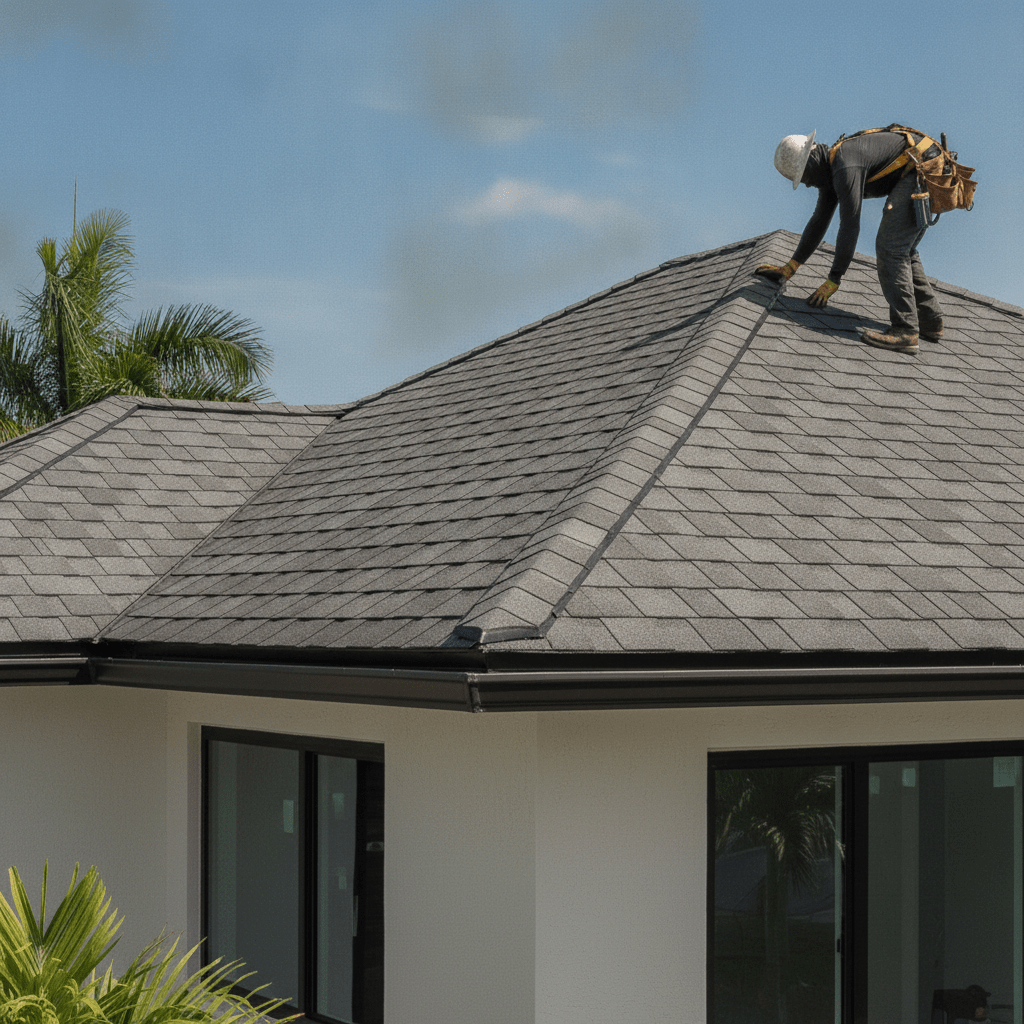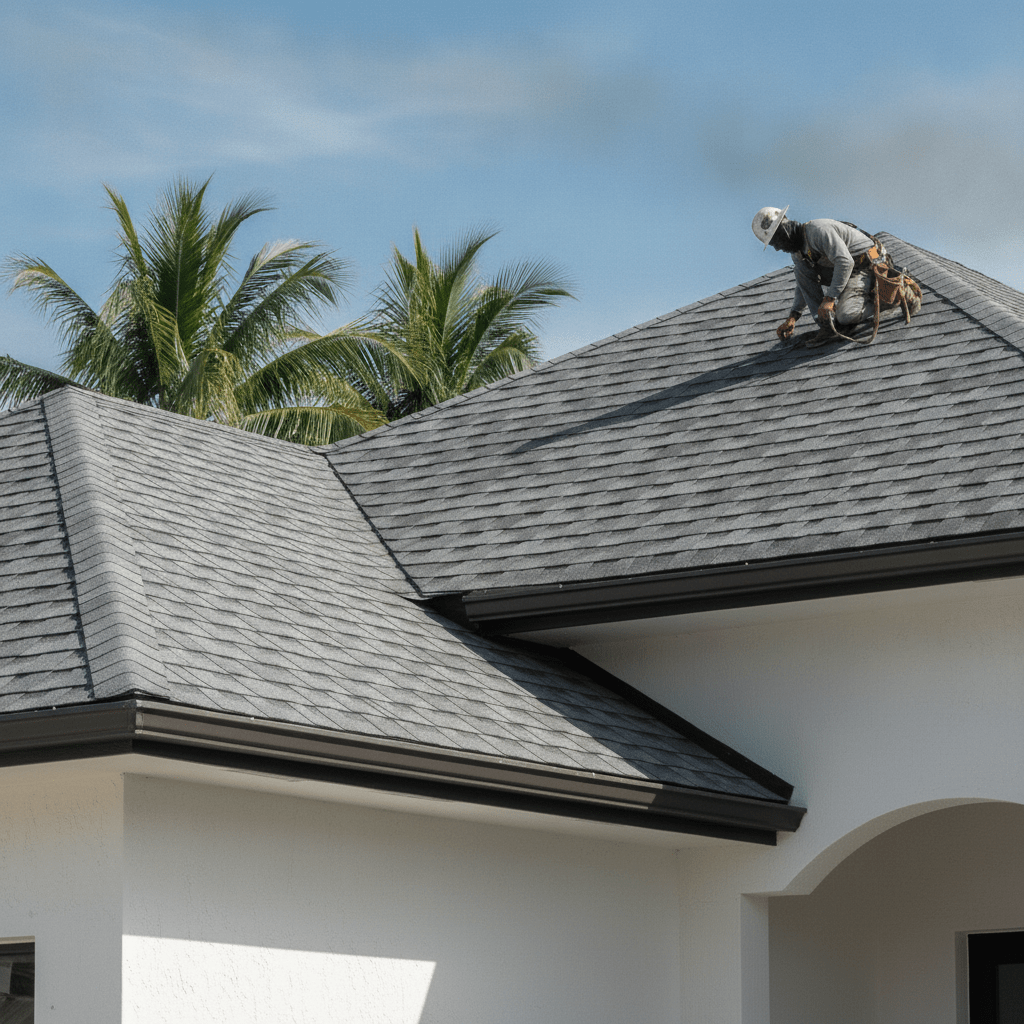
A complete Florida roof system has five components: starter shingles at every perimeter edge, full-deck peel-and-stick underlayment, drip edge at eave and rake, HVHZ-fastened and sealed roof decking, and balanced attic ventilation. Shingles are the outermost layer — the four components beneath them determine whether the system survives a South Florida hurricane.
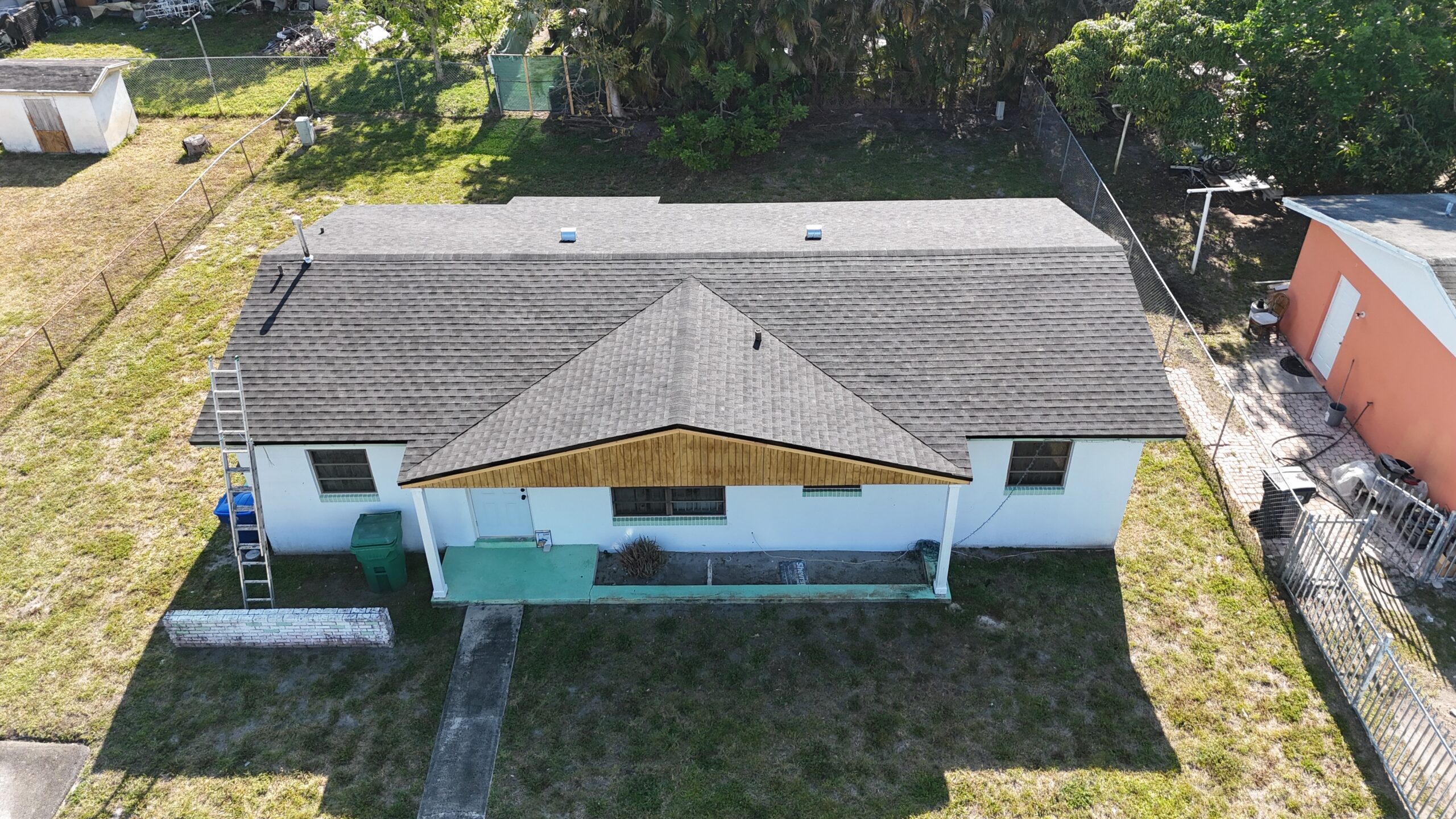
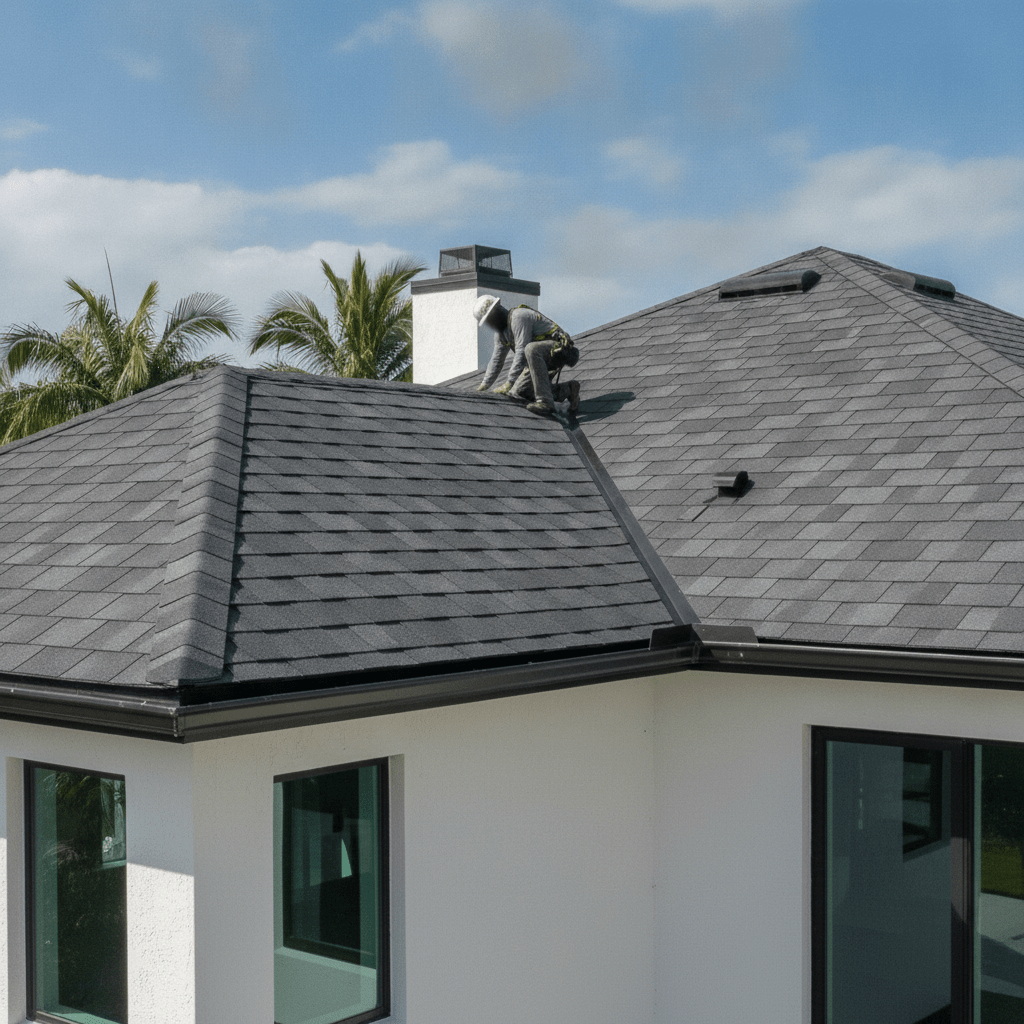
Bottom line: In South Florida’s High-Velocity Hurricane Zone (HVHZ), your roof is only as strong as its weakest component. Most roofs that fail during storms don’t fail because the shingles blew off — they fail because of what was missing underneath them: starter shingles, peel-and-stick underlayment, proper drip edge, sealed roof decking, and balanced attic ventilation. This article breaks down all five.
Key Takeaways
- Shingles are the outermost layer — 4 hidden components beneath them determine whether your roof survives a hurricane.
- Starter shingles at every perimeter edge are required by the Florida Building Code and prevent the most common wind-uplift failure point.
- Peel-and-stick underlayment (not 30-lb felt) qualifies as a secondary water barrier — which matters for insurance and code compliance.
- Drip edge at the eave and rake prevents water infiltration at the roof perimeter, where most leaks originate.
- Attic ventilation imbalance shortens shingle life, raises cooling costs, and can void manufacturer warranties.
- GAF Certified Plus certification (held by Bigfoot Windows & Roofing) unlocks the System Plus warranty — 50 years, non-prorated, covering shingles, labor, tear-off, and accessories.
The Real Problem
Why Homeowners Get Burned by Shingle-Only Thinking
The shingle brand is the last thing that determines whether a roof survives a named storm.
When a homeowner in Miami-Dade or Broward starts researching a new roof, they usually ask the same two questions: What brand of shingles? and How much per square? Both are reasonable — but neither question gets to the root cause of most Florida roof failures.
Storm damage and leak investigations consistently point to components that nobody talked about at the sales table: the starter course that was skipped at the rake, the 30-lb felt that soaked through in the first hour of rainfall, the drip edge that was nailed over instead of under, the ridge vent paired with no soffit intake. Shingles become a liability when the system beneath them is incomplete.
South Florida’s building code — particularly for Miami-Dade County and the HVHZ — exists precisely because these failures are predictable and preventable. The five components below are not optional upgrades. In most cases, they are code requirements that a significant number of re-roofs still skip.
South Florida Context
HVHZ, Miami-Dade NOA, and Why Florida Is Different
Miami-Dade and Broward counties sit inside the High-Velocity Hurricane Zone — the strictest wind-load building code jurisdiction in the United States. Every roofing product installed in the HVHZ must carry a Miami-Dade NOA or a Florida Product Approval that covers HVHZ use. That NOA is not a brand badge; it is a documented test result confirming the product withstands specific wind uplift and water infiltration pressures.
What that means for homeowners: an installation that passes Miami-Dade NOA requirements involves far more than selecting an approved shingle. The entire system — fastener pattern, underlayment type, drip edge detail, starter course placement, ventilation ratio — must match the NOA’s tested assembly. If a contractor substitutes one component (say, felt for peel-and-stick), the tested assembly is no longer intact, and the NOA’s protections are not in force.
Citizens Insurance has been non-renewing roofs that are 20 years or older. A new roof is a significant insurance event — and getting the system right the first time determines whether you qualify for a wind mitigation inspection credit that materially reduces your premium.
The 5 Components
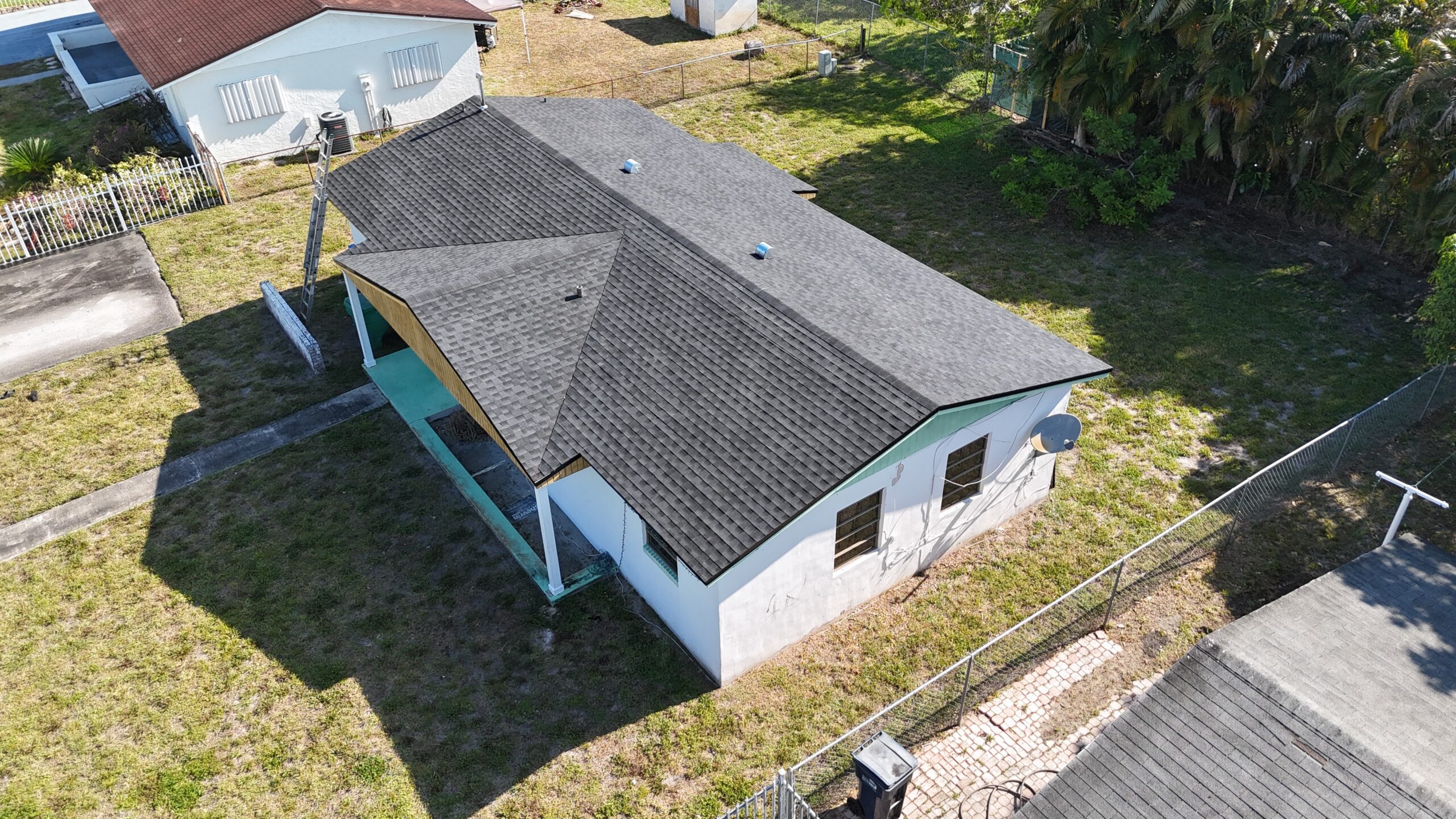
What a Complete Florida Roof System Actually Includes
Each layer below the shingle has a specific job. None of them are optional in South Florida.
Component 1: Starter Shingles at Every Perimeter Edge
The first course of shingles along the eave and every rake edge is the highest wind-uplift risk point on the entire roof. A standard shingle has its adhesive strip set back from the bottom edge — meaning the leading edge of the first course has no factory seal-down adhesive contacting the row below it. Starter shingles are specifically designed to place an adhesive strip at the very bottom, sealing that first course down.
Skipping starter shingles at the rake — the sloped edges at the gable ends — is a code violation and one of the most common shortcuts taken on re-roofs. GAF’s Layer Lock shingles feature a 1.81-inch nail line (significantly wider than prior designs, per GAF engineering data) and 19 dimples per shingle for alignment accuracy, but those features are irrelevant if the perimeter is not started correctly.
Component 2: Peel-and-Stick Secondary Water Barrier
The 2024 Florida Building Code now permits direct-to-deck peel-and-stick underlayment. A full-deck application qualifies as a secondary water barrier — a classification that matters for insurance inspectors and wind mitigation credits. Standard 30-lb felt does NOT qualify as a secondary water barrier. If your contractor proposes felt, ask them to confirm whether you will receive the secondary water barrier designation on your wind mitigation inspection report.
Peel-and-stick also self-seals around fasteners, which reduces the water infiltration pathway that opens up when a shingle is damaged or lifted. In a storm scenario where shingles are compromised, the secondary barrier is what keeps your interior dry. Explore your roofing options in South Florida to understand how different underlayment systems compare.
Component 3: Drip Edge at Eave and Rake
Drip edge is a metal flashing strip installed along the perimeter of the roof deck, at both the eave (horizontal bottom edge) and the rake (sloped side edge). Its job is to direct water off the edge cleanly and away from the fascia board. Without it, water wicks back under the shingle edge, saturating the fascia, soffit, and eventually the wall framing.
Installation sequence matters: at the eave, drip edge goes under the underlayment. At the rake, it goes over. Drip edge installed in the wrong sequence is a documented cause of roof-edge leaks — even when the material itself is present. This is a detail that should be confirmed in writing before work begins.
Component 4: Sealed and Fastened Roof Decking
In HVHZ, the roof deck — typically oriented strand board (OSB) or plywood — must be fastened at specific intervals matching the engineered wind-uplift requirements for the project. The edges must be sealed to prevent moisture migration through the seams. During a re-roof, if the inspector identifies soft spots, delamination, or spacing violations in the decking, those boards must be replaced before any new roofing is applied.
This is one area where having a contractor authorized to handle structural modifications — not just surface roofing — matters. When decking issues involve structural sheathing, connections to rafters, or hurricane straps, a Certified General Contractor (CGC1531370) can address those items in the same permit, so the homeowner does not need a separate contractor for structural corrections found during the re-roof.
Component 5: Balanced Attic Ventilation
Ventilation is the most overlooked component in South Florida because homeowners associate it with cold climates. In reality, poor ventilation in a Miami-Dade summer attic — where temperatures routinely exceed 160°F — accelerates shingle aging, causes decking to warp, and traps moisture that promotes mold growth in the roof structure.
Balanced ventilation means matching net free area (NFA) of intake at the soffit with exhaust at the ridge or high on the roof plane. Adding a ridge vent without soffit intake does not improve ventilation — it creates negative pressure that can pull conditioned air from the living space. This is a code and physics issue, not just a comfort issue. Attic ventilation specifications should be documented in any roofing proposal.
Component Comparison
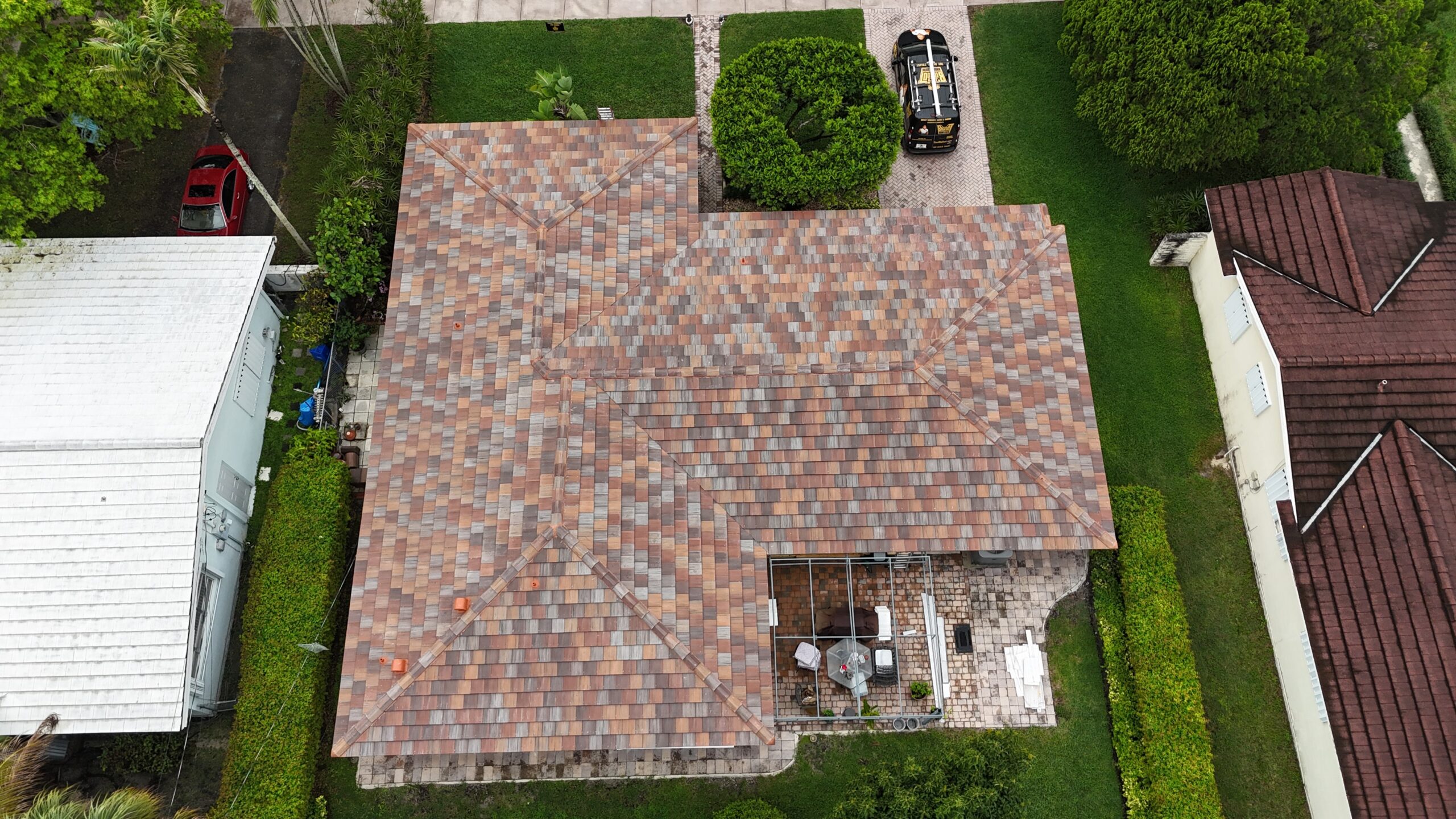
Complete System vs. Shingle-Only Installation
| Component | Shingle-Only Install | Complete System Install |
|---|---|---|
| Starter shingles (eave + rake) | Eave only or skipped | Both eave and rake — code compliant |
| Underlayment type | 30-lb felt | Full-deck peel-and-stick (secondary water barrier) |
| Drip edge sequence | Often reversed or missing at rake | Correct sequence: under at eave, over at rake |
| Deck fastening | No re-inspection of spacing | HVHZ pattern verified; damaged boards replaced |
| Attic ventilation | Not addressed | Balanced NFA confirmed; soffit + ridge documented |
| Wind mitigation eligibility | Partial or none | Secondary water barrier designation possible |
| Warranty coverage | Shingles only | System Plus: shingles + labor + tear-off + accessories |
Why It Matters Who Installs It
Licensed Roofing Contractor — Not a Lead Aggregator
The contractor’s license class determines what they can legally address when they open your roof.
“Most re-roof callbacks I have seen trace back to one skipped step — usually starter shingles at the rake or felt used where peel-and-stick was specified. Those shortcuts save the contractor maybe thirty minutes and cost the homeowner years of headaches.”
Darryl Rosenbaum
President, Bigfoot Windows & Roofing
Product Guidance
GAF Shingles and the System Plus Warranty
Bigfoot Windows & Roofing installs GAF shingles and holds GAF Certified Plus certification. That certification level unlocks the GAF System Plus warranty — 50 years, non-prorated, covering shingles, labor, tear-off, and accessories. Per GAF System Plus warranty terms — verify current terms with your GAF representative — Wind Proven coverage carries no maximum wind speed cap and is not voided by a named storm hitting your county, which is materially different from the 130-mph caps or named-storm voidance clauses in many competing warranties.
GAF’s Layer Lock shingle system is designed for HVHZ applications. The 1.81-inch nail line and 19 alignment dimples per shingle are engineering details, not marketing. They reduce installation error and improve fastener-zone accuracy — both of which are measurable factors in wind uplift resistance.
For flat or low-slope roofs common in South Florida townhomes and commercial-residential mixed use, TPO membrane roofing is the appropriate system. TPO pricing and scope differ significantly from shingle work — see our full roofing services page for a breakdown by roof type. If budget is a consideration, explore available financing options for South Florida homeowners.
What to Expect
How a Complete Roof System Installation Works
| Phase | What Happens | What to Ask For in Writing |
|---|---|---|
| Inspection & Estimate | Deck condition, ventilation ratio, existing underlayment type documented | Written scope listing all 5 system components |
| Permit Pull | HVHZ permit submitted; NOA product numbers listed | Permit number and NOA references |
| Tear-Off | Old material removed; deck inspected for damage | Deck replacement line item and per-board rate |
| Underlayment | Peel-and-stick applied per NOA assembly | Full-deck vs. perimeter-only specification |
| Starter, Drip Edge, Shingles | Installed in code-compliant sequence | Starter at eave AND rake confirmed |
| Final Inspection | County inspector signs off; wind mitigation report available | Wind mitigation inspection scheduling |
Get a Roof System Estimate — Not Just a Shingle Quote
We document every component in writing before work begins. No shortcuts, no surprises.
Request a Free Estimate
See Our Roofing Services Call 786-886-2088
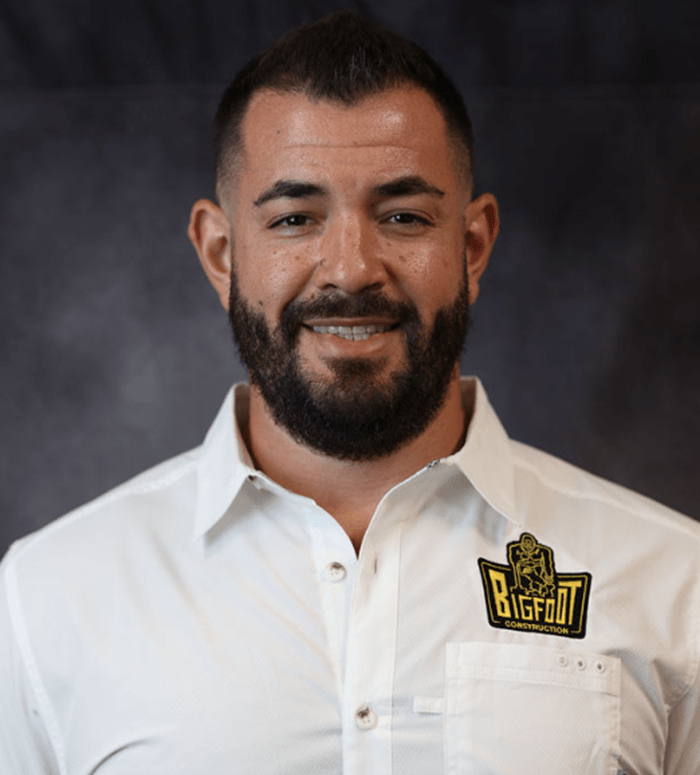
Written by Darryl Henry Rosenbaum, Founder of Bigfoot Windows & Roofing.
Darryl Henry Rosenbaum, doing business as Bigfoot Windows and Roofing, holds four active Florida licenses recognized by the Florida Department of Business and Professional Regulation (DBPR): Certified General Contractor (CGC1531370), Certified Residential Contractor (CRC1331693), Certified Roofing Contractor (CCC1333168), and Certified Specialty Contractor with a Glass & Glazing Specialty (SCC131153098).
Who We’re Not the Right Fit For
Being direct about this saves everyone time:
- Homeowners seeking the lowest bid only. A complete HVHZ-compliant roof system with peel-and-stick, starter shingles at both eave and rake, and proper drip edge costs more than a shingle-swap. If the goal is the cheapest number, we are not likely to win that comparison.
- Projects outside Miami-Dade, Broward, or Palm Beach counties. Our crews and permit relationships are concentrated in South Florida. We are not the right call for Central or North Florida projects.
- Homeowners who need only a minor repair. We focus on full system installations and replacements. A two-shingle patch is not where we add the most value.
- Situations requiring HVAC, electrical, or plumbing coordination only. Our license scope covers general contracting, roofing, and glass and glazing. We do not hold electrical, plumbing, or mechanical licenses and would refer those trades out.
FAQ
Frequently Asked Questions
What are the components of a roof system?
A complete roof system includes: (1) starter shingles at the eave and rake perimeter, (2) underlayment — ideally full-deck peel-and-stick for secondary water barrier status, (3) drip edge flashing at eave and rake installed in the correct sequence, (4) properly fastened and sealed roof decking at HVHZ-required intervals, and (5) balanced attic ventilation with matched soffit intake and ridge exhaust.
Why do shingles alone fail in Florida?
Shingles are a surface layer. In South Florida’s HVHZ, wind uplift begins at the perimeter edges where starter shingles and drip edge do the most work. If the underlayment is felt instead of peel-and-stick, water infiltrates immediately once a shingle lifts. If ventilation is unbalanced, heat and moisture degrade the decking from inside. Shingle brand and price matter less than the integrity of the system installed beneath and around them.