
The Ultimate South Florida Roof Color Guide: How Shingle Color Affects Heat, Lifespan & Resale
Quick answer: In South Florida’s HVHZ climate, lighter and medium-tone roof colors outperform dark shingles for energy efficiency and lifespan. Dark colors absorb significantly more solar heat, increasing attic temperatures and AC load. Light gray, tan, or weathered-wood tones offer the best balance of energy performance, curb appeal, and resale value for most South Florida homes.
Key Takeaways
- Light and medium roof colors reflect more solar energy, reducing attic heat gain in Miami-Dade and Broward.
- Dark charcoal or black shingles can raise attic temperatures significantly — requiring enhanced attic ventilation.
- Reflective and cool-roof products exist across multiple color tones, not only white or light gray.
- GAF System Plus warranty (available through Bigfoot) covers shingles, labor, tear-off, and accessories for 50 years non-prorated.
- Viewing physical samples in South Florida sunlight is essential — online photos misrepresent how colors look on a finished roof.
- Roof color affects insurance wind-mitigation inspections and resale appeal, but material and installation quality matter more for long-term value.
The Problem
Why Roof Color Is a Bigger Decision in South Florida Than Anywhere Else
In most of the U.S., shingle color is mostly an aesthetic choice. Here, it is a thermal and financial one.
South Florida homeowners face an average of more than 250 days of intense sun annually. Your roof absorbs — or deflects — the majority of that solar radiation. The color and reflectance of your shingles directly influence attic temperatures, how hard your AC runs, how quickly your roofing materials degrade, and what a future buyer sees when they pull up to the curb.
In Miami-Dade and Broward counties, which sit inside the High-Velocity Hurricane Zone (HVHZ), every roofing decision is amplified. Installation standards are stricter here than anywhere else in the United States. Getting the color wrong is a recoverable mistake. Getting the material or the attic ventilation wrong because you chose a heat-absorbing color without compensating for it is an expensive one.
This guide cuts through the marketing language and gives you the factual framework for choosing a roof color that works for South Florida’s climate, your home’s architecture, and your long-term financial picture.
South Florida Context
HVHZ, Heat, and What Makes This Market Different
Miami-Dade and Broward counties are designated HVHZ — the most stringent building code jurisdiction for roofing in the United States. Every shingle, fastener, clip, and underlayment must meet or exceed Florida Building Code requirements, and roofing products used here must carry a Miami-Dade Notice of Acceptance (NOA) or Florida Product Approval.
Beyond code, the climate facts are harsh: average summer roof surface temperatures in South Florida can exceed 150°F on dark-colored surfaces. The U.S. Department of Energy has documented that cool roofs — those with high solar reflectance and thermal emittance — can reduce roof surface temperatures by up to 50°F compared to conventional dark roofs under the same conditions. Lower surface temperature means lower attic temperature, which means your AC runs fewer cycles per day.
Salt air in coastal zones (generally within two miles of the Atlantic or the Bay) adds a corrosion factor that affects fasteners and metal flashings — but not shingle color choice directly. What it does mean is that your roofing system as a whole needs to be specified for this environment, and attic ventilation becomes even more important when the ambient humidity is consistently high.
When you explore South Florida roofing options, understanding the HVHZ code environment first is the right starting point.
How It Works
Dark vs. Light Roof Colors: The Heat Science
Solar reflectance index (SRI) is the number that actually matters — not just the color name on a swatch.
Roofing color is measured scientifically by two properties: solar reflectance (how much sunlight bounces off) and thermal emittance (how quickly the surface releases absorbed heat). The combined metric is the Solar Reflectance Index (SRI). The higher the SRI, the cooler the roof behaves.
| Color Category | Typical SRI Range | Attic Temp Impact | AC Load Impact | Lifespan Consideration |
|---|---|---|---|---|
| Black / Charcoal | 0–15 | Highest increase | High increase | Heat accelerates aging in FL |
| Dark Brown / Dark Red | 10–25 | High increase | Moderate–High | Moderate thermal stress |
| Medium Gray / Tan / Weathered Wood | 25–45 | Moderate | Moderate | Good balance for South FL |
| Light Gray / Beige / Driftwood | 40–60 | Low increase | Low–Moderate | Reduced thermal cycling |
| White / Highly Reflective | 70–110 | Minimal | Lowest | Best for flat/low-slope roofs |
For most South Florida pitched-roof homes, a medium-to-light tone in the 30–55 SRI range provides the practical sweet spot: meaningful heat reduction without the stark appearance of a pure-white roof on a traditional Spanish or Mediterranean home.
Why Black and Charcoal Demand Extra Attic Ventilation
Dark-colored roofs are not inherently wrong choices — but they are thermally demanding. In South Florida, a charcoal or black shingle that works adequately in Atlanta or Charlotte can drive attic temperatures to levels that stress wood decking, reduce shingle adhesive performance, and significantly increase cooling costs. If you want a dark roof here, the ventilation design must compensate: ridge vents, soffit vents, and potentially powered exhaust ventilation should be part of a coordinated system. A contractor who simply installs the shingles without assessing the attic ventilation equation is leaving you with an incomplete solution.
Color by Architecture
Matching Roof Color to South Florida Home Styles
The right color performs AND fits. Here is the framework by home type.
| Home Style | Common in South FL | Recommended Tones | Avoid |
|---|---|---|---|
| Spanish / Mediterranean | Very common, Miami-Dade | Terra cotta, weathered red, warm tan | Stark white, charcoal |
| Modern / Contemporary | Growing, Broward & Brickell | Light gray, charcoal (with ventilation) | Brown tones that read dated |
| Traditional / Colonial | Palm Beach suburbs | Weathered wood, slate gray, driftwood | High-contrast dark on light walls |
| Old Florida / Ranch | Inland Miami-Dade | Tan, sand, medium brown | Bright white on rustic profiles |
| Coastal / Beach Cottage | Keys-adjacent, Lauderdale | Light gray, white, soft blue-gray | Dark earth tones |
One note that saves homeowners real money: do not make your final color decision from an online photo or a small paper swatch. Request physical shingle samples and hold them against your home’s fascia and wall color in actual South Florida afternoon sun. Colors shift dramatically under our light spectrum compared to Pacific Northwest or Midwest photography — which is where most manufacturer lifestyle images originate.
Why It Matters Who Installs It
License, Ventilation Assessment, and Code Compliance
A licensed contractor who understands HVHZ attic dynamics — not just shingle color — is the right call for South Florida.
Florida licensed: CGC1531370 · CRC1331693 · CCC1333168 · SCC131153098
“In South Florida, I always walk the attic before we finalize a shingle color recommendation. The ventilation design has to match the thermal load the color choice creates. Dark roof, undersized attic ventilation — that combination shortens shingle life and raises AC bills.”
Founder & President, Bigfoot Windows & Roofing
As a contractor authorized to coordinate multi-trade scope — including structural assessments, ventilation modifications, and roofing in one coordinated project — Bigfoot can address attic framing, hurricane straps, and ventilation design under the same license umbrella without requiring separate subcontractors for each piece. That coherent accountability matters when your roof replacement uncovers structural issues mid-project, which is not uncommon in older South Florida homes.
Product Guidance
GAF Shingles in South Florida: What Color Options Actually Mean for Performance
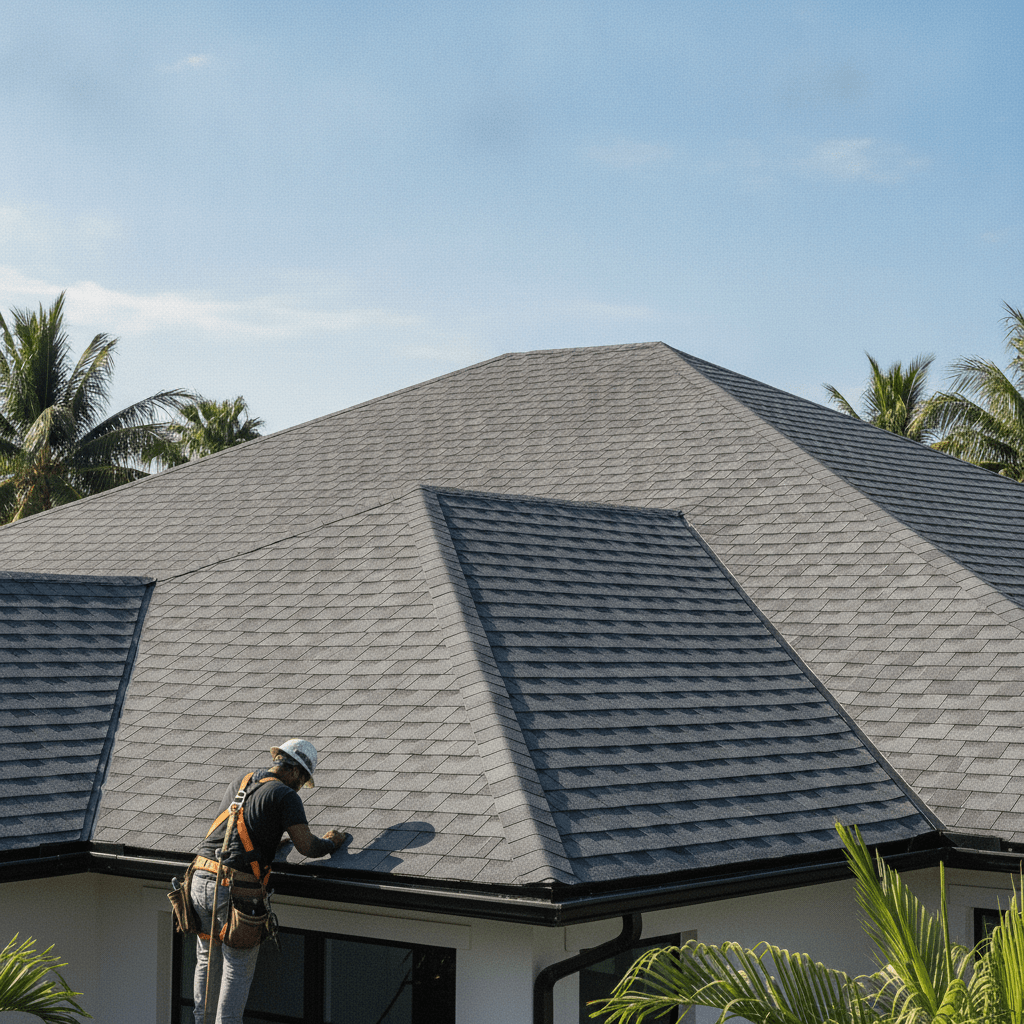
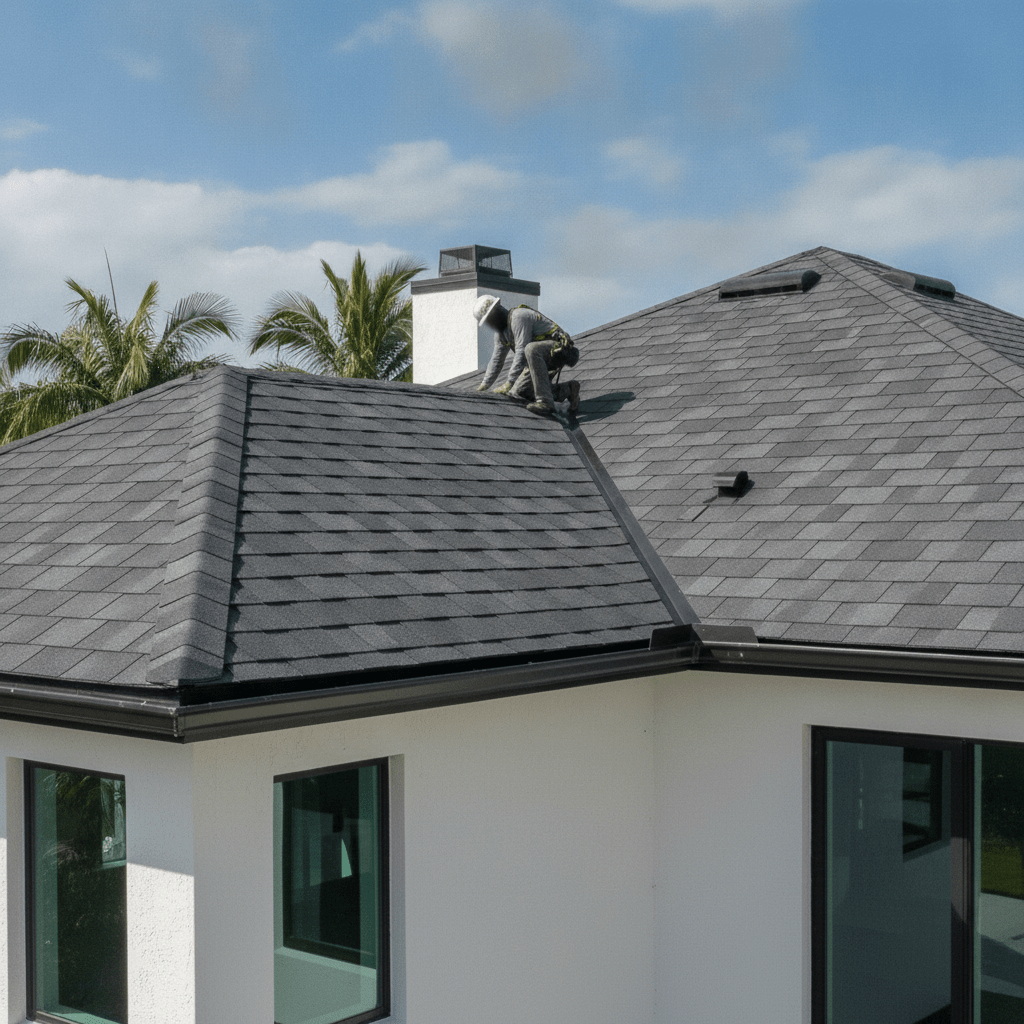
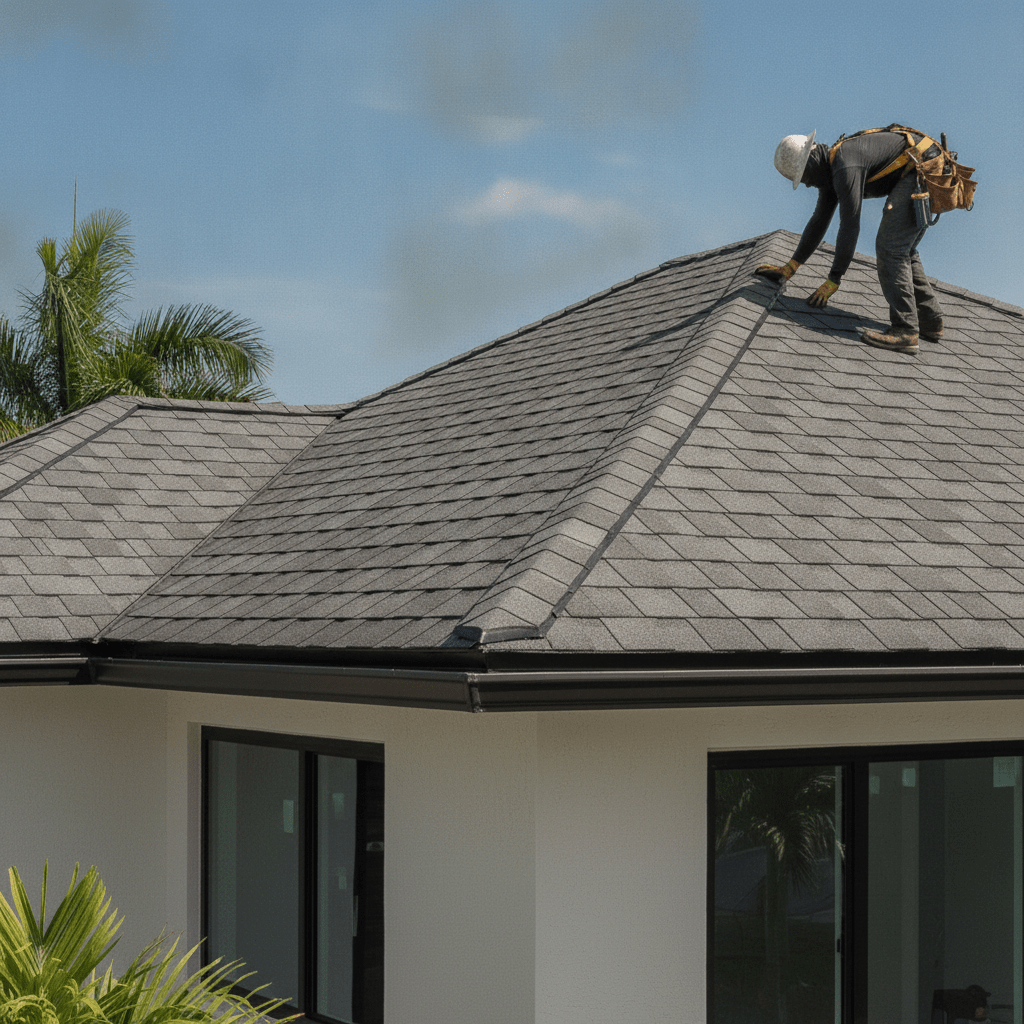
Bigfoot installs GAF shingles and holds GAF Certified Plus certification. GAF’s Timberline HDZ and Timberline CS (Cool Series) lines offer a range of colors with varying SRI values. The Cool Series specifically uses granule technology designed to reflect near-infrared solar energy even in darker color tones — meaning you can get a charcoal or weathered wood appearance with meaningfully better thermal performance than a conventional shingle of the same color.
Key GAF warranty facts relevant to South Florida homeowners exploring roofing options:
- Wind Proven warranty: No maximum mph wind speed rating; valid for 15 years; not voided by named storms making landfall in your county — which is a significant advantage over competitors’ warranties that cap at 130 mph or exclude named-storm events.
- System Plus warranty (available through Bigfoot): 50-year non-prorated coverage including labor, shingles, tear-off, and accessories. This is the warranty tier available to GAF Certified Plus installers.
- Shingle lifespan in South Florida: Realistically 12–15 years for standard architectural shingles due to UV intensity, heat, and storm cycling. Premium products and proper attic ventilation extend that range.
GAF Layer Lock technology uses a 1.81-inch nail line (600% wider than pre-2020 shingles) with 19 precision dimples per shingle, dramatically reducing installation error. In HVHZ, where every fastener placement is inspected, this matters.
Homeowners considering the full exterior envelope — combining a new roof with impact-resistant windows — often unlock wind-mitigation insurance credits that offset project costs. A wind-mitigation inspection after both improvements can yield meaningful premium reductions from Citizens and private carriers.
The Process
How a Roof Color Decision Gets Made at Bigfoot
- Site consultation: We assess the existing roof, attic ventilation, structural deck condition, and your home’s architectural style before discussing color.
- Physical sample review: We bring GAF shingle samples to your home and evaluate them in your specific light conditions — not in a showroom or online.
- Ventilation design alignment: If you want a darker color, we quantify whether your current attic ventilation is adequate or needs upgrading before installation.
- Permit and HVHZ compliance: All work is permitted and inspected per Miami-Dade or Broward county requirements. No shortcuts on NOA-compliant fastening.
- Post-installation inspection: Final county inspection and a walkthrough so you know what was installed and why.
For homeowners interested in financing options, PACE financing is available through property tax assessment — rate approximately 9.49%, 20-year terms, no credit score impact. Roofing and window projects require separate PACE applications. For qualifying property owners, there may be tax benefits available — please consult your CPA.
Get a South Florida Roof Estimate
We bring samples to your home and assess attic ventilation — no guessing from online photos.
Or call us directly: 786-886-2088
Related Reading
More South Florida Roofing Guides
Related Articles
Who We’re Not the Right Fit For
- Homeowners seeking the absolute lowest bid: HVHZ compliance, quality fastening, and GAF System Plus warranty eligibility carry real costs. If your primary filter is lowest price, another contractor may quote lower — and you should understand what they are omitting.
- Projects needing a manufacturer brand we do not carry: We install GAF shingles and do not install Owens Corning, CertainTeed, or other lines. If your HOA or insurer specifies a brand we do not carry, we may not be the right installer.
- Homeowners who want only an email quote without a site visit: Accurate roof proposals for South Florida require an in-person assessment of the deck, attic, and drainage. We do not quote from satellite imagery alone for final contracts.
- Projects outside our service area: We serve Miami-Dade, Broward, and Palm Beach counties. Projects in the Keys, Treasure Coast, or north of Palm Beach fall outside our routine service radius.
Common Questions
Frequently Asked Questions
What is the best roof color for a South Florida home?
For most South Florida homes, medium-to-light tones — light gray, tan, driftwood, and weathered wood — offer the best balance of heat performance, curb appeal, and resale value. These colors reflect more solar energy than dark shingles without the stark appearance of pure white on a traditional Spanish or Mediterranean home. The right answer also depends on your attic ventilation, architectural style, and HOA rules.
Does a dark roof make your house hotter in Florida?
Yes — measurably so. Dark shingles have low Solar Reflectance Index (SRI) values, meaning they absorb more solar radiation and transfer that heat into your attic. In South Florida’s climate, this can translate to significantly higher AC runtime and energy costs. A dark roof is manageable here but requires a well-designed attic ventilation system to offset the thermal load.
Do white or reflective roofs lower AC bills in Miami?
Reflective roofs — including white and cool-series shingles with high SRI ratings — can meaningfully reduce roof surface temperatures, which in turn lowers attic heat gain and AC demand. The U.S. Department of Energy has documented surface temperature reductions of up to 50°F on cool roofs vs. dark conventional roofs. Real-world AC savings depend on your home’s insulation, attic ventilation, and HVAC efficiency — not color alone.
Why do black roofs need extra attic ventilation in Florida?
Black and dark charcoal shingles absorb the most solar energy and drive the highest attic temperatures of any color. In South Florida’s climate, inadequate attic ventilation paired with a dark roof stresses the roof decking, degrades shingle adhesives faster, and forces your AC to work harder year-round. Ridge vents, soffit vents, and sometimes powered exhaust fans are needed to compensate for the additional thermal load a dark color creates.
How does roof color affect home resale value?
Roof color affects curb appeal and buyer perception, but material quality and age matter more to appraisers and buyers in South Florida’s market. Neutral tones — gray, tan, weathered wood — tend to photograph well and appeal to a broader range of buyers. Highly trendy or polarizing colors (stark white on a traditional home, for example) can narrow your buyer pool. A newer, well-maintained roof in any neutral tone is more valuable than an older roof in a theoretically perfect color.
How do I choose a roof color that matches my home’s style?
Start with your home’s wall color, trim, and architectural style. Spanish and Mediterranean homes traditionally pair with warm terra cotta, clay, or weathered red tones. Modern homes suit light or medium gray. Traditional and colonial styles work well with driftwood and slate. Most importantly — request physical shingle samples and evaluate them against your home’s exterior in South Florida afternoon sunlight. Online photos and indoor swatches misrepresent how colors actually look once installed.
Can my HOA restrict my roof color choice in Florida?
HOAs can regulate aesthetic choices including roof color within their governing documents. However, Florida SB 293 prohibits HOAs from blocking impact windows or metal roofing systems. If your HOA has color requirements, review those rules before selecting shingles. For metal roofing, the HOA restriction prohibition is clear under state law. For shingle color, HOA rules still apply — confirm with your association in writing before your project begins.
Sources
- U.S. Department of Energy — Cool Roofs (energy.gov/energysaver/cool-roofs)
- Florida Building Code — High-Velocity Hurricane Zone Roofing Requirements
- GAF Roofing — Timberline HDZ and System Plus Warranty Documentation
- Florida SB 293 — HOA restrictions on roofing and impact windows

Ready to Pick the Right Roof Color for Your South Florida Home?
Bigfoot brings physical samples to your home, assesses attic ventilation, and ensures your choice meets HVHZ code — all in one visit.
Questions? Call 786-886-2088