Key Takeaways
- The wind mitigation form OIR-B1-1802 has seven scored attributes — openings protection is the one that delivers the biggest insurance credit.
- Impact windows and accordion shutters can earn the same opening protection credit tier — the difference is convenience and liability, not the credit itself.
- The “lowest common denominator” rule: one unprotected opening kills the opening protection credit for your entire home.
- Attic access panels must be covered and inspectable — a blocked hatch can void roof-to-wall attachment credits.
- A-rated private carriers often reward mitigation upgrades more aggressively than Citizens Insurance.
- Coastal geography in Miami-Dade and Broward (HVHZ) triggers stricter product-approval requirements — your products must carry a Miami-Dade NOA or a Florida Product Approval that covers HVHZ use.
The Problem
Why Most Homeowners Leave Wind Mit Credits on the Table
A failed or low-scoring wind mitigation inspection means you pay more in premiums — sometimes thousands more per year — for a home that is physically well-protected.
Florida homeowners who upgrade to impact windows often expect their insurance bill to drop automatically. It does not work that way. The credit only flows through the wind mitigation inspection report, form OIR-B1-1802. If the inspector cannot verify every scored attribute — because of a blocked attic hatch, a single unprotected skylight, or an old panel shutter that no longer deploys cleanly — you score lower than your investment deserves.
This article walks through each of the seven attributes inspectors score, the specific mistakes that kill credits, and what South Florida homeowners need to know before scheduling an inspection.
South Florida Context
HVHZ, Citizens Insurance, and Why Miami-Dade Rules Are Different
Miami-Dade and Broward counties sit inside the High Velocity Hurricane Zone (HVHZ) — the most stringent building code jurisdiction in the United States. Products installed in the HVHZ must carry a Miami-Dade Notice of Acceptance (NOA) or a Florida Product Approval. A shutter or window approved for the rest of Florida but lacking a Miami-Dade NOA will not satisfy an HVHZ inspector.
Citizens Insurance, Florida’s insurer of last resort, uses the OIR-B1-1802 form to calculate premium discounts. Private A-rated carriers often apply their own underwriting overlays on top of the form — and some reward full opening protection more aggressively than Citizens. If your goal is the deepest possible premium reduction, ask your broker to run quotes with two or three A-rated carriers alongside Citizens after you receive your updated wind mit report.
Coastal geography adds one more layer: homes within approximately two miles of saltwater face stricter finish requirements for frames and hardware. Aluminum frames in coastal zones should use a 2605 anodized or equivalent marine-grade finish to maintain manufacturer warranties — a detail that also matters to underwriters reviewing product documentation.
How It Works
The Seven Attributes on Form OIR-B1-1802 — and Which Ones Actually Move the Needle
The OIR-B1-1802 form scores seven attributes. Not all of them carry equal premium weight, but all of them interact:
| Attribute | What Inspectors Verify | Credit Potential |
|---|---|---|
| Building Code | Year built or permitted; FBC edition in effect | Low–Moderate |
| Roof Covering | Type of roofing material and installation method | Moderate |
| Roof Deck Attachment | Nail type, spacing, and penetration depth (requires attic access) | Moderate–High |
| Roof-to-Wall Attachment | Hurricane straps, clips, or toenails (requires attic access) | Moderate–High |
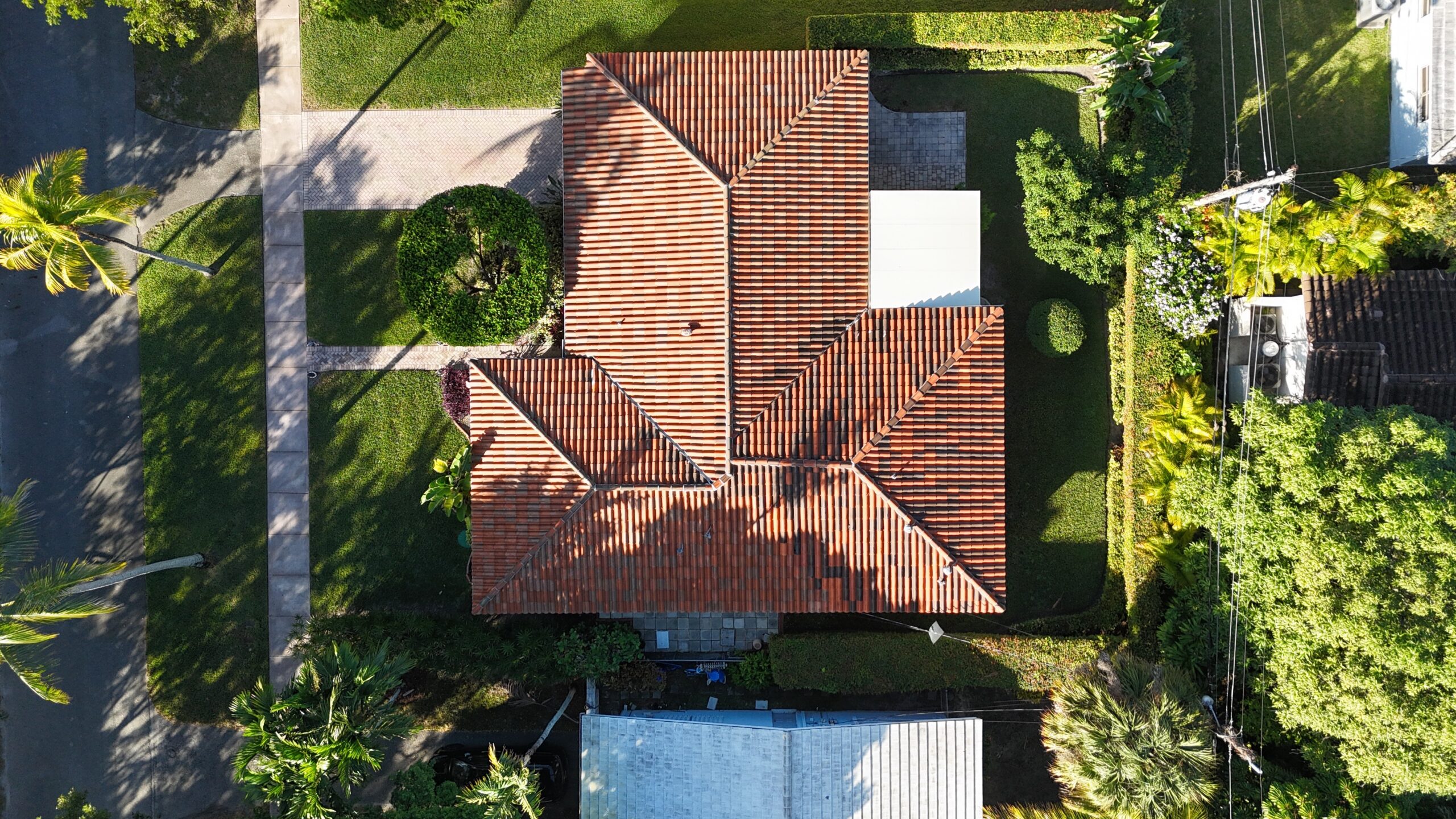
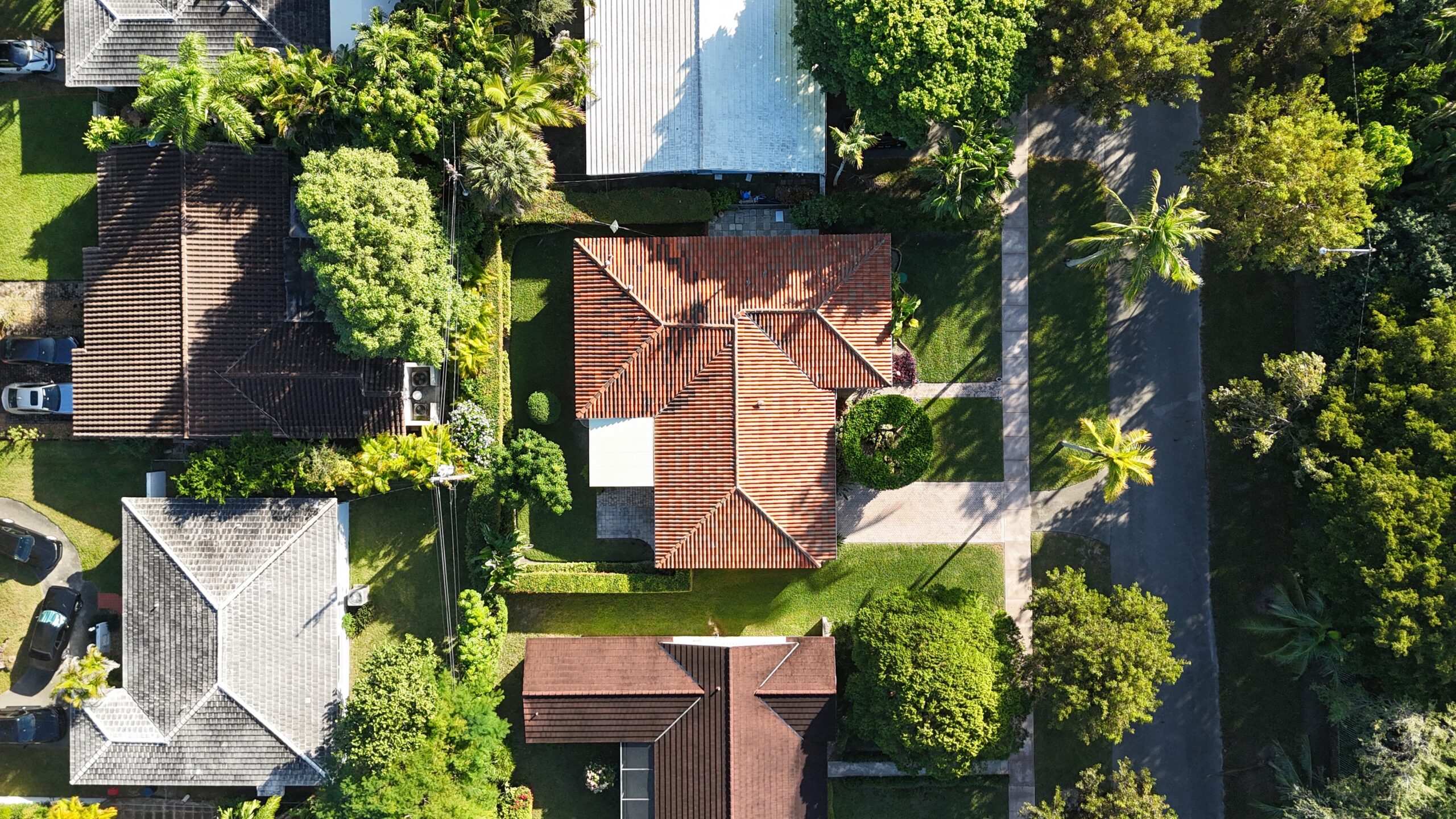
| Roof Shape | Hip vs. gable vs. flat — hip earns the best credit | Moderate |
| Opening Protection | Windows, doors, skylights — every single one | High (largest single credit) |
| Secondary Water Resistance | Peel-and-stick underlayment under shingles | Low–Moderate |
The Big Three: FBC Code, Attachment Nails, and Opening Protection
Insurance underwriters care most about three attributes: the Florida Building Code edition the structure was built to, the roof-to-deck attachment nail pattern, and opening protection. The first is fixed by your permit history. The second requires an attic inspection — and that is where the attic-access problem appears. The third is entirely within a homeowner’s control.
The Lowest-Common-Denominator Rule for Opening Protection
Opening protection is binary at the property level: every opening must meet the same protection standard or the credit drops to the lowest qualifying tier. One unprotected garage door, one skylight without an approved cover, one French door with decorative glazing that lacks an NOA — any of these resets your opening protection score downward for the entire home. Inspectors are required to document every opening, not just the windows.
Impact Windows vs. Shutters: Same Credit Tier, Different Risk Profile
| Factor | Panel Shutters | Accordion Shutters | Impact Windows (Permanent) |
|---|---|---|---|
| OIR-B1-1802 credit tier | Opening Protection A or B (varies by product) | Opening Protection A or B | Opening Protection A or B |
| Deployment required before storm | Yes — manual, labor-intensive | Yes — pull and latch | No action required |
| Rust / corrosion risk (coastal) | High — salt air degrades hinges and bolts | Moderate | Low — aluminum frame with marine finish |
| Last-minute deployment liability | High — workers on ladders in pre-storm wind | Low | None |
| Inspector verification | Must confirm NOA, bolt pattern, condition | NOA + hardware check | NOA + installation permit |
| Permanent protection | No | No | Yes |
The insurance credit for opening protection can be identical between shutters and impact windows, depending on the specific products and their NOA ratings. Where impact windows pull ahead is operational: they are always deployed, they do not rust, and they do not require anyone to climb a ladder in 40-knot gusts. Panel shutters also carry a genuine liability risk — installers and homeowners have been injured deploying heavy corrugated panels under pre-storm conditions.
The Attic Access Problem
Roof deck attachment and roof-to-wall attachment credits both require the inspector to physically enter or visually verify conditions in the attic. If your attic hatch is blocked by storage, insulation blown over the frame, or a finished ceiling with no accessible panel, the inspector marks those attributes as “unverifiable” — which defaults to the lowest credit tier. This is a common and entirely avoidable credit killer. Clear your attic access before the inspection appointment.
For homes where structural modifications are needed — removing a load-bearing wall, adding hurricane straps to existing framing, or coordinating roof and window work under a single permit — having a contractor authorized to manage that scope in-house simplifies the permit trail and gives the inspector a cleaner documentation package to verify.
Carrier Comparison
A-Rated Carriers vs. Citizens: What Underwriting Actually Rewards
The OIR-B1-1802 form is universal, but how carriers apply the scores differs.
| Underwriting Factor | Citizens Insurance | A-Rated Private Carrier |
|---|---|---|
| Opening protection credit | Formula-driven by form tier | Often higher discount for full impact glass |
| Roof age non-renewal threshold | Non-renewing roofs 20–25+ years old | Varies; some accept 15-year roofs with wind mit |
| HVHZ surcharge | Applies | Varies by carrier; some waive with full mitigation |
| Named-storm deductible | Typically 2–5% of dwelling value | Some carriers reduce with full opening protection |
| Secondary water barrier credit | Yes — peel-and-stick only | Yes — some also credit Dens Deck systems |
Why Contractor Choice Matters
Licensed Contractor — Not a Lead Aggregator
The products installed and the permits pulled affect what an inspector can verify. Sloppy documentation means lost credits.
“The inspection is only as good as the installation paperwork. If your permits are clean, your NOA is on file, and every opening is accounted for, the inspector’s job is easy and your credit is secure.”
Founder & President, Bigfoot Windows & Roofing
Product Guidance
What to Install for Maximum Opening Protection Credit
For South Florida homeowners targeting the highest opening protection tier, aluminum impact windows are the most time-tested choice in HVHZ conditions. Aluminum handles heat, humidity, UV, and salt air better than vinyl over the long term — a meaningful consideration in coastal Miami-Dade and Broward.
Bigfoot installs Mr. Glass and ES Windows aluminum impact lines. Mr. Glass carries Florida Product Approval on all lines. The Series 200 single-hung and Series 300 horizontal roller are both high-rise and HVHZ capable. For coastal installations within approximately two miles of saltwater, the 2605 anodized finish is specified — not the 2604 wood-grain finish, which loses the 10-year product warranty in marine environments.
Glass selection also affects compliance. Turtle-code coastal zones require specific glass tints and thicknesses. A 9/16” gray glass is automatically compliant; 5/16” glass in a turtle-code zone requires double-gray glazing. Your installer should be verifying this at the product-selection stage, not after the permit is pulled. For energy efficiency in addition to storm protection, thermally broken aluminum frames reduce heat transfer without sacrificing the structural integrity that HVHZ demands.
If you are financing the upgrade, PACE financing options allow payment through your property tax bill with no credit-score impact — and the wind mitigation premium savings often offset a meaningful portion of the monthly cost.
What to Expect
The Wind Mitigation Process: From Installation to Insurance Credit
- Install permitted, NOA-documented products. Every window, door, and skylight needs a Florida Product Approval or Miami-Dade NOA on file with your local building department.
- Pass final inspection. The building inspector signs off on the installation. This creates the permit record the wind mit inspector will reference.
- Clear your attic access. Before scheduling your wind mitigation inspection, confirm the hatch is accessible and that insulation has not covered the framing — inspectors need to see nail patterns and strap attachments.
- Schedule a licensed wind mitigation inspector. This is a separate appointment from the building inspection — typically a roofing contractor or home inspector credentialed by the Florida Department of Financial Services.
- Receive form OIR-B1-1802. Submit to your insurer or broker. Request re-rating immediately — do not wait for renewal.
- Shop carriers. Send the completed form to at least two A-rated private carriers alongside Citizens to compare how each carrier applies the credits.
Ready to upgrade your opening protection and earn the best wind mitigation tier your home qualifies for?
Or request a free estimate online — no phone call required to get started.
Who We’re Not the Right Fit For
- Homeowners who need the absolute lowest upfront cost only. Impact windows are a long-term investment. If budget is the sole driver and you are comfortable with shutters deployed before every storm, a shutter-only approach may cost less initially. We are happy to discuss both — but we will not recommend an inferior product just to win the job.
- Projects requiring licensed electrical, plumbing, or HVAC work. Bigfoot holds licenses for general contracting, residential contracting, roofing, and glass and glazing. We do not hold electrical, plumbing, or mechanical licenses. If your project requires those trades as the primary scope, you will need a specialist for that portion.
- Buyers who have already selected PGT, CGI, or Andersen windows. Those are brands we do not carry. We install Mr. Glass and ES Windows aluminum impact lines. If you are committed to a different brand, we are not the right installer for that product.
- Homeowners outside our service area. Bigfoot serves Miami-Dade, Broward, and Palm Beach counties. If your property is outside South Florida, we cannot pull your permits or schedule your inspection.
Frequently Asked Questions
How do I pass a Florida wind mitigation inspection?
Ensure every opening — windows, doors, skylights, garage doors — has a Florida Product Approval or Miami-Dade NOA on file. Clear your attic hatch so the inspector can verify nail patterns and hurricane straps. Have your permit records ready. The inspector completes form OIR-B1-1802 based on what they can physically verify; anything unverifiable defaults to the lowest credit tier.
Do impact windows lower my insurance more than shutters?
Not necessarily more — the opening protection credit tier depends on the product’s NOA rating, not the product type. Impact windows and accordion shutters with equivalent ratings can earn the same credit. Impact windows have a practical advantage: they are always deployed, require no pre-storm labor, and carry no rust or last-minute deployment risk. Some A-rated private carriers do apply a larger discount for permanent impact glazing — ask your broker to compare.
What are the biggest factors on a wind mitigation form?
Three attributes drive the most premium movement: opening protection (all windows, doors, skylights), roof-to-wall attachment (hurricane straps vs. toenails), and the Florida Building Code edition the structure was built or permitted to. Opening protection is the one factor most homeowners can upgrade. Roof deck attachment and roof shape also matter but require more significant structural or construction changes.
Why did my wind mitigation credit get denied or come back lower than expected?
The most common reasons: one unprotected opening (the lowest-common-denominator rule), a blocked attic hatch preventing nail and strap verification, products without a valid NOA or Florida Product Approval on file, or panel shutters that are rusted and no longer deployable. Your insurer may also apply underwriting overlays beyond the OIR-B1-1802 form — check with your broker about carrier-specific requirements.
Does attic access affect a wind mitigation inspection?
Yes — significantly. Roof deck attachment and roof-to-wall attachment credits both require the inspector to see inside the attic. If the hatch is blocked, insulated over, or physically inaccessible, those attributes are marked unverifiable and default to the lowest credit category. Clear the hatch and confirm it opens freely before your inspection appointment. This is one of the easiest credit improvements a homeowner can make at zero cost.
What insurance tier do impact windows qualify for in HVHZ?
A product with a current Florida Product Approval (FL number) that covers HVHZ use is legal to install in Miami-Dade and Broward. A Miami-Dade NOA is an additional certification some products also carry; it is not required for the permit. Products with a valid NOA that covers the design pressure for your specific openings typically qualify for Opening Protection Category A or B on the OIR-B1-1802 form, which carries the highest available opening-protection credit.
Can I finance impact windows and still benefit from the wind mitigation credit?
Yes. PACE financing, paid through your property tax bill, does not affect your credit score and has no prepayment penalty. The wind mitigation premium reduction begins as soon as you submit the updated OIR-B1-1802 form to your insurer — you do not need to wait for financing to be paid off. Some homeowners find the annual premium savings offset a meaningful portion of the PACE payment. For qualifying property owners, there may also be tax benefits available — consult your CPA.
Sources
- Florida Office of Insurance Regulation — Uniform Mitigation Verification Inspection Form OIR-B1-1802
- Florida Building Code, 8th Edition — High Velocity Hurricane Zone provisions
- Miami-Dade County Product Control — Notice of Acceptance database
- Florida Department of Financial Services — Wind Mitigation Inspector licensing requirements
Get the Wind Mitigation Credit Your Home Deserves
Bigfoot Windows & Roofing installs aluminum impact windows in Miami-Dade, Broward, and Palm Beach with full permit documentation — so your inspection goes smoothly and your credits stick.
Or call us directly: 786-886-2088