
Metal Roof Cost in Miami: A Bigfoot Guide | Bigfoot Windows & Roofing
Last updated: July 2026 by the Bigfoot Windows & Roofing editorial team.
Key Takeaways
- Standing seam metal roofing in Miami-Dade runs $1,050–$1,300 per square (per 100 sq ft) installed.
- Metal tile (stone-coated) runs $1,175–$1,400 per square installed.
- HVHZ permitting, clip selection, and disposal of the existing roof all push costs upward.
- A wind mitigation inspection after installation can meaningfully reduce homeowner insurance premiums.
- PACE financing lets most Miami-Dade homeowners pay through their property tax bill — no bank loan required.
- Bigfoot holds a Certified Roofing Contractor license and a Certified General Contractor license, so structural findings during a re-roof are handled in-house without a second contractor.
The Homeowner Problem
Why Metal Roof Pricing in Miami Is Harder to Decode Than the Rest of Florida
South Florida’s HVHZ code requirements, salt-air material rules, and shortage of truly qualified installers mean the price spread is wide — and the wrong low bid can cost far more later.
Most Miami homeowners shopping for a new roof get bids that range by $8,000 or more on the same house. Some of that is legitimate scope difference. Some of it is a contractor skipping HVHZ-required components — stamped clips, code-compliant underlayment, proper fastener spacing — and passing the savings to you as a lower price, with the inspection failure or re-work arriving later.
This guide walks you through the real cost drivers so you can evaluate a bid intelligently, not just compare the bottom line.
South Florida Context
What Makes Miami-Dade Metal Roofing More Expensive Than the National Average
Miami-Dade and Broward Counties sit inside the High-Velocity Hurricane Zone (HVHZ) — the strictest residential building code jurisdiction in the United States. The Florida Building Code (FBC) imposes requirements that simply do not exist in most of the country:
- Product approval, not just code compliance: Every roofing product used in HVHZ must carry a Florida Product Approval (FPA) number. Not all products sold nationally qualify.
- Stamped clips, not generic clips: For Englert or Metal Alliance standing seam, the manufacturer-stamped clip system is required. Knockoff clips can pass visual inspection but fail engineering review — the consequence is a full roof redo.
- Coastal finish requirements: Within roughly two miles of salt water, certain coatings and finishes are mandatory. Plain Galvalume is not permitted in Miami-Dade coastal zones.
- Permit and inspection costs: Miami-Dade permit fees and mandatory inspections add to total project cost. Budget $500–$1,500 depending on municipality and roof size — this is not optional and should be line-itemed by every legitimate contractor.
- Disposal of existing roof: Florida building code typically requires removing the old roof before installing a new metal system. Disposal of concrete tile or multiple shingle layers adds cost — usually $300–$700 for a typical residential roof.
Cost Education
Metal Roof Cost Ranges in Miami: By System Type
The table below uses Bigfoot’s current installed pricing (per square = per 100 sq ft of roof area). These are full-replacement ranges — material, labor, permit, and standard disposal included.
| System Type | Low End / sq | High End / sq | Notes |
|---|---|---|---|
| Standing Seam (Englert or Metal Alliance) | $1,050 | $1,300 | Custom roll-formed on-site; stamped clip required for HVHZ |
| Metal Tile / Stone-Coated (Westlake/Unified Steel) | $1,175 | $1,400 | VSH-rated; no named storm or saltwater exclusion clauses |
| Flat (TPO membrane) | $800 | $1,400 | Wide range driven by tapered insulation, ISO board, and Dens Deck cover board requirements |
Example: A 2,000 sq ft home (approximately 20 squares) with a standing seam system runs roughly $21,000–$26,000 before any unusual structural findings. A metal tile system on the same footprint runs approximately $23,500–$28,000.
What Drives Your Number Up or Down
The cost factors below are the most common sources of scope difference between bids:
| Cost Driver | Typical Impact | Direction |
|---|---|---|
| Roof pitch (steep = more labor) | $50–$150/sq adder on steep pitches | Up |
| Multiple hips, valleys, skylights | Increases material waste and labor time | Up |
| Old tile removal (heavy disposal) | $400–$900 for concrete tile tearoff | Up |
| Structural findings (rotted decking, missing hurricane straps) | Variable; addressed during re-roof | Up |
| Simple low-slope hip roof, single layer shingle removal | Keeps project near low-end range | Down |
| PACE financing (20-year term) | Reduces monthly cash impact significantly | Down (cash flow) |
System Comparison
Standing Seam vs. Metal Tile vs. Stone-Coated: Which Is Right for Miami?
Each system has a different cost profile and a different set of trade-offs for Miami-Dade homeowners:
- Standing Seam (Englert or Metal Alliance): Panels run one continuous piece from eave to ridge — no horizontal seams. This is a structural hurricane advantage. The manufacturer-approved clip system allows thermal float, preventing oil canning and buckling that nail-strip systems cause. Warranty terms come from the panel manufacturer on your project (Englert or Metal Alliance) and are listed on your proposal. Best for homeowners who want maximum wind performance and the cleanest modern aesthetic.
- Metal Tile / Stone-Coated (Westlake Unified Steel): VSH-rated; warranty has no named-storm or saltwater exclusion clauses — a meaningful advantage over some competitor tile warranties that do. Best for homeowners who want the look of barrel or flat tile without concrete tile weight or breakage risk.
- Corrugated / Nail-Strip Systems: Lower upfront cost but introduce oil canning and buckling risk, and clip NOA issues have surfaced in the market. Bigfoot does not install nail-strip systems for this reason.
License & Credentials
A Contractor Who Holds the License — Not a Subcontract Chain
Florida licensed: CGC1531370 · CRC1331693 · CCC1333168 · SCC131153098
Certified Roofing Contractor CCC1333168
Certified Residential Contractor CRC1331693
Glass & Glazing Specialty SCC131153098
Miami-Dade • Broward • Palm Beach
GAF Certified Plus
“When we pull back old tile and find rotted decking or missing hurricane straps, we can address that structural scope in-house — you don’t need to call a second contractor and wait. That’s what holding a Certified General Contractor license actually means on a re-roof job.”
President, Bigfoot Windows & Roofing
CGC1531370
Product Guidance
Why Bigfoot Recommends Englert or Metal Alliance Standing Seam and Westlake Metal Tile for Miami-Dade
Bigfoot installs Englert or Metal Alliance standing seam as its primary metal roofing system. Englert or Metal Alliance panels are fabricated custom per job — roll-formed on-site — from 24-gauge Galvalume or aluminum. The proprietary multi-coat Kaner paint system outperforms single-coat competitor finishes. The stamped clip system (installed at the spacing its product approval specifies) is what separates a proper HVHZ installation from one that may fail inspection or re-inspection years later.
For homeowners whose HOA prefers a tile appearance, Westlake Unified Steel stone-coated tile is the recommendation. Under Florida SB 293, HOAs cannot prohibit metal roofing — but if you prefer the look of barrel tile, Westlake delivers it without the weight or breakage exposure of concrete.
For all roofing system options and to see how metal compares to shingle and tile for your specific home, visit Bigfoot’s roofing overview or use the roofing cost estimator to get a preliminary range.
The Process
How a Metal Roof Replacement Works in Miami-Dade: From Estimate to Final Inspection
- On-site estimate: Bigfoot measures the roof, documents existing conditions, and identifies any structural concerns visible at that stage.
- Permit application: Bigfoot pulls the permit. In Miami-Dade, this includes submitting FPA documentation for every product being installed. Permit turnaround varies by municipality — typically 1–4 weeks.
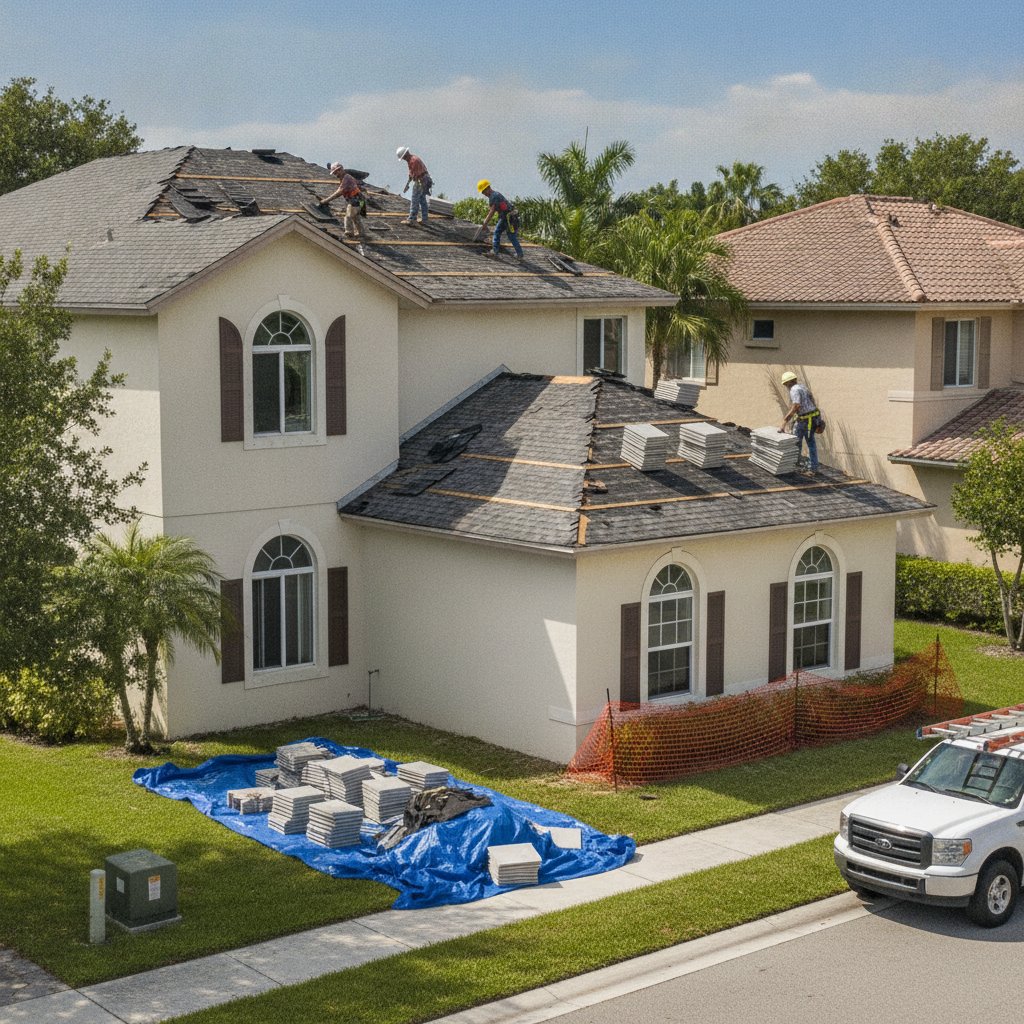
- Tearoff and deck inspection: Old roofing is removed. Decking is inspected. Any rotted decking, missing hurricane straps, or code-driven structural scope is addressed at this stage — in-house, without a separate GC, because Bigfoot holds a Certified General Contractor license (CGC1531370) in addition to its roofing credentials.
- Installation: Panels are roll-formed on-site. Clip system installed to manufacturer and HVHZ specifications. Underlayment installed per FBC requirements.
- Final inspection: Miami-Dade building inspector signs off. Bigfoot coordinates this directly.
- Wind mitigation inspection: After permit close, a licensed wind mitigation inspector can document the new roof for submission to your insurer. This is often where the insurance premium reduction materializes.
Ready to get a real number for your Miami home? No obligation.
Financing
PACE Financing: How Miami Homeowners Pay for a Metal Roof Through Their Property Tax Bill
PACE (Property Assessed Clean Energy) financing is one of the most widely used tools for roof replacement in South Florida. The balance is paid through your property tax bill — not a bank loan. There is no credit score impact. There is no prepayment penalty.
- Current PACE rate: approximately 9.49%
- 20-year term produces the lowest monthly payment
- Sample: $15,000 financed over 20 years ≈ $173/month
- Roofing and window projects must be separate PACE applications — never combine them on one application
The My Safe Florida Home grant offers up to $10,000 for qualifying homeowners and can be stacked with PACE financing. Explore financing options for South Florida homeowners on Bigfoot’s financing page for current program details. For qualifying property owners, there may be tax benefits available — please consult your CPA.
Insurance Impact
Do Metal Roofs Lower Homeowner Insurance Premiums in Miami-Dade?
A new metal roof — especially a standing seam system with a secondary water barrier — qualifies for wind mitigation credits with most Florida insurers. The actual premium reduction depends on your insurer, your current policy, and what the wind mitigation inspector documents. Bigfoot does not guarantee specific dollar savings, but homeowners who replace an aging roof, receive a wind mitigation inspection, and then shop carriers have in some cases seen very significant premium reductions.
Citizens Insurance, Florida’s insurer of last resort, has been non-renewing policies on roofs 20–25 years or older. A new metal roof resets that clock entirely and makes your home insurable with private carriers at competitive rates.
Related Articles
Who We’re Not the Right Fit For
- Homeowners looking for the lowest bid in the market: Bigfoot prices include HVHZ-compliant components, permitted work, and in-house structural scope. If your priority is the lowest number regardless of compliance, a different contractor may quote lower — but the inspection and long-term risk profile will differ.
- Projects requiring commercial high-rise or condo association approval processes: Bigfoot focuses on residential and small commercial. Complex condo association procurement processes with multiple board approval cycles are outside our typical scope.
- Homeowners who want a quick cash estimate with no site visit: Roof cost varies too much by condition, existing layers, and decking state to quote reliably without seeing the property. We do not provide final pricing over the phone without an on-site assessment.
- Outside Miami-Dade, Broward, and Palm Beach Counties: Bigfoot operates in South Florida. If your project is in another region of the state, we are not the right contractor.
Frequently Asked Questions
How much does a metal roof cost per square foot in Miami?
Installed cost for standing seam metal runs $10.50–$13.00 per square foot in Miami-Dade (or $1,050–$1,300 per square of 100 sq ft). Metal tile runs $11.75–$14.00 per square foot. These ranges include material, labor, HVHZ-compliant components, permit fees, and standard single-layer disposal. Steep roofs, complex geometry, and heavy existing roof removal push toward the top of the range.
Are metal roofs worth the investment in hurricane-prone South Florida?
For most South Florida homeowners, yes. A properly installed standing seam metal roof with an HVHZ-compliant clip system is one of the most wind-resistant residential roofing options available. It also resets your insurance eligibility clock — Citizens Insurance has been non-renewing aging roofs. The upfront cost is higher than shingle, but the multi-decade manufacturer warranty and insurance impact make the math work for most homeowners who plan to stay in the home.
What is the difference in cost between standing seam and corrugated metal roofs in Miami-Dade?
Corrugated (nail-strip) systems typically quote lower upfront, but they introduce oil canning, buckling risk, and HVHZ clip NOA compliance issues. Bigfoot does not install nail-strip systems. Standing seam with stamped clips is the correct HVHZ system — and the cost difference over the roof’s lifespan, when you factor in potential inspection failures or re-work with a cheaper system, often disappears.
Do metal roofs lower home insurance premiums in Florida?
A new metal roof can qualify for wind mitigation credits that reduce your premium. The actual reduction depends on your insurer, your current policy structure, and what the wind mitigation inspector documents. Bigfoot does not quote specific savings figures, but the combination of a new roof, a wind mitigation inspection, and shopping carriers has produced very meaningful premium reductions for homeowners in Miami-Dade and Broward.
What permits are required for a metal roof in Miami and how do they affect cost?
Miami-Dade requires a roofing permit for all full replacements. The permit application must include Florida Product Approval documentation for every material used. Bigfoot pulls the permit — it is included in our project scope. Permit fees typically add $500–$1,500 depending on municipality and roof size. Unpermitted roof work in Miami-Dade is a serious liability at resale and can affect insurance claims.
Can I finance a metal roof in Miami without a bank loan?
Yes. PACE financing is paid through your property tax bill, not a traditional loan. There is no credit score impact and no prepayment penalty. The current PACE rate is approximately 9.49%. A 20-year term minimizes monthly payment — roughly $173/month on a $15,000 balance. The My Safe Florida Home grant (up to $10,000) can also be stacked with PACE for qualifying homeowners. Roofing and window applications must be submitted separately. For qualifying property owners, there may be tax benefits — consult your CPA.
Does my HOA in South Florida have to approve a metal roof?
Under Florida SB 293, HOAs cannot prohibit metal roofing. They may still have aesthetic guidelines about color or style, but a blanket prohibition is not enforceable. If your HOA prefers the look of tile, Westlake Unified Steel stone-coated metal tile delivers that appearance on a metal system. Always confirm specific HOA requirements with your association before signing a contract.
Sources
- Florida Building Code (FBC) — High-Velocity Hurricane Zone (HVHZ) roofing requirements
- Florida Department of Business and Professional Regulation (DBPR) — license verification: dbpr.state.fl.us
- Florida SB 293 — HOA restrictions on metal roofing and impact windows
- My Safe Florida Home Program — myfloridacfo.com/division/sfhm

Get an honest estimate for your Miami metal roof — no pressure, no obligation.
Start Your Free Roofing Estimate
Or call Bigfoot Windows & Roofing directly: 786-886-2088