
Bigfoot Windows & Roofing | Impact Windows South Florida
Last updated: July 2026
Bottom line: Impact windows installed to Miami-Dade HVHZ standards protect your home from hurricanes, may reduce your homeowners insurance premium, and eliminate the need to deploy shutters before every storm. This guide covers what qualifies an impact window under Florida Building Code, what the permit process looks like in Miami-Dade County, and how to compare products honestly.
Key Takeaways
- Miami-Dade HVHZ requires windows tested to TAS 201, 202, and 203 — not just any “impact” label.
- Florida Product Approval (FPA) is required statewide; Miami-Dade NOA is a stricter county-level layer for HVHZ.
- Impact window installation typically costs $65–$150 per square foot installed in South Florida, depending on frame, glass, and opening size.
- A wind mitigation inspection after installation can support an insurance premium reduction under Florida Statute 627.0629.
- Bigfoot installs aluminum-framed impact windows — more time-tested in South Florida heat, UV, and coastal conditions than vinyl.
- As a Certified General Contractor, Bigfoot can handle structural modifications and code-driven scope in a single project.
The Homeowner Problem
Storm Season Is Not the Time to Figure Out Your Windows
Most South Florida homeowners discover their windows are non-compliant the hard way — at renewal time, when insurance sends a non-renewal notice, or when a contractor pulls a permit and the inspector finds single-pane glazing in an HVHZ structure.
South Florida is not a standard wind zone. Miami-Dade and Broward counties sit inside the High Velocity Hurricane Zone (HVHZ) — the strictest residential building code path in the United States. A window that passes Florida statewide product approval can still be rejected during a Miami-Dade inspection if it lacks a Miami-Dade Notice of Acceptance (NOA). These are two different documents, and confusing them is one of the most common mistakes homeowners make when shopping for impact windows.
Beyond code, there is the insurance pressure. Citizens Property Insurance has been tightening underwriting requirements. Homes with non-impact windows or aging shutters face higher premiums and, in some cases, non-renewal. Installing compliant impact windows — and getting a wind mitigation inspection documented — creates a paper trail that supports an insurance review under Florida Statute 627.0629, which requires insurers to offer premium discounts for mitigation features. We cannot guarantee a specific dollar savings, but the mechanism exists and is well-established.
South Florida Context
HVHZ, NOA, and the Florida Building Code — What They Actually Mean
The Florida Building Code Chapter 16 governs structural loads, including wind-borne debris requirements. In the HVHZ — which covers all of Miami-Dade and Broward — windows must pass three specific test protocols:
- TAS 201 — Large missile impact test (a 9-lb 2×4 at 50 ft/s)
- TAS 202 — Cyclic wind pressure test (simulates hurricane gusts, not just sustained load)
- TAS 203 — Uniform static air pressure test
A window that passes all three and receives a Miami-Dade Notice of Acceptance (NOA) is cleared for HVHZ installation. The NOA is issued by Miami-Dade County’s Product Control Section — it is separate from, and layered on top of, Florida Product Approval (FPA). Both documents must be on file before a permit can be issued in Miami-Dade County.
Palm Beach County does not require an NOA — Florida Product Approval is sufficient there. If your property straddles code jurisdictions or you are unsure which applies, our impact window service page explains the county-by-county requirements in more detail.
| Approval Type | Where Required | Who Issues It | What It Tests |
|---|---|---|---|
| Florida Product Approval (FPA) | All of Florida | Florida DBPR / FL Dept of Business & Prof. Regulation | Wind, impact, structural per FBC |
| Miami-Dade NOA | Miami-Dade & Broward (HVHZ) | Miami-Dade Product Control Section | TAS 201 / 202 / 203 — stricter HVHZ standards |
| Neither / Local Only | Not acceptable in Florida | N/A | N/A — always verify FPA at minimum |
Education
Impact Windows vs. Hurricane Shutters — What the Code Actually Requires
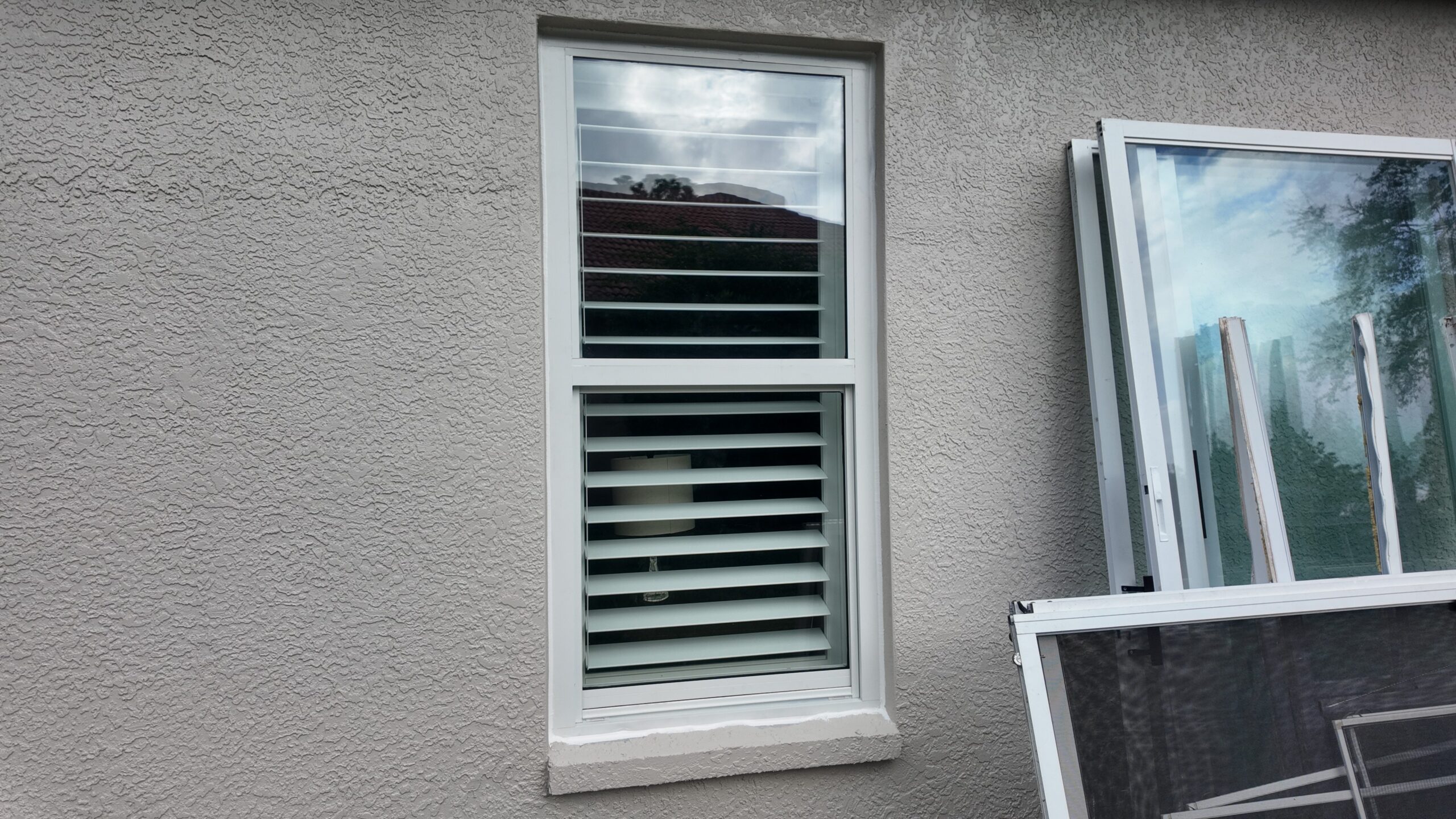
Hurricane shutters and impact windows both satisfy HVHZ glazing protection requirements when properly installed and documented. The practical differences matter more than the marketing:
| Factor | Hurricane Shutters | Impact Windows |
|---|---|---|
| Pre-storm action required | Yes — deploy each storm | None |
| Year-round burglar deterrent | No (when stored) | Yes — laminated glass |
| Natural light during storm | No | Yes |
| Insurance wind-mit credit potential | Possible, lower tier | Typically higher tier (opening protection) |
| Noise reduction | Some | Significant (laminated IG) |
| HOA restrictions | Possible | Florida SB 293 protects impact windows |
Florida SB 293 prevents HOAs from prohibiting impact windows or metal roofing — so if your association has previously pushed back on window upgrades, that barrier is legally removed.
For homeowners considering impact doors alongside windows, the same NOA and permitting framework applies — both need to be documented on a single permit set for a whole-home opening-protection upgrade.
Product Comparison
What Impact Window Product Lines Does Bigfoot Install?
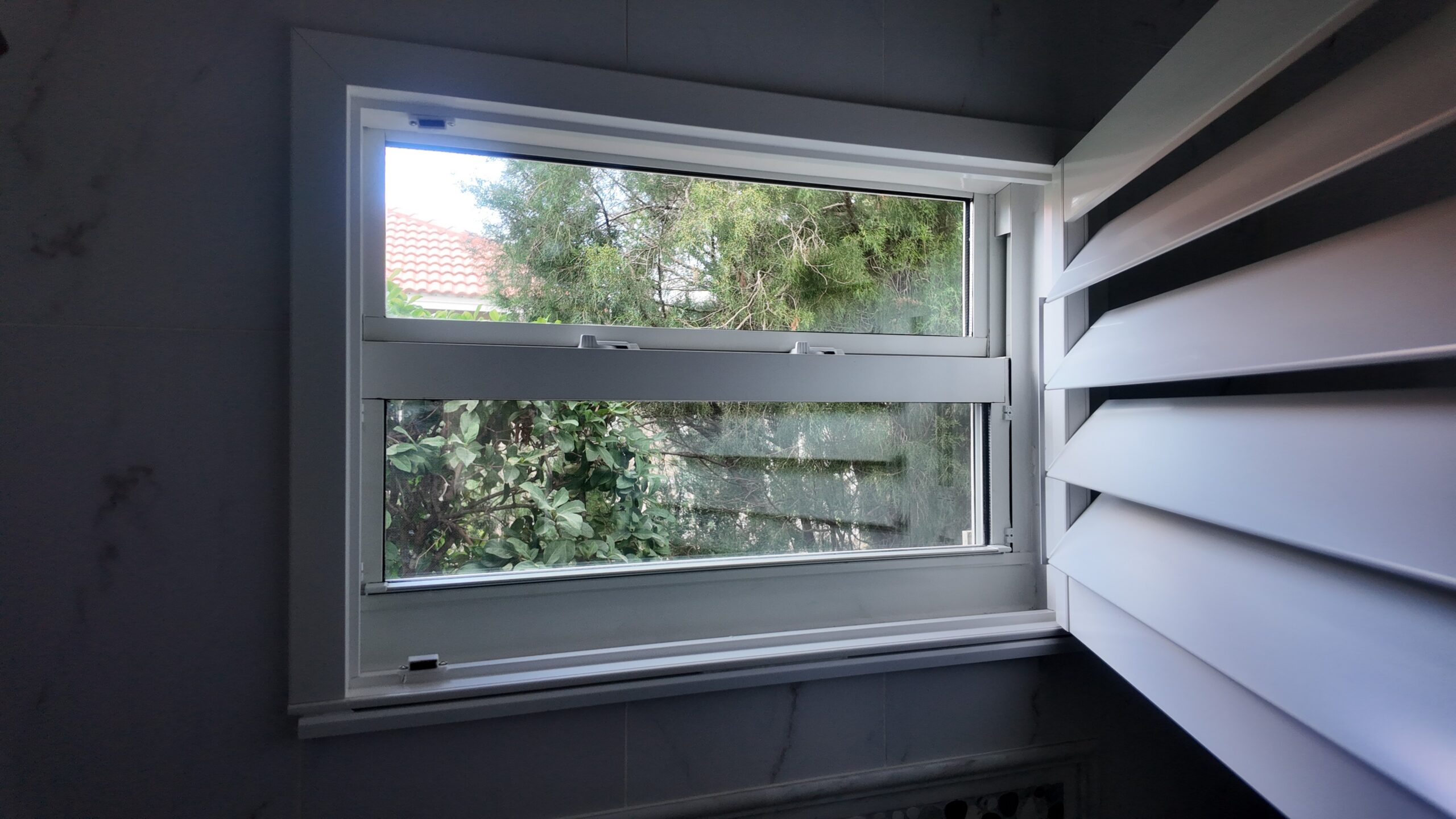
We install aluminum-framed impact windows. Here is why that matters in South Florida.
Bigfoot installs Mr. Glass as our primary impact window line and ES Windows as our secondary line. Both carry Florida Product Approval and Miami-Dade NOA on their impact-rated series. We recommend aluminum frames for South Florida — not vinyl — because aluminum is more time-tested in HVHZ heat, coastal salt air, and UV conditions. In our installation experience, vinyl has shown a tendency to warp or creep in prolonged South Florida heat and UV exposure; aluminum holds dimension and finish more predictably in HVHZ conditions.
Key product facts for homeowners:
- Mr. Glass Series 350: residential-only builder grade. Not recommended for condos, high-rise, or commercial buildings.
- Mr. Glass Series 200 / 300 / 400: flagship lines; high-rise capable; Series 300 handles openings up to 127-5/8” wide in a 3-panel configuration.
- Glass thickness: 5/16” (builder), 7/16” (standard mid), 9/16” (high-rise / heavy duty). Upgrading glass thickness does NOT change the frame depth — a common misconception we hear often.
- Coastal finish: within 2 miles of water, we use 2605 finish. A 2604 wood-grain finish loses the 10-year warranty in coastal environments.
- Low-E glass: SB 70 is our primary recommendation — strongest heat block, compliant with South Florida climate zone energy code requirements.
We carry a 10-year workmanship warranty on all window installations. Mr. Glass carries a 10-year product warranty (effective October 2025).
Why Bigfoot
Four Licenses. One Contractor. No Subcontracting Surprises.
Bigfoot Windows & Roofing is licensed at the Certified General Contractor level — which means structural scope, hurricane straps, and code-driven modifications that arise during a window project can be handled without bringing in a second contractor. That matters on older Miami-Dade homes where the rough opening framing is compromised, or where an inspector flags a structural correction mid-permit.
“When a permit inspector flags a structural issue mid-project, we handle it. You don’t get a phone call telling you to hire someone else.”
Darryl Rosenbaum
Founder & President
Pricing
How Much Do Impact Windows Cost in South Florida?
Impact window installation in South Florida typically runs $65–$150 per square foot installed. The range is wide because several factors move the number significantly:
- Frame material and series: builder-grade vs. flagship series affects both material cost and labor time.
- Glass specification: 5/16” vs. 9/16” glass; Low-E upgrade; insulated glass units (IG) for noise and energy performance.
- Opening count and size: more openings = higher total cost but potentially lower per-window cost due to mobilization efficiency.
- Structural condition of rough openings: compromised framing adds labor and material scope.
- Permit and inspection fees: Miami-Dade permit fees vary by project value; factor $300–$800 in permit costs for a typical residential project.
Financing is available for qualifying homeowners. See our financing options, including PACE financing paid through your property tax bill — no credit score impact and no prepayment penalty. The My Safe Florida Home grant (up to $10,000) can stack with financing for eligible properties.
For qualifying property owners, there may be tax benefits available — please consult your CPA.
The Process
What the Miami-Dade Permit and Installation Process Looks Like
Here is a realistic sequence for an impact window replacement project in Miami-Dade County:
- Measure and proposal: We measure every opening, confirm which Mr. Glass or ES Windows series fits your HOA, structural, and code requirements, and provide a written scope.
- Product order: Aluminum frames are custom-fabricated per opening. Lead times vary; plan for 4–8 weeks from order to delivery in current South Florida market conditions.
- Permit application: We pull the permit with Miami-Dade BCCO (Building and Compliance Construction Operations). Standard residential permit review typically takes 10–20 business days; expedited review is available for an additional fee.
- Rough-in inspection: Once windows are set in place but before stucco or trim is finished, the inspector verifies frame placement, anchorage, and NOA compliance.
- Final inspection: Trim, sealant, and finish work is complete. Inspector signs off. Permit closes.
- Wind mitigation inspection: After the permit closes, schedule a licensed wind mitigation inspector to document the new opening protection. Submit the report to your insurance carrier for a premium review under Florida Statute 627.0629.
Total timeline from signed contract to final inspection: typically 8–14 weeks depending on permit queue and product lead time. We communicate status throughout — no disappearing after the deposit clears.
For roofing work being done at the same time, our roofing service page explains how a combined permit set works and when it reduces total project cost.
Ready to get a real number for your project?
Request a free estimate Call 786-886-2088
Schedule Your Free Estimate
Ready to get started? Request a free estimate — no phone call required.
Related Articles
Keep Reading
Related Articles
Who We’re Not the Right Fit For
- Budget-first buyers seeking the lowest bid: We do not compete on price alone. Our product specs, permit rigor, and workmanship warranty reflect the actual cost of doing the work correctly in an HVHZ jurisdiction. If the priority is simply the cheapest number on paper, another contractor may submit a lower bid.
- Commercial high-rise projects: We serve residential and low-rise structures. Multi-story commercial buildings require a different license scope and project management infrastructure than we currently staff for.
- Homeowners who want a quick turnaround without permits: Every window replacement in Miami-Dade requires a permit. We will not skip it. If a contractor offers to install “without the hassle of permits,” that is unpermitted work — it voids your NOA, exposes you to code enforcement, and can create problems at resale.
- Out-of-state or remote property owners who cannot coordinate access: Our installation process requires property access at multiple stages (measurement, delivery, install, inspection). If you cannot facilitate that coordination, the project timeline will stall.
Frequently Asked Questions
What makes a window qualify as impact-rated in Miami-Dade County?
A window must pass TAS 201 (large missile impact), TAS 202 (cyclic wind pressure), and TAS 203 (uniform static air pressure) testing and hold a Miami-Dade Notice of Acceptance (NOA) issued by Miami-Dade County’s Product Control Section or a Florida Product Approval that covers HVHZ use. A product with a current Florida Product Approval (FL number) that covers HVHZ use is legal to install in Miami-Dade and Broward. A Miami-Dade NOA is an additional certification some products also carry; it is not required for the permit. Either document — FPA or NOA — must be on file before a permit is issued.
How much does impact window installation typically cost in South Florida?
Expect $65–$150 per square foot installed in South Florida. The main cost drivers are frame series (builder vs. flagship), glass specification (5/16” vs. 9/16”), opening count and size, structural condition of rough openings, and permit fees. Larger whole-home projects sometimes reduce the per-window unit cost through mobilization efficiency. Get a written scope before comparing bids.
Will installing impact windows help lower my homeowners insurance in Florida?
Installing NOA-approved impact windows and obtaining a wind mitigation inspection creates documentation that supports an insurance premium review under Florida Statute 627.0629, which requires insurers to offer discounts for qualifying mitigation features. We cannot guarantee a specific dollar savings — outcomes vary by insurer, current premium, and policy structure. Have the wind mitigation report submitted to your carrier after the permit closes.
What is the difference between hurricane shutters and impact windows for HVHZ compliance?
Both can satisfy HVHZ opening-protection requirements when properly installed and documented. The key differences: shutters require manual deployment before each storm; impact windows provide year-round protection passively. Impact windows also tend to score at a higher tier on wind mitigation inspections (classified as opening protection vs. just
Ready to get started? Get a free, no-pressure estimate from a licensed South Florida contractor.