Impact windows, doors and roofing · Before your appointment
Your First Appointment With Bigfoot: What Happens and How to Prepare
Quick reassurance: you do not need to be an expert, and you do not need to decide that day
A first appointment with Bigfoot is a working visit, not a performance. We look at the home, we ask what you are trying to solve, we measure what needs measuring, and we explain the options and what each one includes. You leave with a clearer picture of your home, your choices, the likely scope, and the next step. Nobody needs to know the difference between a design pressure and a product approval before we arrive, and nobody has to sign anything for the visit to be worth having.
It is fair to be guarded. Many South Florida homeowners have sat through a contractor visit that felt like a pitch, or received a number with no explanation of what it covered. The way to lower that guard is not to promise you a pleasant afternoon. It is to tell you, in advance, exactly what the visit is for, what we will and will not do, and what you should expect to have in hand afterward. That is what this page does. It is the detail behind stage one of the Bigfoot Journey on our homepage, the stage we call “Start With Clarity.”
Do I have to decide during the visit?
No. Bigfoot’s own proposal terms say the estimate is not a contract and has no effect until a signed copy is received at the office and accepted in writing. Florida law also gives a buyer the right to cancel a sale made in the home until midnight of the third business day after signing (s. 501.025, Florida Statutes). The paperwork is a separate, later step, and it is designed that way.
Will I get a price at the appointment?
Sometimes. A proposal may be presented during the visit when the scope and measurements are sufficiently defined, or it may follow after office review, product confirmation, engineering or additional measurement. The advisor should tell you what remains and when to expect the written follow-up.
Is a longer visit a warning sign?
No. A visit runs longer when there are more openings to measure, a roof that needs a closer look, or more questions from you, and a careful measurement takes the time it takes. Duration alone does not indicate pressure. There is no universal time promise: the visit should last long enough to inspect the relevant areas, answer your questions and explain the next step, while leaving you free to consider the proposal afterward.
Who is this page for?
Homeowners who have booked or are considering an impact window, impact door, or roofing appointment with Bigfoot in South Florida. If you have not booked yet, the quote page is where you start.
Before arrival: what happens between booking and the knock on the door
When you book, the appointment confirmation should state the date, arrival window and current rescheduling method. Confirmation and reminder channels can vary, so keep the message you receive and contact Bigfoot if any access or timing detail changes.
Your appointment may be handled by a Bigfoot Project Advisor or by a project-specific specialist, depending on the trade and inspection needs. The confirmation should identify the expected contact; if anything differs, you may ask the visitor to identify themselves before providing access. Bigfoot’s estimating team supports the visit when additional measurements or technical review are required.
Expect the visit to include both the inside and the outside of the home. For windows and doors, we need to see each opening from inside the room and from outside. For roofing, we need to walk the perimeter and, where appropriate and safe, look at the roof surface and the attic. If a gate, a locked side yard, a dog, or a tenant will affect access, mention it when you book and it can be planned around.
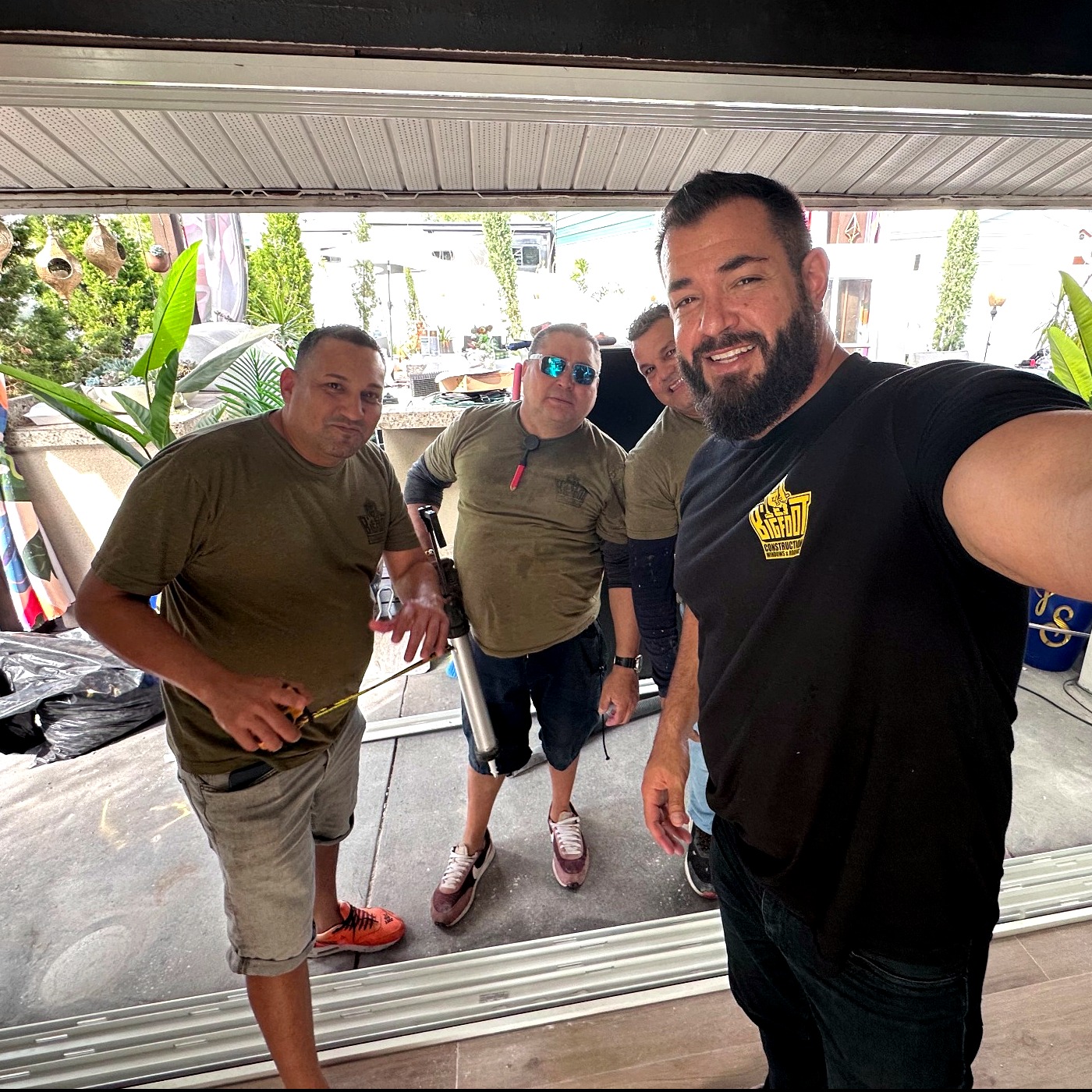
Bigfoot’s own crew on a South Florida impact-door installation. This is an installation photo, not an appointment photo; the same team stands behind the proposal you receive.
How to prepare: a short list, none of it mandatory
You do not need to clean the house or study products. A few things make the visit more useful:
- Your concerns, in your own words. Leaks, drafts, a window that will not lock, a roof that a buyer’s inspector flagged, noise, storm worry, insurance pressure. Photos of a problem taken during rain are worth more than a description.
- Previous proposals, permits or inspection reports, if you want to share them. They are useful for comparing scope. You are never required to show another company’s number, and we will not ask you to.
- HOA or condominium information. If your community has an architectural review process, having the contact or the guidelines handy helps us explain how approvals fit the timeline. Our guides on HOA approval for windows and doors and HOA approval for roofing cover what associations typically ask for.
- Budget and financing questions. It is fine to say what you are comfortable spending, and fine not to. Bigfoot’s proposal deck describes multiple financing programs with zero-down options, subject to lender approval and terms, and the financing page explains the programs. Ask the advisor to show how a program changes the monthly figure, not just the total.
- Reasonable access. Move what you can away from the windows that will be inspected, unlock the gate, know where the attic hatch is, and give a thought to where a vehicle can park. None of this is a rule; it just keeps the visit moving.
- Pets and children. Doors will be opened and closed and someone may be on a ladder outside. A dog in another room for a while keeps everyone comfortable.
Who should attend
Invite anyone who will help choose products, weigh options, or advise you: a spouse or partner, an adult child, a co-owner, a friend who has been through it. When everyone hears the same explanation once, the follow-up questions are fewer and the decision is easier to make together. If someone cannot attend, ask in advance whether they can join the recommendation portion by phone or video. Availability depends on the appointment and connection, so it should not be assumed without confirmation.
Everyone involved in the decision is welcome, but the inspection and information do not depend on every owner being in the room. Final contracting or authorization requirements are separate and should be stated in the written proposal.
Opening conversation: what we ask, and why
The visit starts at the table, not at the window. The questions are the same ones we would want answered before spending money on our own homes:
- What prompted the call: a specific failure, a storm, an insurance letter, a sale, or a long-planned upgrade?
- How long do you expect to own the home? A five-year plan and a twenty-year plan point to different products and different scopes.
- What matters most: appearance, comfort and noise, storm protection, energy, low maintenance, or the total number?
- What is the budget range you would be comfortable with, if you want to share it?
- What is the schedule: is there a deadline from an insurer, a closing, a lender, or hurricane season?
- Is there an HOA, condo board or historic-district review, and has anything been submitted already?
The point of asking is to match the recommendation to the evidence and your goals. When a repair, phased project or no immediate work is a responsible option, the advisor should explain why; the available scope still depends on the condition, trade and services offered for that project.
Windows/doors path: what we look at, measure and discuss
For impact windows and doors, the inspection is an inventory. Each opening is counted, photographed and measured, and we note how it operates today, what it is made of, and what the wall around it looks like. The advisor is looking for:
- Operation and condition. Which units stick, leak, fog between panes, or no longer lock. Whether existing shutters or tracks will stay or go.
- Opening construction. Block, frame, or a mix; whether wood bucks exist or will be needed; signs of past water intrusion around the opening; anything that will affect the finish work after installation.
- Configuration and glass. Which openings should be fixed, single-hung, horizontal roller, casement or sliding; which need egress; where tint, privacy glass or laminated-insulated glass makes sense. If you want to understand what is printed on a window label before the visit, the Model Decoder reads a product label into plain English.
- Design pressure and approvals. In the High-Velocity Hurricane Zone, each opening has a required design pressure, and the product installed there must carry a current approval for that pressure and size. Miami-Dade Notices of Acceptance and statewide Florida Product Approvals are public records you can look up yourself (Florida Product Approval search). Our NOA explainer covers what to look for. The advisor should be able to tell you which approval a recommended product will carry.
- Repair and finish scope. What happens to stucco, drywall, paint, and trim after the new unit goes in, and which of those are included in writing. Bigfoot’s window and door proposal deck includes a “compare what’s written” page that lists minor installation touch-ups as included where stated and says larger repairs are discussed first.
Measurements taken at a first visit are for scoping and pricing. Bigfoot’s windows-and-doors process schedules final measurements and selections, confirming openings, colors, glass, configurations and movement directions, after the agreement is signed and before the order is released. So if a number moves slightly between the first visit and the final measure, that is the process working, and it should be explained to you in writing.
We do not bring the whole showroom to your kitchen. Advisors may use photographs, digital proposal materials, manufacturer information and selected samples; the exact tools and whether the opening inventory is completed on site or finalized afterward can vary. Full-size displays and manufacturer information are available in the virtual showroom.
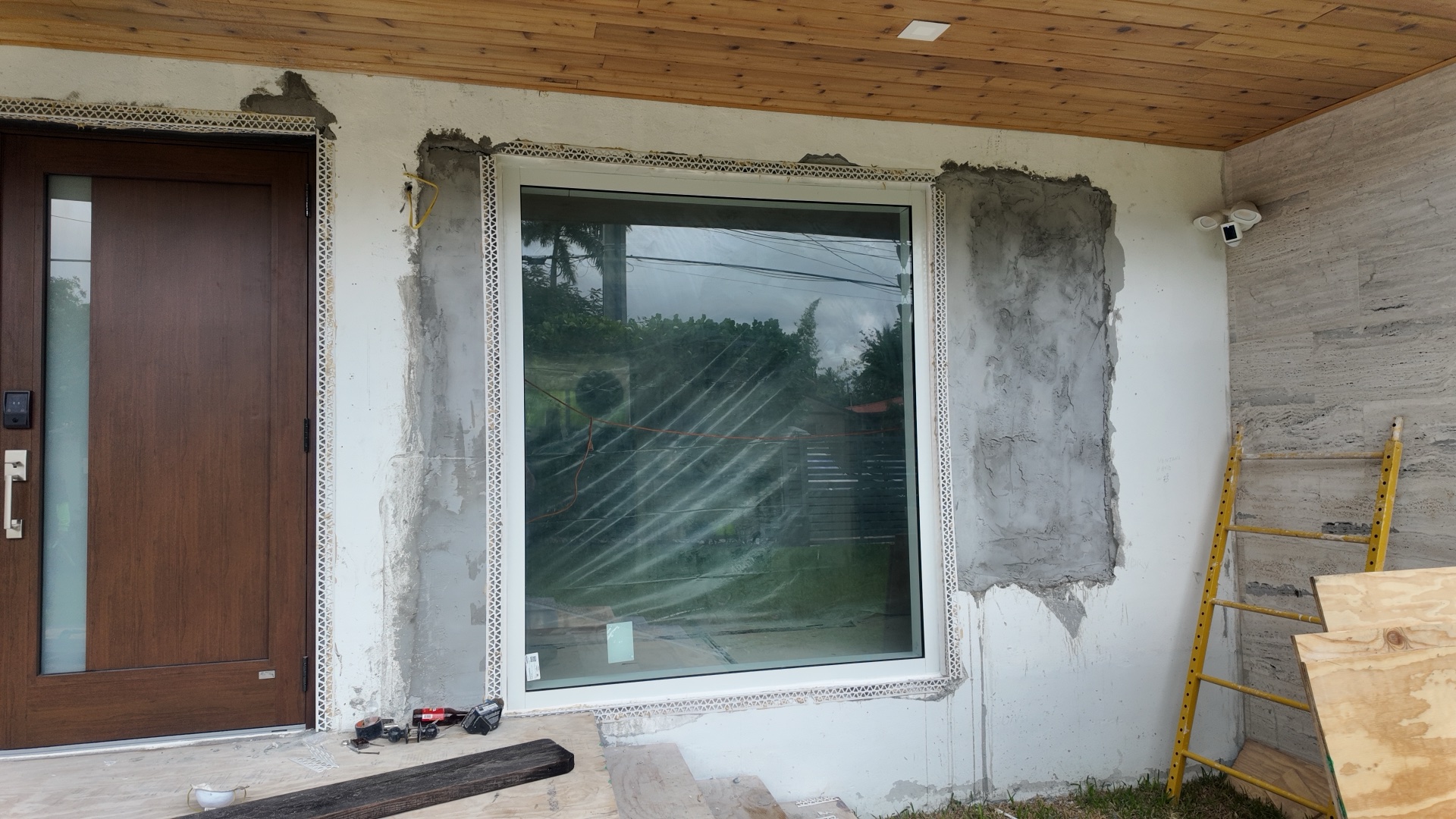
A Bigfoot impact-window installation in Miami, mid-finish. The opening construction and the stucco repair around it are exactly what the first-visit inspection is meant to anticipate.
Roofing path: history, symptoms, measurements and options
For a roof, the conversation starts with history: the roof’s age if you know it, what covering is on it now, any leaks and where they show inside, past repairs, and whether an insurer or an inspector has asked for anything. Then the inspection. Bigfoot’s roofing process describes the on-site consultation as a thorough inspection with measurements that identifies the roof type, materials and color preferences. In practice that means:
- Exterior assessment. The perimeter from the ground, the condition of the covering, flashings, penetrations, gutters and drainage, and the transitions where roof meets wall or another roof. Where it is safe to do so, a look at the surface itself.
- Attic assessment when appropriate. Accessible attic areas may be reviewed when doing so is safe, relevant and included in the appointment scope. Limited access, unsafe conditions or an inspection that does not require attic entry may prevent it.
- Measurements. A roof is priced by its measured area, slope and complexity. Measurements may come from site work, aerial reporting or both. Ask which method supports your proposal and whether the underlying report is available.
- System and material options. Shingle, tile, standing-seam metal, metal tile, or a low-slope membrane, and what each does for appearance, weight, wind rating, lifespan and insurance. Our roofing estimator gives a range by system before the visit so the conversation can start from a realistic place.
- Concealed conditions, said plainly. A roof cannot be fully known until the covering comes off. Bigfoot’s roofing terms state that the condition of the existing deck, sheathing and framing cannot be fully known until tear-off, and that rotten or non-code material found is documented by change order and priced before replacement, with the customer notified of the condition and the cost first. A good first visit tells you this before you ever see a number.
On roofing pricing, the detailed estimate generally follows the site visit after the office reviews measurements, scope and system choices. The project contact should confirm the expected delivery time and whether the review will be in person, by video or by phone.
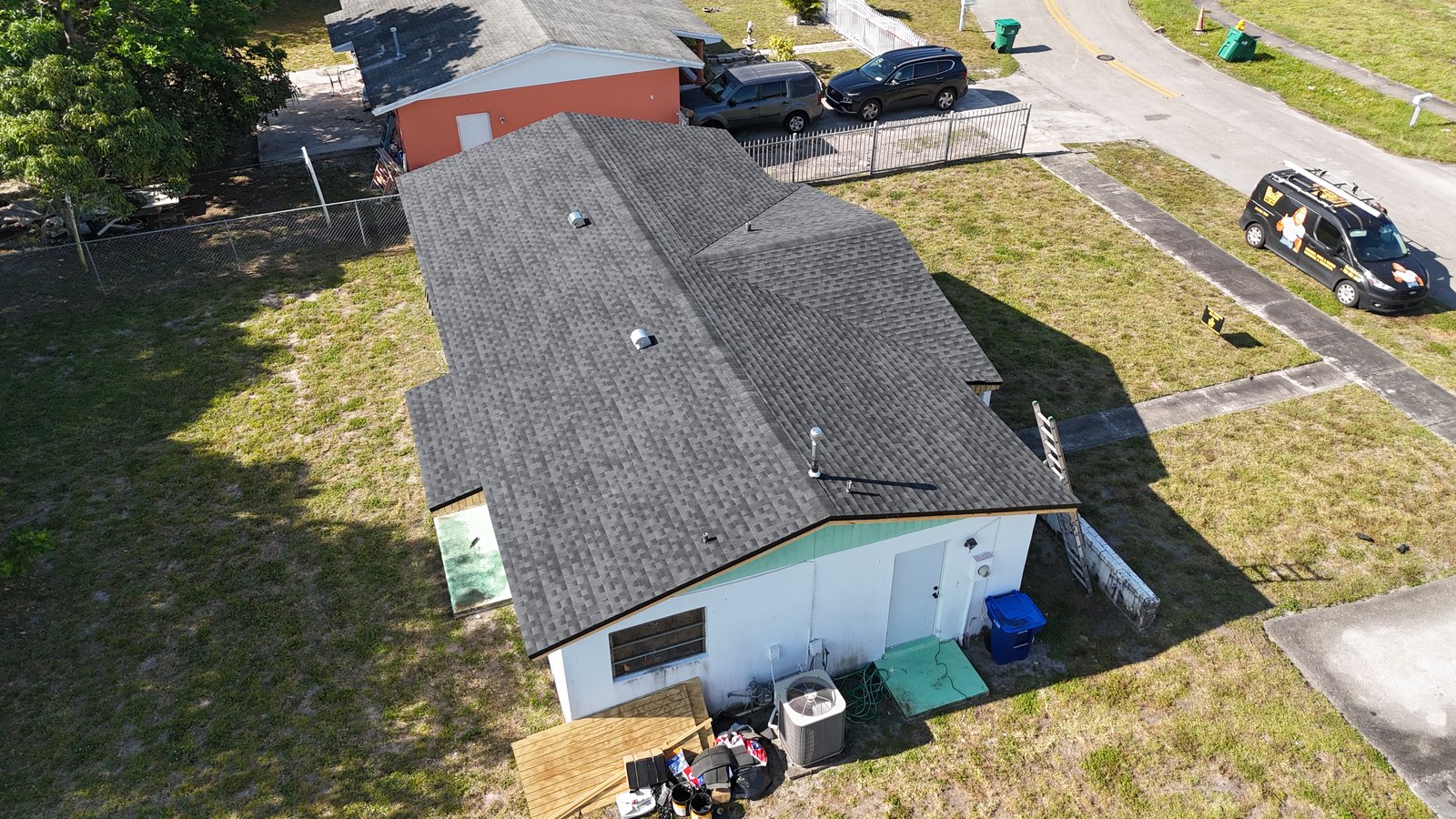
A completed Bigfoot shingle re-roof in Miami-Dade, from the drone. The first visit is where the roof’s area, slope and transitions get measured and where concealed-condition pricing gets explained.
Recommendations and proposal: what you should be able to see in writing
Whether it lands on the table or arrives after the visit, the proposal should let you check every item below without calling to ask. If any of these is missing from any proposal you receive, including ours, ask for it in writing before you sign.
- Options and tradeoffs. More than one way to do the job where there is more than one, and a plain statement of what you give up with the less expensive route.
- Inclusions and exclusions. What is in the scope, what is out, and what is “not stated.” Permit, engineering and architectural fees must be treated according to the specific written scope. Never assume the treatment is identical between windows, doors and roofing: the proposal should state what is included, excluded or still pending.
- Timing dependencies. Manufacturing lead time, permit processing, and association approval each move the calendar. Bigfoot’s windows-and-doors process holds the order until any required HOA, Board of Architects or advance municipal approval is in hand, and releases it immediately when none is required. For roofing, the process notes that material wait times vary with availability and HOA approval where applicable, and that the permit package is sent for signature and submitted to the county.
- Warranties. The proposal should distinguish the manufacturer’s product warranty from Bigfoot’s workmanship coverage. Because different company materials contain different durations, this guide does not promise a universal term; the warranty language in the signed, project-specific agreement controls.
- Payments. Each payment and its trigger should appear in the project-specific written proposal. Do not rely on a general article for a payment schedule. Florida also regulates certain contractor obligations after an initial payment (s. 489.126, Florida Statutes).
- What still needs follow-up estimating. A structural question, an engineer’s letter, a custom opening, a low-slope drainage fix. If it cannot be priced at the visit, the proposal should say so and say who resolves it.
Two guides go deeper on reading a proposal: what a window and door contract should contain and what a roof replacement estimate should include.
What will not happen
These are the standards homeowners should expect from a clear, professional appointment. The project-specific written proposal remains the controlling document.
- No requirement to sign immediately. The visit ends when the inspection and the explanation end. Nothing becomes binding until the required agreement is signed and accepted. Because published materials have shown different validity periods, rely only on the expiration date written on the proposal you receive.
- No fake today-only discount. Bigfoot’s terms state that the company assumes no responsibility for oral promises and that every term must appear in writing on the contract. A discount that exists only if you sign before the advisor leaves is not a term; it is a tactic. If a financing program, manufacturer offer or promotion has a real end date, it should appear in writing with the applicable terms and expiration date.
- No shame for comparing. Get other proposals. Our guide on comparing home improvement quotes explains how to line them up by scope rather than by total. Bring the comparison back to us if you want a second look at what a lower number leaves out.
- No promise that every answer and every pricing scenario can be finalized on site. Some things need the office: an engineer’s opinion, a manufacturer’s confirmation on an odd size, a permit-history search, a financing approval. When that is the case you will hear “we need to check” rather than a guess.
A word on photos and recording. The advisor may photograph openings or roof areas when those images are needed for inspection and estimating. A private conversation must not be recorded without prior consent from all parties under Florida law (s. 934.03, Florida Statutes). If recording is proposed, you should be asked first and may decline. Bigfoot’s separate photography and media release for promotional project images belongs to the contract stage, not the appointment itself.
After the appointment
You should receive a written proposal or a written follow-up explaining what still needs to be measured, confirmed or priced. The project contact should state the delivery method and expected follow-up timing. Any revision should also be supplied in writing rather than handled only as a verbal adjustment.
What happens next is your call and your pace. If you move forward, the process is already written down. For windows and doors, Bigfoot’s process runs from signing to a welcome call, to final measurements and selections, to the approval check and order release, then manufacturing and permitting, and installation once materials arrive. For roofing, the process runs from approval and final measurements, with the deposit collected, to permit submission, order placement, progress updates, installation, inspections, and the balance once inspections pass. From the day you sign to the day the permit closes, Bigfoot’s proposal promises one named contact, and it commits to a follow-up call thirty days after completion. Our roofing process timeline and window installation preparation guide describe the installation phase in detail. Before a roof installation, you also receive a one-page home-preparation sheet covering the work area, dust, access, vehicles, pets, attic items and interior protection.
Tools you can use while you think it over:
- Model Decoder: reads the label on a window or door product into plain English, so you can check what a proposal names.
- Impact window and door cost estimator and the roofing estimator: ranges by product and system, useful for checking whether a proposal sits where you expected.
- Financing calculator: monthly figures for a given total and term.
- My Safe Florida Home: the state program that can fund inspections and certain wind-hardening upgrades for eligible homes (official program site).
Additional homeowner tools may be added as they are published. Use only links that are live and available on the website.

Questions are welcome, before and after. If something on the proposal is unclear, call 786-886-2088 or text 786-358-7754. Asking is not a commitment.
Questions homeowners should ask
Print this list and ask every company the same questions, including us.
Twelve questions for any window, door or roofing appointment
- What exactly is included in this price, and what is excluded or not stated?
- Which product approval or Notice of Acceptance applies, and does it match the required design pressure?
- Who pulls, pays for and closes the permit?
- How are concealed conditions documented, priced and approved?
- Is this measurement final?
- Where are the manufacturer and workmanship warranties written?
- When is each payment due?
- How long is the proposal valid?
- Who is my point of contact?
- What is the realistic timeline, including permits and HOA approval?
- How should I prepare the home?
- May I compare this proposal before deciding?
Schedule an appointment—or prepare for the one on your calendar
If you have not booked yet, tell us what you want to improve. If the appointment is already scheduled, bring your questions and we will bring the measurements.
Sources
- Section 501.025, Florida Statutes: buyer’s right to cancel a home solicitation sale until midnight of the third business day after signing.
- Section 934.03, Florida Statutes: interception of oral communications; lawful when all parties have given prior consent.
- Section 489.126, Florida Statutes: contractor obligations after receiving an initial payment, including permit application timing.
- Florida Product Approval search: statewide product approvals for windows, doors and roofing components.
- Florida DBPR license search: verify any contractor licence, including the four listed below.
- My Safe Florida Home: the state’s wind-mitigation inspection and grant program.
- Bigfoot Windows and Roofing proposal decks, roofing edition and windows-and-doors edition, as deployed on 2026-09-13; the slide quoted is named in each data-source attribute in this article; quoted for company-policy statements only.
Author and reviewer: Darryl Rosenbaum, founder, Bigfoot Windows and Roofing (Bigfoot Construction, Inc.).
Florida licenses: CGC1531370, CCC1333168, CRC1331693, SCC131153098.
Contact: 786-886-2088 · Request an appointment
Update log: September 2026 — reviewed for publication. Company-policy statements are based on current proposal materials; project-specific timing, pricing, warranty, payment and appointment details must be confirmed in writing.