
Big Foot Roofing: South Florida Expertise | Bigfoot Windows & Roofing
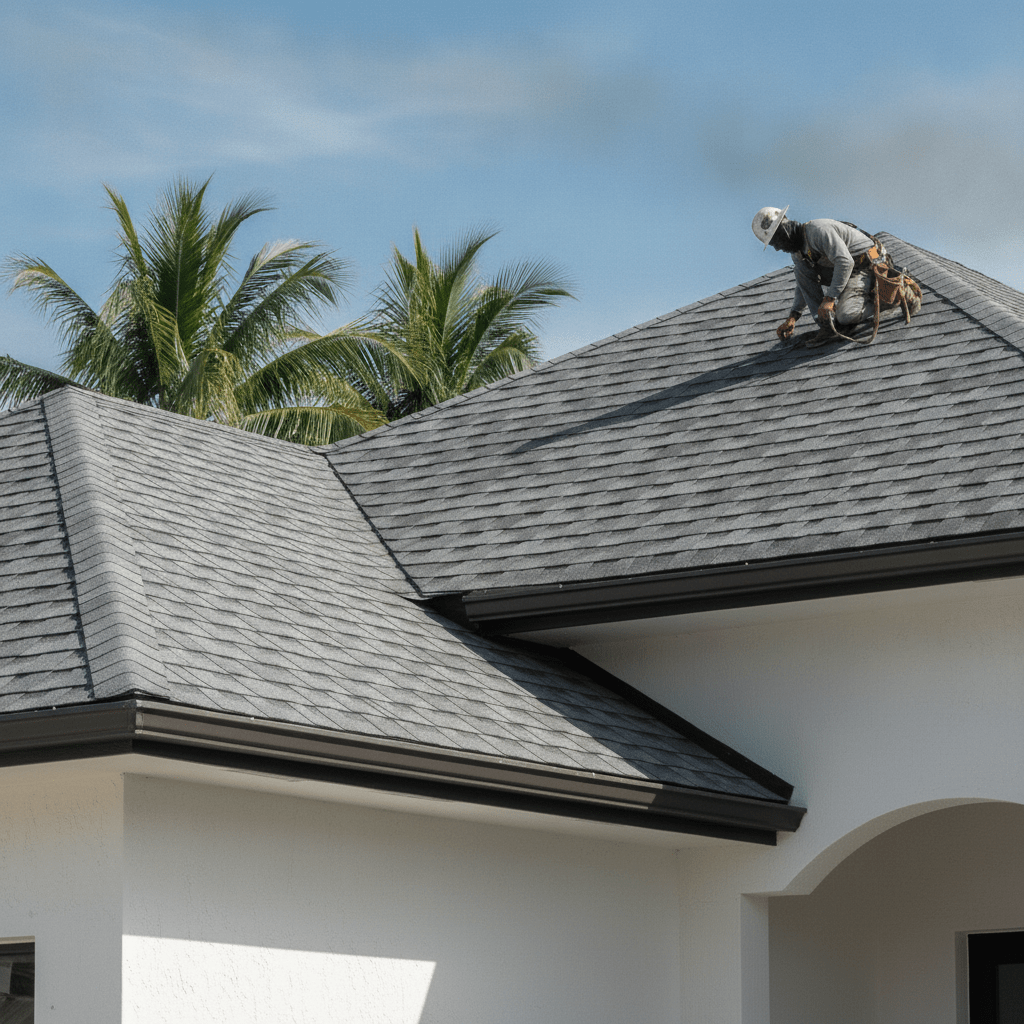

Bigfoot Windows & Roofing is a South Florida roofing contractor licensed under Florida DBPR with four active contractor licenses — including a Certified Roofing Contractor license (CCC1333168) — serving Miami-Dade, Broward, and Palm Beach counties under the Florida Building Code’s High-Velocity Hurricane Zone (HVHZ) requirements.
Updated September 2026
Key Takeaways
- HVHZ (Miami-Dade and Broward) enforces the strictest residential roofing code in the United States — every material and installation method must carry a Florida Product Approval or Miami-Dade NOA.
- A roofing contractor in Miami-Dade must hold a Florida Certified Roofing Contractor (CCC) license and must pull a permit for virtually every roof replacement or significant repair.
- Metal standing seam, concrete tile, and modified bitumen are among the most common HVHZ-approved roofing systems — each with its own cost range, lifespan, and approval documentation.
- Bigfoot Windows & Roofing holds four active DBPR licenses, is a GAF Silver Plus certified contractor, and handles structural scope (hurricane straps) in-house under its Certified General Contractor license (CGC1531370).
- After a hurricane, document damage immediately with photos and video before any temporary repairs — your insurer needs that evidence.
The Problem
South Florida Roofing Is Its Own Category — Most Contractors Don’t Operate at This Level
Miami-Dade and Broward homeowners face requirements that simply do not exist in most of the country.
If you own a home in Miami-Dade or Broward County, your roof lives under the Florida Building Code’s High-Velocity Hurricane Zone (HVHZ) provisions — the strictest residential building code in the United States. That means the shingles, tiles, underlayment, clips, and adhesives your contractor uses must all carry approved documentation: either a Florida Product Approval (FL number) or a Miami-Dade Notice of Acceptance (NOA). A contractor who works in Central Florida or out of state and occasionally takes South Florida jobs may not know how to navigate this system — and the permit inspector will catch it.
The second problem: many homeowners searching for a local roofer don’t know what license to verify, what a NOA actually means, or when a permit is legally required. This article answers each of those questions directly so you can hire with confidence — regardless of which contractor you choose.
Local Context
What Makes HVHZ Roofing Different from Everywhere Else in Florida
Miami-Dade and Broward Counties operate under a code path that other Florida jurisdictions don’t follow.
The HVHZ designation under Florida Building Code Chapter 15 applies to Miami-Dade and Broward counties. It requires that every roofing material and system installed in those counties be tested and approved under protocols more stringent than the standard Florida Building Code. Miami-Dade County’s Product Control division administers the NOA (Notice of Acceptance) program — an additional certification layer on top of the statewide Florida Product Approval system.
Here is what that means in practice:
- Florida Product Approval (FL#): A statewide approval that covers HVHZ use when the product’s approval document explicitly includes HVHZ. A product with a current FL number that covers HVHZ is legal to install in Miami-Dade and Broward.
- Miami-Dade NOA: An additional certification issued by Miami-Dade County Product Control. Some products carry both an FL# and an NOA. The NOA is not always required for a permit — but it is the gold standard for HVHZ-grade products and is required for certain product categories.
- Certificate of Competency: Miami-Dade County requires roofing contractors to hold a County-issued Certificate of Competency in addition to the state license. Verify both before signing a contract.
- Permit required: Roof replacements and most significant repairs in Miami-Dade require a building permit. A contractor who offers to “skip the permit to save money” is not protecting your interests — an unpermitted roof can void your insurance coverage and complicate a future home sale.
| Requirement | Miami-Dade / HVHZ | Non-HVHZ Florida |
|---|---|---|
| Product approval standard | FL# with HVHZ scope OR Miami-Dade NOA | FL# (any scope) |
| Permit for full replacement | Always required | Almost always required |
| County contractor credential | Certificate of Competency + State license | State license only (most counties) |
| Underlayment standard | HVHZ-specific (peel-and-stick full deck common) | Standard FBC |
| Inspection rigor | Multi-stage, strict | Standard |
Education
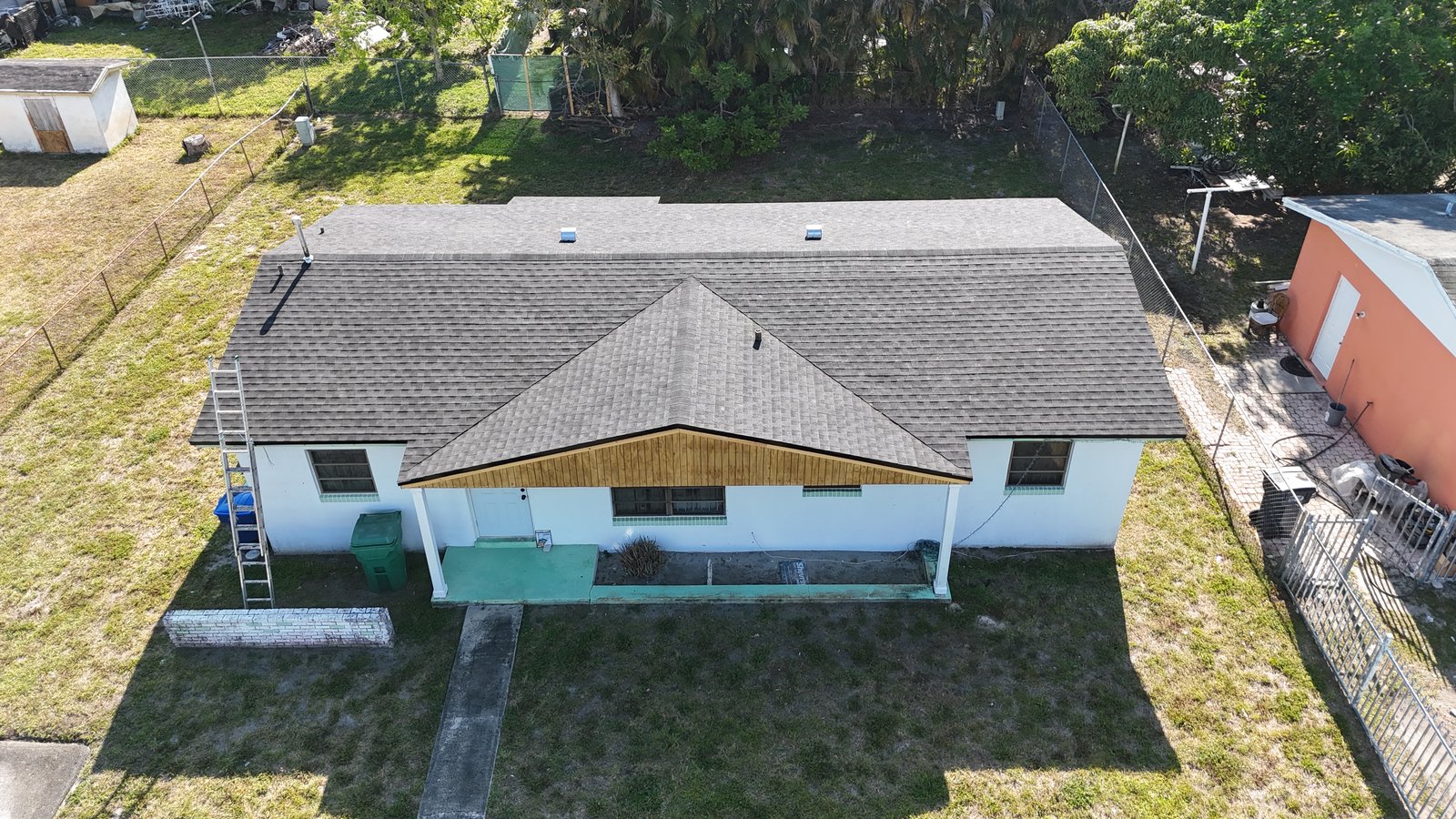
Roofing Materials Approved for HVHZ Use: What South Florida Homeowners Need to Know
Not every material in a roofing supply yard is legal to install in Miami-Dade or Broward.
The most common HVHZ-approved roofing systems — and their general installed cost ranges — are listed below. These figures are estimated ranges per roofing square (100 sq ft) installed, reflecting typical South Florida labor and material costs; your actual cost will vary based on roof complexity, tear-off layers, decking condition, and access. Ranges are based on Bigfoot Windows & Roofing pricing as of mid-2026 and are provided as estimates only.
| System | Estimated Installed Cost / Square | Typical Lifespan (South FL) | HVHZ Approval Path |
|---|---|---|---|
| Architectural shingle (e.g., GAF) | Typically $750–$850 | Typically 12–15 years | Florida Product Approval with HVHZ scope |
| Standing seam metal | Typically $1,050–$1,300 | Typically 40–50+ years | FL# + Miami-Dade NOA (Englert system) |
| Metal tile profile | Typically $1,175–$1,400 | Typically 40–50+ years | Florida Product Approval with HVHZ scope |
| Concrete/clay tile | Typically $1,000–$1,350 | Typically 30–50 years (underlayment typically 20–25 yrs) | Florida Product Approval or Miami-Dade NOA |
| Flat (TPO membrane) | Typically $800–$1,400 | Typically 20–30 years | Florida Product Approval with HVHZ scope |
A note on tile roofs: The tile itself may last decades, but the underlayment beneath it typically needs replacement every 20–25 years even when the tile remains intact. Many homeowners are surprised to learn that a “tile roof replacement” sometimes means replacing only the underlayment while reusing the original tiles.
On shingles: South Florida’s heat, UV intensity, and storm frequency mean architectural shingles age faster here than in any other U.S. market — typically 12–15 years in our experience. GAF’s Wind Proven warranty (no maximum mph cap, not voided by named storms) is the strongest shingle wind warranty available and is accessible through GAF Silver Plus certified contractors like Bigfoot Windows & Roofing.
For homeowners weighing roofing system costs in detail, the online estimator breaks down material and labor ranges by system type.
How to Hire Right
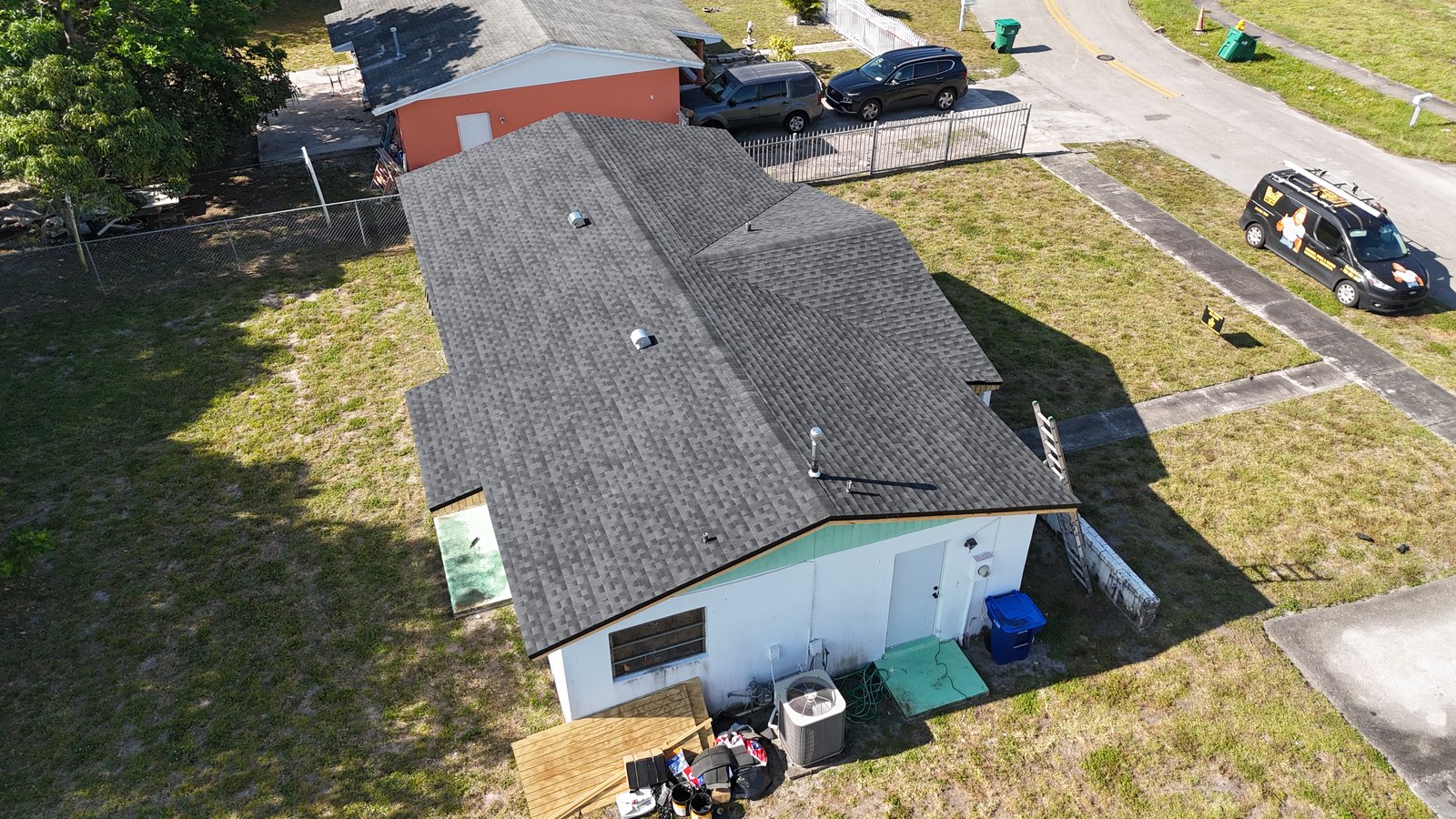
What to Verify Before Signing a Roofing Contract in Miami-Dade or Broward
Five checks every South Florida homeowner should complete before work begins.
| What to Check | Where to Verify | Why It Matters |
|---|---|---|
| State CCC license (Certified Roofing Contractor) | www2.myfloridalicense.com | Required to legally contract and supervise roof work in Florida |
| Miami-Dade Certificate of Competency | Miami-Dade Building Department portal | Required for work in Miami-Dade County in addition to state license |
| General liability + workers’ comp insurance | Ask for COI; verify with insurer | Protects you if a worker is injured on your property |
| Permit pulled in contractor’s name | Miami-Dade/Broward permit portal | Confirms contractor is licensed; ensures inspection coverage |
| Product NOA / FL# matches your roof system | Ask for documentation before install | Ensures materials are code-legal for HVHZ; affects insurance |
Bigfoot Windows & Roofing’s Florida DBPR license numbers are publicly verifiable: CGC1531370 (Certified General Contractor), CRC1331693 (Certified Residential Contractor), CCC1333168 (Certified Roofing Contractor), and SCC131153098 (Certified Specialty Contractor — Glass & Glazing). Every roofing project we execute is permitted under CCC1333168.
Licensed Contractor — Not a Lead Aggregator
Why License Breadth Matters for Your Roof Project
A licensed contractor, not a lead aggregator. Every project permitted and inspected under Bigfoot’s own license numbers.
When your roof replacement uncovers a structural issue — a rotted rafter, missing hurricane straps, or an undersized header over a garage door — most roofing-only contractors have to stop work and bring in a second contractor. Bigfoot Windows & Roofing holds a Certified General Contractor license (CGC1531370), which means hurricane strap upgrades and structural modifications are within our in-house scope. That structural work can be addressed under the same permit set, keeping your project on a single timeline without the coordination burden of managing two separate contractors.
“In HVHZ, every detail on a roof replacement has to be documented and inspected. We pull the permit, we manage the inspection, and we don’t use a product unless it has the right approval for Miami-Dade. That’s the standard — not a selling point.”
President, Bigfoot Windows & Roofing
Roofing Systems
The Roofing Systems Bigfoot Installs in South Florida
Materials selected for HVHZ performance and long-term durability in coastal conditions.
Standing seam metal (Englert/Angler): Englert panels are roll-formed on-site from 24-gauge C4 steel. A continuous panel running from ridge to eave means no horizontal seams — a meaningful structural advantage in hurricane conditions. The clip system allows thermal float without oil canning — ask for Englert’s installation specifications for the specific clip configuration on your system. In South Florida conditions, standing seam metal roofs are typically 40–50+ years in our experience with Englert systems.
Architectural shingle (GAF): Bigfoot is a GAF Silver Plus certified contractor. GAF System Plus warranty coverage is available through our certification — terms vary by certification tier, so ask for the warranty document before signing to confirm the specific coverage scope. GAF’s WindProven warranty carries no maximum mph cap and is not voided by named storms — the strongest wind warranty available for shingle roofing. Under the 2024 Florida Building Code update, direct-to-deck peel-and-stick underlayment is now permitted statewide; a full-deck peel-and-stick installation qualifies as a secondary water barrier for insurance purposes.
Concrete tile (Westlake): Poly-set foam adhesive attachment is rated to 180 mph in South Florida conditions. Bigfoot installs Westlake concrete tile profiles — ask about available profiles during your estimate. Tile underlayment should be evaluated every 20–25 years independently of tile condition.
Homeowners interested in comparing roofing contractors in Miami-Dade will find it useful to ask each bidder for the specific FL number or NOA number for their proposed materials.
Process
How a Roof Replacement Works with Bigfoot — From Estimate to Final Inspection
- Free on-site estimate: We measure the roof, assess decking and structural condition, and identify any permit triggers (structural scope, change of material category).
- Material selection and approval verification: We confirm that the proposed system carries the correct FL# or NOA for HVHZ use at your specific address.
- Permit application: We pull the permit in our name (CCC1333168) through the Miami-Dade or Broward Building Department. Standard residential permit review typically takes two to six weeks.
- Tear-off and decking inspection: Existing roofing is removed; decking is inspected and replaced where damaged.
- Installation: System installed per NOA or FL# installation requirements — fastener spacing, underlayment layers, and accessory products all documented for inspection.
- Inspection and close-out: Municipal inspector verifies compliance; permit is closed. You receive a copy of the permit card for your records and insurance file.
If the tear-off reveals missing or corroded hurricane straps, Bigfoot can address that scope under CGC1531370 — keeping structural work on the same permit set rather than requiring a separate contractor experienced with general contracting scope.
Ready to replace your South Florida roof with HVHZ-approved materials — and have every step permitted and inspected?
Related Reading
More Roofing Guidance for South Florida Homeowners
Related Articles


Who We’re Not the Right Fit For
Being honest about fit matters more than winning every job. Here are situations where Bigfoot Windows & Roofing may not be the right match:
- You need the absolute lowest price and are comfortable skipping the permit. We pull permits on every job — it is not optional for us. If the lowest possible price requires unpermitted work, we are not the right contractor for that project.
- You want a quick patch with no inspection. We treat every repair as permitted work under our license. If you need a minor maintenance patch on a recently permitted roof and your HOA or association has a preferred vendor for that work, they may be a better fit for that specific task.
- Your project is outside Miami-Dade, Broward, or Palm Beach County. We serve South Florida. If your property is in another region of Florida, we are not the right geographic match.
- You need a specialized commercial roofing system beyond our current scope. Large commercial flat roofing or multi-story commercial projects may fall outside our current residential and small commercial focus. Call us and we will tell you honestly whether your project fits our scope.
Frequently Asked Questions
What roofing materials are approved for use in Miami-Dade’s High-Velocity Hurricane Zone?
Materials must carry a Florida Product Approval (FL#) that explicitly covers HVHZ use, or a Miami-Dade Notice of Acceptance (NOA). Common approved systems include standing seam metal, concrete and clay tile, architectural shingles with HVHZ-scope FL numbers, and TPO membrane for flat roofs. Your contractor should be able to provide the specific FL# or NOA number for every major component before installation begins.
How do I know if a roofing contractor is licensed to work in Miami-Dade County?
Verify two things: a Florida Certified Roofing Contractor (CCC) license through the DBPR at www2.myfloridalicense.com, and a Miami-Dade Certificate of Competency through the county’s building department portal. Both are required to legally contract roofing work in Miami-Dade. Ask to see the license numbers before signing anything, then verify them yourself — it takes under two minutes.
What is a Notice of Acceptance (NOA) and why does my South Florida roof replacement require one?
A Miami-Dade NOA is a product certification issued by Miami-Dade County’s Product Control division after testing a product under HVHZ-grade protocols. It documents exactly how a product must be installed to achieve its rated performance. For certain roofing systems in Miami-Dade and Broward, the NOA governs fastener spacing, clip types, and underlayment requirements. Your permit inspector will verify the installation matches the NOA requirements.
Does a roofing contractor need to pull permits for roof work in Miami-Dade County?
Yes. Full roof replacements and most significant repairs in Miami-Dade require a building permit pulled in the licensed contractor’s name. An unpermitted roof can void your homeowner’s insurance coverage, create liability during a home sale, and expose you to code-compliance issues. A contractor who offers to skip the permit to save time or money is creating a much larger problem for you down the road.
How soon after a hurricane should I get my roof inspected in South Florida?
Document visible damage — photographs and video — as soon as it is safe to do so, before any temporary repairs. Then contact your insurer to open a claim and request an adjuster visit. A licensed roofing contractor can perform an inspection and provide a written damage assessment to support your claim. Waiting too long can complicate the insurance process; storm chasers who appear after hurricanes often lack the proper HVHZ licensure — verify credentials before any work begins.
Can Bigfoot Windows & Roofing handle structural work discovered during a roof replacement?
Yes. Bigfoot holds a Certified General Contractor license (CGC1531370) that covers structural scope — including hurricane strap upgrades and structural modifications. When a tear-off reveals missing straps or damaged structural members, we can address that work under the same permit set, without the homeowner needing to hire a separate contractor for general contracting scope. This keeps the project on a single timeline.
Does Bigfoot Windows & Roofing offer financing for roof replacements?
Yes. PACE financing is available — it is paid through your property tax bill, not a bank loan, and does not require a credit check. Rates are approximately 9.49%; a 20-year term typically offers the lowest monthly payment. For qualifying property owners, there may be tax benefits available — please consult your CPA. Learn more about roofing and window financing options on our financing page.
Schedule Your Free Estimate
Ready to get started? Request a free estimate — no phone call required.
Sources
- Florida Building Code, Chapter 15 (HVHZ provisions) — floridabuilding.org
- Miami-Dade County Product Control — Florida Product Approval and NOA documentation — miamidade.gov
- Florida DBPR License Verification — www2.myfloridalicense.com
- GAF WindProven Limited Wind Warranty Sell Sheet — gaf.com
- Bigfoot Windows & Roofing Roofing Pricing Guide (2026) — bigfootwindowsandroofing.com/metal-roof-cost-florida-pricing-guide/
- Bigfoot Windows & Roofing Roofing Warranty Guide (2026) — bigfootwindowsandroofing.com/roofing-warranty-florida-materials-workmanship/
Get a transparent, permitted roof replacement estimate from a contractor with four active Florida licenses.
Call Bigfoot Windows & Roofing at 786-886-2088 or Request a Free Estimate Online