
Updated September 2026
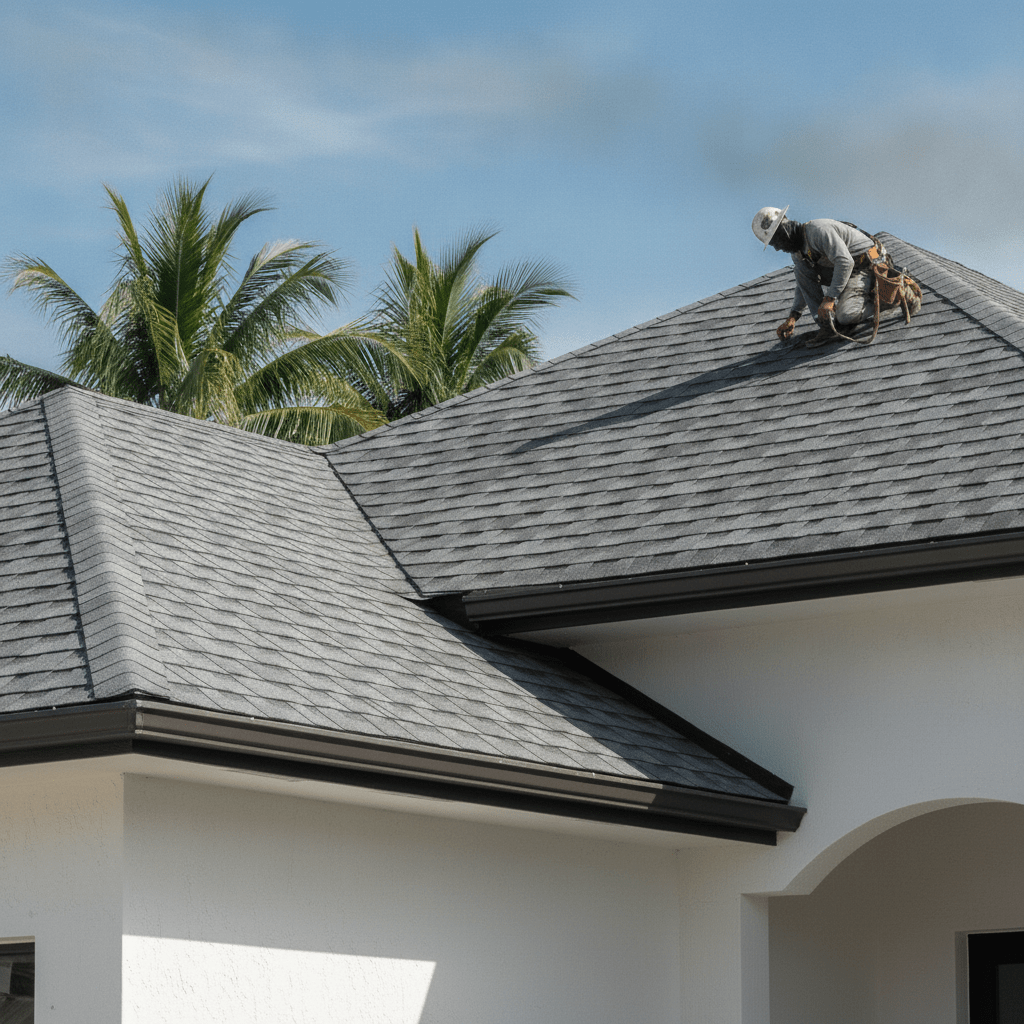
Most South Florida roofing construction defects — improper nail spacing, under-lapped underlayment, non-compliant deck fastening — are invisible from the ground but become catastrophic the moment a hurricane makes landfall. A forensic engineer’s post-storm inspection can determine whether damage resulted from the storm or from a pre-existing code defect, which directly affects your insurance claim outcome.
Key Takeaways
- Miami-Dade and Broward fall inside the High-Velocity Hurricane Zone (HVHZ) — roofing systems must comply with Florida Building Code Chapter 16 HVHZ provisions, which are stricter than the standard state code.
- Common HVHZ construction defects include incorrect nail patterns, inadequate underlayment lapping, improper deck attachment, and installation that deviates from the product’s Notice of Acceptance (NOA).
- A licensed forensic or structural engineer produces a defect report that differs materially from a public adjuster report — insurers treat them differently.
- Florida Statute 558 requires a pre-suit notice period before filing a construction defect lawsuit; missing this window can forfeit your legal remedies.
- Bigfoot holds a Certified General Contractor license (CGC1531370) allowing structural scope — hurricane straps and deck attachment issues — to be addressed under the same permit as a roof replacement.
The Problem
Why South Florida Roofing Defects Stay Hidden Until a Hurricane Hits
Code violations that shorten roof life and void wind coverage — and why most homeowners never see them coming.
South Florida sits inside the High-Velocity Hurricane Zone (HVHZ), the strictest residential building code jurisdiction in the United States. The Florida Building Code imposes requirements on roofing systems in Miami-Dade and Broward counties that go significantly beyond standard state minimums. When those requirements are not met during installation — whether due to contractor inexperience, cost-cutting, or simple oversight — the result is a roof that looks fine on the surface but is structurally compromised underneath.
The problem compounds because most defects are invisible without removing roofing material or using specialized inspection tools. Nail heads driven flush to the surface don’t reveal whether the shank penetrated the deck at the correct angle. Underlayment laps look adequate from the attic but may be just short of the code-required minimum. Deck fasteners can miss a rafter by fractions of an inch and still hold on a calm day. None of this shows up in a standard home inspection — only in a code-specific forensic evaluation or after a major hurricane exposes the failure.
For homeowners who recently had a roof installed — or who are buying a home in Miami-Dade or Broward — understanding what defects look like, how they’re documented, and what your legal and insurance options are is not optional. It is the difference between a protected home and a total loss claim that an insurer disputes.
South Florida Context
HVHZ Roofing Requirements: What Makes Miami-Dade and Broward Different
The Florida Building Code’s High-Velocity Hurricane Zone provisions — codified in FBC Chapter 16 — apply exclusively to Miami-Dade and Broward counties. They impose requirements that differ from the rest of Florida in several material ways:
- Deck attachment: HVHZ requires ring-shank nails at specific spacing patterns into the roof deck. Standard 8d common nails used correctly elsewhere in Florida may not satisfy HVHZ deck attachment schedules.
- Underlayment: HVHZ mandates specific underlayment types and minimum lap dimensions. A lap that falls short of the required minimum is a code violation — not a minor variance — even if it is only slightly below the specified dimension.
- Product approvals: Every roofing system installed in the HVHZ must hold a current Florida Product Approval (FL number) that covers HVHZ use. A product with a current Florida Product Approval that covers HVHZ use is legal to install in Miami-Dade and Broward. A Miami-Dade NOA is an additional certification some products also carry; it is not required for the permit — but when a product does carry a Miami-Dade Notice of Acceptance (NOA), any installation deviation from the NOA-approved method constitutes a code defect, not merely a warranty issue.
- Fastener patterns: Shingle fastener schedules, clip spacing for metal roofing, and tile adhesive application patterns are all product-specific in the HVHZ. The NOA or FL approval document governs the allowed installation method.
When a contractor installs a roofing system that deviates from the approved method — even slightly — the entire wind-uplift resistance rating of that system may be invalidated. The roof may pass a cursory inspection and still fail in a major storm event.
For homeowners seeking roofing contractors in Miami-Dade County, permit records and inspection sign-offs do not guarantee code compliance. Inspectors examine what is visible at the time of inspection; they do not remove installed materials to verify underlayment laps or nail penetration depth.
What the Defects Actually Look Like
Most Common HVHZ Roofing Construction Defects Documented After South Florida Storms
Post-hurricane forensic evaluations in Miami-Dade and Broward consistently identify the same categories of roofing defects. These are the ones a licensed engineer is specifically trained to find and document:
| Defect Type | Code Reference | Why It Matters in a Hurricane | Visible Without Demo? |
|---|---|---|---|
| Incorrect nail pattern (spacing or gauge) | FBC HVHZ Chapter 16 / NOA | Reduces sheathing withdrawal resistance — deck separates from rafters under uplift | Rarely |
| Under-lapped underlayment | FBC R905 / product NOA | Wind-driven rain can penetrate during a storm even if shingles remain intact | No (requires inspection) |
| Non-compliant deck fastening schedule | FBC / structural drawings | Roof deck may peel away under sustained uplift loads; cascading interior damage and possible structural failure | No |
| NOA deviation — metal clip spacing | Englert / metal panel NOA | Thermal float and wind-uplift resistance both compromised | No (hidden by panels) |
| Improper tile adhesive application | FBC / Westlake / NOA | Tiles detach and become high-velocity projectiles | Partial (attic view) |
| Missing or incorrect hip/ridge cap nailing | FBC / shingle NOA | Ridge cap loss exposes roof deck; water intrusion and structural uplift path created | Sometimes |
Each of these defects can independently undermine the wind-uplift resistance that the roofing system was designed and approved to provide. In combination, they create a roof that is structurally unreliable under HVHZ wind loads — regardless of what material it is made from.
Forensic Engineer vs. Public Adjuster
What a Forensic Engineer Finds That a Public Adjuster Cannot
Two different professionals, two very different documents — and insurers weigh them differently.
| Factor | Public Adjuster Report | Licensed Forensic / Structural Engineer Report |
|---|---|---|
| Professional license required | Licensed Public Adjuster (Florida) | Professional Engineer (PE) license, Florida |
| Primary purpose | Maximize insurance claim recovery | Determine cause and origin of damage; code compliance |
| Can distinguish storm vs. pre-existing defect | No — not within scope | Yes — core function of forensic evaluation |
| Code reference analysis | Generally absent | FBC, HVHZ, NOA, FL approval compliance documented |
| Admissible in Florida Statute 558 proceedings | Limited | Widely accepted; required in most litigation contexts |
| Covers structural defects (deck, framing) | No | Yes — including deck attachment, hurricane straps, headers |
A forensic engineer evaluates the roofing system against the code and the product’s approved installation method. Their written report identifies specific defects, cites the applicable code section or NOA requirement, documents the deviation, and provides a professional opinion on whether the damage observed was caused by the defect or by the storm event. That distinction matters enormously when an insurer is deciding whether to pay a wind-damage claim.
When the forensic report confirms that a defect existed before the storm and contributed to the loss, the homeowner’s legal options shift. Florida Statute 558 governs the pre-suit notice process for construction defect claims — and that clock starts the moment you know or should reasonably know a defect exists.
Why Contractor Licensing Matters Here
What License Authority Means for Defect Prevention
A licensed contractor, not a lead aggregator — and scope coverage that extends to structural issues.
Most roofing defect disputes arise because the installing contractor lacked the license authority to address the full scope of what the code required. When structural deck attachment or hurricane strap conditions are involved, a Certified Roofing Contractor alone cannot legally perform that structural work in Florida — a Certified General Contractor license (CGC) is required.
Bigfoot performs hurricane strap upgrades and structural modifications — including deck attachment corrections — under Certified General Contractor license CGC1531370. That means structural scope and roofing scope can be addressed under the same permit set, reducing the coordination gaps where defects typically occur. Learn more about Bigfoot’s HVHZ roofing process and pricing.
“The inspections that catch code defects don’t happen at ground level. They happen when someone with the right knowledge pulls back the material and measures against the NOA. That’s why installation method matters as much as product selection.”
President, Bigfoot Windows & Roofing
Installation Standards That Prevent Defects
How Code-Compliant Roofing Is Actually Installed in the HVHZ
Understanding what defect-free installation looks like helps homeowners ask the right questions before signing a contract — and identify red flags when comparing quotes.
Shingle systems (GAF): The GAF Layer Lock system uses 1.81-inch nail lines with 19 dimples per shingle to guide nail placement — a significantly wider target zone than older shingle designs. Under the 2024 Florida Building Code update, direct-to-deck peel-and-stick underlayment is now permitted statewide and qualifies as a secondary water barrier for insurance premium reduction purposes. A 30-lb felt underlayment does not qualify. Full-deck peel-and-stick applied correctly eliminates the underlayment lap defect category entirely.
Metal standing seam (Englert): Englert panels are fabricated custom per job and roll-formed on-site from 24-gauge C4 steel. The NOA-required clip system uses 6-inch clips at ridge and eave and 2-inch clips in the field — Englert-stamped clips only. Knockoff clips that have not been tested to the Englert NOA result in a failed inspection and a full roof redo. Nail-strip systems, by contrast, create oil canning and restrict thermal float — both structural concerns in South Florida heat cycles.
Tile systems (Westlake concrete tile): Poly-set foam adhesive attachment is rated to 180 mph in South Florida conditions (per Bigfoot Windows & Roofing warranty documentation). Mechanical fasteners alone are rated to a lower wind speed threshold by comparison. The adhesive application pattern is defined by the product’s NOA — under-application or off-pattern placement is a documentable code defect. Tile underlayment typically needs replacement every 20 to 25 years even when tile itself remains intact; a redecking project that skips underlayment replacement may itself constitute a defect relative to the service life the system is warranted to provide.
For any of these systems, Bigfoot’s estimate process includes confirmation of the FL product approval number and the applicable HVHZ installation method before materials are ordered. Installation deviations from the NOA are not acceptable under our quality process — because they create exactly the kind of documented defect that voids wind coverage and exposes a homeowner to a denied claim.
Florida Statute 558 & Your Legal Timeline
What to Do If You Suspect a Roofing Defect in Florida
Florida Statute 558 establishes a mandatory pre-suit notice process for construction defect claims. Before filing a lawsuit related to a roofing defect, a Florida homeowner must:
- Obtain a written defect report — ideally from a licensed Professional Engineer who can document specific code violations and their cause-and-origin relationship to observed damage.
- Serve a Chapter 558 Notice of Claim on the contractor — in writing, identifying the specific defect(s), the location, and the resulting damage.
- Allow the notice period to run — the contractor typically has a defined period to inspect and respond, and may offer to repair, pay, or dispute the claim.
- Preserve the defect — do not allow repairs that destroy evidence of the defect before the contractor has had an opportunity to inspect.
| Step | Who Performs It | Approximate Timing |
|---|---|---|
| Forensic inspection & PE report | Licensed Professional Engineer | Varies — schedule promptly after damage observed |
| Chapter 558 Notice of Claim | Homeowner or attorney | Before any lawsuit is filed |
| Contractor inspection period | Original contractor | Per statutory notice period; consult attorney |
| Contractor response | Original contractor | Within notice period |
| Statute of limitations | Legal counsel guidance required | Generally runs from date of discovery; consult attorney |
The statute of limitations for construction defect claims in Florida is generally measured from the date the defect was discovered or should have been discovered, but the specific facts of your situation govern. This article is educational — it is not legal advice. Consult a licensed Florida construction attorney for guidance specific to your claim.
Concerned your South Florida roof may have been installed incorrectly? Talk to a licensed roofing contractor before the next hurricane season.
Related Reading
More South Florida Roofing Guides
Who We’re Not the Right Fit For
Honest contractors tell you when they are not the right call. Here is when Bigfoot is probably not your best option:
- You need a forensic engineering report for litigation. Bigfoot installs and replaces roofing systems. We are not a forensic engineering firm, and we do not produce PE-stamped defect reports for insurance disputes or lawsuits. You need a licensed Professional Engineer for that scope.
- You are looking for the lowest possible price and are comfortable with minimum-spec installation. HVHZ code-compliant installation costs more than a minimum-bid job that cuts corners on underlayment, clip spacing, or deck attachment. If price is your only filter, we will not be the cheapest quote.
- You need a commercial high-rise roofing contractor. Bigfoot specializes in residential roofing in Miami-Dade, Broward, and Palm Beach. Large-scale commercial flat roofing is outside our primary scope.
- You want a same-week installation. HVHZ permit review in Miami-Dade typically takes two to six weeks. We cannot legally begin before a permit is issued, and we will not install without one.
Frequently Asked Questions
How can I tell if my South Florida roof was installed incorrectly before a hurricane causes damage?
You generally cannot tell from visual inspection alone. HVHZ code defects — incorrect nail spacing, inadequate underlayment lapping, non-compliant deck fastening — are hidden under installed materials. The only reliable method is a pre-storm forensic inspection by a licensed Professional Engineer who can pull representative material samples and measure against the applicable Florida Building Code HVHZ requirements and the product’s NOA-approved installation method.
What does a forensic engineer look for when inspecting a Miami-Dade roof for construction defects?
A forensic engineer evaluates nail type, gauge, and spacing against code and NOA requirements; underlayment lap dimensions and sequencing; deck fastener penetration depth and rafter alignment; product FL approval or NOA status; and clip or adhesive application patterns for metal and tile systems. They then produce a written report that identifies each specific deviation, cites the governing code section or NOA requirement, and provides a professional opinion on whether the defect contributed to observed damage.
Does a roofing construction defect void my Florida homeowners insurance wind coverage?
A pre-existing construction defect can give an insurer grounds to dispute or deny a wind-damage claim on the basis that the loss resulted from faulty workmanship rather than the storm event. Whether a specific defect voids your coverage depends on your policy language and the forensic findings. A PE report that distinguishes storm causation from defect causation is the primary document used in these disputes. Consult your insurer and a Florida construction attorney for policy-specific guidance.
What are the most common HVHZ roofing code violations found after South Florida hurricanes?
Post-storm inspections in Miami-Dade and Broward most frequently document: incorrect nail pattern or gauge for the deck attachment schedule; underlayment laps below the code-minimum dimension; tile adhesive applied off-pattern from the NOA; metal roofing clips that are non-compliant or improperly spaced; and ridge cap nailing that deviates from the shingle manufacturer’s NOA requirements. Any one of these can invalidate the wind-uplift resistance the system was rated to provide.
How long do I have to file a construction defect claim on a new roof in Florida?
Florida Statute 558 requires a pre-suit notice of claim before any lawsuit is filed. The statute of limitations for construction defect claims in Florida is generally measured from the date the defect was discovered or should have been discovered. The specific facts of your situation — including when you knew or should have known about the defect — govern your timeline. This is not legal advice; consult a licensed Florida construction defect attorney before taking action.
Can a contractor fix an HVHZ roofing defect without pulling a new permit?
In most cases, no. Corrections to deck attachment, underlayment, or structural components that are governed by the original permitted scope generally require a permit for the remediation work. Miami-Dade Building Department permit review typically takes two to six weeks for standard residential projects. Attempting to correct HVHZ code defects without a permit creates a second layer of code exposure and may void product warranties. A licensed contractor should evaluate the specific defect and advise on the required permitting path.
Do hurricane straps affect a roofing defect evaluation?
Yes. Hurricane strap installation and connection integrity are part of the structural scope that a forensic engineer may evaluate when examining roof uplift failure. In older homes, missing or undersized hurricane straps contribute to roof deck separation during storm events. Bigfoot handles hurricane strap upgrades in-house under Certified General Contractor license CGC1531370, allowing structural corrections to be completed under the same permit as a roof replacement — rather than requiring a separate structural contractor.
Schedule Your Free Estimate
Ready to get started? Request a free estimate — no phone call required.
Sources
- Florida Building Code, High-Velocity Hurricane Zone provisions (FBC Chapter 16) — floridabuilding.org
- Miami-Dade County Product Control Division — miamidade.gov
- Florida Statute 558 (Construction Defects) — flsenate.gov
- Bigfoot Windows & Roofing — Roofing Warranty: Florida Materials & Workmanship — bigfootwindowsandroofing.com
- GAF WindProven Limited Wind Warranty — gaf.com
Ready to verify your roof meets HVHZ standards — or replace one that doesn’t?
Bigfoot installs code-compliant roofing systems in Miami-Dade, Broward, and Palm Beach under four active Florida licenses. Permits handled. Structural scope in-house.