Impact Window Installation in Florida: What to Expect
By the installation team at Bigfoot Windows & Roofing — Florida-licensed general, roofing, and specialty contractors (CGC1531370, CCC1333168, CRC1331693, SCC131153098) installing hurricane impact windows across Miami-Dade and Broward. Reviewed for code accuracy against the 2023 Florida Building Code (8th Edition).
Impact window installation in Florida works like this: a licensed contractor pulls a building permit, then installs Miami-Dade NOA-approved (in the HVHZ) or Florida-approved units, anchored exactly per the approval drawings into prepared bucks with fully sealed perimeters. A county inspector then verifies anchoring, labeling, and flashing before final sign-off. Expect roughly 45–90 minutes per opening.
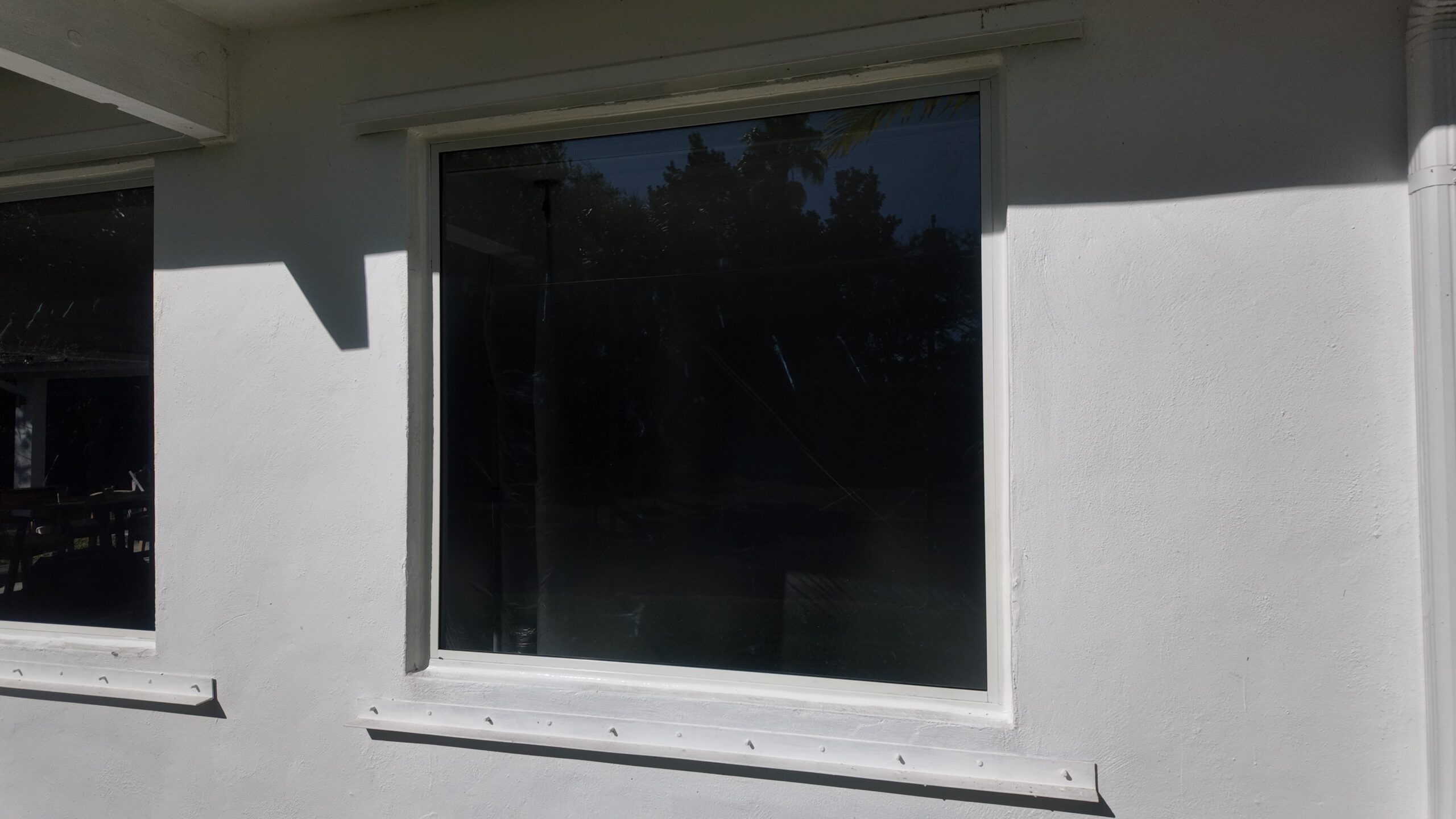
That is the short version. The long version depends on where you live: Miami-Dade and Broward counties sit inside the High-Velocity Hurricane Zone, which runs on stricter product approvals, testing, and inspections than the rest of the state. As a licensed contractor (CGC1531370) installing hurricane impact windows across Miami-Dade and Broward every week, here is how the process actually works, from product selection to final sign-off.
Why Miami-Dade’s HVHZ Changes the Installation Rules
The Florida Building Code designates Miami-Dade and Broward counties as the High-Velocity Hurricane Zone. Inside the HVHZ, the code layers additional requirements on top of the statewide rules: products must pass the Miami-Dade Testing Application Standards — TAS 201 (large missile impact), TAS 202 (structural pressure), and TAS 203 (cyclic pressure) — rather than only the ASTM E1886/E1996 protocols accepted elsewhere in Florida.
The stakes here are not abstract. In its post-storm building performance study of Hurricane Andrew, FEMA found that a large share of structural damage began when wind-borne debris breached windows and doors, allowing wind pressure to enter and lift roofs off homes (FEMA, Building Performance: Hurricane Andrew in Florida). That finding is the reason the HVHZ product-approval system exists — and the reason a breached opening is treated as a structural failure, not a broken window.
Practically, a window that is legal to install in Orlando may be rejected at permitting in Miami. HVHZ inspectors also check impact window installation in Florida’s toughest zone against the approval drawings line by line — anchor type, spacing, edge distance, shim limits, sealant. The process below is built around passing that scrutiny.
Step 1: NOA Product Selection — Windows That Pass in Miami-Dade
Every impact window we install in the HVHZ carries a Miami-Dade Notice of Acceptance (NOA), issued by the county’s Product Control Section. An NOA is not a marketing badge — it is a numbered engineering document whose drawings specify the exact frame, glass makeup, anchor schedule, and maximum design pressures the unit was tested to. You can look up any product’s current NOA and expiration date directly in Miami-Dade County’s Product Control Search (miamidade.gov). Outside the HVHZ, a statewide Florida Product Approval (an “FL number,” searchable at floridabuilding.org) is sufficient; inside Miami-Dade and Broward, the product needs an NOA or an FL number that covers HVHZ use.
The units themselves are laminated impact glass systems: two panes bonded to a polyvinyl butyral (PVB) or ionoplast interlayer, set in reinforced aluminum or vinyl frames. When debris strikes, the glass may crack, but the interlayer holds the opening sealed — which is the whole point, because a breached opening lets hurricane pressure into the house. We install NOA-approved products from South Florida manufacturers such as ES Windows, CGI, and Mr. Glass, and we match each unit’s rated design pressure to the wind loads calculated for your specific openings — corner openings and upper floors see higher loads than a sheltered ground-floor window. On a recent Pinecrest job, two corner openings on the second story required a higher design-pressure unit than the rest of the house, which is exactly the kind of per-opening detail that gets missed when someone quotes a single “whole-house” window.
This is also where impact-resistant windows separate from hurricane shutters: shutters protect only when deployed; a NOA-approved impact window is permanent engineered protection that counts directly in your wind mitigation inspection.
Step 2: Measurement, Contract, and the Miami-Dade Permit Process
After you approve a proposal, a technician measures every opening — width, height, depth, and the condition of the existing bucks (the wood or structural framing the window anchors into). South Florida openings are rarely square, and the measurements drive the factory order, so an installer does this visit, not a salesperson.
Then comes the permit. In Miami-Dade, window replacement requires a building permit — no exceptions for “just swapping like for like.” The permit package includes the signed contract, the NOA or Florida Product Approval documents for each product, an opening schedule mapping each approval to each opening, and site-specific anchoring details. The contractor of record pulls the permit under their license; that license number appears on the permit card posted at your home. Permit review times vary by municipality, and manufacturing lead times for custom-sized impact units typically run several weeks — so the quiet stretch between contract and install day is the factory and the building department doing their work, not your project stalling.
One flag: if a company suggests skipping the permit, walk away. Unpermitted impact window installation earns no insurance credits and becomes a problem you must disclose and cure when you sell.
Step 3: Install Day — Removal, Bucks, Anchors, and Sealant
Install day is where the impact window installation process gets physical. For each opening, the crew:
- Removes the existing window — frame and all, cut out cleanly to avoid damaging the surrounding stucco and interior finishes.
- Inspects and preps the buck. Rotted, delaminated, or undersized bucks get replaced and re-anchored to the masonry. This is the step low-bid installers skip, and it is the step inspectors and hurricanes both find.
- Sets the new unit plumb, level, and square, shimmed within the tolerances stated on the NOA drawings.
- Anchors per the approval. The NOA specifies the fastener type, embedment depth, edge distance, and spacing for your wall type — concrete, block, or wood frame. Anchor substitutions void the approval, so the crew installs exactly what the drawings call for.
- Seals the perimeter. A continuous bed of approved sealant between frame and buck, inside and out, is what keeps wind-driven rain out during a storm. In the HVHZ, water intrusion failures are as common as structural ones — sealant work is not cosmetic.
- Leaves the NOA label on the glass. The permanent etching and the temporary approval label stay in place until the inspector has seen them.
A well-run crew works room by room and leaves each opening weathertight the same day — your home is never left open overnight.
Step 4: Final Inspection — What the Miami-Dade Inspector Checks
When installation is complete, the contractor calls in the final inspection. The municipal inspector verifies, opening by opening, that the installed product matches the permitted NOA, that labels are present and legible, that anchoring is consistent with the approval drawings (inspectors routinely ask crews to pull a screw cap or probe a jamb), and that the perimeter is properly sealed and flashed. Only after the inspector signs off is the permit closed — and only a closed permit gives you documentation your insurer and a future buyer will accept.
If something fails, the contractor corrects it and re-calls the inspection. The inspection is a genuine check, not a formality — especially in Miami-Dade.
How Long Installation Takes: Per Opening and Whole Home Timeline
Per opening, plan on 45 to 90 minutes of installation work: a straightforward ground-floor single-hung on the short end; large sliders, second-story openings, and openings needing buck repair on the long end. A typical single-family home with 10–15 openings is usually installed in one to three working days.
The full project timeline is longer: measurement, permit approval, and factory manufacturing of custom-sized NOA units generally put several weeks to a couple of months between signing and installation, with the final inspection shortly after the crew finishes. If a contractor promises next-week installation of custom impact windows, ask whose stock sizes they are pulling — and whether those sizes actually fit your openings.
Why Florida Requires Licensed Installers (and Why DIY Fails Inspection)
Florida law requires window replacement to be performed by, or under, a licensed contractor pulling the permit — and in the HVHZ, the inspection regime makes that stick. A homeowner can buy an impact window; what a homeowner cannot easily produce is the anchoring compliance, NOA paperwork trail, and closed permit that make the window count.
DIY and handyman installs fail for predictable reasons: wrong anchors for the wall type, anchors outside the NOA spacing, no buck repair, no permit at all. A window installed outside its approval conditions is not an impact window in any way your insurer or the building department recognizes. Bigfoot Windows & Roofing installs under state licenses CGC1531370, CCC1333168, CRC1331693, and SCC131153098 — the permit, inspection, and liability sit with us, where they belong.
After Sign-Off: Insurance Discount Paperwork and My Safe Florida Home
The closed permit is where the financial payoff starts. Florida Statute 627.0629 requires insurers to offer premium credits for wind mitigation features, and opening protection — impact windows on every opening — is one of the heaviest-weighted items on the Uniform Mitigation Verification Inspection form your wind mitigation inspector completes. Schedule that inspection after final sign-off and send the completed form to your insurance agent; the windstorm portion of your premium is where the discount lands.
Beyond wind protection, laminated impact glass is typically insulated and Low-E, which reduces cooling loads. The U.S. Department of Energy notes that heat gain and loss through windows accounts for roughly 25%–30% of residential heating and cooling energy use (energy.gov) — a meaningful figure in a Miami cooling climate where the air conditioner runs most of the year.
Florida homeowners should also look at the state’s My Safe Florida Home program, which has offered matching grants for wind-hardening upgrades, including opening protection, to eligible single-family homeowners. Funding availability changes by legislative session, so check the program’s current status with the Florida Department of Financial Services before counting on it — but when funding is open, it meaningfully offsets impact window installation cost.
Quotable Facts: Impact Windows in the HVHZ
- Two counties are in the HVHZ. The Florida Building Code designates Miami-Dade and Broward as the High-Velocity Hurricane Zone, where TAS 201/202/203 testing applies (floridabuilding.org).
- Windows drive ~25%–30% of home heating/cooling energy use through heat gain and loss (U.S. Department of Energy, energy.gov).
- Breached openings caused catastrophic failures in Hurricane Andrew, per FEMA’s building performance study — the origin of the HVHZ opening-protection rules (fema.gov).
- Florida law requires insurers to credit opening protection under Florida Statute 627.0629, applied via the Uniform Mitigation Verification Inspection form.
FAQ: Impact Window Installation in Florida
Do I need a permit to install impact windows in Miami-Dade County?
Yes. All window replacement in Miami-Dade requires a building permit pulled by a licensed contractor, with the NOA or Florida Product Approval documents for each product included in the permit package. Unpermitted installations cannot pass final inspection and will not qualify for windstorm insurance credits.
What is the difference between a Miami-Dade NOA and statewide Florida product approval?
A Miami-Dade Notice of Acceptance (NOA) certifies a product passed the county’s TAS 201/202/203 testing protocols; installations in the HVHZ (Miami-Dade and Broward) need it or a Florida Product Approval that covers HVHZ use. A statewide Florida Product Approval (“FL number”) covers the rest of the state under ASTM-based testing. In the HVHZ, install to the NOA.
How long does impact window installation take per window?
Roughly 45 to 90 minutes per opening, depending on size, floor level, and buck condition. A typical home with 10–15 openings is installed in one to three working days, with the final inspection following shortly after.
Can I install impact windows myself in Florida?
Not practically. Window replacement requires a permit pulled by a licensed contractor, and HVHZ inspectors verify anchoring against the NOA drawings. A self-installed window outside its approval conditions fails inspection and earns no insurance credit.
What does the final inspection check after impact window installation?
The inspector verifies each installed unit matches the permitted NOA, that approval labels are present, that anchor type and spacing follow the approval drawings, and that the perimeter is sealed and flashed. The permit closes only after sign-off.
What paperwork do I need for windstorm insurance discounts after installation?
The closed permit plus a wind mitigation inspection documented on the state’s Uniform Mitigation Verification Inspection form. Florida Statute 627.0629 requires insurers to credit qualifying opening protection; your agent applies the form to your policy.
How can I verify a window’s Miami-Dade NOA is valid?
Use Miami-Dade County’s Product Control Search on miamidade.gov to look up the product’s NOA number and confirm it is active and not expired. Statewide products can be verified by their “FL number” at floridabuilding.org. The approval drawings tied to that number define the legal installation.
Ready for a free estimate? Call 786-886-2088 or fill out our contact form.
Bigfoot Windows & Roofing · 7250 SW 39th Ter, Miami, FL 33155 · 786-886-2088 · Licensed: CGC1531370, CCC1333168, CRC1331693, SCC131153098
Related Articles
- Miami-Dade NOA vs. Florida Product Approval: What HVHZ Homeowners Need to Know
- Impact Windows vs. Hurricane Shutters: Which Protection Fits Your South Florida Home
- How Wind Mitigation Inspections Lower Your Florida Windstorm Premium
- Hurricane-Season Prep Checklist for Miami-Dade and Broward Homeowners
Schedule Your Free Estimate
Ready to get started? Request a free estimate — no phone call required.