Can Impact Windows Withstand a Category 5 Hurricane?
Yes — impact windows can withstand a Category 5 hurricane. Units tested to Miami-Dade TAS 201/202/203 protocols are engineered for 157+ mph sustained winds, provided the installed unit matches its NOA and is anchored per the approval documents. The glass, frame, anchors, and installation must all match the tested assembly — a window is a system, not just a pane.
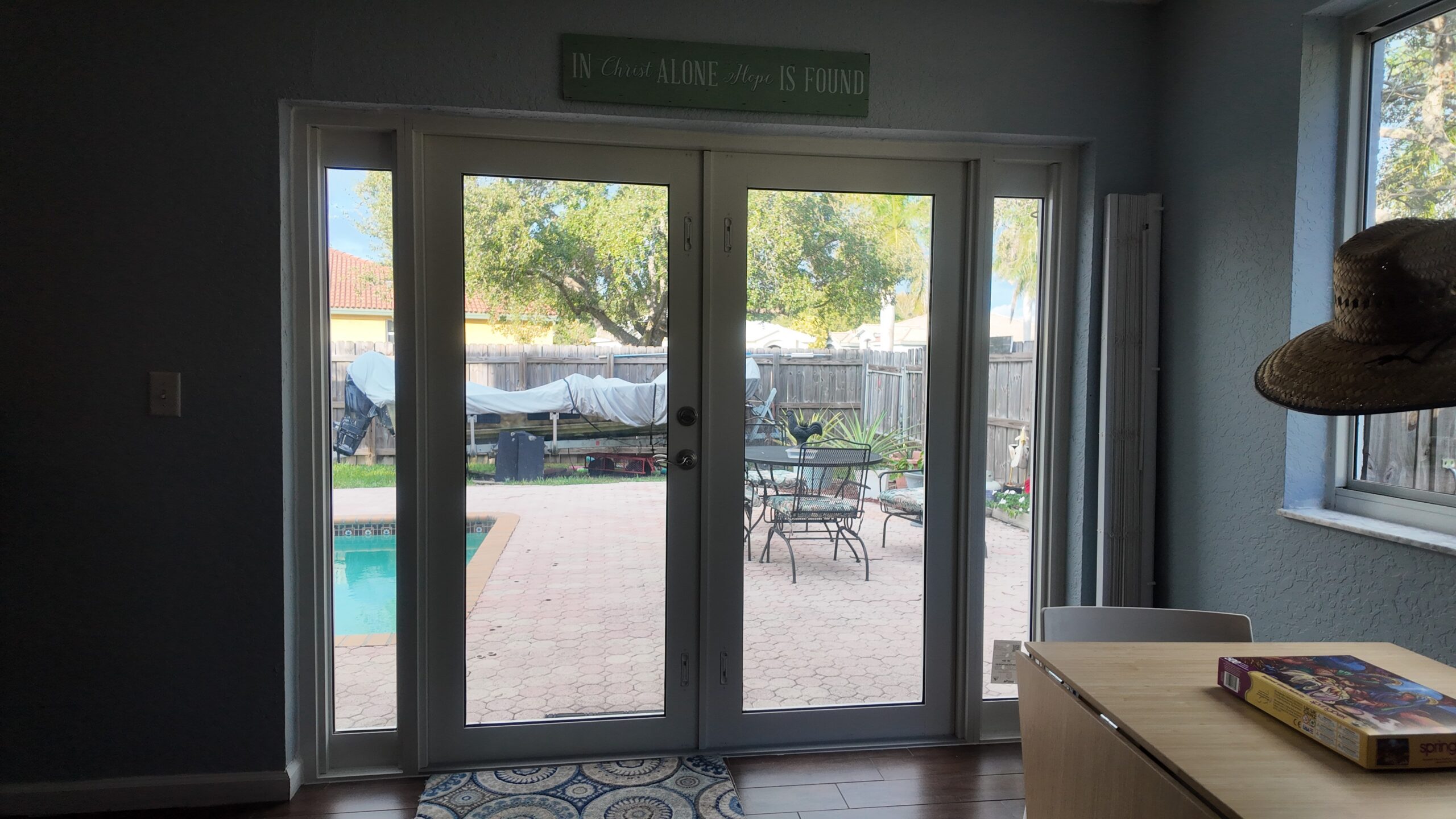
At Bigfoot Windows & Roofing, we install and permit impact windows across Miami-Dade and Broward as a state-licensed contractor (CGC1531370, CCC1333168, CRC1331693, SCC131153098). Here is the full answer, in the terms an engineer or a Miami-Dade plans examiner would use.
What a Category 5 Hurricane Actually Throws at Your Windows
A Category 5 hurricane means sustained winds of 157 mph or greater, with gusts running higher, according to the NOAA National Hurricane Center’s Saffir-Simpson scale. Wind load scales with the square of speed, so the jump from Category 3 to Category 5 is far more violent than the mph numbers suggest. Your windows face three distinct attacks:
- Windborne debris — roof tiles, fence boards, and lumber fast enough to punch through ordinary glass on the first hit.
- Sustained positive pressure — wind pushing the window into the opening for hours.
- Negative (suction) pressure — at leeward walls and building corners, wind pulls the window outward; corner suction loads are often the highest on the whole house.
The real catastrophe is breach: once an opening fails, the storm pressurizes the interior and pushes up on the roof deck from below. FEMA has documented that windborne debris breaching the building envelope is a primary driver of catastrophic wind damage to homes (FEMA P-499, Home Builder’s Guide to Coastal Construction). Windborne debris protection is not about saving the glass — it is about keeping the building envelope closed.
What the Miami-Dade Tests Actually Simulate (TAS 201/202/203)
The High-Velocity Hurricane Zone (HVHZ) — Miami-Dade and Broward — uses the most demanding fenestration testing in the country, via three Testing Application Standards published by the Florida Building Commission (floridabuilding.org):
- TAS 201 — Large missile impact test. A 9-pound 2×4 is fired from an air cannon at roughly 34 mph (50 ft/s) into the glass, including at the corners — the assembly’s weakest points. The laminated impact-resistant glass may crack, but the interlayer must hold: no penetration, no envelope breach.
- TAS 202 — Uniform static air pressure. The unit is chamber-loaded to its design pressure and beyond to verify structural performance and water/air infiltration limits.
- TAS 203 — Cyclic pressure loading. The same cracked unit then endures roughly 9,000 alternating positive and negative pressure cycles — hours of gusting hurricane wind working on already-damaged glass.
That sequence — impact first, then thousands of pressure cycles on the damaged unit — separates HVHZ-rated impact windows from ordinary “storm” products. It is a direct simulation of what a Category 5 hurricane does to a wall opening.
Design Pressure: The Number That Matters More Than Category
Hurricane categories describe wind speed. Buildings are engineered in design pressure (DP) — pounds per square foot (PSF) of load an opening must resist, positive and negative. When we permit a window job in Miami-Dade, the required pressures come from a site-specific wind load calculation, not the storm category on the news.
Typical Miami-Dade openings calculate out roughly between +/-50 and +/-105 PSF depending on wall zone, height, exposure, and opening size — corner zones and second stories run highest. The rule is simple: the window’s rated design pressure must meet or exceed the calculated pressure for that specific opening. Asking “can impact windows withstand a Category 5 hurricane” really means asking “does each installed unit meet the design pressure calculated for its opening.”
NOA vs. Florida Product Approval: Why HVHZ Homes Need the NOA
Florida has two product approval systems, and they are not interchangeable:
- Florida Product Approval (statewide) — acceptable for most of Florida under the Florida Building Code.
- Miami-Dade NOA (Notice of Acceptance) — accepted in the High-Velocity Hurricane Zone (as is a Florida Product Approval that covers HVHZ use); it means the product passed the TAS 201/202/203 protocols with ongoing manufacturing quality assurance. You can search current NOAs free on Miami-Dade County’s Product Control Search.
In Miami-Dade or Broward, the building department requires HVHZ-compliant approval documents at permitting; a statewide approval never tested to the HVHZ protocols does not qualify — a distinction we constantly clear up on quotes from companies based outside South Florida.
How to Read Your Own NOA (Real Example From a Product We Install)
Every impact window we install in the HVHZ carries a current Miami-Dade NOA, which you can look up free on Miami-Dade County’s product control search. Take a typical aluminum single-hung from a major Florida manufacturer we install — its NOA package contains four things that matter:
- Expiration date — NOAs expire and get renewed; the NOA must be current at time of permit.
- Size and pressure tables — the maximum tested width and height at each design pressure. A rating in one tested size is not automatically approved in a larger size.
- Glass makeup — the exact laminated glass composition tested; substitute glass voids the approval.
- Anchor schedule and installation drawings — fastener type, diameter, embedment depth, edge distance, and spacing into concrete, block, or wood buck. The page most homeowners never read — and the one that decides whether the window performs as tested.
Comparing quotes? Ask each contractor for the NOA number on every product line quoted. One who cannot produce it is telling you something.
Why Installation Matters More Than the Glass
The TAS tests certify an assembly: frame, glass, and a specific anchorage into a specific substrate. In the field, we have opened up other companies’ jobs and found fasteners too short to reach proper embedment, screws spun into crumbling wood bucks, anchors missing near corners where suction loads peak, and shim stacks so thick the fastener was bending instead of bearing. Every one of those windows carried an impact-rated label; none would have performed like the tested unit. Getting it right means:
- Following the anchor schedule exactly — correct fastener diameter, embedment, and spacing for the actual substrate (concrete, CMU block, or wood frame).
- Sound bucks — pressure-treated bucks properly fastened to structure, or direct-to-masonry anchorage where the NOA allows it; never anchoring into rotten or loose framing.
- Correct shimming — shims at anchor points so the frame stays square and the fastener bears solidly, without over-shimming that turns the anchor into a lever.
- Proper opening prep and sealing — water intrusion over hours of storm cycling is its own failure mode.
An inspector cannot verify every screw’s embedment after the fact. The installer’s discipline is the last line of defense — the crew matters as much as the brand on the glass.
What We See in Miami-Dade Inspections: A Real Project Story
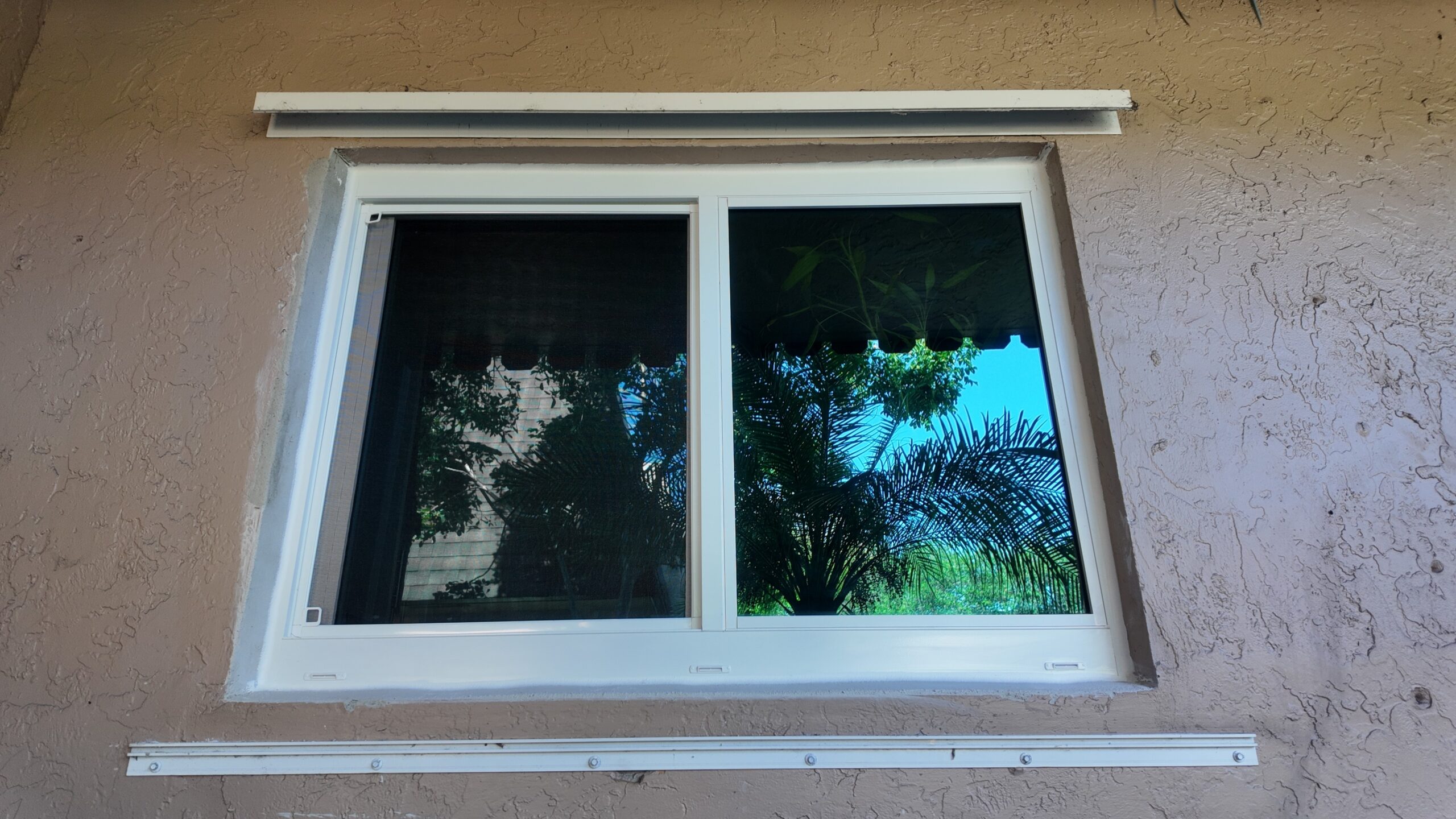
On a recent two-story replacement in Miami-Dade, our crew pulled the old frames and found the original openings anchored through deteriorated wood bucks — some fasteners turned freely by hand. On paper, those windows were impact-rated. In reality, Category 5 suction at the second-floor corners would have been pulling against soft wood, not structure.
We replaced the bucks with properly fastened pressure-treated lumber, anchored the new units per the NOA schedule, and documented the anchorage; the final inspection passed clean. That job is this article in one house: the owner had paid for “impact windows” but had not bought Category 5 protection until the anchorage matched the NOA.
Impact Windows vs. Hurricane Shutters in a Cat 5
Code treats both as acceptable opening protection, but they are not equivalent in practice. Shutters protect only when deployed — panels left in the garage protect nothing. Impact windows are passive and always on duty, with no ladder required when a storm is 36 hours out.
And if a shutter panel over ordinary glass is breached, unprotected glass is next in line — while a laminated impact window is itself the tested barrier. For most South Florida homeowners, impact windows are the primary system and shutters at most supplemental.
Where Impact Windows Can Still Fail (Honest Limits)
We install these products every week, and will still tell you plainly where they can fail:
- Wrong DP for the opening — a unit rated below the calculated pressure for a corner-zone or second-story opening can fail structurally even though it would pass a missile test.
- Non-conforming installation — wrong anchors, short embedment, bad bucks: the most common failure mode we see, and invisible from the sidewalk.
- Debris beyond the test standard — a Category 5 storm can throw heavier objects faster than the 9-pound 2×4 at 34 mph. The glass may crack and deform badly; the design intent is a closed envelope, not cosmetic survival.
- Expired or mismatched approvals — a unit installed outside its NOA’s tested size or substrate is, in effect, untested.
Impact windows are not invincible. They are engineered and tested to keep your envelope intact through the worst wind event the code contemplates — when the installed system matches the tested system.
Impact Windows and Energy: A Bonus Beyond the Storm
Because impact windows are laminated and typically insulated, they also cut energy loss. The U.S. Department of Energy notes that heat gain and loss through windows is responsible for roughly 25%–30% of residential heating and cooling energy use (energy.gov). ENERGY STAR–qualified impact units can reduce that load in the Florida climate zone — a year-round benefit on top of storm protection.
Frequently Asked Questions
Have impact windows ever survived a real Category 5 hurricane?
Yes. Properly installed HVHZ-rated units have come through major South Florida hurricanes with the envelope intact — sometimes with cracked outer glass, which is the design working as intended. Post-storm failures overwhelmingly trace to non-rated products or non-conforming installation.
What wind speed defines a Category 5 hurricane?
A Category 5 hurricane has sustained winds of 157 mph or greater on the NOAA National Hurricane Center’s Saffir-Simpson scale. HVHZ impact windows are tested to the TAS protocols published by the Florida Building Commission, which correspond to design conditions in this wind range for the Miami-Dade and Broward zone.
What design pressure (DP) rating do I need in Miami-Dade or Broward County?
It depends on your home’s height, exposure, wall zone, and opening size. Typical Miami-Dade openings run roughly +/-50 to +/-105 PSF, highest at corner zones and upper floors. The wind load calculation at permitting sets the number; each window’s NOA rating must meet or exceed it.
Does the glass break during the large missile impact test?
Often, yes — and the unit still passes. TAS 201 allows the laminated glass to crack when the 9-pound 2×4 hits at roughly 34 mph, as long as the interlayer prevents penetration; the cracked unit must then survive roughly 9,000 pressure cycles under TAS 203. The pass criterion is a closed envelope, not unbroken glass.
Is a Miami-Dade NOA required everywhere in Florida, or only in the HVHZ?
Only the High-Velocity Hurricane Zone — Miami-Dade and Broward counties. Elsewhere in Florida, a statewide Florida Product Approval is generally sufficient. If your home is in Miami-Dade or Broward, insist on the NOA and verify it on Miami-Dade County’s Product Control Search.
Do I still need hurricane shutters if I have impact windows?
No. Impact windows installed per their NOA satisfy the Florida Building Code’s opening protection requirement on their own. Shutters over impact glass are optional extra insurance, not a requirement.
How can I verify my installed windows actually match their NOA?
Check the permanent label on the glass or frame for manufacturer and series, look the product up on Miami-Dade County’s product control search, and compare your openings against the NOA’s size and pressure tables. If you cannot get the installation documents, a licensed contractor can inspect and verify the anchorage.
Related Articles
- Impact windows in Florida: what HVHZ homeowners need to know
- How impact window installation works, step by step
- Impact window permits and inspections in Miami-Dade
- What impact windows cost in South Florida
Ready for a free estimate? Call 786-886-2088 or fill out our contact form.
Schedule Your Free Estimate
Ready to get started? Request a free estimate — no phone call required.