Last updated: July 2026 by the Bigfoot Windows & Roofing editorial team.
Direct answer: Florida home insurance rates are rising because global reinsurers have repriced South Florida risk after years of catastrophic losses, roof-age underwriting rules now disqualify or surcharge older roofs, and a fraud-and-litigation epidemic inflated claim costs for years before recent reforms. Your roof is the single largest variable you can actually control.
Key Takeaways
- Reinsurance — the insurance that insurers buy — repriced after multi-year losses, and Florida homeowners are absorbing the cost.
- Carriers use roof age as a primary risk proxy; a roof 15+ years old can trigger non-renewal or replacement requirements.
- Miami-Dade and Broward sit inside the High Velocity Hurricane Zone (HVHZ), the strictest building code region in the US — insurers price that exposure separately.
- Assignment of Benefits (AOB) fraud added billions to claims costs; 2022–2023 tort reforms began unwinding that, but premiums have not fully followed yet.
- A new qualifying roof — especially metal or GAF System Plus shingle — plus impact windows and a wind mitigation inspection are the three levers most likely to reduce your premium.
The Core Problem
Why Your Florida Homeowner Premium Feels Disconnected from Reality
You haven’t filed a claim in a decade. Your premium doubled anyway. Here’s why.
Florida homeowners have watched premiums climb steeply while their personal claim history stayed clean. That disconnect is real, and it has a specific structural cause: your premium is not just priced on your history — it is priced on the aggregate risk of every home in your zip code, the cost of reinsurance in global capital markets, and the legal environment insurers face in Florida courts. All three of those inputs moved against homeowners at the same time.
Between 2017 and 2022, Florida’s property insurance market absorbed losses from Hurricanes Irma, Michael, and Ian, plus tens of thousands of non-weather claims inflated by contractor-attorney fraud schemes. Twelve Florida domestic insurers became insolvent between 2017 and 2023. The survivors raised rates, tightened underwriting, or both. Citizens Property Insurance — the state-backed insurer of last resort — swelled to over 1.4 million policies, creating its own systemic risk.
South Florida Context
Miami-Dade, Broward, and the HVHZ Premium
Miami-Dade and Broward counties sit inside the High Velocity Hurricane Zone (HVHZ) — the strictest wind-load and product-approval zone in the United States. The Florida Building Code requires a Miami-Dade NOA or a Florida Product Approval that covers HVHZ use for roofing and window products installed here; products approved for the rest of Florida do not automatically qualify. That means materials, installation methods, and inspection standards are all more demanding and more expensive than anywhere else in the state.
Insurers price HVHZ exposure separately. A home in Miami-Dade carrying a 20-year shingle roof without Miami-Dade NOA documentation is viewed by an underwriter as a high-severity, high-frequency risk — not because the homeowner is careless, but because the exposure math in a major hurricane is unfavorable. Wind speed design thresholds in the HVHZ commonly exceed 175 mph, and older roofing systems were not engineered to those standards.
Salt-air corrosion compounds the issue. Coastal homes within two miles of the water face accelerated fastener corrosion and membrane degradation. Carriers are aware of this. Proximity to the coast is a rated characteristic on virtually every Florida homeowner policy.
How the System Works
Reinsurance, Roof Age Rules, and the Fraud Epidemic Explained
Three forces drove premiums higher. Understanding them is the first step toward addressing them.
1. Reinsurance: The Upstream Cost Nobody Talks About
Reinsurance is the coverage that primary insurers buy from global capital markets to protect themselves against catastrophic losses. When a major hurricane causes $60 billion in insured losses, it is reinsurers — largely based in Bermuda, London, and Germany — who absorb a large share of that loss. After several consecutive years of elevated losses, reinsurers repriced Florida risk sharply upward beginning around 2022. Primary carriers had two choices: absorb the higher reinsurance cost, or pass it to policyholders. They passed it.
This is why your premium can increase even if your home is in perfect condition and you have never filed a claim. You are not being penalized for your behavior — you are being assessed your share of the aggregate risk pool repricing happening in global capital markets.
2. Roof Age: The 15-Year Rule
Many Florida carriers now apply a hard underwriting rule: a shingle roof older than 15 years triggers either a non-renewal notice, a requirement to replace before binding coverage, or a surcharge that makes the policy unaffordable. Some carriers use a remaining useful life formula — if an inspector determines the roof has fewer than three to five years of useful life remaining, coverage is refused or restricted. Replacing an aging roof before your insurer inspects is frequently the most direct path to stable coverage.
Why 15 years? Shingle manufacturers and insurers have studied failure rates in South Florida’s heat, UV, and storm environment. The data consistently shows that shingle roofs in the HVHZ degrade faster than manufacturer lab-test assumptions. A 15-year shingle roof in Miami-Dade has experienced far more thermal cycling, UV exposure, and wind loading than a 15-year-old roof in a temperate climate. Insurers are pricing actuarial reality, not penalizing homeowners arbitrarily.
| Roof Age (Shingle) | Typical Insurer Treatment | Homeowner Action |
|---|---|---|
| Under 10 years | Standard underwriting | Maintain; schedule wind mit inspection |
| 10–14 years | Closer inspection; may require 4-point | Document condition; get roof inspection |
| 15–19 years | Non-renewal risk; surcharge likely | Obtain replacement quotes now |
| 20+ years | Non-renewal or coverage refusal common | Replace before policy renewal date |
| Metal roof (new) | Most favorable underwriting | Wind mitigation inspection after install |
3. Assignment of Benefits Fraud and Litigation Costs
Florida’s Assignment of Benefits (AOB) mechanism — which allowed contractors to file claims directly on a homeowner’s behalf — was weaponized by a minority of contractors and attorneys who filed inflated claims, often on minor storm damage, and then litigated when carriers contested. Between 2013 and 2022, Florida accounted for roughly 8 percent of US homeowner claims nationally but more than 70 percent of homeowner insurance litigation. That litigation cost was baked into every Florida premium. Florida’s legislature passed significant tort reforms in 2022 and 2023, eliminating one-way attorney fees and restricting AOB. The reforms are real, but premium relief lags because carriers and reinsurers need multiple years of post-reform loss data before repricing downward.
Roofing Material Comparison
How Different Roof Types Affect Your Insurance Position
| Roof Type | Typical Lifespan (S. Florida) | Insurer Preference | Wind Mit Benefit |
|---|---|---|---|
| Asphalt shingle (standard) | 12–15 years | Acceptable when new; surcharge risk by year 15 | Moderate |
| Metal standing seam | 40–50+ years | Most favorable; long underwriting horizon | High |
| Concrete tile | 25–40 years | Good; depends on underlayment condition | Moderate–High |
| GAF System Plus shingle | 12–15 years (but warranty backed) | Good; Wind Proven label helps | Moderate–High |
| Flat (TPO membrane) | 15–25 years | Variable; depends on drainage and inspection | Moderate |
Metal roofing — particularly standing seam aluminum or steel — offers the longest underwriting horizon of any residential roof type. A new metal roof removes the 15-year underwriting cliff from your risk profile for decades. Combined with a wind mitigation inspection and impact windows on your home, a metal roof installation creates the strongest possible documentation package for your insurer.
When Citizens Insurance non-renews a policy due to roof age, homeowners often discover private-market options improve dramatically after a new roof is installed. I have seen customers go from facing non-renewal to receiving competitive private-market offers — the roof was the single variable that changed.
Why It Matters Who Does the Work
License Breadth and Structural Scope
A licensed contractor, not a lead aggregator — and the scope of license matters when your project touches structure.
When a roof replacement uncovers damaged decking, deteriorated hurricane straps, or structural framing issues — which happens routinely in South Florida homes that have weathered decades of storms — a contractor who holds only a roofing license must stop and bring in a separate general contractor to address those structural items. That creates coordination gaps, separate permit pulls, and scheduling delays. A contractor who holds a Certified General Contractor license alongside a Certified Roofing Contractor license can address structural repairs, hurricane strap upgrades, and roofing scope under a single permit and single project structure. That is a structural advantage grounded in license breadth — not a marketing claim, but a direct consequence of what the Florida DBPR licenses authorize.
“Insurance companies want documentation. A new roof, a wind mitigation report, and impact windows give your insurer three reasons to treat your home differently. We help homeowners build that documentation package the right way.”
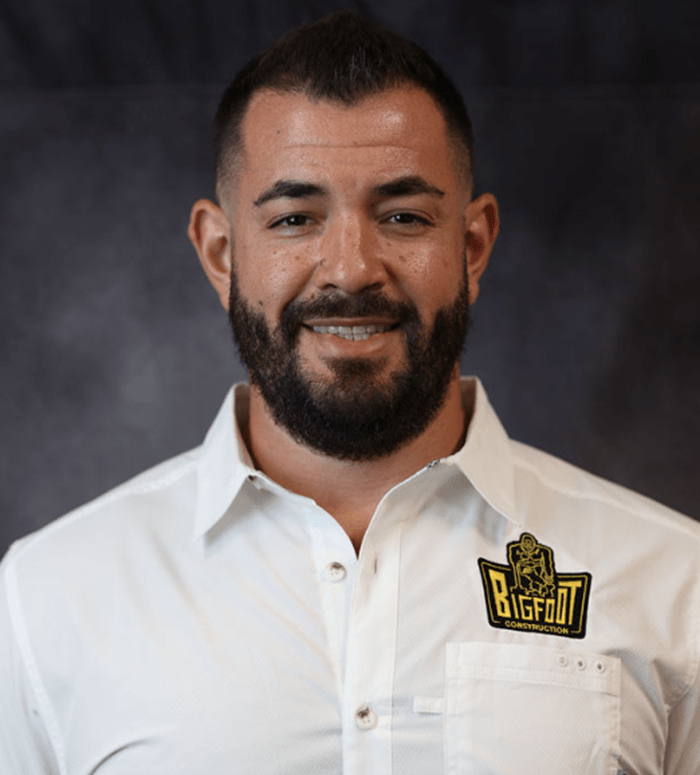
President, Bigfoot Windows & Roofing
What to Install
Roofing Products That Strengthen Your Insurance Position
For shingle replacement, Bigfoot Windows & Roofing installs GAF roofing systems. Our GAF Certified Plus certification means we can offer the GAF System Plus warranty — 50 years non-prorated, covering shingles, labor, tear-off, and accessories. GAF’s Wind Proven designation carries no maximum mph rating and is not voided by named storms in your county — a meaningful distinction from competitors who cap wind warranties at 130 mph or exclude named storms.
For metal roofing, we install Englert or Metal Alliance standing seam systems. Englert or Metal Alliance panels are fabricated and roll-formed on-site, one continuous piece from ridge to eave — no horizontal seams, which is a structural advantage in hurricane conditions. The clip system uses manufacturer-approved clips at specified intervals; using non-approved clips causes failed inspection and requires full redo. Warranty terms come from the panel manufacturer on your project (Englert or Metal Alliance) and are listed on your proposal.
Both product lines carry the Miami-Dade NOA documentation your insurer and the county building department accept. If you are pursuing financing for your roof replacement, PACE financing is available through property tax billing — no bank loan, no credit score impact, and the My Safe Florida Home grant of up to $10,000 may be stackable depending on your eligibility.
What the Process Looks Like
From Inspection to Wind Mitigation Report
Here is a straightforward sequence for homeowners using a roof replacement to stabilize their insurance position:
- Roof inspection and scope definition. We assess existing roof condition, decking integrity, hurricane strap status, and drainage. This determines what the permit scope will include.
- Permit pull and material selection. We pull the permit — always. No permit means no Miami-Dade NOA documentation, no legal protection, and no insurance credit. Product selection is confirmed against your insurer’s requirements where known.
- Installation and structural scope. Roofing proceeds. If decking replacement, hurricane strap upgrades, or structural repairs are required, those are coordinated under the same permit where scope permits — the GC license authorizes this.
- County inspection and close-out. Final inspection is completed. Permit closes. You receive documentation.
- Wind mitigation inspection. After permit close, a licensed wind mitigation inspector produces the OIR-B1-1802 form your insurer requires. Present this to your insurer or agent immediately.
Your roof age may be the reason your insurer is threatening non-renewal. Let’s look at your options.
Who We’re Not the Right Fit For
- Budget-first shoppers comparing only price: We pull permits, use NOA-compliant materials, and do not cut corners on HVHZ requirements. If the lowest-bid contractor who skips permits is your comparison point, we will not be the cheapest quote and we are not trying to be.
- Homeowners who want a roof done without a permit: We do not install roofs without permits in Miami-Dade or Broward. No permit means no NOA documentation, no legal protection, and no insurance credit — we will not put a homeowner in that position.
- Owners seeking a brand we do not carry: We do not install PGT windows or work with Owens Corning or CertainTeed shingles. If those are hard requirements, a different contractor is the right fit.
- Projects outside South Florida: Our licensing and active operations are in Miami-Dade, Broward, and Palm Beach counties. We are not the right fit for projects north of Palm Beach.
Frequently Asked Questions
Why are Florida home insurance rates going up so fast?
Three main forces: global reinsurance repricing after years of hurricane and litigation losses, roof-age underwriting rules that disqualify or surcharge older roofs, and the after-effects of Assignment of Benefits fraud that inflated claim costs for nearly a decade. Recent tort reforms have addressed the fraud side, but premium relief lags because reinsurers and carriers need multiple years of post-reform loss data before adjusting rates downward.
What is reinsurance and why does it affect my premium?
Reinsurance is the coverage your insurer buys from global capital markets to protect itself from catastrophic losses. When reinsurers raise the price they charge Florida insurers — which happened sharply around 2022 after consecutive years of losses — primary carriers pass that cost to policyholders. Your premium can increase even if you have never filed a claim because you are sharing in the repricing of aggregate Florida risk.
What is the 15-year roof rule in Florida?
Many Florida carriers apply a rule that a shingle roof 15 years or older triggers non-renewal, a required replacement before binding coverage, or a significant surcharge. Some use remaining useful life instead of a fixed year threshold. In South Florida’s HVHZ heat and UV environment, shingle roofs degrade faster than in temperate climates, so the 15-year threshold reflects real actuarial data rather than an arbitrary policy.
How does my roof type affect my insurance rate?
Roof type, age, and material all affect your rate. Metal standing seam roofs receive the most favorable underwriting treatment because of their 40–50-year lifespan — they remove the 15-year underwriting cliff for decades. New tile and GAF System Plus shingle roofs also improve your position. A wind mitigation inspection after any new roof installation documents the improvement to your insurer and typically produces a premium credit.
Will a new roof actually lower my insurance premium?
A new qualifying roof is the single strongest lever most South Florida homeowners have to stabilize or reduce their premium. Combined with a wind mitigation inspection and impact windows, a new roof gives your insurer documented evidence of reduced risk. Specific savings depend on your carrier, policy structure, current surcharges, and the roof system installed. I have seen customers reduce premiums significantly — but individual results vary and I cannot guarantee a specific dollar amount.
Are Florida insurance laws actually changing?
Yes. Florida’s legislature passed meaningful tort reforms in 2022 and 2023 — eliminating one-way attorney fees, restricting Assignment of Benefits, and changing bad-faith litigation rules. These reforms address the litigation-cost driver that inflated premiums for years. However, premium relief is gradual: carriers and reinsurers need several years of post-reform loss data before pricing downward. The market is stabilizing, but full relief has not yet reached policyholders broadly.
Can I finance a roof replacement to stabilize my insurance?
Yes. PACE financing allows qualifying property owners to finance a roof replacement through their property tax bill — no bank loan, no credit score impact. Rates are approximately 9.49% and terms of up to 20 years are available. The My Safe Florida Home grant program offers up to $10,000 and may be stackable with PACE financing for eligible homeowners. Consult your CPA regarding any potential tax considerations — we do not provide tax advice.
Sources
- Florida Office of Insurance Regulation (OIR) — market conduct and rate filing records
- Florida Legislature — HB 837 (2023 tort reform) and SB 2D (2022 property insurance reform)
- Florida Department of Financial Services — Citizens Property Insurance Corporation data
- Florida Building Code, 8th Edition — High Velocity Hurricane Zone provisions
- National Roofing Contractors Association (NRCA) — roofing lifespan and performance data
Your roof age may be driving your insurance crisis. Let’s build your documentation package.
Request a free roofing estimate — permits, NOA materials, and wind mitigation report included in our process.
Or call directly: 786-886-2088