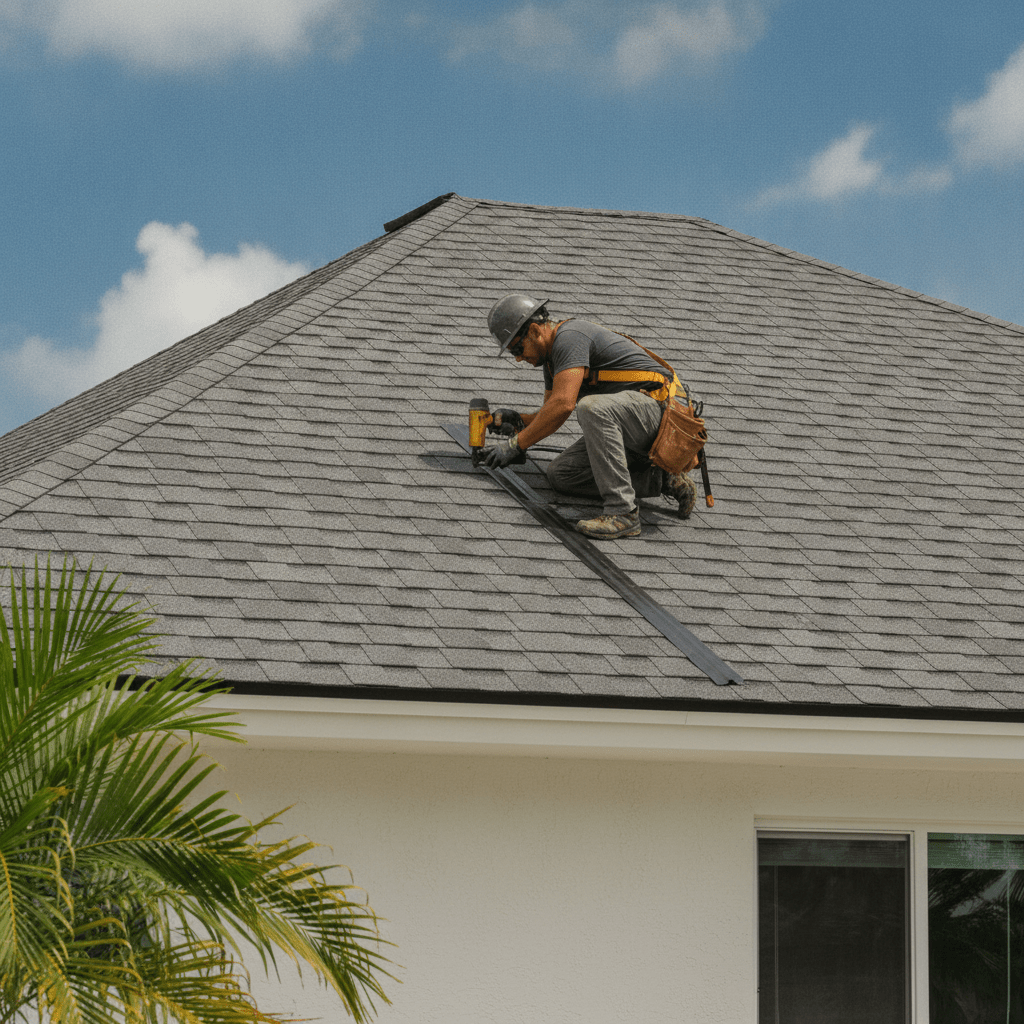
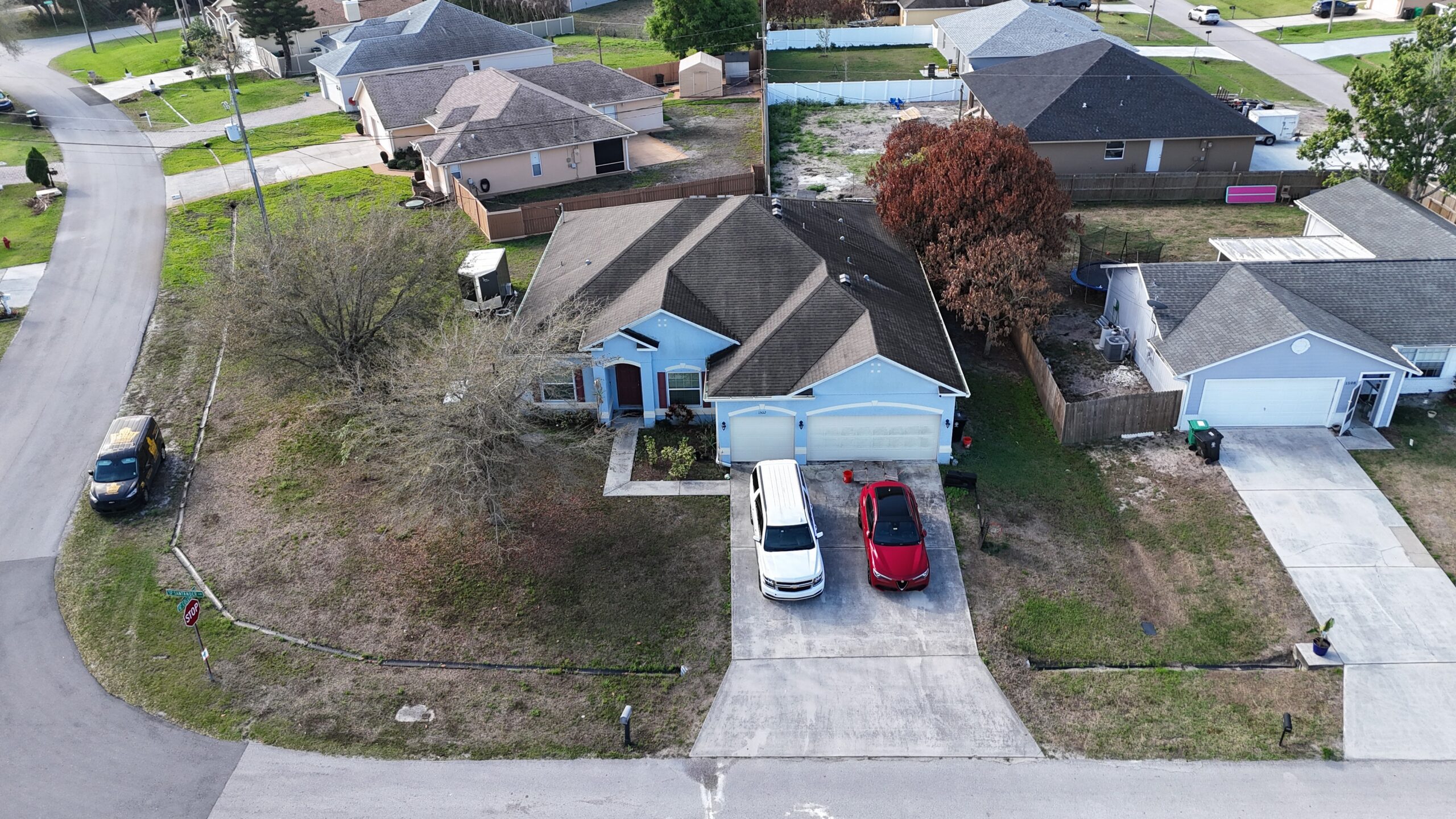
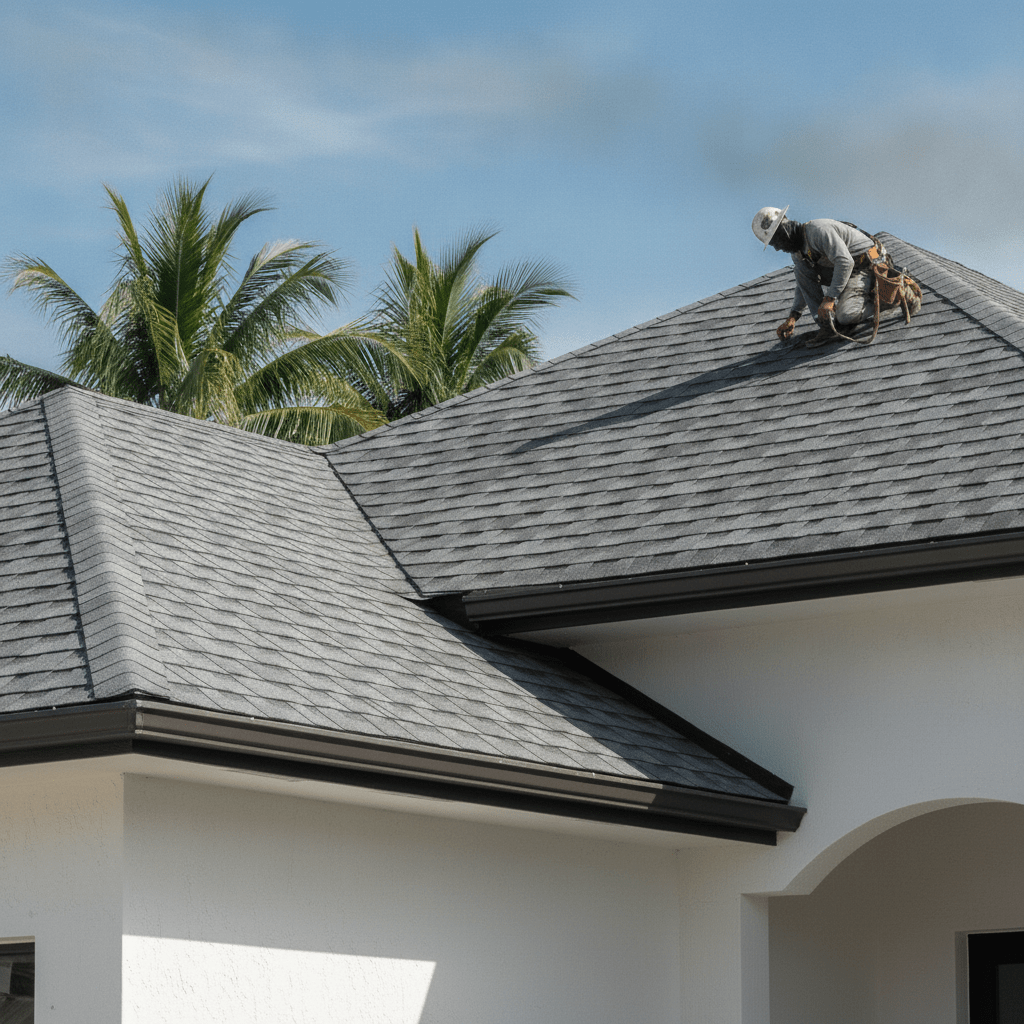
Key Takeaways
- Florida’s OIR-B1-1802 wind mitigation form governs which home features qualify for insurance discounts.
- The 2026 revision adds stricter proof requirements for roof slope and regional classification.
- A single unprotected garage door can erase most of your wind mitigation credits.
- Roof-to-wall attachment type (toe-nail vs. double wrap) is the single largest credit driver.
- Structural strap upgrades require a Certified General Contractor — not a roofer alone.
- A full storm retrofit can break even within roughly 8 years in South Florida markets.
The Problem
Why South Florida Homeowners Leave Insurance Money on the Table
Most missed credits come down to documentation gaps and fixable deficiencies — not unaffordable upgrades.
If you own a home in Miami-Dade or Broward County and you have not had a wind mitigation inspection in the last five years, there is a good chance your insurer is charging you more than necessary. Florida law allows insurers to offer premium credits for homes that meet certain wind-resistance standards, and those credits are documented on a standardized state form — the OIR-B1-1802.
The problem is that most homeowners do not know what the inspector is looking at, which means they cannot prepare. They get an inspection, receive a report with mediocre scores, and assume nothing can be done. In reality, several of the biggest credit categories are fixable — some before the inspector even arrives.
Common credit killers include: an unprotected garage door (which can nullify the entire “opening protection” credit), toe-nail roof-to-wall attachments instead of hurricane straps, and a secondary water barrier made of 30-lb felt instead of peel-and-stick or tin-cap underlayment. Each of these has a documented impact on the OIR-B1-1802 score.
Local Context
Miami-Dade and the HVHZ: A Different Standard
Miami-Dade and Broward Counties sit inside the High Velocity Hurricane Zone (HVHZ) — the most stringent building code jurisdiction in the United States. The Florida Building Code requirements for roofing, attachments, and opening protection are stricter here than anywhere else in the state, which means the OIR-B1-1802 credits available to HVHZ homeowners are correspondingly more valuable.
Citizens Insurance, which insures a large share of South Florida homes, has been non-renewing policies on roofs older than 20–25 years. A new roof combined with a wind mitigation inspection is often the fastest path to retaining coverage and reducing premium. Inspectors operating in Miami-Dade also require a Miami-Dade NOA or a Florida Product Approval that covers HVHZ use for any product claiming credit — a step that matters if you are installing impact-rated windows and doors as part of your opening protection upgrade.
Florida Senate Bill 293 also clarified that HOAs cannot prohibit metal roofing or impact windows — a relevant fact for homeowners in deed-restricted communities who assumed those upgrades were not an option.
How It Works
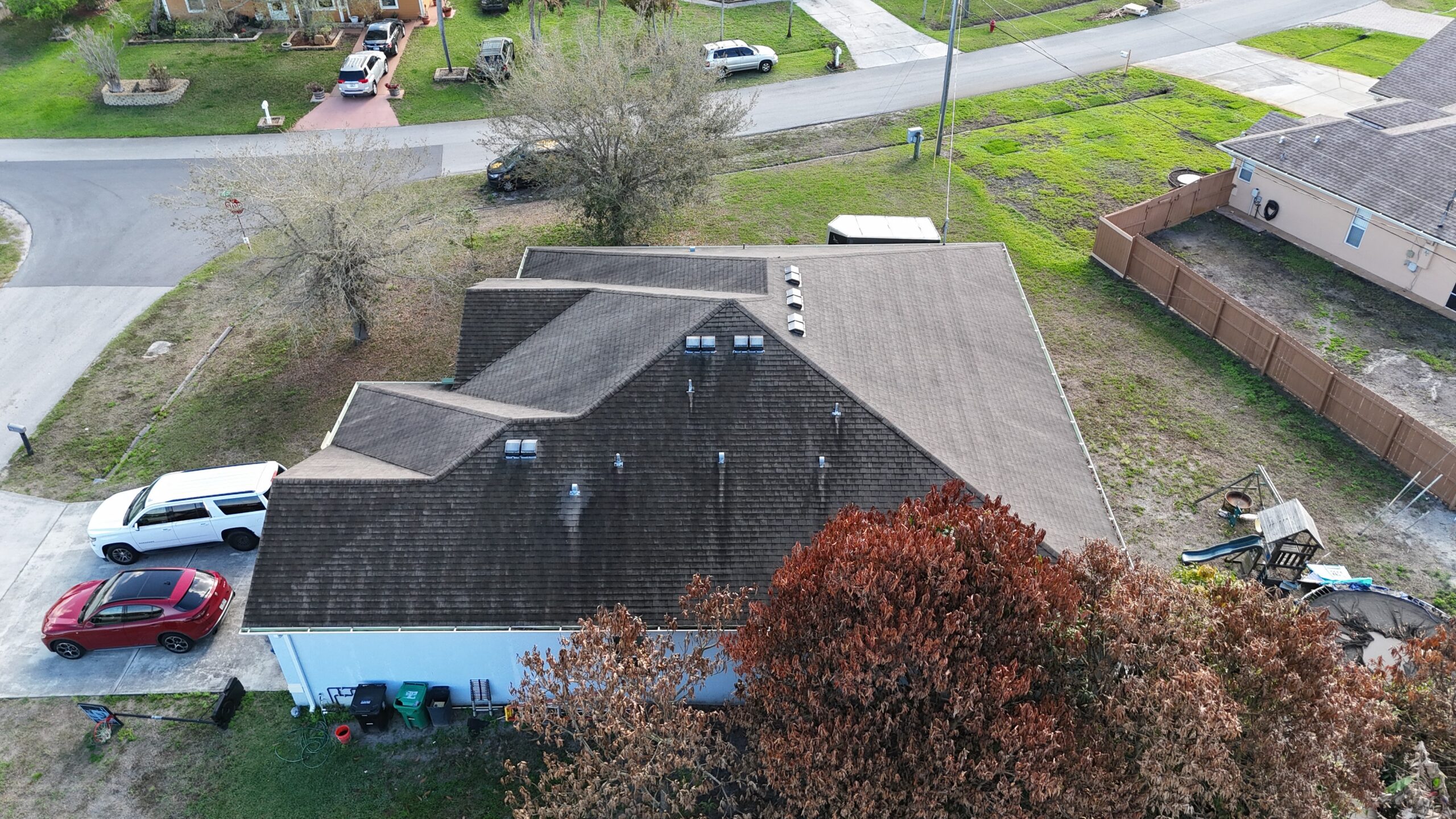
What the OIR-B1-1802 Form Actually Measures
Six scored categories — each one tied to a specific structural or envelope feature.
The OIR-B1-1802 wind mitigation form scores your home across six categories. Each category produces a separate credit, and credits compound. A home that scores well in all six can see premium reductions of 40–70% compared to a home with no credits. A home that scores poorly in even one high-weight category can lose a significant portion of the total discount.
| Category | What the Inspector Checks | Credit Weight |
|---|---|---|
| 1. Building Code | Was the home built or re-roofed under the Florida Building Code (2001+)? | Moderate |
| 2. Roof Covering | Type and installation method — shingle, metal, tile, flat | Moderate |
| 3. Roof Deck Attachment | Nail spacing and pattern on sheathing — 6″ vs 6″/12″ patterns matter | High |
| 4. Roof-to-Wall Attachment | Toe-nail (weakest) → strap → double wrap (strongest) | Highest |
| 5. Roof Geometry | Hip vs gable vs flat — hip roofs receive the strongest credit | Moderate–High |
| 6. Opening Protection | All glazed openings AND garage door must be rated impact or storm-shuttered | Highest |
The 2026 OIR-B1-1802 Changes: What’s New
The 2026 revision to the OIR-B1-1802 form introduces two notable changes that inspectors in Miami-Dade are already applying:
- Region + Roof Slope documentation: Insurers now require verified documentation of the wind speed region and the roof slope category. An inspector cannot simply check a box — they must attach supporting documentation or field measurements.
- Stricter proof standards: Photos alone are no longer sufficient for several credit categories. Inspectors must document permit records, product approvals, or manufacturer data sheets where applicable.
If your existing wind mitigation report was issued before 2026, check with your insurer whether it will be accepted at renewal. Some carriers are requiring re-inspection on older reports, particularly for homes in Miami-Dade County.
The Garage Door Problem
Opening protection is an all-or-nothing credit in most insurer rating models. If every window and door on your home is impact-rated or shuttered — but your garage door is a standard non-rated door — you receive zero credit for opening protection. This is one of the most common and most costly mistakes South Florida homeowners make when preparing for a wind mitigation inspection.
An impact-rated or wind-rated garage door with the appropriate Miami-Dade NOA or Florida Product Approval is required to claim the credit. Replacing a standard garage door with a rated unit is typically one of the lower-cost opening protection upgrades available.
Secondary Water Barrier: Tin-Cap vs. Peel-and-Stick
The secondary water barrier category rewards homes that have a qualifying underlayment system beneath the roof covering. Two options qualify under Florida Building Code: tin-cap fastened underlayment and peel-and-stick (self-adhered) membrane. Thirty-pound felt does NOT qualify as a secondary water barrier for credit purposes.
Peel-and-stick installed over the full roof deck is the strongest qualifying option and, since the 2024 Florida Building Code update, is now permitted as a direct-to-deck installation. Some Citizens Insurance policies also offer a secondary water barrier discount that stacks with the wind mitigation credit — ask your agent whether your policy qualifies.
Attachment Types Compared
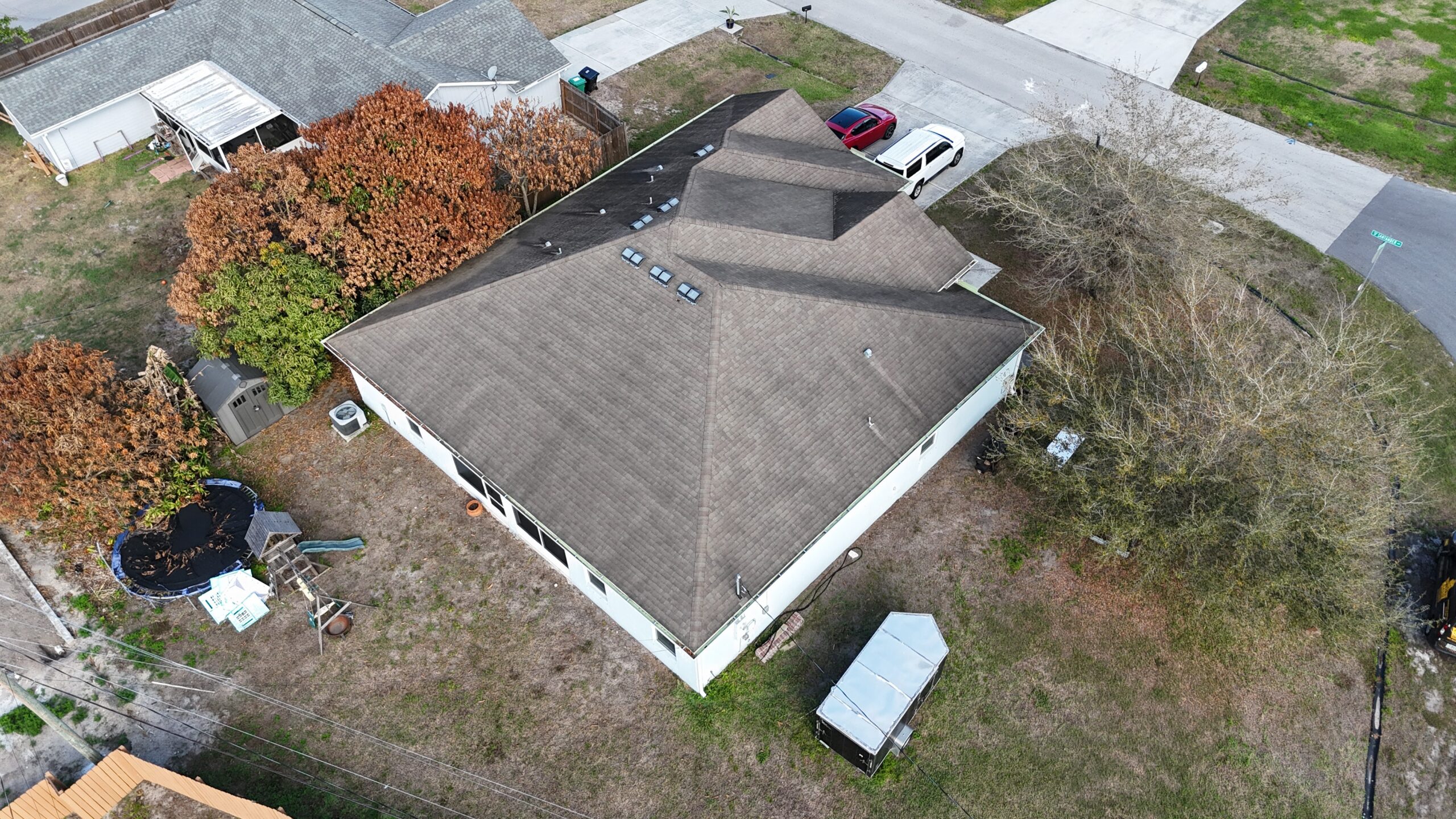
Roof-to-Wall Attachment: The Credit That Matters Most
Upgrading from toe-nails to double wraps is the single highest-value structural change you can make for wind mitigation credit purposes.
| Attachment Type | Wind Resistance | Credit Category | Upgrade Path |
|---|---|---|---|
| Toe-nail | Lowest | Category A (minimal credit) | Requires structural upgrade |
| Single strap (clip) | Moderate | Category B | Accessible from attic in many homes |
| Single wrap | Good | Category C | Most common in post-2002 FBC construction |
| Double wrap | Strongest | Category D (maximum credit) | Best credit; requires structural access |
Here is the important detail most roofing contractors will not tell you: upgrading from toe-nails to hurricane straps is a structural modification — not a roofing task alone. Adding or relocating straps requires work at the top plate connection between the roof truss and the wall framing. That scope falls under general contracting, not roofing. A contractor authorized to coordinate structural modifications — holding a Certified General Contractor license — can legally perform that work and pull the appropriate permits. A roofing-only contractor cannot. Florida licensed: CGC1531370 · CRC1331693 · CCC1333168 · SCC131153098.
This distinction matters when you are trying to maximize wind mitigation credits, because a roofer who installs a new roof but cannot address strap deficiencies leaves the single highest-credit category untouched. You end up with a new roof and a mediocre wind mitigation score.
When a Roofer Alone Is the Better Choice
If your home already has adequate hurricane straps documented from the original construction permit, and your only goal is a roof replacement to qualify for the roof covering and deck attachment credits, a roofing-only contractor is a straightforward fit. The GC scope only becomes relevant when structural strap work or other structural modifications are needed alongside the roof.
Why License Breadth Matters Here
A Roofing Contractor Who Can Also Fix What the Inspector Finds
Licensed contractor — not a lead aggregator.
“We see it constantly — a homeowner gets a wind mitigation inspection, finds out their straps are toe-nailed, and then discovers their roofer can’t touch the structural side. That’s the gap we exist to close.”
President, Bigfoot Windows & Roofing
The 8-Year Break-Even Math
Does a Full Storm Retrofit Actually Pay Off?
Conservative estimates suggest most South Florida homeowners break even in 6–10 years depending on scope.
A full storm retrofit — new qualifying roof system, hurricane straps where needed, peel-and-stick secondary water barrier, and impact-rated opening protection — addresses every OIR-B1-1802 credit category. The premium reduction that results from a maximum-credit wind mitigation report, combined with a wind mitigation inspection and policy shopping, can be significant.
Here is a conservative way to think about the math: if a full roof replacement with strapping upgrades costs approximately $18,000–$24,000 and your annual premium drops by $2,500–$4,000 (depending on your carrier, policy structure, and coverage level), the break-even point on the roofing portion alone falls in the 6–10 year range. Adding impact windows and doors increases upfront cost but also increases the opening protection credit and may qualify the home for additional insurer discounts beyond the wind mitigation form. Financing options, including PACE through property tax, can make the monthly cost of upgrades comparable to or less than the monthly premium savings — see our financing page for details.
Note: we do not quote specific premium savings because every policy and carrier is different. What we can say is that the combination of a qualifying roof, straps, and impact openings consistently produces the highest possible wind mitigation credit score on the OIR-B1-1802 form.
Before Your Inspection
What to Gather and Fix Before the Inspector Arrives
- Pull your existing permit history. Your local building department has records of when your roof was replaced and what code it was built under. Inspectors need permit documentation for the 2026 form — having it ready speeds the process.
- Check your garage door rating. Look for a Miami-Dade NOA sticker or a Florida Product Approval label on the door or frame. If there is none, the door likely does not qualify for opening protection credit.
- Look in your attic at the truss-to-wall connections. If you see only nails driven diagonally through the truss into the top plate (toe-nails), you are in Category A. If you see metal straps wrapping over the truss, you are in Category B or higher.
- Confirm your underlayment type. If your roof was replaced recently, ask your contractor for documentation of the underlayment installed. Peel-and-stick and tin-cap qualify; 30-lb felt does not.
- Document all window and door product approvals. For every impact-rated window or door, the inspector needs either a Miami-Dade NOA number or a Florida Product Approval number. Gather these before inspection day.
Ready to get the highest wind mitigation credit score your home qualifies for?
Who We’re Not the Right Fit For
- Homeowners who only need the inspection paperwork filed: We are a roofing and window installation contractor, not a wind mitigation inspection service. If your home is already fully upgraded and you just need a licensed inspector to complete the OIR-B1-1802 form, hire a home inspector directly — we are not the right call.
- Buyers shopping purely on lowest price: We do not compete on being the cheapest bid. We carry four state licenses, pull all permits, and perform structural scope in-house. That structure costs more than a roofing-only sub. If price is the only criterion, a single-trade roofer may quote lower.
- Projects that need only cosmetic roof repair: If your roof has minor damage and you are not pursuing wind mitigation credits or insurance compliance, a repair-only contractor is a better fit than a full replacement crew.
- Homeowners outside Miami-Dade, Broward, and Palm Beach counties: Our crews, permit runners, and inspection relationships are built for South Florida. We do not serve Central Florida or the Panhandle and would not do your project justice.
Common Questions
Frequently Asked Questions
When does the new Florida wind mitigation form take effect?
The 2026 OIR-B1-1802 revision was in effect for inspections performed in Miami-Dade beginning in 2026. Inspectors are already applying the updated proof requirements for roof slope and regional classification. Check with your insurer about whether an older report will be accepted at your next renewal or whether a re-inspection is required.
Will the new form automatically lower my premium?
No. A completed wind mitigation form documents your home’s features — it does not automatically generate a discount. Your insurer applies their own rate schedule to the credits earned on the form. The premium impact depends on your carrier, your existing policy structure, and how many of the six credit categories your home qualifies for.
What documents should I gather before a wind mitigation inspection?
Gather: the permit record for your most recent roof replacement, product approval numbers (Florida PA or Miami-Dade NOA) for every impact-rated window and door, the garage door’s rating label or NOA, and any underlayment documentation from your roofer. Having these ready shortens the inspection and reduces the chance of a category being scored conservatively due to missing proof.
Is my existing wind mitigation report still valid?
Most insurers accept a wind mitigation report for five years from its inspection date. However, the 2026 form changes mean some carriers are requesting re-inspections on older reports, particularly in HVHZ counties. Call your insurance agent and ask specifically whether your current report satisfies the updated OIR-B1-1802 requirements before your next renewal.
What is the easiest way to avoid delays and denied credits?
Fix what you can before the inspector arrives. The two most common fixable issues are an unrated garage door (which eliminates the entire opening protection credit) and missing product approval documentation for windows and doors. Both can be resolved before inspection day. For structural issues like toe-nail attachments, those require a contractor authorized for structural modifications — not a quick pre-inspection fix.
Can I finance hurricane straps and roof upgrades together?
Yes — PACE financing (Property Assessed Clean Energy) is one option available to qualifying South Florida homeowners. Payments are made through your property tax bill, not a bank loan, and there is no prepayment penalty. Note: roofing and window scopes must be submitted as separate PACE applications. For qualifying property owners, there may be tax benefits available — please consult your CPA. See our financing options page for details.
Why does the roof-to-wall attachment type matter so much?
Roof-to-wall attachment is the highest-weighted credit category on the OIR-B1-1802 form. Homes with toe-nail connections receive the lowest credit; homes with double-wrap hurricane straps receive the highest. Upgrading straps is a structural modification that requires a contractor authorized for that scope — a roofing-only license is not sufficient to pull structural permits and perform strap work in Florida.
Sources
- Florida Office of Insurance Regulation, OIR-B1-1802 Wind Mitigation Inspection form and guidance.
- Florida Building Code, 8th Edition — Section on roofing underlayment and secondary water barrier requirements.
- Citizens Property Insurance Corporation — Roof age and coverage eligibility guidance.
- Florida Senate Bill 293 (2023) — HOA restrictions on roofing materials and opening protection.

Have questions about your wind mitigation inspection or roofing upgrade options? Talk to a contractor who holds all four Florida licenses and can address every credit category — structural scope included.