
Last updated: July 2026 by the Bigfoot Windows & Roofing editorial team.
Key Takeaways
- An outdated roof can trigger a premium spike of thousands of dollars annually — enough to bust a buyer’s DTI and kill loan approval.
- Wind mitigation credits require documented proof: dated photos, permit records, and an inspector-signed report.
- A 4-point inspection is valid for only 1 year on older homes; timing matters at closing.
- Missing the secondary water resistance (SWR) credit is one of the most common — and most fixable — documentation errors.
- South Florida’s HVHZ rules mean underwriters scrutinize roofs more carefully here than almost anywhere else in the country.
The Problem
One Insurance Quote Can Collapse a Deal at the Closing Table
Most buyers focus on the purchase price. Insurers focus on the roof age, construction method, and documentation — and the difference can be thousands of dollars a year.
A roof-related insurance surprise is one of the most common reasons a Florida real estate closing fails at the last stage — and it is almost entirely preventable when the right documentation exists. Here is how it happens. A buyer gets under contract on a home listed at $550,000. Their lender pre-approves them at a debt-to-income ratio that leaves almost no margin. Then, two weeks before closing, the insurance quote comes back: not $3,500 per year as expected, but $11,500 per year — because the roof is 22 years old, there are no Miami-Dade NOA-compliant improvements on record, and the seller never pulled a wind mitigation report.
The lender re-runs the DTI with the real insurance premium. The loan fails. The deal dies. That is the $8,000 insurance surprise.
This article explains what drives that gap, what documentation controls it, and what sellers and buyers in South Florida should do before the closing clock starts running.
South Florida Context
Why Miami-Dade Is Ground Zero for Closing Insurance Shocks
Florida’s property insurance market is already the most volatile in the country. Inside Miami-Dade and Broward — the High Velocity Hurricane Zone (HVHZ) — underwriting standards are stricter still. Insurers operating here must comply with HVHZ-specific building codes, and they price risk accordingly.
The HVHZ designation affects nearly every underwriting decision: roof material approval, Miami-Dade NOA product compliance, and whether secondary water resistance features earn a credit. A roof that would be considered acceptable in Orlando may trigger a non-renewal notice in Miami-Dade.
Citizens Insurance, Florida’s insurer of last resort, has been actively non-renewing policies on homes with roofs aged 20 years or older. When Citizens non-renews, the homeowner — or an incoming buyer — must find coverage on the private surplus-lines market, where premiums are frequently two to three times higher. That premium shock is what collapses deals at the closing table.
What Actually Drives the Premium
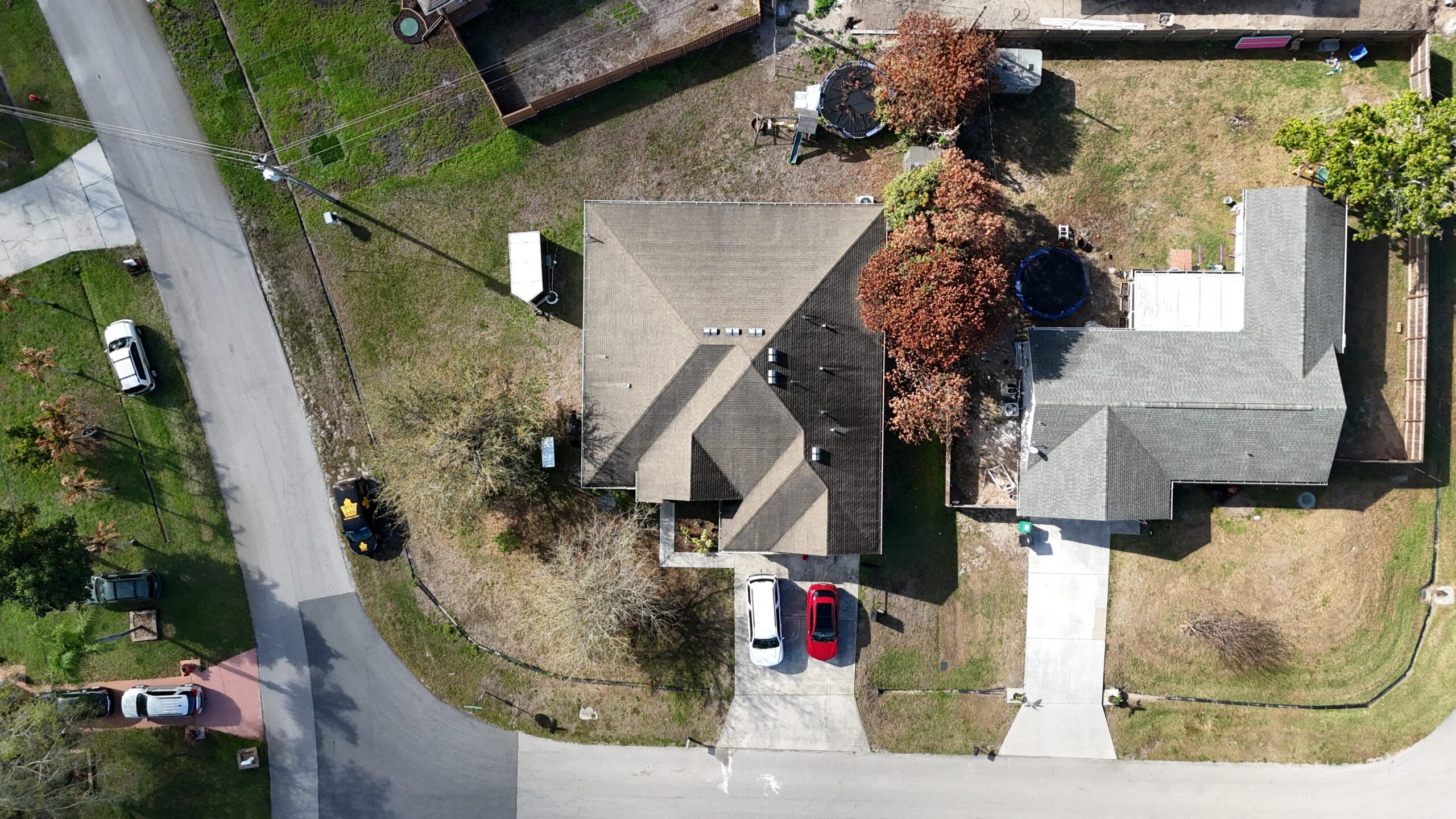
The Five Roof-Related Insurance Factors That Determine Your Quote
Understanding these five factors is the difference between a smooth closing and a renegotiated purchase price — or a dead deal.
| Factor | Low-Risk Profile | High-Risk Profile |
|---|---|---|
| Roof age | Under 5 years | Over 15–20 years |
| Roof material | Metal standing seam, new tile | Aging 3-tab shingle |
| Wind mitigation report | Current, credits documented | Expired or never done |
| Secondary water resistance (SWR) | Full peel-and-stick underlayment | 30-lb felt only — no credit |
| 4-point inspection | Passed within 12 months | Expired or flagged deficiencies |
1. Roof Age and Material
Most private insurers in Florida will not write a new policy on a home with a shingle roof older than 15 years or a tile roof older than 25 years. A metal roof from a reputable manufacturer — installed with a current Miami-Dade NOA — dramatically extends the insurable life of the home and often unlocks lower base rates. When you are selling or buying in Miami-Dade, the roof age and material are effectively public record once an inspector walks the property.
2. Wind Mitigation Report and Credits
A wind mitigation inspection documents how the home is built to resist hurricane-force winds. Credits are granted for features including hip roofs, reinforced roof decks, Miami-Dade NOA-approved opening protection, and roof-to-wall connections such as hurricane straps. These credits can reduce the wind portion of a premium by 20–45%, depending on how many credits qualify.
The report must be signed by a licensed inspector and is typically valid for 5 years. But if the roof has been replaced since the last report, the old report may understate the credits now available. Sellers who replaced their roofing system and never updated the wind mitigation report are leaving money on the table — and potentially leaving buyers exposed to a higher quote than the home actually deserves.
3. Secondary Water Resistance (SWR)
This is the most commonly missed credit. SWR refers to a self-adhering peel-and-stick underlayment applied directly to the roof deck before the primary roofing material goes on. It creates a secondary barrier against water intrusion if the primary covering is damaged in a storm.
Under Florida Building Code updates effective for 2024 construction, direct-to-deck peel-and-stick is now permitted. A full-deck peel-and-stick installation qualifies for an SWR discount from many insurers. Standard 30-lb felt does NOT qualify — and that distinction alone can represent hundreds of dollars per year in premium.
To claim the SWR credit at closing, the seller needs: (a) permit records showing the material used, (b) the contractor’s invoice specifying peel-and-stick, and (c) ideally, dated installation photographs taken before the primary covering was applied. Without photographic proof taken during installation, proving the underlayment type after the fact is nearly impossible.
4. Hurricane Straps and Roof-to-Wall Connections
Hurricane straps — metal connectors fastened between roof trusses and wall framing — are one of the highest-value wind mitigation credits. Homes built before 2002 in Miami-Dade often lack them or have minimum-spec clips rather than single or double wraps. When a roofing contractor authorized to coordinate structural modifications installs a new roof, upgrading to hurricane straps at the same time is common practice because the decking is already exposed. A Certified General Contractor (CGC1531370) can handle this structural scope in-house, which means the documentation trail — permit, inspection, photo record — stays with one responsible party rather than being split across multiple subcontractors.
5. 4-Point Inspection Timing
A 4-point inspection covers the four systems insurers care most about: roof, electrical, plumbing, and HVAC. Most insurers require a passing 4-point inspection before binding coverage on homes older than 20–25 years. The inspection is typically valid for 12 months on older homes. If the seller’s 4-point report is 14 months old, the buyer’s insurer will require a new one — and if anything has changed (or deteriorated) since the last inspection, the deal can stall.
Document Readiness Comparison
Seller Prepared vs. Seller Unprepared: What the Buyer Pays
| Documentation Status | Likely Annual Premium | Likely Outcome at Closing |
|---|---|---|
| Current wind mit + SWR credit + new roof (<5 yrs) | $3,500–$5,500 | Deal proceeds; buyer qualifies |
| Expired wind mit, no SWR, roof 12–18 yrs old | $7,000–$10,000 | Deal may proceed; buyer DTI stressed |
| No wind mit, no 4-point, roof >20 yrs | $11,000–$16,000+ | Deal at serious risk; loan may fail |
Ranges are illustrative and reflect general South Florida market conditions. Actual premiums depend on carrier, coverage level, home construction, and individual underwriting. Always obtain quotes from a licensed insurance agent.
Why This Matters — Contractor Accountability
Documentation Doesn’t Happen By Accident
A licensed contractor, not a lead aggregator — one responsible party for scope, permit, and paperwork trail.
“The paperwork a roof generates at installation is just as important as the installation itself. Permits, photos, underlayment specs — that file is what protects the homeowner at closing three years later.”
President, Bigfoot Windows & Roofing
Roofing Options and Insurance Implications
Which Roof Type Earns the Best Insurance Profile in South Florida?
Not all roofs are treated equally by insurers. Here is how the most common South Florida roofing systems compare for insurance purposes:
Metal standing seam (Englert or Metal Alliance): Panels run as one continuous piece from eave to ridge — no horizontal seams — which is a structural advantage in hurricane conditions. A properly installed standing seam system with Miami-Dade NOA-compliant clips and peel-and-stick underlayment can deliver a strong wind mitigation profile and SWR credit. Our manufacturer uses a stamped clip system that allows thermal float and has a current NOA on file. Warranty terms come from the panel manufacturer on your project (Englert or Metal Alliance) and are listed on your proposal.
GAF architectural shingle: Bigfoot installs GAF shingles and holds GAF Certified Plus certification. The GAF System Plus warranty (50 years non-prorated, covers shingles, labor, tear-off, and accessories) provides documentation depth that insurers and buyers can verify. GAF’s Wind Proven program has no maximum mph cap and is not voided by named storms — a meaningful differentiator from standard shingle warranties that cap at 130 mph or exclude named storms in the county (per GAF Wind Proven program terms; verify current program eligibility with your GAF-certified contractor). Shingle lifespan in South Florida is typically 12–15 years due to heat, UV, and storm cycles.
Concrete and barrel tile (Westlake): Tile roofs can last 25–30+ years structurally, but the underlayment beneath them degrades faster and is the primary failure point insurers care about. A tile re-roof with full peel-and-stick underlayment and updated wind mitigation documentation can restore the home’s insurable profile without replacing the tile itself in some cases. Poly-set foam installation rates at 180 mph vs. 160 mph for mechanical fasteners — a spec difference worth noting for wind mitigation credit documentation (per Miami-Dade NOA product approval testing; confirm the specific NOA number with your tile manufacturer).
For impact window and door upgrades paired with a new roof, the combination often yields the most significant wind mitigation credit stack — roof-to-wall connections, roof cover, opening protection, and roof deck attachment can all credit simultaneously, each reducing the wind premium independently.
What To Do Before You List or Before You Close
A Pre-Closing Roof and Insurance Readiness Checklist
Whether you are a seller preparing to list or a buyer who just got an insurance quote that felt wrong, these steps apply:
- Pull the permit history. Miami-Dade and Broward county permit records are public. Find the date the roof was last permitted, who pulled it, and what the scope was. If no permit exists for a roof that looks newer than the house age, that is a red flag for both buyers and insurers.
- Get the current wind mitigation report. If it is expired or was done before a roofing upgrade, order a new one. The inspection typically costs $75–$150 and can recover many times that in annual premium reduction.
- Locate the underlayment documentation. If peel-and-stick was installed, find the permit, the contractor invoice specifying the product, and installation photos. If you cannot find the photos, talk to the contractor who did the work.
- Order a fresh 4-point if the existing one is over 11 months old. Do not let the inspection expire between listing and closing.
- Get a pre-closing insurance quote — not a ballpark. Ask a licensed insurance agent to bind a quote against the actual property, not a generic estimate. The difference between an estimate and a real quote is often the number that kills a deal.
- Consider a roofing replacement before listing if the roof is over 18 years old. A pre-listing roof replacement can dramatically change the insurance profile, attract better offers, and eliminate the most common negotiation leverage buyers use to reduce purchase price. Explore roofing financing options if the capital outlay is a timing issue.
Need a roof inspection report, permit documentation review, or a pre-listing replacement estimate?
Related Articles

Written by Darryl Henry Rosenbaum, Founder of Bigfoot Windows & Roofing.
Darryl Henry Rosenbaum, doing business as Bigfoot Windows and Roofing, holds four active Florida licenses recognized by the Florida Department of Business and Professional Regulation (DBPR): Certified General Contractor (CGC1531370), Certified Residential Contractor (CRC1331693), Certified Roofing Contractor (CCC1333168), and Certified Specialty Contractor with a Glass & Glazing Specialty (SCC131153098).
Who We’re Not the Right Fit For
- Sellers who need a roof done in under two weeks: Permitted roofing work in Miami-Dade requires inspections and cannot be responsibly rushed. If your closing is in 10 days and the roof needs full replacement, we are not the right call — but we will tell you that honestly upfront.
- Buyers looking for an inspection-only service: We install and replace roofing systems. We do not offer standalone inspection or consulting engagements. For a pre-purchase roof inspection, hire a licensed home inspector.
- Homeowners whose primary criterion is lowest possible price: Our work is permitted, documented, and warrantied. If you are comparing bids and the deciding factor is who can do it cheapest with no permit pulled, that contractor is not us and we are not competing for that job.
- Projects outside our service area: We serve Miami-Dade, Broward, and Palm Beach counties. If your property is outside those counties, we are not the right fit.
Frequently Asked Questions
How does home insurance affect a real estate closing?
Lenders require proof of homeowners insurance before funding a mortgage. The annual premium is factored into your monthly escrow payment, which is included in your debt-to-income calculation. If the real insurance quote comes in significantly higher than the estimate used during pre-approval, your DTI can exceed the lender’s threshold and the loan can fail — killing the deal even after you are under contract.
Why did my home insurance premium jump at closing?
The most common causes are roof age, lack of wind mitigation documentation, or a missing secondary water resistance credit. Pre-approval estimates often use a generic premium figure. When an actual underwriter reviews the property — including roof age and inspection reports — the real premium can be substantially higher. In South Florida’s HVHZ, this gap is larger than in most other markets.
What is a secondary water resistance credit?
Secondary water resistance (SWR) is a peel-and-stick self-adhering underlayment applied directly to the roof deck before the primary covering goes on. Many Florida insurers offer a premium discount when SWR is documented. To claim it, you typically need permit records, a contractor invoice specifying the product used, and installation photographs taken before the primary covering was installed. Standard 30-lb felt does not qualify.
What documents do I need to get a wind mitigation credit?
You need a wind mitigation inspection report signed by a licensed inspector (engineer, architect, or certified home inspector with the right credential). The report documents roof cover type, roof deck attachment, roof-to-wall connections (including hurricane straps), roof shape, and opening protection. Supporting documentation — permits, NOA product approvals, installation photos — strengthens the report and may be requested by the insurer if a credit is disputed.
How long is a 4-point inspection valid in Florida?
Most insurers accept a 4-point inspection for 12 months on homes over 20–25 years old. Some accept up to 3–5 years on newer homes, depending on the carrier. At a real estate closing, if the seller’s existing 4-point report is close to expiring — or has already expired — the buyer’s insurer will require a new one. Order a fresh inspection if the existing report is more than 11 months old to avoid a last-minute delay.
Can a high insurance premium kill a mortgage approval?
Yes. Lenders calculate your debt-to-income ratio using your actual projected housing cost, which includes the insurance escrow.