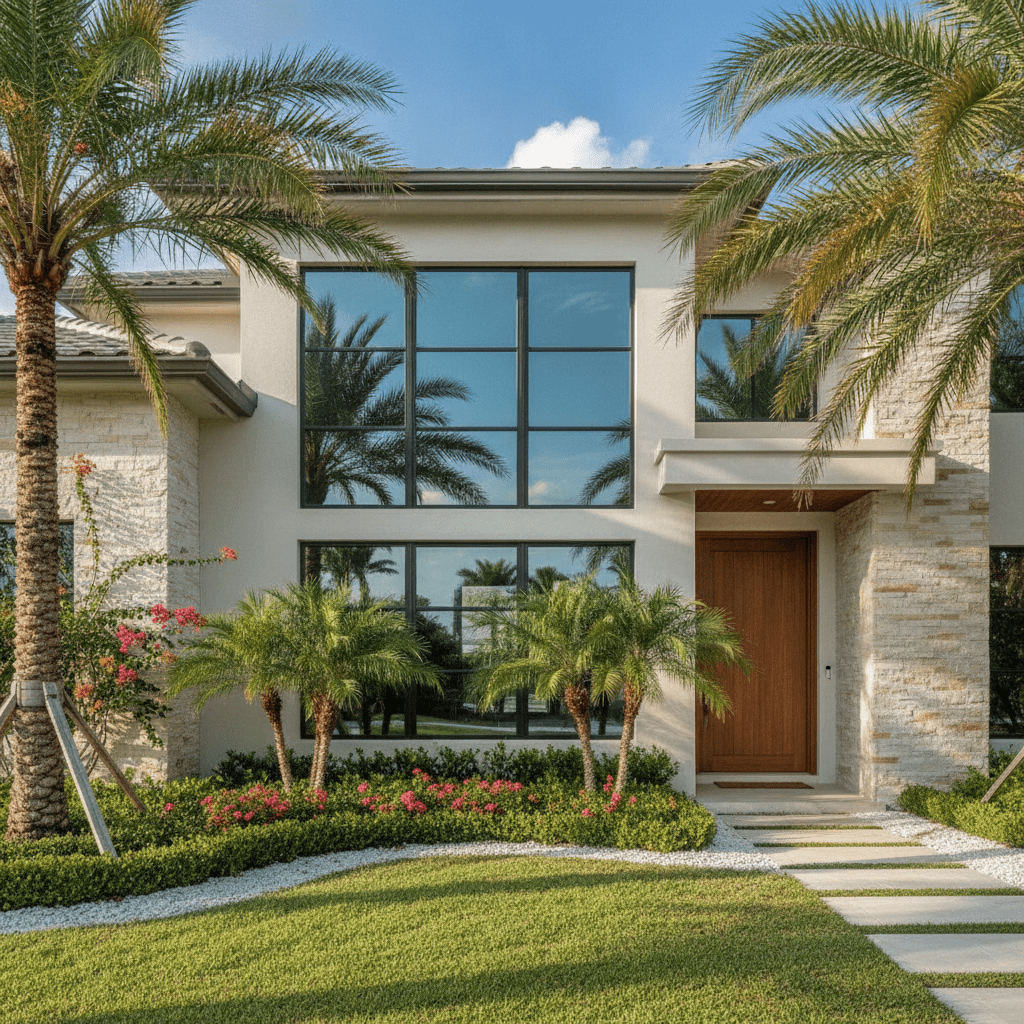
Impact window installation in South Florida requires a permitted, NOA-approved product installed by a licensed contractor under the Florida Building Code and, in Miami-Dade and Broward, the additional requirements of the High-Velocity Hurricane Zone. Most whole-house replacements on a single-story home take one to three days of installation time, plus two to six weeks for permit approval and product fabrication.
Updated September 2026
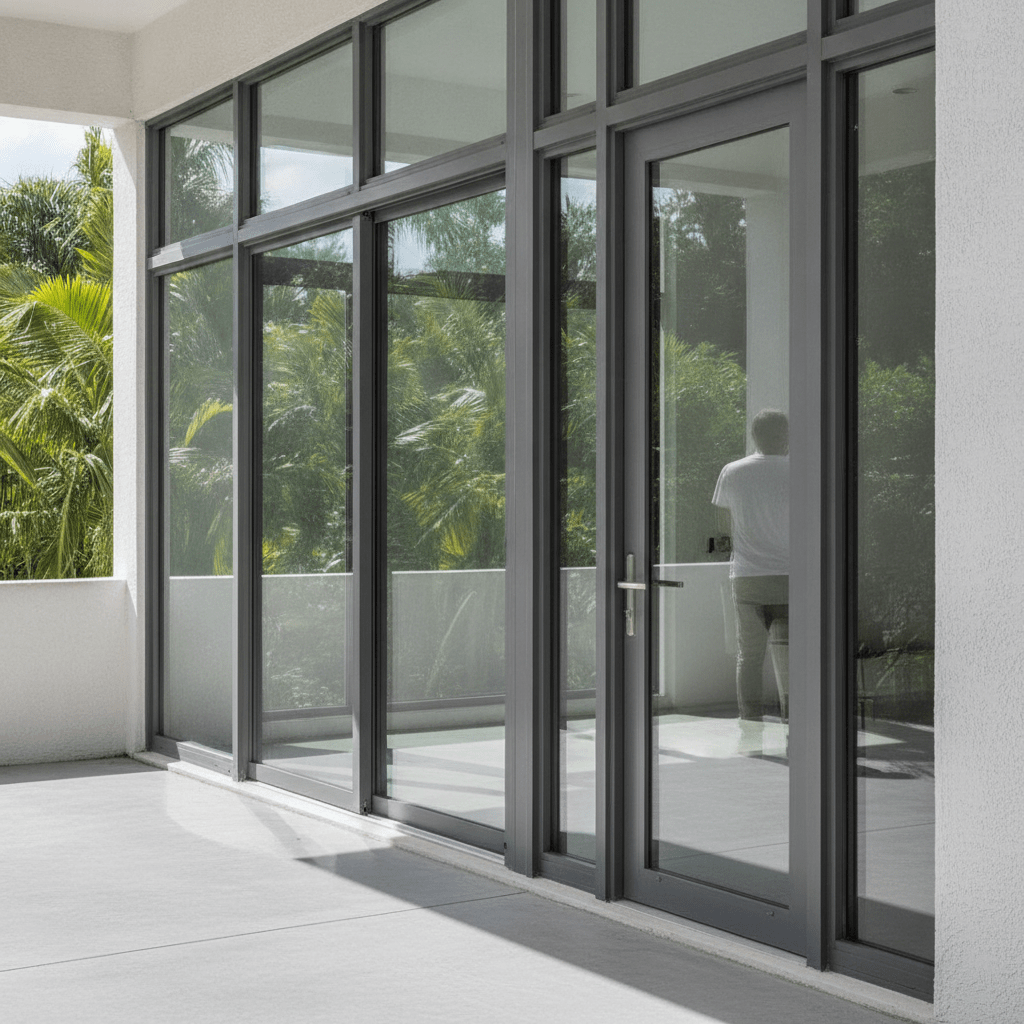
Key Takeaways
- Every impact window replacement in Miami-Dade and Broward requires a building permit and a product with a valid Miami-Dade NOA or Florida Product Approval covering HVHZ.
- The High-Velocity Hurricane Zone (HVHZ) applies to all of Miami-Dade and Broward — it imposes the strictest impact-resistance testing protocol in the U.S.
- Installation timeline: typically 1–3 days for a whole house, plus 2–6 weeks for permitting and product lead time.
- Florida law generally requires insurers to offer wind-mitigation credits for approved impact openings — actual premium reductions vary and are not guaranteed.
- Verify your contractor holds the right Florida license classification and that the product approval document specifically covers your window type and opening size.
The Problem
Why Impact Window Installation Is More Complex Than Most Homeowners Expect
Skipping one step can mean a failed inspection, a void warranty, or a window that is not legally compliant.
South Florida homeowners shopping for impact windows often focus on price per window. What catches them by surprise is that the product is only one piece of a multi-step, code-driven process. Miami-Dade County and Broward County sit entirely within the High-Velocity Hurricane Zone (HVHZ) — the most stringent wind-borne debris region defined by the Florida Building Code. A window that is perfectly legal in Orlando may be illegal to install in Miami without an additional Miami-Dade Notice of Acceptance (NOA).
The most common homeowner mistakes we see: choosing a product before confirming its NOA covers their specific opening size and design pressure; signing a contract before confirming the contractor holds the right license classification; and not budgeting enough time for the permit approval stage. This guide walks you through each step so you can ask the right questions before you sign anything.
South Florida Context
HVHZ, Miami-Dade NOA, and Why the Rules Are Different Here
Miami-Dade and Broward are held to a higher code standard than the rest of Florida — here is what that means in practice.
The High-Velocity Hurricane Zone designation under the Florida Building Code means every window, door, and skylight installed in Miami-Dade or Broward County must meet both the large-missile impact test (ASTM E1886/E1996, Protocol PA 201/202/203) and the cyclic-wind-pressure test. Products that pass only small-missile testing — which is the standard for most of Florida outside the HVHZ — are not permitted in these counties.
A Miami-Dade Notice of Acceptance (NOA) is the document that certifies a specific product, in a specific size range, with specific installation details (fastener type, spacing, embedment depth), has passed HVHZ testing and been reviewed by Miami-Dade Product Control. A Florida Product Approval (FPA) issued by the state covers most of Florida but does not automatically satisfy HVHZ requirements. If your home is in Miami-Dade or Broward, the NOA — not just the FPA — is what your inspector will verify.
Palm Beach County sits just outside the HVHZ. Florida Product Approval is sufficient there, though the county still requires a permit for every window replacement. If you live near the Palm Beach–Broward county line, confirm which county’s rules govern your address before selecting a product.
| Jurisdiction | Impact Standard Required | Document Required | Permit Required? |
|---|---|---|---|
| Miami-Dade County | Large-missile (HVHZ) | Miami-Dade NOA | Yes |
| Broward County | Large-missile (HVHZ) | Miami-Dade NOA | Yes |
| Palm Beach County | Small- or large-missile | Florida Product Approval | Yes |
| Rest of Florida | Small-missile (wind-borne debris region) | Florida Product Approval | Yes |
How It Works
The Full Impact Window Installation Process, Step by Step
From the first site visit to the final inspection sign-off — here is what every stage involves and how long each takes.
- Site assessment and product selection (1–2 weeks): A licensed contractor measures every opening, checks the existing rough opening condition, confirms the design pressure rating required for each opening’s size and location (corner openings carry higher DP requirements), and selects a product with a valid NOA or FPA that covers those parameters. At Bigfoot, we install Mr. Glass impact windows as our primary line. Mr. Glass Series 200, 300, and 400 carry Florida Product Approval; the Series 2500T impact door additionally carries a Miami-Dade NOA. A product with a current Florida Product Approval (FL number) that covers HVHZ use is legal to install in Miami-Dade and Broward. A Miami-Dade NOA is an additional certification some products also carry; it is not required for the permit.
- Contract, HOA coordination, and permit application (2–6 weeks): Before installation begins, many South Florida communities require HOA pre-approval alongside the county building permit. HOA architectural review can add one to four weeks if your community meets monthly. The building permit application requires submitting the product’s NOA or FPA, engineered drawings where required by the county, and proof of contractor licensure. Miami-Dade Building Department review typically takes two to four weeks; expedited review options exist for an additional fee.
- Product fabrication and delivery (2–5 weeks): Impact windows — especially in non-standard sizes — are custom-fabricated per opening. Lead times vary by manufacturer and season; hurricane season demand can push lead times toward the longer end.
- Installation day(s) (1–3 days for a typical single-story home): Existing windows and frames are removed; rough openings are inspected for rot, moisture damage, or structural issues. Frames are set, shimmed, fastened to the required embedment depth per the NOA, and sealed. On projects where the rough opening requires structural modification — such as header resizing — our Certified General Contractor (CGC1531370) scope covers that work in-house, so homeowners do not need to coordinate a separate structural contractor.
- Inspection and closeout (1–2 weeks after installation): The county inspector verifies the product NOA or FPA, fastener schedule, and installation against the permit drawings. Once the inspection passes, the permit is closed. You then have the documentation needed to request a wind mitigation inspection from a licensed inspector.
Florida law requires insurers to offer wind-mitigation credits for approved opening protection such as impact windows. In our experience, many South Florida homeowners see meaningful homeowners-insurance premium reductions after installing impact windows and obtaining a wind mitigation inspection. Actual reductions vary by insurer, policy, location, and home construction, and no specific figure can be guaranteed.
Impact Ratings Compared
Large-Missile vs. Small-Missile: What the Rating Means for Your Home
Not all impact ratings are equal — and the difference matters in the HVHZ.
| Feature | Small-Missile Impact (ASTM E1886) | Large-Missile Impact (HVHZ / Miami-Dade) |
|---|---|---|
| Test projectile | 10 steel balls at 50 ft/s | 9-lb 2×4 timber at 50 ft/s (up to 30 ft height) |
| Required in HVHZ? | No — not sufficient | Yes — mandatory |
| Approval document | Florida Product Approval (FPA) | Miami-Dade NOA |
| Typical product example | Inland Florida products | Mr. Glass Series 200/300/400 (FPA); 2500T door (NOA) |
| Valid in Miami-Dade/Broward? | No | Yes |
When a contractor quotes you an impact window without specifying the approval path, ask directly: does this product carry a Miami-Dade NOA that covers my opening size and design pressure? If the answer is unclear, treat that as a red flag.
Why It Matters Who Installs It
License Verification and What to Check Before You Sign
A licensed contractor, not a lead aggregator or unlicensed sub — your permit and your warranty depend on it.
Before signing a contract for impact window installation, verify the contractor’s Florida license at myfloridalicense.com. The license must be active and cover the scope of work — a Certified Residential Contractor or Certified General Contractor scope is required for structural modifications such as header resizing that can accompany window replacement in older South Florida homes. A glass-only subcontractor license alone does not authorize structural framing work.
Also verify the product approval documentation before you order. Request the specific NOA or FPA number, confirm it covers the window series, the opening size, and the design pressure of your home’s exposure category. Approval numbers, revisions, and status change over time — verify the current status at floridabuilding.org or Miami-Dade Product Control before finalizing your selection.
“The permit drawing and the NOA tell the story. If a contractor cannot hand you both before the job starts, you do not have a complete picture of what you are buying.”
Darryl Rosenbaum
President, Bigfoot Windows & Roofing
Product Guidance
Choosing the Right Impact Window for South Florida Conditions
Aluminum frames, glass thickness, and Low-E coatings — what matters and why.
For South Florida’s HVHZ combination of heat, humidity, salt air, and hurricane-season wind loading, we recommend aluminum impact window frames. Aluminum has a longer track record than vinyl in these conditions — this reflects our field experience installing in Miami-Dade, Broward, and Palm Beach, not a single published comparative test. Vinyl impact products with a valid Florida Product Approval can be appropriate for some inland, non-HVHZ applications.
Glass thickness scales with design pressure: roughly 5/16" for builder-grade or lower-DP openings, 7/16" for most standard residential applications, and 9/16" for high-rise and heavy-duty HVHZ openings. The Mr. Glass Series 1000 sliding glass door uses 9/16" glass as standard. The frame does not change depth when glass thickness increases — a common misconception that delays orders when homeowners try to comparison-shop across thickness tiers.
Low-E glass: we recommend the SB 70 Low-E coating as our standard specification. In South Florida’s cooling-dominated climate, Low-E coatings primarily reduce solar heat gain that your air conditioning must overcome. Climate Guard 6227 is available as a no-charge upgrade on whole-house replacements and carries identical performance specifications to the SB 70.
For homes within two miles of saltwater, the aluminum frame should use the 2605 coastal finish. Specifying a 2604 wood-grain finish in a coastal zone can void the manufacturer’s 10-year product warranty — confirm current warranty terms with the manufacturer before purchase.
Homeowners who need to explore impact window options for their home can review our product guidance or call us directly. If your project also involves a roof replacement or structural changes, our Certified General Contractor license authorizes us to handle structural modifications — including header resizing and hurricane strap upgrades — as part of a single coordinated scope, so you are not managing two separate contractors and two separate permit packages. Learn more about financing options for impact window installation if upfront cost is a consideration.
Permits & Timeline
What the Permitting Process Looks Like in Miami-Dade
A realistic week-by-week breakdown so you can plan your project without surprises.
| Phase | Who Handles It | Typical Duration |
|---|---|---|
| Site assessment & product selection | Contractor | 1–2 weeks |
| HOA pre-approval (if applicable) | Homeowner + contractor | 1–4 weeks |
| Permit application & county review | Contractor | 2–4 weeks (Miami-Dade) |
| Product fabrication & delivery | Manufacturer → contractor | 2–5 weeks |
| Installation (whole house, 1-story) | Contractor crew | 1–3 days |
| County inspection & permit closeout | Contractor + inspector | 1–2 weeks after install |
| Wind mitigation inspection (optional but recommended) | Licensed wind mit inspector | Schedule after permit closes |
HOA coordination is a step many homeowners forget to budget time for. Florida Senate Bill 293 generally restricts homeowners associations from prohibiting impact-rated windows and doors — confirm current HOA rules and your rights with an attorney before your project begins, as HOA documents vary and this area of law can change. Even where an HOA cannot block the installation, architectural review for color, grid pattern, or frame finish may still be required and can add weeks to your timeline.
To start the estimate process, use our impact window pricing estimator for a directional cost range before committing to a site visit.
Ready to talk through your project? We pull permits, confirm the NOA for every opening, and handle structural scope in-house.
Who We’re Not the Right Fit For
- Homeowners needing only a single window replaced as the cheapest possible bid: We do not cut corners on permitting or product approval to hit a rock-bottom price. If your only criterion is the lowest number on a page, a different contractor may quote lower — but verify their license and their NOA before signing.
- Commercial high-rise projects: Our residential impact window line (Mr. Glass) is designed for residential and low-rise applications. High-rise commercial buildings require a different product engineering path and a different project structure than what we specialize in.
- Buyers who want to skip the permit: Every impact window replacement in Miami-Dade, Broward, and Palm Beach requires a building permit. We do not perform unpermitted work. If a contractor offers to skip the permit to save time or money, that is a serious legal and insurance risk for the homeowner.
- Projects outside our South Florida service area: We serve Miami-Dade, Broward, and Palm Beach Counties. Projects in other Florida markets are outside our current service footprint.
Frequently Asked Questions
How long does impact window installation take for a typical South Florida home?
For a typical single-story South Florida home, installation takes one to three days. Add two to six weeks for permit approval and two to five weeks for product fabrication, so plan on eight to fourteen weeks from contract to closed permit in Miami-Dade. HOA review, if required, can add one to four more weeks.
Do I need a permit to install impact windows in Miami-Dade County?
Yes, without exception. Every window replacement in Miami-Dade requires a building permit. The inspector verifies the product’s Miami-Dade NOA, the fastener schedule, and the installation against the permit drawings. Unpermitted impact window work creates legal and insurance exposure for the homeowner and voids the window’s warranty in most cases.
What is an NOA and why do I need one for impact windows in Florida?
An NOA (Notice of Acceptance) is a Miami-Dade Product Control document certifying that a specific product, in a specific size and configuration, passed HVHZ large-missile impact and cyclic-wind-pressure testing. If your home is in Miami-Dade or Broward, the inspector will verify the NOA — not just a Florida Product Approval — before signing off on the permit. A product with a current Florida Product Approval (FL number) that covers HVHZ use is legal to install in Miami-Dade and Broward. A Miami-Dade NOA is an additional certification some products also carry; it is not required for the permit.
Will impact windows lower my homeowner’s insurance premium in South Florida?
Florida law requires insurers to offer wind-mitigation credits for approved opening protection such as impact windows. In our experience, many South Florida homeowners see meaningful premium reductions after installing impact windows and completing a wind mitigation inspection. Actual reductions vary by insurer, policy, location, and home construction — no specific savings figure can be guaranteed.
What is the High-Velocity Hurricane Zone and how does it affect the windows I can buy?
The HVHZ covers all of Miami-Dade and Broward Counties. It is the strictest wind-borne debris region under the Florida Building Code. Products installed in the HVHZ must pass large-missile impact testing (a 9-lb 2×4 timber at 50 ft/s) and hold a Miami-Dade NOA — small-missile-only products approved for the rest of Florida are not legal to install here.
Can my HOA block me from installing impact windows?
Florida Senate Bill 293 generally restricts HOAs from prohibiting impact-rated windows and doors. However, HOAs may still require architectural review for frame color, glass tint, or grid pattern. Confirm your specific HOA rules and consult an attorney before starting your project — HOA documents vary and this area of law can evolve.
What Florida contractor license do I need to install impact windows?
Impact window installation requires a contractor holding an appropriate active Florida license — at minimum a Certified Specialty Contractor with a Glass & Glazing Specialty for the glazing work itself. If the project involves structural modifications such as header resizing, a Certified Residential Contractor or Certified General Contractor classification is also required. Verify any contractor’s license at myfloridalicense.com before signing.
Schedule Your Free Estimate
Ready to get started? Request a free estimate — no phone call required.
Sources
- Florida Building Code — High-Velocity Hurricane Zone requirements: floridabuilding.org
- Miami-Dade Product Control — NOA search: miamidade.gov/building/pc-search
- Florida Senate Bill 293 (HOA impact window/door restrictions): flsenate.gov
- Florida DBPR license verification: myfloridalicense.com
- My Safe Florida Home grant program (up to $10,000 matching grant): mysafeflhome.com
- Bigfoot Windows & Roofing — impact window cost guide: bigfootwindowsandroofing.com/impact-windows-cost-south-florida/
Have questions about your specific openings, HOA, or permit timeline? We are happy to walk through the process before you commit to anything.