
How Much Does a Metal Roof Cost in Florida? (Miami-Dade Pricing Guide)
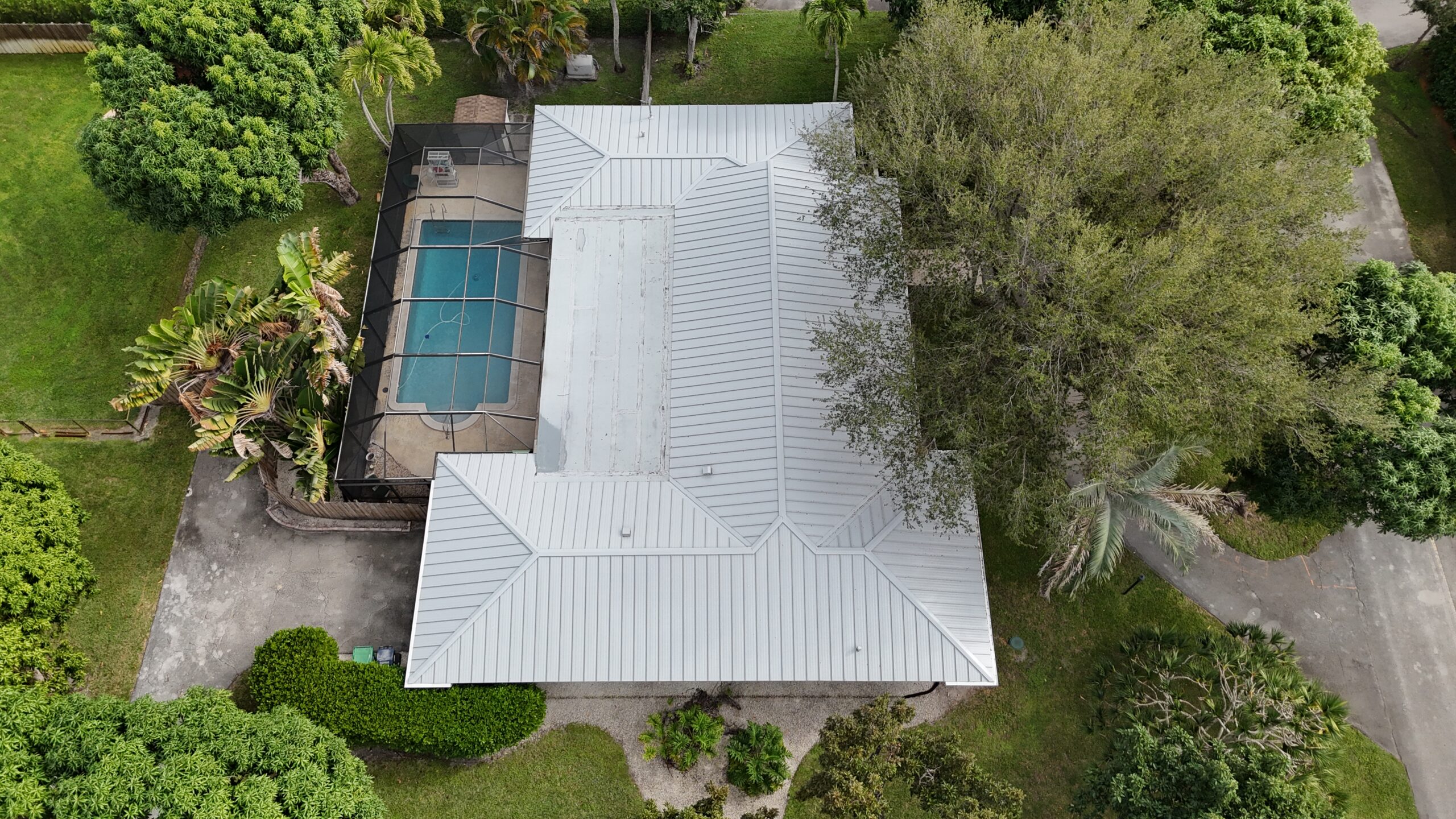
Last updated: July 2026 by the Bigfoot Windows & Roofing editorial team.
Key Takeaways
- Standing seam metal roofing in Florida costs $1,050–$1,300 per square (per 100 sq ft) installed.
- Metal tile and stone-coated steel typically runs $1,175–$1,400 per square installed.
- Roof size, pitch, existing deck condition, and permit complexity are the biggest cost drivers.
- Metal roofs in Florida typically last 40–70 years — far longer than asphalt shingle (12–15 years in South Florida heat).
- Insurance savings after installation can be significant; a wind mitigation inspection is recommended post-install.
- HOAs in Florida cannot legally block metal roofing — Florida SB 293 protects your right to install it.
The Real Cost Question
Why Metal Roof Pricing Is Hard to Pin Down
Most online estimates are dangerously vague. Here is what actually moves the number.
You have probably seen ranges like “$7,000 to $70,000” thrown around online. That spread is real — but it is not helpful if you are trying to budget for your Miami-Dade or Broward home right now. The price of a metal roof in Florida depends on the type of metal system you choose, your roof’s square footage and pitch, the condition of your existing deck, and local permit requirements in the High Velocity Hurricane Zone (HVHZ).
This guide breaks down what drives costs in South Florida specifically — not a national average that ignores Miami-Dade’s strict Florida Building Code requirements.
South Florida Context
Why Florida Metal Roof Pricing Differs From the National Average
Miami-Dade and Broward counties sit inside the High Velocity Hurricane Zone (HVHZ) — the strictest building code jurisdiction in the United States. A product with a current Florida Product Approval (FL number) that covers HVHZ use is legal to install in Miami-Dade and Broward. A Miami-Dade NOA is an additional certification some products also carry; it is not required for the permit. That means materials, fasteners, clips, and underlayment are all held to a higher standard than the rest of the country.
The result: HVHZ-compliant metal roofing costs more per square than what you might see quoted for a roof in Orlando or Jacksonville. Permits, inspections, and the requirement for code-compliant clip systems (not generic nail-strip panels) add real labor and material cost. When comparing bids, always confirm each contractor is quoting an HVHZ-approved system — not a standard system that will fail inspection.
Learn about roofing services in South Florida and what HVHZ compliance means for your project scope.
Pricing Breakdown
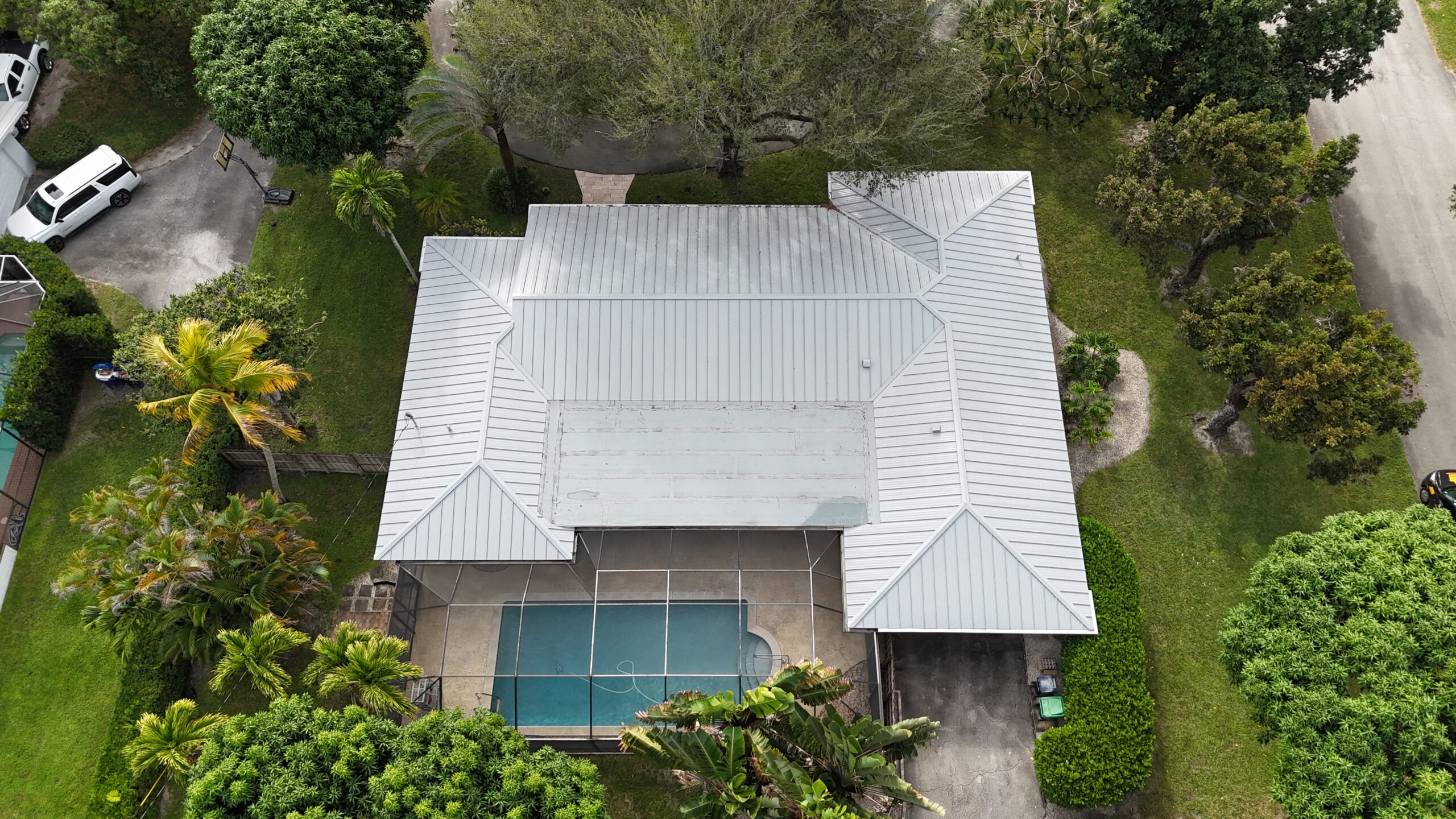
Metal Roof Cost by System Type — Florida 2026
Pricing below is per square (one square = 100 sq ft of installed roofing). These are installed costs that include labor, materials, permit, and standard tearoff. Your final number will shift based on the variables listed after the table.
| Metal Roof System | Installed Cost per Square | Typical Lifespan (FL Climate) | Best For |
|---|---|---|---|
| Standing Seam (Englert or Metal Alliance) | $1,050 – $1,300 | 50–70 years | Most homes; best wind & water performance |
| Metal Tile / Stone-Coated Steel | $1,175 – $1,400 | 40–50 years | HOA neighborhoods; tile aesthetic |
| Flat / Low-Slope Metal (TPO hybrid) | $800 – $1,400 | 20–30 years (membrane) | Flat-roof additions; commercial-style homes |
| Asphalt Shingle (for comparison) | $750 – $850 | 12–15 years | Lowest upfront cost only |
Sample budget estimate: A 2,000 sq ft home with a simple hip roof = 20 squares. At standing seam pricing, expect a rough installed range of $21,000–$26,000 before adjustments for pitch, deck repair, or complexity. This is directional — not a firm quote.
What Moves the Price Up or Down
| Cost Factor | Effect on Price | Notes |
|---|---|---|
| Roof pitch (steep vs. low-slope) | +10%–25% for steep pitches | Labor increases with difficulty and safety requirements |
| Roof size (squares) | Larger = lower per-square cost | Setup and mobilization costs spread across more area |
| Deck condition / repairs | +$50–$150 per sheet of plywood replaced | Rotted or soft decking found during tearoff is billed separately |
| Panel fabrication (custom vs. stock) | Custom longer panels = premium | Englert or Metal Alliance rolls panels on-site; no horizontal seams = better performance |
| Number of penetrations / complexity | +$200–$600 per penetration | Skylights, HVAC curbs, chimneys each require custom flashing |
| Permit and inspection fees | Varies by county | Miami-Dade and Broward permit fees are built into reputable contractor bids |
| Layer count (tearoff) | +$50–$100 per square for double layers | Florida Building Code limits layers; full tearoff often required |
Metal vs. Alternatives
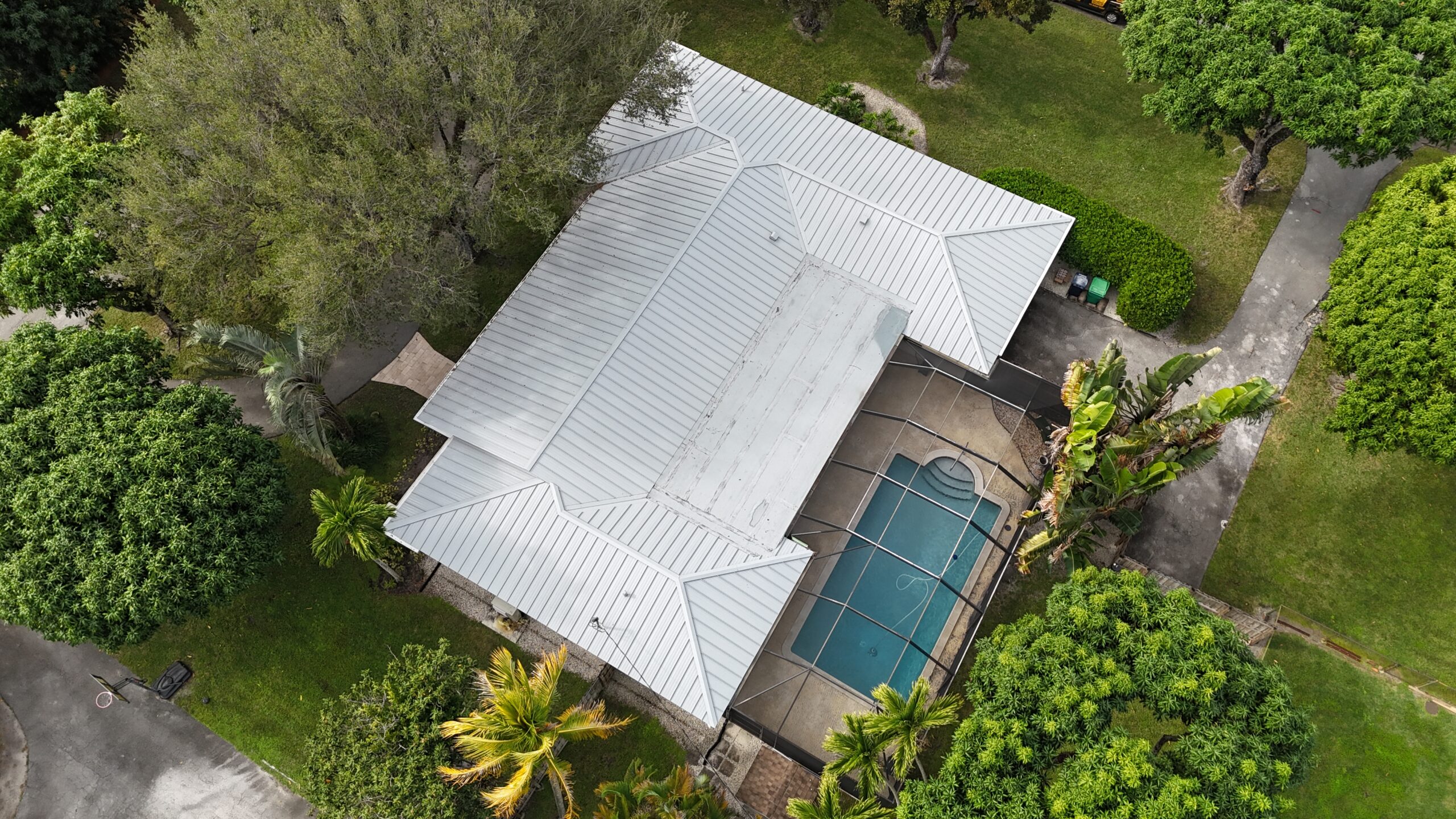
Metal Roof vs. Tile vs. Shingle — Which Makes Sense for Florida?
Each roofing material has a different cost profile and longevity equation. Here is how they stack up for a South Florida home:
- Metal standing seam: Highest upfront cost per square among common options, but the lowest lifetime cost when you factor in 50–70 year lifespan, minimal maintenance, and insurance savings from a wind mitigation inspection.
- Concrete or clay tile: Similar installed cost to metal tile ($1,000–$1,350/sq). Tile is heavy — older homes may need structural reinforcement. Tile also requires underlayment replacement every 15–20 years even when the tile itself is intact.
- Asphalt shingle: The cheapest entry point ($750–$850/sq) but lasts only 12–15 years in Miami-Dade’s heat, UV, and storm exposure. Citizens Insurance has begun non-renewing roofs over 20–25 years old. Shingle replaces itself every generation of homeownership.
When Another Option Might Be the Better Fit
Metal roofing is not automatically the right call for every homeowner. If your budget is tight right now and you plan to sell within five years, a quality shingle system may be the more practical short-term choice. If your HOA requires a specific tile profile and the aesthetic is non-negotiable, a stone-coated steel tile or concrete tile may serve you better. If your home has significant structural complexity — multiple rooflines, heavy dormers, or unusual penetrations — get a detailed scope review before comparing metal bids against shingle bids on a per-square basis alone.
Why It Matters Who Installs It
License Scope and Roofing Accountability
A licensed contractor — not a lead aggregator or unlicensed crew.
Certified General Contractor CGC1531370
Certified Residential Contractor CRC1331693
Glass & Glazing SCC131153098
Miami-Dade · Broward · Palm Beach
In South Florida, the stakes of hiring the wrong roofing contractor are high. The HVHZ requires not just a licensed Certified Roofing Contractor — it requires one who understands NOA requirements, uses stamped clips (not knockoff hardware), and pulls permits correctly the first time. Failed inspections mean full re-dos at the homeowner’s expense.
Bigfoot Windows & Roofing also holds a Certified General Contractor (CGC1531370) license. This matters when a roofing project surfaces structural issues — deteriorated fascia framing, hurricane strap deficiencies, or rotted structural decking. A contractor authorized to handle structural modifications can address those findings directly rather than stopping work and sending you to find a second contractor.
If you are also considering impact window replacement alongside your roof project, having a single contractor licensed for both trades simplifies permitting and accountability.
“The clip system is where roofing bids fall apart. One competitor’s clip NOA has lapsed — their system will not pass a Miami-Dade inspection. We use manufacturer-approved clips only.”
Bigfoot Windows & Roofing
What We Install
Metal Roofing Systems Bigfoot Uses in South Florida
For standing seam metal roofing, Bigfoot installs Englert or Metal Alliance systems. Here is why that matters to your price and your protection:
- Fabricated on-site: Englert or Metal Alliance panels are roll-formed at your property, creating one continuous panel from bottom to top — no horizontal seams where water can enter.
- 24-gauge Galvalume or aluminum: Heavier gauge than most competitors’ 26-gauge offerings.
- Kaner multi-coat paint system: Versus the single-coat S&P paint on cheaper alternatives — relevant to South Florida’s salt air and UV intensity.
- Stamped clip system: The manufacturer’s approved clips, installed at the spacing its product approval specifies. Knockoff clips fail inspection. A competitor’s nail-strip system introduces oil canning and buckling under thermal expansion.
- Warranty: standing seam terms come from the panel manufacturer on your project (Englert or Metal Alliance) and are listed on your proposal; Lifetime on stone-coated steel.
For tile profiles, Bigfoot installs Westlake tile systems including Saxony 900 (flat concrete) and Barcelona (barrel) — the most popular profiles in Southeast Florida. Stone-coated Unified Steel carries a VSH wind rating and a Lifetime warranty with no named storm or saltwater exclusion clauses — a meaningful difference from some competitors.
Curious about financing options? See available financing programs, including PACE financing payable through your property tax bill.
What to Expect
The Metal Roofing Process: Inspection to Completion
- Scope assessment: We inspect your existing deck, measure your roof geometry, identify penetrations, and note any structural concerns. This is what produces a real number — not a per-square guess.
- Permit application: We pull the permit with Miami-Dade, Broward, or Palm Beach county as applicable. HVHZ requires this before a single panel goes down.
- Tearoff and deck inspection: Existing roofing is removed. Deck condition is documented. Rotted sheets are replaced and billed transparently.
- Underlayment and peel-and-stick: Per current Florida Building Code, direct-to-deck peel-and-stick underlayment is now permitted and qualifies for an insurance secondary water barrier discount. 30-lb felt does not qualify.
- Panel fabrication and installation: Englert or Metal Alliance equipment rolls panels on-site to the exact length needed. Stamped clips are set. Panels run bottom-to-top in one continuous piece.
- Final inspection: County inspector signs off. You receive documentation for your insurance wind mitigation inspection.
Ready for an honest metal roof estimate in Miami-Dade or Broward?
Or use the online roofing estimator to get a ballpark before you call.
Related Articles
Keep Reading
Related Articles
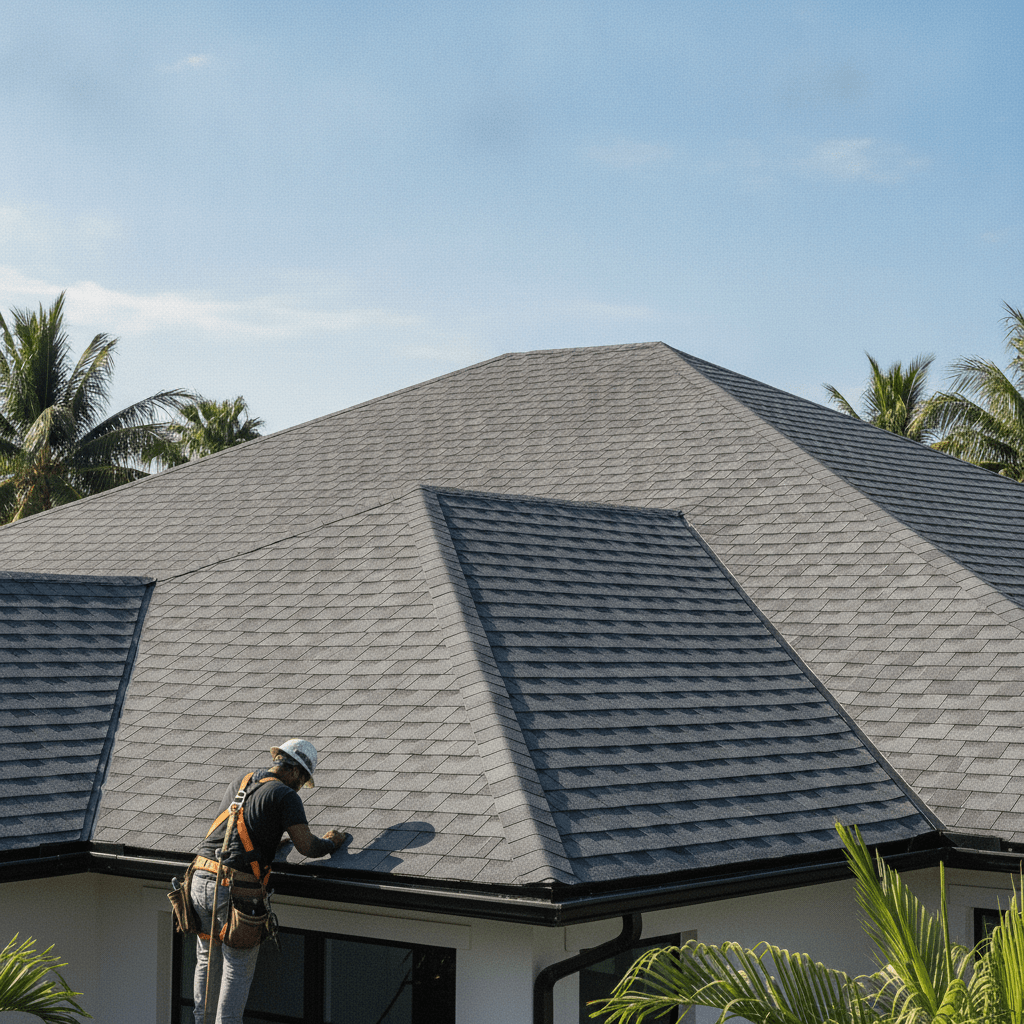
Who We’re Not the Right Fit For
- Homeowners seeking the lowest possible bid regardless of system quality. We do not cut corners on clip systems, gauge, or permit compliance to win a price war. If price is the only criterion, a competitor willing to use non-compliant hardware will beat our number — and likely fail inspection.
- Projects outside Miami-Dade, Broward, and Palm Beach counties. Our teams and permit relationships are concentrated in South Florida. We are not the right fit for a roof in Orlando, Tampa, or the Panhandle.
- Very small flat-roof repairs under $3,000. Our project model is set up for full replacements and significant repairs. Small patch jobs are not where we operate most effectively.
- Homeowners who need a same-week install with no permit. HVHZ work requires permits. Any contractor offering to skip this step is putting your insurance coverage and resale value at risk.
Frequently Asked Questions
How much does a metal roof cost in Florida?
In South Florida, standing seam metal roofing typically costs $1,050–$1,300 per square (100 sq ft) installed. Metal tile and stone-coated steel runs $1,175–$1,400 per square. For a 2,000 sq ft home, expect a rough installed range of $21,000–$28,000 depending on roof pitch, deck condition, and permit complexity. These are directional ranges — not firm quotes.
How much is a new roof in Florida?
A new roof in Florida ranges from roughly $15,000 (basic shingle on a small home) to $35,000+ (standing seam metal on a larger or complex roof). The wide range reflects material choice, roof size, pitch, and South Florida’s HVHZ permit requirements. Asphalt shingle is cheapest upfront ($750–$850/sq) but lasts only 12–15 years in Miami-Dade’s climate.
How long do metal roofs last in Florida?
A properly installed standing seam metal roof in Florida typically lasts 50–70 years. Stone-coated steel tile carries a Lifetime warranty. By comparison, asphalt shingles last only 12–15 years in South Florida due to intense UV, heat cycling, and hurricane exposure. The longer lifespan makes metal’s higher upfront cost competitive on a per-year basis.
Are metal roofs good in Florida?
Yes — when installed correctly with HVHZ-approved systems and stamped clips. Metal standing seam roofs are wind-resistant, shed water efficiently, and tolerate South Florida’s heat and salt air better than most alternatives. The key is HVHZ compliance: the clip system, NOA, and underlayment must all meet Miami-Dade standards. An improperly installed metal roof using non-approved hardware will fail inspection.
Can my HOA block a metal roof in Florida?
No. Florida SB 293 prohibits HOAs from blocking the installation of metal roofing or impact windows. Your HOA may require a specific color or profile approval, but it cannot ban metal roofing outright. If you receive pushback from an HOA, reference Florida SB 293 directly in your correspondence.
Does a metal roof lower homeowners insurance in Florida?
A new metal roof can reduce your insurance premium when paired with a wind mitigation inspection that documents your roof’s wind resistance features. Some South Florida homeowners have seen significant premium reductions after installing a metal roof and updating their wind mitigation report. Savings vary by insurer and policy — we do not quote specific dollar amounts because every situation differs.
How long does a roof last in Florida compared to other states?
Roofs in Florida typically have shorter lifespans than the same material in cooler, drier climates. Asphalt shingles last 12–15 years here versus 20–25 years in the Northeast. Metal roofs hold up much better — 50–70 years for standing seam in South Florida — because they are not degraded by the heat cycling and UV that destroy organic-based materials faster here.
Get a transparent, itemized metal roof estimate for your South Florida home.
Prefer to talk through your project? Call Bigfoot Windows & Roofing at 786-886-2088.
Sources
- Florida Building Code, 8th Edition — Roofing Chapter, HVHZ provisions
- Miami-Dade County Building Department — Notice of Acceptance (NOA) requirements
- Florida SB 293 (2023) — HOA restrictions on roofing and impact windows
- Florida Department of Business and Professional Regulation (DBPR) — License verification
- National Roofing Contractors Association (NRCA) — Metal roofing installation guidelines