Last updated: July 2026 by the Bigfoot Windows & Roofing editorial team.
Cheap roofing bids in South Florida most often omit three things: the 6-nail Wind Proven nail pattern, full-deck peel-and-stick underlayment, and a written decking replacement policy — and each omission has a measurable cost consequence. That is the experience most South Florida homeowners discover after collecting multiple quotes: the low bid feels like a win until it costs more to fix than the premium quote would have cost upfront. This article explains exactly what cheap roofing bids typically leave out, so you can compare proposals on substance, not just headline price.
Key Takeaways
- South Florida roof prices vary because contractors scope jobs differently — not because material costs are that different.
- Wind-proven nail patterns, peel-and-stick underlayment, and deck replacement terms are the three most common omissions in cheap bids.
- HVHZ (Miami-Dade and Broward) code is the strictest in the US — shortcuts that pass inspection in other states fail here.
- Rotted decking language in a contract can add thousands in post-signing surprises; know what to look for before you sign.
- A roofing contractor who also holds a Certified General Contractor license can handle structural deck issues in-house — no separate sub needed.
The Real Problem
Why South Florida Roof Quotes Look So Different
The gap between a $12,000 bid and a $19,000 bid on the same house is rarely about profit margin — it is about what each contractor chose to include.
When you collect multiple roofing quotes in Miami-Dade or Broward, you are not comparing apples to apples. You are comparing different scopes of work. One contractor prices what the Florida Building Code minimum requires. Another prices what the Florida Building Code minimum requires plus the items that prevent callbacks, failed inspections, and insurance claim denials down the road.
The three items most commonly missing from low bids: the correct nail pattern for Wind Proven warranty eligibility, a full-deck peel-and-stick secondary water barrier (rather than 30-lb felt), and a clear, written policy on how rotted decking replacement is handled and priced. Each of those omissions has a real dollar value — and a real risk consequence.
South Florida Context
HVHZ Rules and Why They Raise the Bar
Miami-Dade and Broward counties sit inside the High Velocity Hurricane Zone (HVHZ) — the strictest residential building code jurisdiction in the United States. A product with a current Florida Product Approval (FL number) that covers HVHZ use is legal to install in Miami-Dade and Broward. A Miami-Dade NOA is an additional certification some products also carry; it is not required for the permit. Many materials that are legal to install in Palm Beach or Orlando are simply not permitted in Miami-Dade.
That matters for pricing because HVHZ-approved materials cost more to manufacture and more to install correctly. When a bid comes in 25–30 percent below the field average, the first question to ask is whether the quoted materials carry a valid Miami-Dade NOA. A cheap shingle or a non-approved clip system is not just a code violation — it is a warranty void and a potential insurance claim denial after a named storm.
Citizens Insurance, the state insurer of last resort, has been known to non-renew policies on homes with roofs 20 years or older, according to Citizens Insurance policy guidelines. A roof installed without a proper permit or with materials without HVHZ product approval in the HVHZ may trigger a reinspection that results in cancellation, not renewal.
What the Numbers Actually Mean
The Five Line Items Cheap Bids Routinely Skip
Each omission below represents a real cost that either you or the contractor will eventually pay — the question is who pays it and when.
| Line Item | Cheap Bid Approach | Full-Scope Approach | Homeowner Risk if Skipped |
|---|---|---|---|
| Nail Pattern | Standard 4-nail pattern | 6-nail Wind Proven pattern (1.81″ nail line) | Warranty void; shingle blow-off in 100+ mph winds |
| Underlayment | 30-lb felt | Full-deck peel-and-stick SWB | No secondary water barrier insurance discount; leak exposure |
| Rotted Decking | “Extra per sheet” (unquoted) | Written cap or per-sheet rate disclosed pre-sign | Open-ended post-signing cost; project held hostage |
| Drip Edge & Starter | Minimal or omitted | Code-compliant drip edge + starter strip | Fascia rot; shingle lifting at perimeter |
| Permit & Inspection | Sometimes pulled “after” or skipped | Permit open before tear-off begins | No inspection = no insurance eligibility; title issues at sale |
Wind-Proven Nail Patterns: What They Are and Why They Cost More
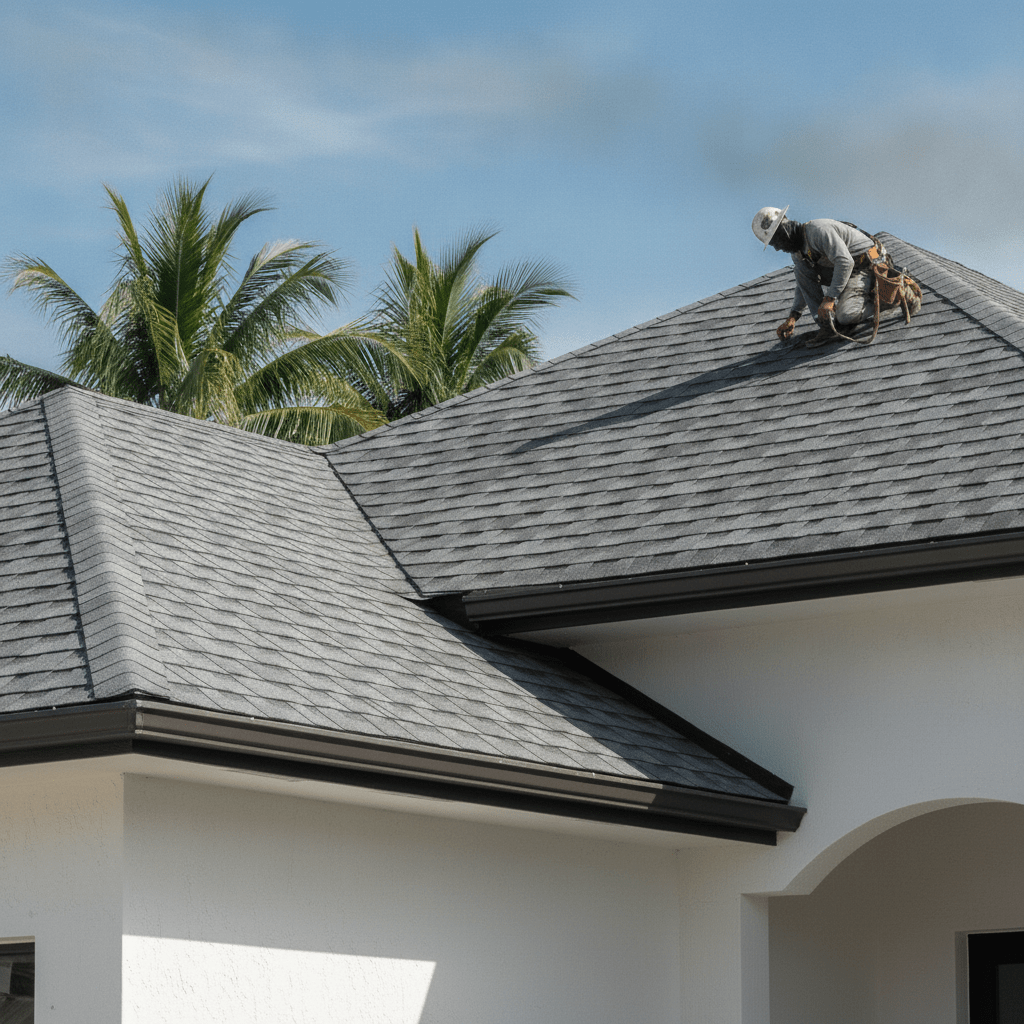
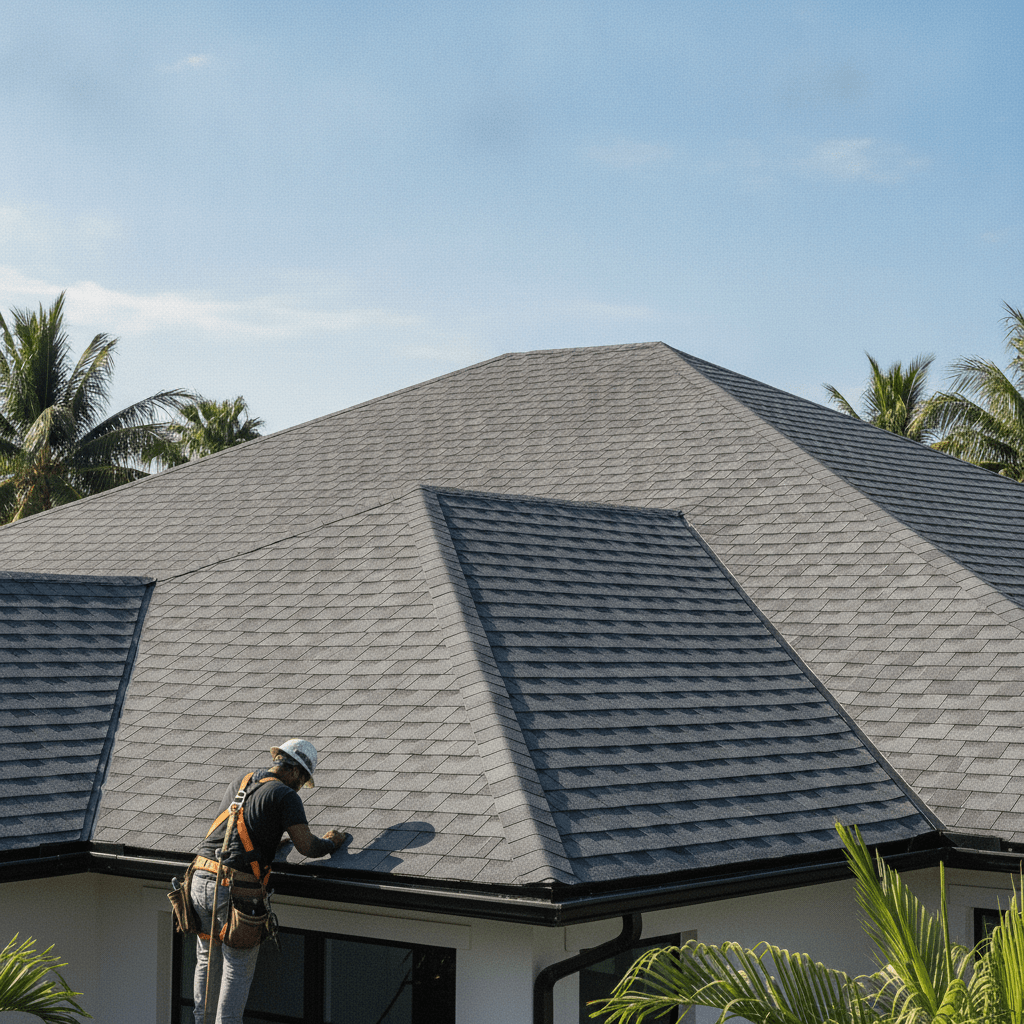
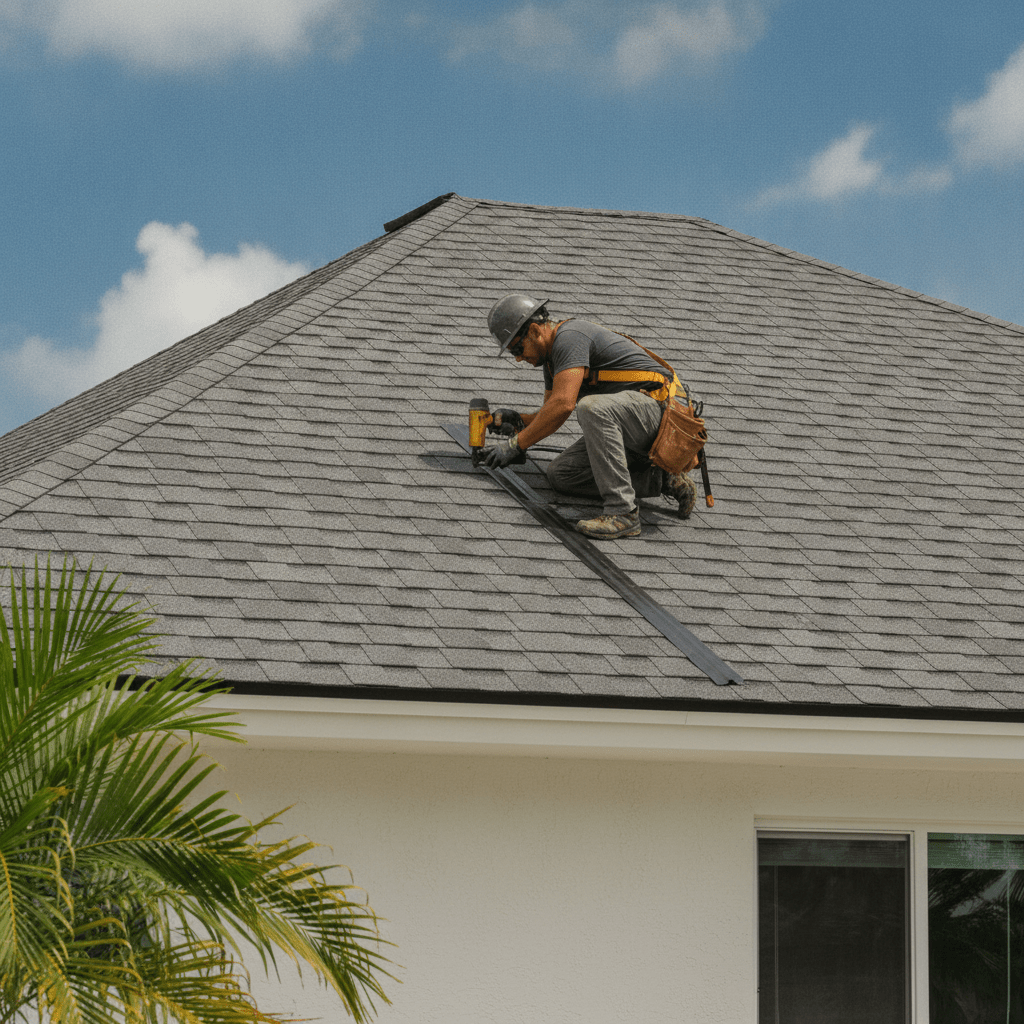
GAF’s Wind Proven warranty — part of the System Plus package — has no maximum wind speed cap and is not voided by named storms making landfall in your county. That is a meaningful difference from competitor warranties that cap at 130 mph or include named-storm exclusions. To qualify, shingles must be installed with a specific 6-nail pattern using a 1.81-inch nail line — significantly wider than the pre-2020 standard nail line. That pattern takes longer to install and requires a trained crew. Contractors who do not offer Wind Proven simply skip the pattern and absorb the speed savings as margin.
Explore Bigfoot’s full roofing services and material options to see how Wind Proven eligibility is built into every shingle scope we quote.
Peel-and-Stick vs. 30-lb Felt: What the 2024 Code Change Means
Under 2024 Florida Building Code updates, direct-to-deck peel-and-stick installation is now permitted, and a full-deck peel-and-stick application qualifies as a secondary water barrier (SWB) — which can unlock a meaningful insurance premium reduction. Thirty-pound felt does NOT qualify as a secondary water barrier under the current code. A cheap bid that specifies 30-lb felt is leaving that discount on the table for the homeowner while costing less to the contractor at install. Ask every bidder directly: is this a full-deck peel-and-stick SWB? If they cannot answer clearly, that tells you something.
If insurance premium reduction is a factor in your decision, review financing options for roofing projects to understand how PACE and other tools can offset the upfront cost difference between a full-scope and a bare-minimum install.
Bid Comparison
How to Compare Two Roofing Bids Side by Side
Use this checklist before signing anything.
| Evaluation Criteria | Red-Flag Bid | Full-Scope Bid |
|---|---|---|
| Nail pattern specified? | Not mentioned | 6-nail Wind Proven pattern called out explicitly |
| Underlayment type? | “Standard felt” or blank | Full-deck peel-and-stick SWB named |
| Rotted deck policy? | “Will discuss on site” | Written per-sheet rate or cap in contract |
| Miami-Dade NOA on materials? | Not referenced | NOA numbers available on request |
| Permit included? | “You can pull it yourself” | Contractor pulls permit; included in price |
| Warranty type? | “1-year workmanship” | System Plus or equivalent; labor + materials named |
Why License Breadth Matters Here
A Certified General Contractor on Your Roofing Job
A licensed roofing contractor, not a lead aggregator.
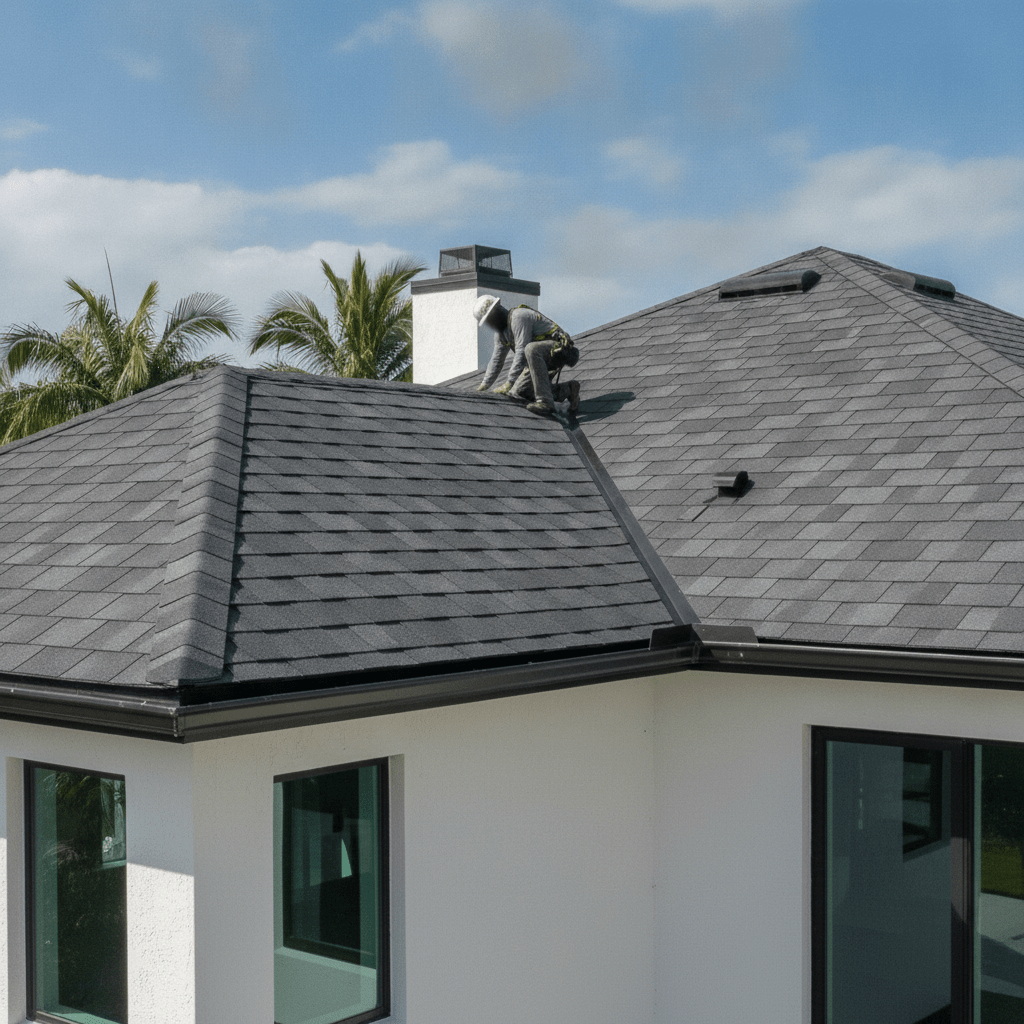
Most roofing bids come from companies that hold only a roofing license. When the tear-off reveals structural deck damage — rotted rafters, hurricane strap failures, or sheathing that cannot hold a fastener — a roofing-only contractor has two choices: stop work and call a separate subcontractor, or quietly work around the problem and move on. Neither option serves the homeowner.
Darryl Henry Rosenbaum holds a Certified General Contractor license (CGC1531370) in addition to a Certified Roofing Contractor license (CCC1333168). That means structural deck repairs, hurricane strap corrections, and code-driven scope discovered mid-project can be handled in-house — no second contractor, no scheduling gap, no finger-pointing between trades when the permit closes. That structural accountability is built into how we scope roofing jobs from the first site visit.
“The cheapest bid usually becomes the most expensive job. What is missing from the number is always more important than the number itself.”
Darryl Rosenbaum
President, Bigfoot Windows & Roofing
Material Guidance
What We Actually Recommend — and Why
For shingle roofing in South Florida, we install GAF shingles with the Wind Proven nail pattern as a standard offering. The System Plus warranty — covering shingles, labor, tear-off, and accessories on qualifying installs, per GAF warranty documentation on qualifying installs — is available on qualifying jobs. Bigfoot holds GAF Certified Plus certification. We do not currently hold GAF Master Elite status and do not claim Golden Pledge warranty eligibility — that distinction matters because some contractors claim warranty tiers they are not certified to deliver.
For metal roofing, we use Englert or Metal Alliance standing seam systems with panels fabricated as one continuous piece from eave to ridge — no horizontal seams. The clip system uses the manufacturer’s approved clips, at the spacing its product approval specifies. Knockoff clips without HVHZ product approval will fail a Miami-Dade inspection; a re-do at that point costs more than the original roof. Metal pricing in South Florida typically runs $1,050–$1,300 per square (per 100 sq ft installed) for standing seam; tile runs $1,000–$1,350 per square depending on material and roof complexity. Shingle typically runs $750–$850 per square. These ranges assume a standard residential roof — complexity, slope, crane access requirements, and decking condition all move the number.
See the roofing materials and installation standards we use on every job.
How the Process Works
From First Visit to Passed Inspection
Every roofing job starts with a site visit and a written scope — not a phone estimate. The written scope names the nail pattern, underlayment type, decking policy, materials with NOA references, and warranty tier. The permit is pulled before tear-off begins. An inspector closes the permit after installation; the homeowner receives a copy of the passed inspection report. That document is what your insurance carrier and future buyer need.
If the tear-off reveals structural issues — rotted rafters, failed hurricane straps, or sheathing that needs replacement — the in-house Certified General Contractor license authorizes us to address those items without stopping the project or calling a separate sub. We document what was found, price the additional scope in writing before doing the work, and proceed only with homeowner approval. No surprises after the fact.
Want a written roofing scope that spells out nail pattern, underlayment, and decking terms before you sign?
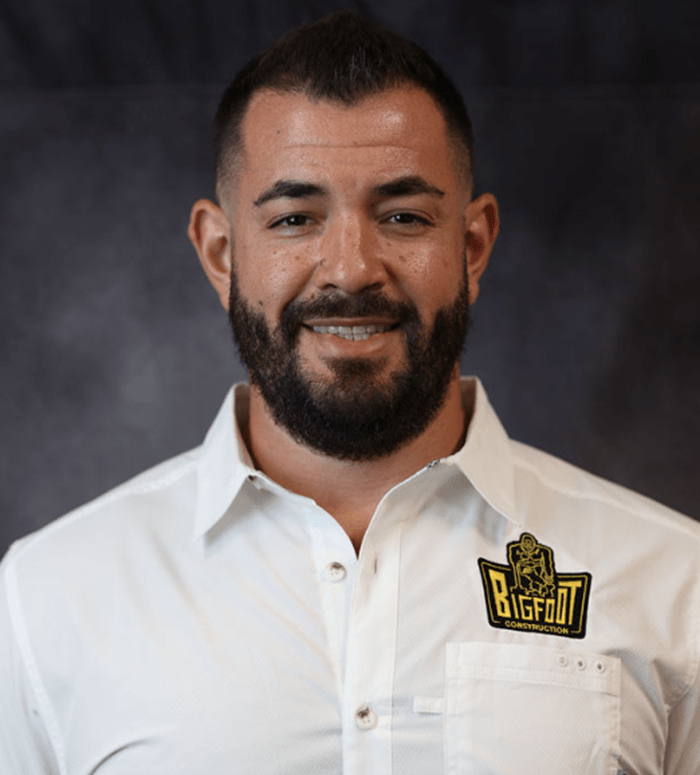
Written by Darryl Henry Rosenbaum, Founder of Bigfoot Windows & Roofing.
Darryl Henry Rosenbaum, doing business as Bigfoot Windows and Roofing, holds four active Florida licenses recognized by the Florida Department of Business and Professional Regulation (DBPR): Certified General Contractor (CGC1531370), Certified Residential Contractor (CRC1331693), Certified Roofing Contractor (CCC1333168), and Certified Specialty Contractor with a Glass & Glazing Specialty (SCC131153098).
Who We’re Not the Right Fit For
- Homeowners whose only decision criterion is lowest price. If the bid comparison ends at the bottom-line number, we are probably not the right contractor. Our scopes are written to include nail patterns, underlayment, decking terms, and permit costs explicitly — that transparency does not produce the cheapest number on paper.
- Projects that need a same-week start without a site visit. We do not price or commit to a scope over the phone. Every job starts with an in-person assessment. If the timeline requires a crew on the roof before a written scope is agreed, we are not the right fit.
- Homeowners who want to supply their own materials. We warrant our work as a system — materials and labor together. We do not install contractor-supplied or homeowner-supplied roofing materials.
- Very small repair-only jobs under $2,000. Our operational structure is built around full and partial replacements. Small leak patches and minor repairs are not our primary service; a qualified roofing repair specialist may serve you better and faster.
Frequently Asked Questions
Why are South Florida roof quotes so different from each other?
Quotes differ because contractors scope jobs differently. One may include a Wind Proven nail pattern, full-deck peel-and-stick underlayment, and a written decking replacement policy. Another may quote the bare Florida Building Code minimum. Materials have a narrow cost band; the real gap is labor standards, warranty tier, and what happens when problems are discovered at tear-off. Always ask what the quote explicitly includes before comparing numbers.
What do cheap roofing bids most often leave out?
The three most common omissions are: the 6-nail Wind Proven pattern required for the highest GAF warranty tier; full-deck peel-and-stick secondary water barrier (many cheap bids specify 30-lb felt, which does not qualify for insurance discounts); and a written decking replacement policy. Permit costs, drip edge, and starter strip are also sometimes absent from low bids.
What is a wind-proven nail pattern?
Wind Proven is a GAF warranty tier that has no maximum wind speed cap and is not voided when a named storm hits your county — unlike most competitor warranties capped at 130 mph. To qualify, shingles must be installed with a specific 6-nail pattern using a 1.81-inch nail line. The pattern takes longer to install and requires a trained crew, which is why contractors offering lower labor rates often skip it.
What is peel-and-stick underlayment and why does it matter?
Peel-and-stick (also called self-adhering modified bitumen) is a rubberized underlayment that bonds directly to the roof deck, sealing around fasteners and blocking water intrusion if shingles are lost in a storm. Under the 2024 Florida Building Code, a full-deck peel-and-stick application qualifies as a secondary water barrier — which can unlock an insurance premium reduction. Thirty-pound felt does not qualify as a secondary water barrier and provides significantly less storm protection.
How does roof complexity affect pricing in South Florida?
Complexity adds labor hours and waste. Multiple slopes, valleys, hips, dormers, skylights, and low-pitch sections all increase cut lines and material waste. Steep pitches require additional safety equipment and slower installation. Some two-story and multi-unit properties require crane access for material delivery, which adds a separate line-item cost. A flat quote without a site visit cannot accurately account for complexity — which is one reason low phone quotes often change after the crew arrives.
What should a roofing contract say about rotted decking?
Before you sign, the contract should name a per-sheet price for replacement decking or provide a written cap on the total decking cost. Vague language like “additional work billed at cost” with no ceiling leaves you exposed to an open-ended charge once the old roofing is torn off and the crew is already on-site. Ask every bidder to put the decking policy in writing before you sign — a contractor who refuses is a red flag.