Last updated: July 2026 by the Bigfoot Windows & Roofing editorial team.
Direct answer: Two legitimate South Florida roofing quotes can differ by $10,000–$20,000 on the same house because the Florida Building Code, HVHZ requirements, and each contractor's scope decisions create dramatically different material and labor line items. Neither quote is automatically wrong — but they are often not quoting the same roof.
Key Takeaways
- HVHZ (Miami-Dade and Broward) imposes stricter code requirements than the rest of Florida — that costs money.
- A peel-and-stick secondary water barrier, roof deck replacement, and hurricane straps each add separate line-item cost and value.
- Material choice — shingle vs. tile vs. standing seam metal — can swing total installed cost by $300–$550 per square.
- Florida has a 15% material cost exemption and a $300,000 valuation exemption that legally allow some reroofs to skip full code compliance — at the homeowner's risk.
- The realistic South Florida reroof range is $750–$1,400 per square installed, depending on material, structural conditions, and code scope.
The Problem
You Got Three Quotes. They're $15,000 Apart. Now What?
Most homeowners assume the lowest quote is a scam and the highest is inflated. The truth is messier.
You call three roofing contractors to your Miami-Dade home. One quotes $14,000. One quotes $21,000. One quotes $29,000. All three are real, licensed companies. All three walked the same roof. How is that gap even possible?
The gap is almost never about one contractor being dishonest. It's almost always about each quote building a different roof — different layers, different code compliance scope, different structural work, different materials. If you pick the lowest quote without understanding what it excludes, you may end up paying twice: once for the low bid and once to fix what it left out.
This article breaks down every structural reason South Florida roofing quotes differ so you can compare them on equal terms.
Local Context
Why South Florida Is a Different Roofing Market
Miami-Dade and Broward counties sit inside the High-Velocity Hurricane Zone (HVHZ) — the strictest residential roofing code jurisdiction in the United States. Products used here must carry a Miami-Dade Notice of Acceptance (NOA) or Florida Product Approval. Installation methods, fastening schedules, and uplift testing requirements all exceed what is required elsewhere in Florida.
That means a shingle installed in Orlando and the same shingle installed in Hialeah are not the same job. The HVHZ version requires a tested and approved roofing system — not just the shingle alone. Contractors who build the HVHZ system correctly use more fasteners, approved underlayments, and tested accessories. All of that costs more. Contractors who skip those steps bid lower — and expose you to failed inspections, voided manufacturer warranties, and potential denial of insurance claims after a storm.
The Real Cost Drivers
Eight Specific Things That Explain the Price Gap
Each line item below is a legitimate cost decision — not padding. Know what you're comparing.
1. Secondary Water Barrier (Peel-and-Stick)
Florida's 2020 Building Code update and current HVHZ requirements encourage — and in many re-roof scenarios effectively require — a peel-and-stick self-adhered membrane applied directly to the deck before any other roofing layer. This is the secondary water barrier. It protects the home if the primary roofing material is damaged or lifted in a storm. It typically adds $1.50–$3.00 per square foot to materials and labor. On a 2,000 sq ft roof, that is $3,000–$6,000 extra. A contractor who quotes without it — or who substitutes 30-lb felt, which does NOT qualify as a secondary water barrier for insurance purposes — will always price lower. That cheaper quote is not the same roof.
Important: A full-deck peel-and-stick secondary water barrier typically qualifies for a Citizens Insurance wind mitigation premium discount. Thirty-pound felt does not.
2. Roof Deck Replacement
When the old roofing is torn off, the plywood deck underneath is inspected. In South Florida, heat, humidity, salt air, and storm infiltration routinely soften or rot sections of the deck. Some contractors include a fixed allowance (e.g., up to 10 squares of replacement decking) in their quote. Others quote zero deck replacement and tell you they will charge per sheet on the day. If your deck is in bad shape, the “cheaper” quote can balloon by $2,000–$5,000 on the day of installation. Always ask how the quote handles deck replacement.
3. Roof-to-Wall Connections (Hurricane Straps)
Florida law and the Florida Building Code require that when a roof is replaced, the roof-to-wall connections be brought up to current code if they are deficient. Older South Florida homes — many built before 1994 — were fastened with simple toenails, which provide far less uplift resistance than modern hurricane straps or clips. Retrofitting hurricane straps is structural work. It typically requires opening the attic, attaching metal connectors to every rafter-to-top-plate connection, and having it inspected. Depending on the home, this can add $3,000–$8,000 to the project. A contractor who does not assess and include this work — or who skips it hoping an inspector won't catch it — will quote thousands less. Because this is structural scope, a contractor holding a Certified General Contractor license (CGC1531370) can handle strap retrofits in-house without subcontracting to a separate structural contractor.
4. The 15% Material Exemption and the $300,000 Valuation Exemption
Florida law contains two code exemptions that significantly affect what a reroof legally must include. The 15% material exemption allows a reroof covering less than 25% of the roof area to avoid triggering a full code upgrade, in some circumstances. The $300,000 building valuation exemption (for structures valued under $300,000) can limit what upgrades are required at permit time. Contractors who know how to apply these exemptions can legally quote a lower-scope job. The risk: if your roof suffers storm damage, an insurer or inspector may find that the work did not bring the structure to current code — and coverage may be affected. Always ask the contractor which exemptions, if any, they are applying to your quote and why.
5. Material Choice: Shingle vs. Tile vs. Metal
| Material | Installed Cost Range (per square) | Estimated South Florida Lifespan |
|---|---|---|
| Architectural shingle (GAF) | $750–$850 | 12–15 years |
| Concrete or clay tile | $1,000–$1,350 | 25–40 years |
| Standing seam metal (Englert or Metal Alliance) | $1,050–$1,300 | 40–50+ years |
| Stone-coated metal tile | $1,175–$1,400 | Lifetime (with warranty) |
| Flat / TPO membrane | $800–$1,400 | 15–25 years |
Two quotes for the exact same house quoting different materials can differ by $5,000–$12,000 on material cost alone — before any structural scope difference. If one contractor quotes shingle and another quotes metal tile, the comparison is not apples-to-apples.
6. Attic Ventilation and Insulation
Florida Building Code requires adequate attic ventilation for a new roofing system. If your existing ventilation is deficient, a code-compliant contractor will include ridge vents, soffit vents, or both. Some will also quote blown-in attic insulation as part of the energy-code compliance package. A contractor who excludes ventilation work will quote lower — and may not pass final inspection.
7. Permitting and Inspection
In Miami-Dade and Broward, every reroof requires a permit. A contractor who “does not pull permits” is not saving you money — they are transferring risk to you. An unpermitted roof can block a home sale, create insurance complications, and leave you personally liable for code violations. Permit fees and the time to process them are built into a legitimate quote. If a quote has no line for permitting, ask why.
8. Manufacturer System vs. Individual Products
Some contractors quote individual shingles or tiles. A code-compliant HVHZ quote should use an approved roofing system — meaning the primary material, underlayment, fasteners, and accessories are all tested together and carry a matching Miami-Dade NOA or Florida Product Approval. Systems cost more because every component is approved. A quote built from mismatched components may not pass inspection and will not carry a manufacturer warranty.
Scope Comparison
Low Quote vs. High Quote: What Each Typically Includes
| Scope Item | Low Bid Typically Includes | Full-Code HVHZ Bid Includes |
|---|---|---|
| Primary roofing material | Yes | Yes (Miami-Dade NOA approved) |
| Secondary water barrier (peel-and-stick) | Often 30-lb felt substitute | Full-deck peel-and-stick |
| Deck replacement allowance | Often $0 / billed on the day | Fixed allowance included |
| Hurricane strap assessment & retrofit | Often not assessed | Assessed, included if required |
| Permit | Sometimes omitted | Always included |
| Attic ventilation upgrade | Often excluded | Included to meet code |
| Manufacturer system warranty | Partial or none | Full system warranty |
Why License Breadth Matters Here
Structural Scope Handled In-House
A licensed contractor, not a lead aggregator.
When hurricane strap retrofits or structural deck repairs are part of a reroof, having a contractor who holds both a Certified Roofing Contractor license and a Certified General Contractor license means that structural work can be handled under a single contract and permit package. Homeowners do not need to hire a separate structural contractor for strap retrofits or minor structural modifications that arise during a reroof.
“The biggest mistake I see is homeowners comparing three quotes without realizing one of them left out $8,000 worth of code-required structural work. That's not a deal — that's a liability transfer.”
President, Bigfoot Windows & Roofing
Material Guidance
Roofing Materials We Recommend for South Florida
For shingle roofing, we install GAF systems with the Certified Plus certification and offer the System Plus warranty (50-year non-prorated, covering shingles, labor, tear-off, and accessories). GAF's Wind Proven designation has no maximum mph wind speed limit and is not voided by named storms in your county — a meaningful advantage over standard wind warranties capped at 130 mph.
For metal roofing, we use Englert or Metal Alliance standing seam panels fabricated custom per job, with panels running one continuous piece from eave to ridge — no horizontal seams, which is a structural advantage in hurricane conditions. The manufacturer uses a stamped clip system that allows thermal float and prevents oil canning. For tile, we install Westlake products, including the Saxony 900 flat concrete (most popular) and Barcelona barrel tile. Stone-coated metal (Unified Steel) carries a Lifetime warranty with no named storm or saltwater exclusion clauses. If you want to explore all roofing options in more detail, we walk through each system with you before we quote.
Our Process
How a Bigfoot Roofing Quote Is Built
- Roof inspection and deck assessment — We physically assess the deck condition before quoting, not on the day of installation.
- Strap and connection review — We note whether existing roof-to-wall connections meet current code and quote the retrofit scope if they do not.
- Material selection and system matching — We specify the full approved system (primary + underlayment + fasteners + accessories) with Miami-Dade NOA or Florida Product Approval confirmation.
- Permit application — We pull the permit. Always. In Miami-Dade and Broward, this is not optional.
- Installation and inspection — We coordinate final inspection. You receive a copy of the passed inspection certificate.
If financing is part of your plan, we also offer PACE financing through property tax — no credit score impact, no prepayment penalty, with a sample rate around 9.49%. Roofing and windows must be on separate PACE applications. For qualifying property owners, there may be tax benefits available — please consult your CPA.
Want a quote that shows every line item?
We build transparent estimates so you can compare scope, not just price.
Who We're Not the Right Fit For
- Budget bids with no permit. If your top priority is the absolute lowest number on paper and you are willing to skip the permit, we are not the right contractor. We pull permits on every job.
- HOA-deadline emergency reroofs with no structural assessment. If you need a roof in five days and cannot wait for a proper deck and strap inspection, we may not be able to serve you safely at that pace.
- Commercial or industrial roofing. Our focus is residential — single-family homes, townhomes, and low-rise residential buildings in South Florida. Large commercial flat-roof projects are outside our core scope.
- Out-of-county projects. We operate in Miami-Dade, Broward, and Palm Beach counties. If your property is outside those three counties, we are not the right fit.
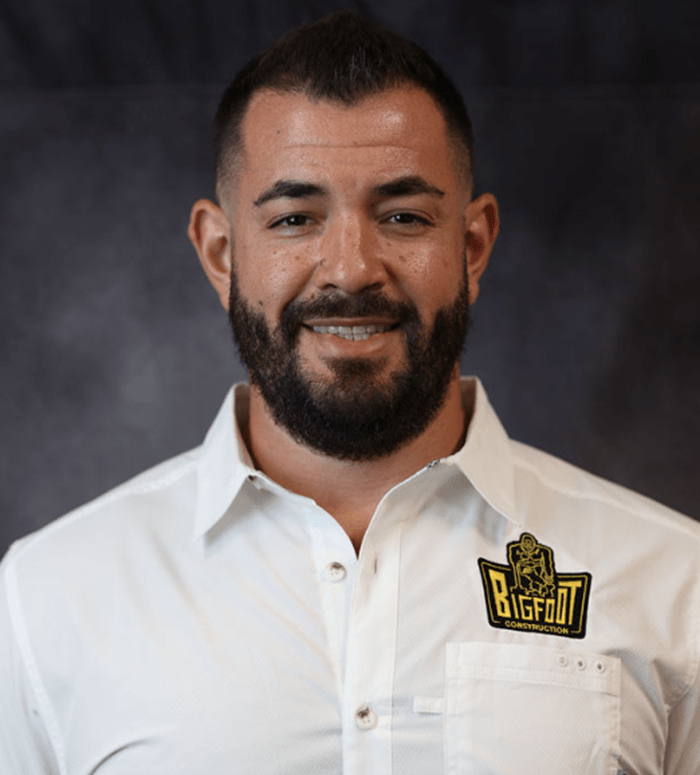
Written by Darryl Henry Rosenbaum, Founder of Bigfoot Windows & Roofing.
Darryl Henry Rosenbaum, doing business as Bigfoot Windows and Roofing, holds four active Florida licenses recognized by the Florida Department of Business and Professional Regulation (DBPR): Certified General Contractor (CGC1531370), Certified Residential Contractor (CRC1331693), Certified Roofing Contractor (CCC1333168), and Certified Specialty Contractor with a Glass & Glazing Specialty (SCC131153098).
FAQ
Frequently Asked Questions
Why are roofing estimates so different from one contractor to another in South Florida?
Each contractor makes independent decisions about which code requirements to include, which materials to spec, and how much structural work to anticipate. In HVHZ, the gap between a minimal scope and a full-code scope is wide. Secondary water barrier, hurricane straps, deck replacement, and permit costs all vary by contractor. Two quotes on the same home can differ by $10,000–$20,000 when one includes full structural scope and one does not. Neither is automatically dishonest — they are often quoting different scopes.
What is a secondary water barrier and does it increase roof cost?
A secondary water barrier is a self-adhered peel-and-stick membrane applied directly to the roof deck before any other roofing layer. It protects the home if the primary material is damaged in a storm. It typically adds $1.50–$3.00 per square foot to the installed cost — roughly $3,000–$6,000 on a 2,000 sq ft roof. Thirty-pound felt is not a qualifying secondary water barrier for Citizens Insurance wind mitigation purposes.
What is the difference between roof deck replacement and underlayment?
The roof deck is the structural plywood or OSB sheathing nailed to your rafters. Underlayment (including peel-and-stick) is a waterproof layer applied on top of that deck. Deck replacement means removing and replacing rotted or soft plywood — a structural repair. Underlayment is a code-required waterproof layer. Both add cost, but they serve different functions and are priced separately. Ask your contractor what their deck-replacement allowance covers before signing.
How do roof-to-wall straps affect a roofing quote?
Roof-to-wall connections (hurricane straps or clips) attach the roof framing to the wall structure. Pre-1994 South Florida homes often have only toenail connections, which fail at lower wind speeds. Florida code requires bringing connections up to current standard when a roof is replaced. Retrofitting straps involves attic access, metal connector installation, and inspection. Depending on the home, this structural scope can add $3,000–$8,000 to the project. A contractor who does not include this in their quote may be skipping a required step.
What are the 15% material and $300,000 valuation roofing exemptions in Florida?
Florida law allows two exemptions that can reduce the scope of code upgrades required at permit time. The 15% material exemption applies when less than 25% of the roof area is being replaced in certain conditions. The $300,000 valuation exemption can limit required upgrades on lower-value structures. Contractors who apply these exemptions can quote a lower-scope job legally — but the homeowner bears the risk if the reduced-scope roof performs differently in a storm or affects insurance coverage. Always ask which exemptions apply to your quote.
What is the average cost to replace a roof in South Florida?
South Florida reroof costs typically range from $750 to $1,400 per square (per 100 sq ft installed), depending on material, structural conditions, and code scope. Shingles run $750–$850/sq. Tile runs $1,000–$1,350/sq. Standing seam metal runs $1,050–$1,300/sq. Stone-coated metal tile runs $1,175–$1,400/sq. Structural extras (straps, deck replacement, ventilation) add cost on top of material pricing. A 2,000 sq ft roof on the low end might run $15,000; a complex tile or metal reroof with full structural scope can exceed $30,000.
Why is metal roofing more expensive than shingles in South Florida?
Metal roofing costs more upfront because the materials, clip systems, and custom fabrication are more expensive than asphalt shingles. However, metal typically lasts 40–50+ years in South Florida conditions, compared to 12–15 years for shingles in the heat and UV environment here. Metal also performs better in HVHZ wind events when installed with a stamped clip system and continuous panels. For many homeowners, the per-year cost over the roof's lifetime is comparable or lower with metal.
Sources
- Florida Building Code, Residential Volume (current edition) — roof-to-wall connection and secondary water barrier requirements.
- Miami-Dade County Product Control — Notice of Acceptance (NOA) database for roofing systems.
- Florida Department of Business and Professional Regulation (DBPR) — license verification for roofing and general contractors.
- GAF Roofing — Wind Proven and System Plus warranty program documentation.
- Citizens Property Insurance Corporation — wind mitigation inspection form and secondary water barrier credit requirements.
Ready to see a transparent, line-item roofing estimate?
Request a free estimate online or call us directly. We serve Miami-Dade, Broward, and Palm Beach counties.