
Metal Roof Replacement Cost Per Square Foot | Bigfoot Windows & Roofing
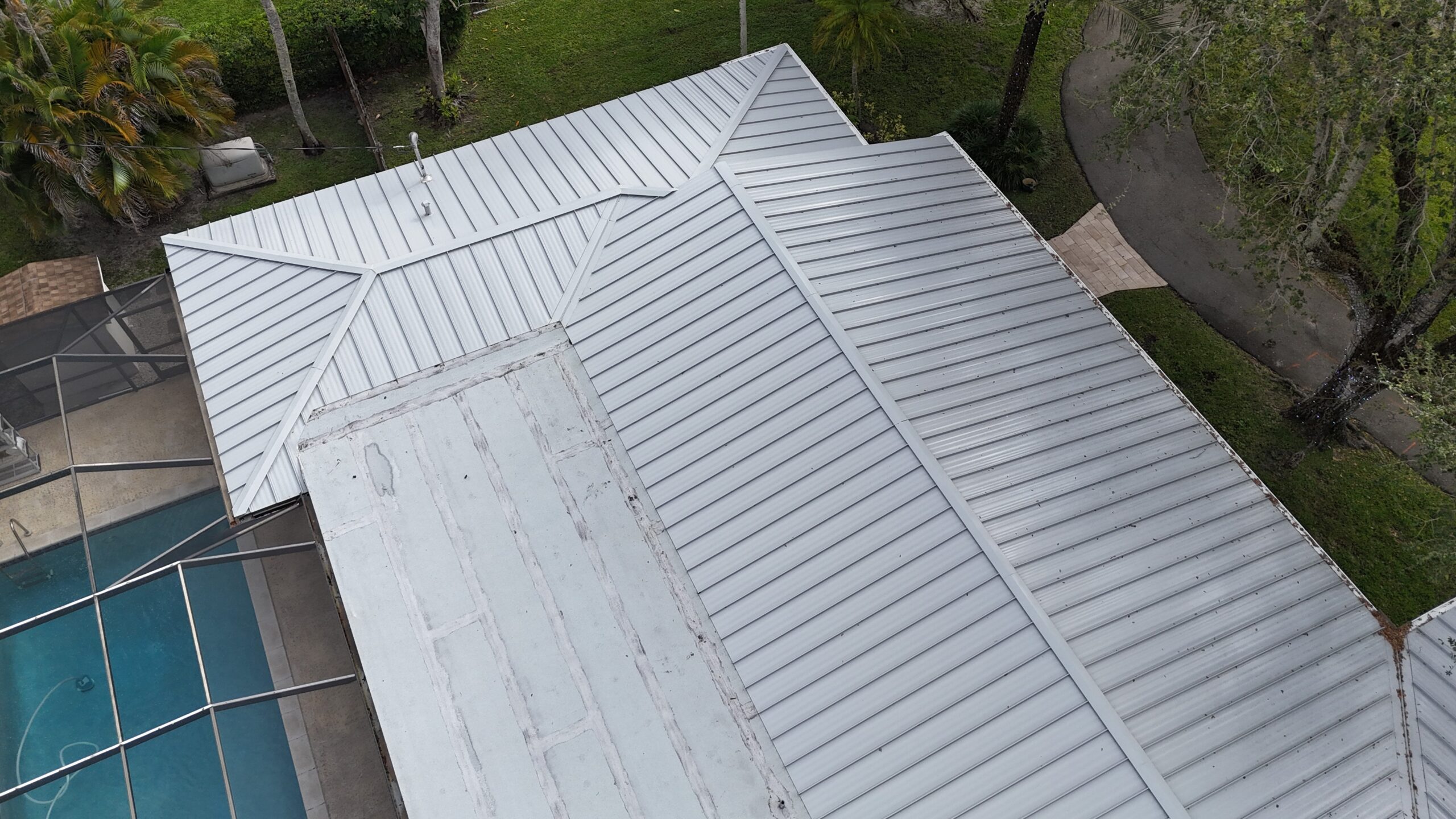
Updated July 2026
Key Takeaways
- Standing seam metal roofing in South Florida typically runs $1,050–$1,300 per square (per 100 sq ft installed).
- Metal tile and stone-coated steel typically run $1,175–$1,400 per square installed.
- HVHZ requirements in Miami-Dade and Broward add real cost — clip systems, inspections, and NOA-compliant materials all matter.
- A new metal roof can meaningfully reduce homeowner’s insurance premiums through a wind mitigation inspection — specific savings vary by policy and insurer.
- Permit fees, roof complexity, deck repairs, and accessory upgrades all push costs toward the upper end of the range.
The Problem
Why Metal Roof Pricing Is So Hard to Pin Down
Every quote is different — here is what actually drives the number.
You searched “metal roof cost per square foot” and found a wide range — anywhere from $8 to $20+ per square foot depending on who you ask. That spread is real, and it is not a contractor trick. Metal roofing in South Florida involves material grades, HVHZ code requirements, permit fees, deck condition, and accessory systems that vary dramatically from roof to roof.
This article breaks down what you are actually paying for, what moves the price up or down in Miami-Dade and Broward counties, and what questions to ask any contractor before you sign. We will use per square pricing (one square = 100 square feet of installed roof area) because that is how roofing contractors actually measure and quote jobs — it removes the confusion of “per square foot” math when your roof is 2,200 square feet.
South Florida Context
Why HVHZ Changes Everything About Metal Roof Cost
Miami-Dade and Broward are not just “windy” — they are the strictest residential building code zone in the United States.
The High-Velocity Hurricane Zone (HVHZ) designation covers Miami-Dade and Broward counties and operates under the Florida Building Code, which requires roofing products to carry a Miami-Dade Notice of Acceptance (NOA) or Florida Product Approval before they can be legally installed. Not every metal panel on the market qualifies. Products that pass HVHZ testing are more expensive to manufacture, and the installation process is more labor-intensive because the Florida Building Code specifies fastener patterns, clip types, and underlayment requirements that go well beyond standard practice in other states.
Key local cost factors that homeowners outside South Florida do not face:
- HVHZ-approved materials only — panels, clips, fasteners, and underlayment must all carry current approvals for your specific wind speed design pressure. Using a clip that does not match the NOA voids the approval and fails inspection.
- Permit fees — pulling a roofing permit in Miami-Dade or Broward is not optional and not free. Fees vary by municipality and roof size; budget roughly $500–$1,200 in permit fees for a typical residential roof, though some jurisdictions charge more based on project valuation.
- Mandatory inspections — HVHZ requires interim inspections (nail pattern, deck, underlayment) before the finish material goes on. This adds scheduling time and sometimes a re-inspection fee if something does not pass the first round.
- Secondary water barrier — a full-deck peel-and-stick underlayment is increasingly common and required in many HVHZ permit sets. This adds cost but also qualifies the roof for Citizens Insurance secondary water barrier discounts.
If a contractor quotes you a metal roof price that seems well below the ranges in this article, the first question to ask is whether the materials carry current Miami-Dade NOA. A lapsed NOA is not a minor paperwork issue — it means the product cannot legally be installed without an NOA or a Florida Product Approval that covers HVHZ use, and the homeowner bears the liability if a future inspection or insurance claim surfaces the discrepancy. You can look up current NOA status at the Miami-Dade County product approval portal (miamidade.gov/building).
Cost Breakdown
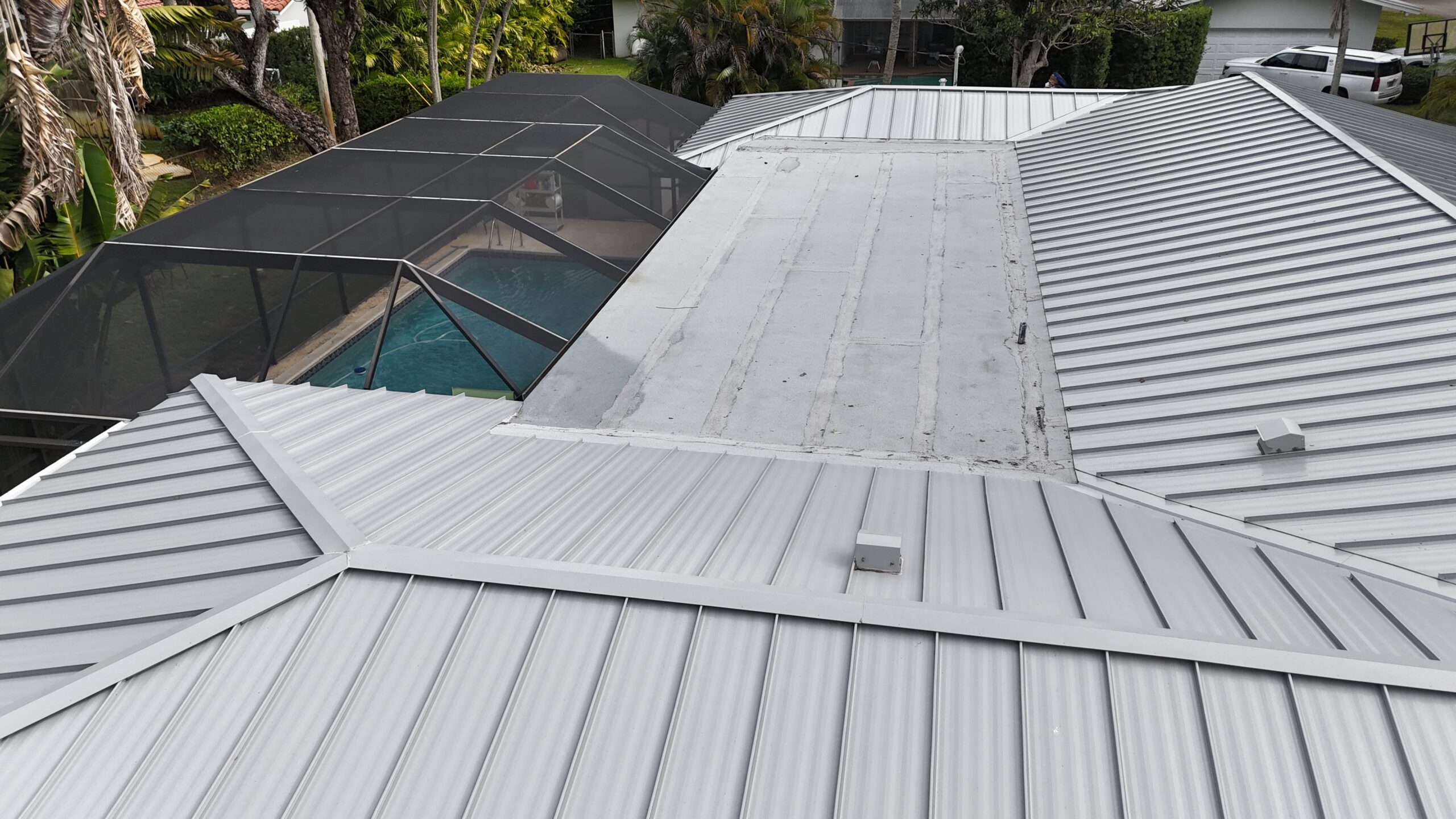
Metal Roof Cost Per Square in South Florida: What the Ranges Actually Mean
Material type is the single biggest variable — but it is not the only one.
The table below shows installed cost ranges per square (100 sq ft) for the metal roofing systems most commonly installed on South Florida residential properties. “Installed” means material + labor + standard accessories; it does not include permit fees, deck repair, or structural modifications.
| System Type | Installed Cost per Square | Best For | HVHZ-Ready? |
|---|---|---|---|
| Standing Seam (Englert or Metal Alliance / custom-fabricated) | $1,050 – $1,300 | Long-term durability, insurance credits, continuous-panel strength | Yes — with stamped NOA clips |
| Metal Tile / Stone-Coated Steel | $1,175 – $1,400 | HOA aesthetics, tile look without tile weight | Yes — Westlake / Unified Steel VSH-rated |
| Corrugated / R-Panel (exposed fastener) | $700 – $950 | Agricultural, utility — less common on residential | Limited — verify NOA per product |
These ranges reflect South Florida market conditions as of mid-2026. Steel and aluminum prices fluctuate with commodity markets; a project bid in late 2025 may not match a bid in mid-2026. Always get a written quote dated within 30 days of your intended start.
What Pushes Your Quote Toward the High End?
Within any given system type, several job-specific factors will move the final price up:
- Roof complexity — hip roofs, multiple valleys, dormers, and steep pitches all add labor time. A simple gable roof on a flat site is faster to install than a complex hip-and-valley roof with three pipe boots and a skylight penetration.
- Deck condition — if the decking has soft spots, rot, or delamination, it must be repaired or replaced before the new roof goes on. Budget $3–$6 per square foot of deck repair, though costs vary by extent.
- Tear-off and disposal — existing tile roofs are heavy and slow to remove. Tile tear-off adds more labor cost than shingle tear-off.
- Gutters and fascia — standing seam metal often requires new fascia or gutter realignment. These are legitimate add-ons, not padding.
- Custom fabrication — Englert or Metal Alliance metal is roll-formed on-site into continuous panels from ridge to eave. There are no horizontal seams. This is structurally advantageous in a hurricane — but the fabrication process means your material cost is slightly higher than a pre-cut panel system.
What Does NOT Meaningfully Change the Price?
A few things homeowners commonly ask about do not actually move the needle much:
- Paint color — standard Kaner multi-coat color options are included. Exotic custom colors may add a small premium but are not a major cost driver.
- Number of stories — single vs. two-story adds some lift cost but is rarely a line-item surprise in a South Florida market where two-story homes are common.
- Attic venting — ridge vents are typically part of a standard metal roof install; they are not a significant add-on.
| Cost Factor | Typical Impact on Price | Notes |
|---|---|---|
| Roof complexity (hip, valleys, dormers) | +10–20% | Labor-intensive; more cuts, more flashing |
| Deck repair (per sq ft of damage) | +$3–$6/sq ft | Extent unknown until tear-off |
| Tile tear-off (vs. shingle) | +$150–$300/sq | Weight, disposal, slower removal |
| Full-deck peel-and-stick underlayment | +$50–$100/sq | Required in many HVHZ permit sets; enables insurance discount |
| Permit fees (Miami-Dade / Broward) | +$500–$1,200 flat | Varies by municipality and valuation |
| Structural repairs (hurricane straps, rafter ties) | Variable — scope-dependent | See GC scope note below |
Metal vs. Asphalt — Long-Term Value
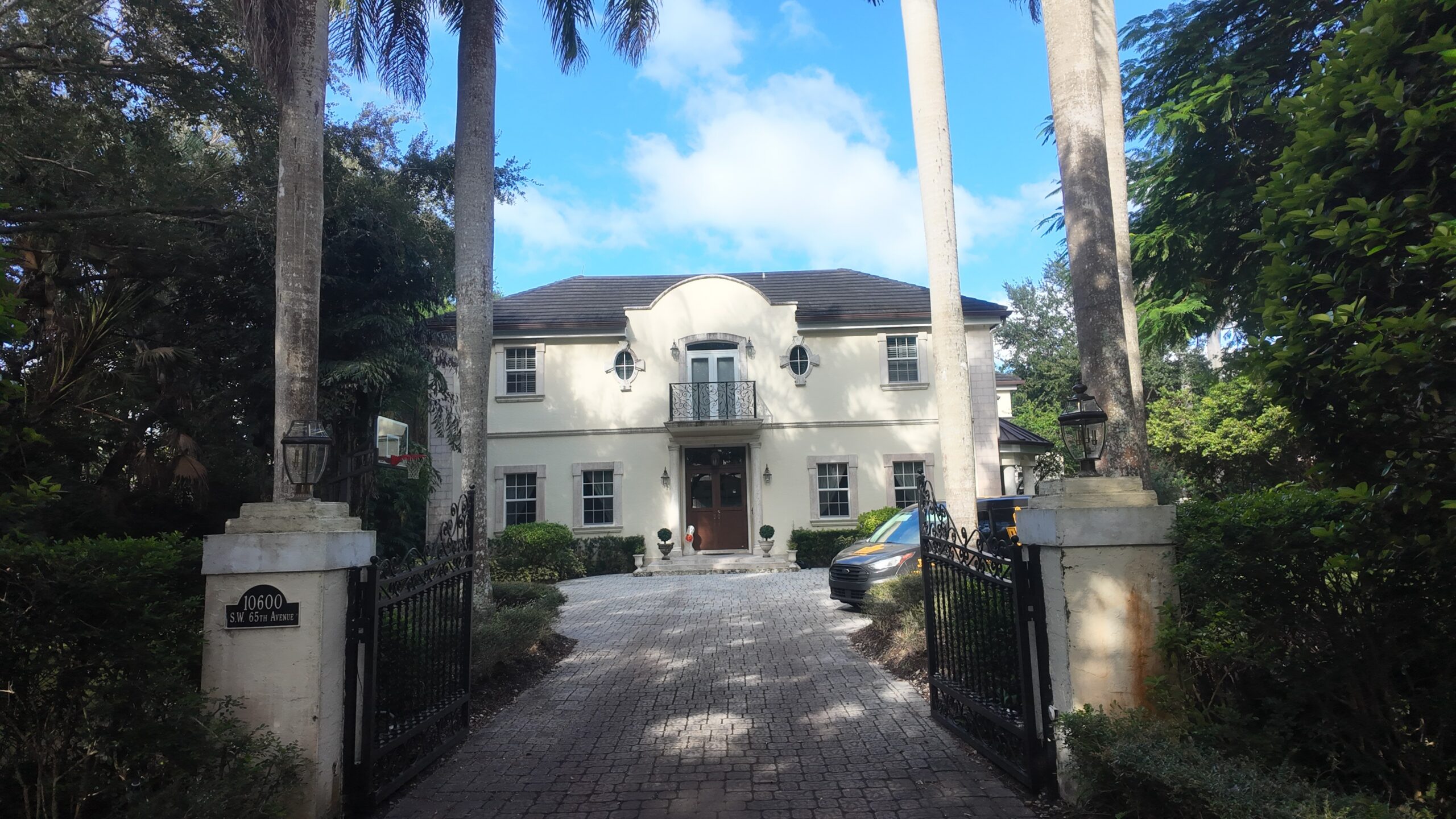
Is a Metal Roof Worth the Higher Upfront Cost in South Florida?
The comparison changes when you account for lifespan, maintenance, and insurance in a hurricane-prone market.
Asphalt shingles in South Florida last approximately 12–15 years due to the combination of intense UV, heat cycling, and storm exposure. A metal roof — standing seam or stone-coated — has a substantially longer useful life, commonly cited in the 40–70-year range for properly installed systems in Florida climates, though individual results depend on installation quality, maintenance, and storm history.
| Attribute | Asphalt Shingles (GAF) | Standing Seam Metal (Englert or Metal Alliance) | Metal Tile / Stone-Coated |
|---|---|---|---|
| Installed cost per square | $750–$850 | $1,050–$1,300 | $1,175–$1,400 |
| Expected lifespan (South FL) | 12–15 years | 40–70 years | 30–50+ years |
| Wind resistance | System Plus / Wind Proven (GAF) | Continuous panel — no seam failure point | VSH-rated (Westlake / Unified Steel) |
| Insurance credits available? | Yes (wind mit) | Yes — typically stronger credits | Yes (wind mit) |
| HOA compatibility | High | Moderate (Florida SB 293 protects homeowners) | High — tile appearance |
| Re-roof cycles in 40 years | 2–3 replacements | 0–1 replacements | 0–1 replacements |
The HOA note matters: Florida Senate Bill 293 prohibits HOAs from blocking the installation of metal roofing or impact windows. If your HOA has told you metal is not allowed, that restriction is unenforceable under current Florida law. Ask your contractor to provide the SB 293 reference in writing if needed.
When Asphalt Shingles Are the Better Fit
Metal is not always the right answer. Asphalt shingles installed with a GAF System Plus warranty (50-year non-prorated, Wind Proven with no maximum mph cap) are a legitimate choice for homeowners who:
- Plan to sell within 5–8 years and want to limit upfront capital outlay
- Have a tight budget and need a code-compliant, storm-resistant solution now
- Prefer a lower-cost entry point while they plan a larger renovation
For more on roofing options and full-service roofing in South Florida, see our main roofing page.
Why It Matters Who Pulls the Permit
A Roofing Contractor vs. a Certified General Contractor: The Structural Difference
Licensed contractor — not a lead aggregator, not a storm-chaser crew.
Many roofing contractors hold only a roofing license. That is sufficient for a straightforward re-roof. But a meaningful number of South Florida homes — particularly those built before 2002 — need structural work before or during a metal roof installation: hurricane straps that do not meet current code, rafters that have shifted, or a roof deck that requires partial replacement. When those issues surface, a contractor who holds only a roofing license must either stop the job, bring in a sub, or (in the worst case) skip the repair and install over a deficient structure.
Bigfoot Windows & Roofing holds a Certified General Contractor license (CGC1531370) in addition to the Certified Roofing Contractor license (CCC1333168). That means structural modifications, hurricane strap upgrades, and code-driven structural scope can be addressed in-house under a single permit set — the homeowner does not need to source and coordinate a separate general contractor when the roof tear-off reveals a structural issue. This is a structural advantage grounded in license breadth, not a marketing badge.
Florida DBPR licenses are public record. You can verify any contractor’s license status at myfloridalicense.com. Florida licensed: CGC1531370 · CRC1331693 · CCC1333168 · SCC131153098.
“The question I hear most is: can I trust the number I was quoted? My answer is always the same — get the NOA number for the clip system in writing before you sign. If the contractor cannot produce it, that is your answer.”
Founder & President, Bigfoot Windows & Roofing
What We Install
Metal Roofing Systems Bigfoot Installs in South Florida
Every product we install carries current HVHZ approvals and is appropriate for coastal South Florida conditions.
Bigfoot Windows & Roofing installs two primary metal roofing lines, each selected for specific performance reasons in the South Florida environment.
Englert or Metal Alliance Standing Seam (Primary Metal Roofing)
Englert or Metal Alliance metal is fabricated custom per job using 24-gauge Galvalume or aluminum. The panels are roll-formed on-site into continuous pieces from ridge to eave — there are no horizontal seams. In a hurricane, a seam is a failure point; a continuous panel eliminates that vulnerability.
The clip system is critical and frequently where corners get cut. Bigfoot installs the manufacturer’s approved clips, at the spacing its product approval specifies. Knockoff clips — or competitor systems that use only 2-inch clips throughout — have seen their NOA status lapse in some cases, which means the installation cannot pass HVHZ inspection. A failed inspection on a clip system can mean a complete roof redo. Asking for the clip NOA number before your job starts is not paranoia; it is basic due diligence.
The Englert or Metal Alliance paint system uses a Kaner multi-coat proprietary process rather than the single-coat S&P paint used by many competitors. This matters in a coastal salt-air environment where paint adhesion and fade resistance directly affect how the roof looks and performs over decades.
Westlake / Unified Steel (Metal Tile and Stone-Coated)
For homeowners who want the aesthetic of a tile roof without the weight or fragility, Westlake and Unified Steel stone-coated panels are the primary alternative. The Unified Steel product carries a VSH (Very Severe Hail) rating and a 50-year warranty with no named-storm exclusions and no saltwater exclusions — both of which are common exclusions in competitor warranties. If a competing product’s warranty contains named-storm or act-of-God language, read it carefully before you assume it covers a Category 3 landfall.
Metal Alliance panels are available as a secondary standing-seam option when project scope or lead time makes them the appropriate fit.
What we do not install: Nail-strip metal panel systems. The nail-strip design limits thermal movement, which causes oil-canning and buckling over time — a real problem in South Florida’s heat range. Clip systems allow the panel to float thermally, which is why all Bigfoot metal roofing uses a clip-based system exclusively.
The Installation Process
From Estimate to Final Inspection: What to Expect
A metal roof replacement in South Florida involves more steps than a shingle re-roof — here is the sequence.
- On-site estimate and measurement — Bigfoot measures the roof, documents pitch and complexity, photographs the deck edge and fascia condition, and identifies any visible structural concerns. The estimate includes material, labor, permit fees, and standard accessories. It does not include deck repair, because deck condition is not fully known until tear-off.
- Permit application — Bigfoot pulls the permit under the Certified Roofing Contractor license (CCC1333168). In Miami-Dade and Broward, this requires submitting product NOA documentation or documentation of a Florida Product Approval that covers HVHZ use, a signed and sealed site plan in some cases, and the completed permit application to the local building department. Permit processing times vary by municipality — currently ranging from a few days to several weeks depending on department workload.
- Tear-off and deck inspection — the existing roof is removed, the deck is inspected, and any damaged or soft sections are repaired before anything new goes on. This is the step where hidden costs can emerge — and a reputable contractor will document what they found with photos before billing for the repair.
- Underlayment installation — a full-deck peel-and-stick underlayment is applied before the metal panels. This serves as the secondary water barrier required by the Florida Building Code and qualifies for Citizens Insurance secondary water barrier credits.
- Metal panel fabrication and installation — for Englert or Metal Alliance standing seam, the roll-forming machine arrives on-site and fabricates panels to the exact length of each roof slope. Panels are installed with the stamped clip system. Ridge caps, hip caps, valleys, and flashings are completed to match.
- Interim and final inspections — HVHZ requires interim inspections at deck and underlayment stages before panels go on. The final inspection covers the completed system. Only after the final passes is the permit closed.
- Cleanup and documentation — debris is removed, the permit card is closed, and Bigfoot provides the homeowner with documentation for the wind mitigation inspection — which is the next step toward an insurance premium review.
Homeowners who also need impact window or door replacements can coordinate that scope under the same contractor relationship, since Bigfoot holds the Certified Specialty Contractor with a Glass & Glazing Specialty license (SCC131153098) for windows and doors alongside the roofing license.
Get a Real Number for Your Roof
Ranges are useful. A number with your address on it is better. Request a free on-site estimate and we will measure, document, and give you a written quote within the ranges above — with the NOA clip number included.
Related Reading
You Might Also Find These Useful
Related Articles
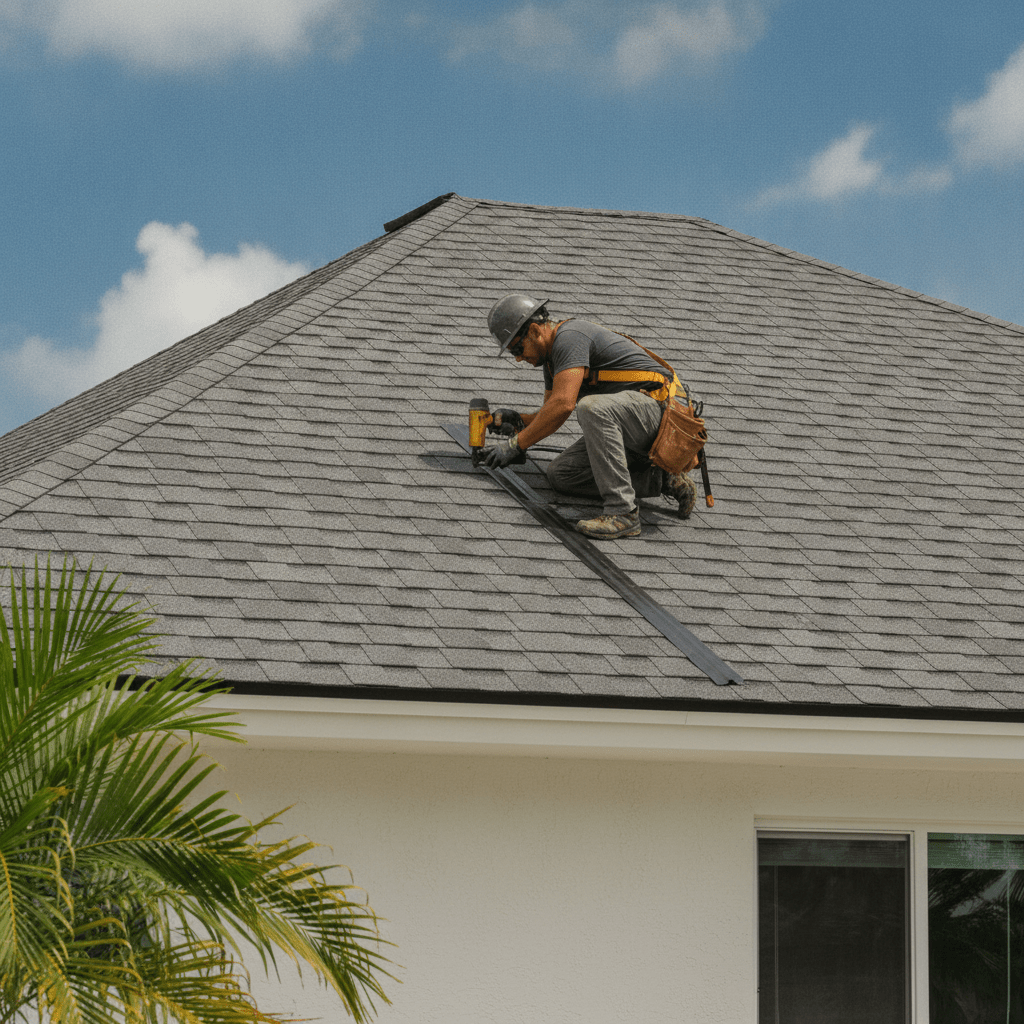
Who We’re Not the Right Fit For
We believe in being upfront about fit before you spend time getting a quote. Bigfoot Windows & Roofing is probably not the right contractor for you if:
- You need the absolute lowest price on the market. HVHZ-compliant materials, stamped clips, peel-and-stick underlayment, and a proper permit cost more than a cash job with unlicensed labor. If the priority is the lowest number regardless of code compliance, we are not that contractor. Situation: price-primary buyer → why not a fit: our process is code-first → next step: verify that any low bid includes a permit application and NOA documentation before signing.
- You want the job started in the next few days. Pulling a permit in Miami-Dade or Broward takes time. We do not skip that step. If you have an emergency leak, we can address the immediate issue, but a full replacement requires a permit. Situation: urgent timeline → why not a fit: permit timelines are outside our control → next step: call us and we can discuss emergency tarping while the permit is processed.
- You are outside our service area. We serve Miami-Dade, Broward, and Palm Beach counties. If your property is in a different Florida county, we are not the right contractor. Situation: outside South Florida → next step: verify the contractor you choose holds a Florida Certified Roofing Contractor license and check their DBPR license status before signing.
- You want financing through a bank loan only. We offer PACE financing (paid through your property tax bill, not a credit check-based bank loan). PACE is not the right fit for everyone — particularly if you plan to sell the property in the near term. For more detail, see our financing page. Situation: bank-loan preference → next step: use your own financing and we can still quote the project.
Frequently Asked Questions
Frequently Asked Questions
How much does a standing seam metal roof cost in Miami?
Standing seam metal roofing in Miami and the broader Miami-Dade area typically runs $1,050–$1,300 per square (per 100 sq ft installed) for an Englert, Metal Alliance, or equivalent system with NOA-compliant clips. Your total depends on your roof’s square footage, pitch, complexity, and any deck repairs found at tear-off. Permit fees in Miami-Dade add another $500–$1,200 depending on your municipality and project valuation. Get a written quote that includes the NOA clip number.
Are metal roofs worth it in Florida’s hurricane zone?
For most South Florida homeowners planning to stay in their home for 10 or more years, a properly installed metal roof is worth the higher upfront cost. Asphalt shingles in this climate last roughly 12–15 years before replacement is needed again. A metal roof lasts substantially longer, qualifies for stronger wind mitigation insurance credits, and has no horizontal seams — a critical structural advantage when high winds apply sustained uplift pressure. The per-replacement math usually favors metal over a 30–40-year horizon.
Do metal roofs lower home insurance in South Florida?
A new metal roof can meaningfully reduce your homeowner’s insurance premium through a wind mitigation inspection. Florida insurers use OIR-B1-1802 wind mitigation forms to apply credits based on roof cover type, attachment method, and secondary water barrier presence. Metal roofing systems typically qualify for stronger credits than asphalt shingles. Specific savings vary by insurer, policy, and your home’s current rating — I have seen customers save significantly after a metal roof plus wind mit inspection plus policy shopping. Never take a specific savings promise from a contractor as a guarantee.
What is the average lifespan of a metal roof in Miami-Dade?
A properly installed standing seam metal roof in Miami-Dade can last 40–70 years. Stone-coated metal tile systems are commonly rated for 30–50+ years. Both ranges assume proper installation with NOA-compliant materials, full-deck underlayment, and correct clip or fastener systems. South Florida’s UV intensity, salt air, and hurricane season all accelerate roof aging compared to other climates — which is precisely why choosing a product with current HVHZ product approval matters more here than in most other states.
What are the permit costs for a metal roof replacement in Broward County?
Permit fees in Broward County for a residential roof replacement typically range from approximately $500 to $1,200+ depending on the municipality (each city in Broward has its own building department and fee schedule), the assessed value of the project, and whether any supplemental inspections or plan reviews are required. Your licensed roofing contractor handles the permit application; those fees are typically included in or added to the project quote. Always confirm permit fees are itemized in your contract before signing.
Can I finance a metal roof replacement in South Florida?
Yes. PACE (Property Assessed Clean Energy) financing is available for qualifying homeowners in Miami-Dade and Broward. PACE is paid through your property tax bill — not a traditional bank loan — with rates around 9.49% and terms up to 20 years. A $15,000 roof on a 20-year PACE plan runs approximately $173/month with no prepayment penalty. Roofing and window projects must be submitted as separate PACE applications. The My Safe Florida Home grant (up to $10,000) can stack with PACE for eligible properties. For qualifying property owners, there may be tax benefits available — please consult your CPA. See our full financing options for more detail.
Can my HOA prevent me from installing a metal roof in Florida?
No. Florida Senate Bill 293 prohibits homeowners associations from blocking the installation of metal roofing on residential properties. If your HOA has denied a metal roof request or told you it is not permitted, that restriction is not enforceable under current Florida law. Ask your roofing contractor to provide the SB 293 reference in writing if your HOA pushes back. The same law also protects your right to install impact windows — relevant if you are planning a combined roof and window upgrade.
Sources
- Miami-Dade County Building Department — Product Approval & NOA Portal: miamidade.gov/building
- Florida Building Code (FBC), 7th Edition (2020) — High-Velocity Hurricane Zone provisions
- Florida DBPR Contractor License Verification: myfloridalicense.com
- Florida Office of Insurance Regulation — OIR-B1-1802 Wind Mitigation Form
- Florida Senate Bill 293 (2023) — HOA restrictions on roofing materials and impact windows
- Citizens Property Insurance Corporation — underwriting guidelines for roof age and secondary water barrier credits
Ready to Get a Written Quote for Your Metal Roof?
Request a free on-site estimate. We will measure your roof, document current conditions, and give you a written quote with the NOA clip documentation included — no obligation.