
Metal Roof vs Metal Tile Roof Cost | Bigfoot Windows & Roofing
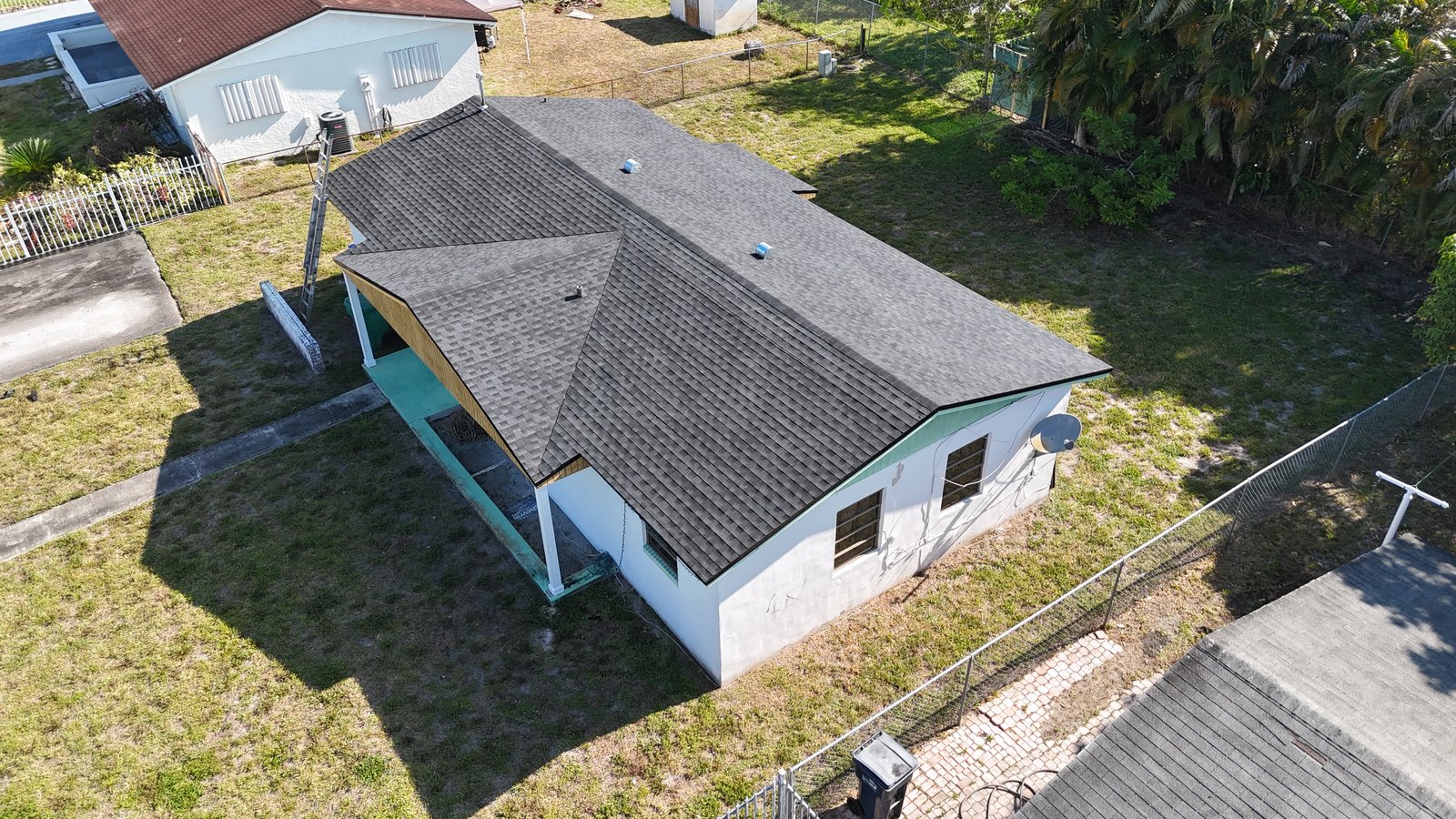
In South Florida, standing-seam metal panels typically run $1,050–$1,300 per square installed, while metal tile roofing runs $1,175–$1,400 per square installed. The gap is real but narrower than most homeowners expect—and HVHZ permitting, substrate condition, and insurance outcomes can shift the total cost of ownership significantly in either direction.
Updated August 2026
Key Takeaways
- Standing-seam metal panels: roughly $1,050–$1,300/sq installed in South Florida.
- Metal tile roofing: roughly $1,175–$1,400/sq installed—a premium of $125–$200/sq.
- HVHZ permitting, Miami-Dade NOA requirements, and secondary water barrier add costs not shown in national pricing guides.
- Both systems can qualify for meaningful homeowners insurance wind-mitigation credits in Florida.
- Long-term maintenance costs differ: concealed-clip standing seam has fewer leak points than exposed-fastener or mechanically attached tile systems.
The Pricing Problem
Why Metal Roof Quotes Confuse South Florida Homeowners
National price guides aren’t built for Miami-Dade. Here’s what they leave out.
You’ve seen the articles that say “metal roofing costs $8–$14 per square foot.” That range is not wrong nationwide, but it buries the details that actually move the number in South Florida. When a contractor quotes you a roofing replacement in Miami-Dade, the price reflects HVHZ-specific product approvals, mandatory secondary water barriers, and permitting engineering costs that simply don’t apply in Atlanta or Phoenix.
The second problem is vocabulary. “Metal roof” is used to describe at least three fundamentally different systems: exposed-fastener corrugated panels, concealed-fastener standing seam, and interlocking metal tile. Each has a different installed cost, a different long-term maintenance profile, and a different relationship with your homeowners insurance carrier. Comparing them on price per square foot alone misses the point.
South Florida Context
How Miami-Dade HVHZ Rules Affect Your Roofing Cost
The High Velocity Hurricane Zone sets the most demanding roofing standards in the United States.
Miami-Dade and Broward counties sit in the High Velocity Hurricane Zone (HVHZ)—the strictest residential building code environment in the country. Every roofing product installed here must carry a Miami-Dade Notice of Acceptance (NOA) or a Florida Product Approval verified against HVHZ wind-uplift requirements. That approval process adds cost at multiple points.
First, the product itself costs more: HVHZ-rated panels, clips, and tile profiles require more rigorous testing than standard Florida Product Approvals. Second, the fastener schedule is denser: both standing-seam clip spacing and metal tile mechanical attachment must meet the NOA’s specific uplift numbers, which means more labor time per square. Third, Florida Building Code Section 1504 wind-uplift compliance typically requires a permit with engineered drawings for any full re-roof in HVHZ—a cost line that surprises homeowners who have never replaced a roof outside South Florida.
Add a mandatory secondary water barrier (peel-and-stick underlayment applied directly to decking), required under current Florida Building Code for full re-roofs, and you have three to four cost adders that national pricing guides simply don’t model. We factor all of these into every estimate we issue in Miami-Dade and Broward.
Cost Breakdown
Metal Panel vs Metal Tile: Installed Cost Ranges for South Florida
Directional market ranges based on current South Florida conditions. Actual pricing varies with roof complexity, deck condition, and permit scope.
| System | Installed Range (per sq) | Primary Driver of Range | HVHZ Product Approval Required? |
|---|---|---|---|
| Standing-Seam Metal (Concealed Clip) | $1,050–$1,300 | Panel gauge, clip spec, deck condition | Yes—NOA or FL Product Approval (HVHZ-verified) |
| Metal Tile (Stone-Coated or Interlocking) | $1,175–$1,400 | Profile complexity, mechanical attachment labor | Yes—an NOA or a Florida Product Approval that covers HVHZ use in Miami-Dade / Broward. |
| Exposed-Fastener Metal Panel | $850–$1,050 | Lower material & labor; more maintenance long-term | Yes—but fewer profiles hold HVHZ NOA |
A few clarifications on these ranges. Standing seam is the concealed-fastener system where panels interlock vertically and clips float to allow thermal expansion. For standing-seam metal roofing, we install Englert or Metal Alliance panels roll-formed on-site from 24-gauge Galvalume or aluminum, with the manufacturer’s approved clips, at the spacing its product approval specifies. The clip system is what makes the difference: knockoff clips that don’t match the NOA fastener schedule will fail inspection and require a full redo.
Metal tile roofing replicates the profile of clay or concrete tile using steel or stone-coated steel panels. The appeal in South Florida is aesthetic—many neighborhoods prefer the barrel or flat tile look—combined with the lighter weight of steel (roughly 1.5–2 lbs per square foot versus 8–12 lbs for concrete tile). The premium over standing seam reflects more complex mechanical attachment, profile-specific HVHZ testing, and the additional labor of fitting cut pieces at hips, ridges, and valleys.
Exposed-fastener panels are the cheapest option but carry a meaningful long-term cost: every fastener penetration is a potential leak point, and in South Florida’s heat-expansion-contraction cycle, fastener washers degrade faster than in moderate climates. We include them here for completeness, not as a recommendation for primary HVHZ residential roofing.
Side-by-Side Comparison
Metal Tile vs Standing-Seam Metal: Five Factors That Affect Total Cost of Ownership
| Factor | Standing-Seam Metal | Metal Tile |
|---|---|---|
| Installed cost (South FL typical) | $1,050–$1,300/sq | $1,175–$1,400/sq |
| HVHZ NOA availability | Widely available (Englert or Metal Alliance, others) | Available—verify profile by NOA |
| Maintenance (10-yr horizon) | Very low—no exposed fasteners | Low—occasional fastener inspection at cut edges |
| Wind-mit insurance credit potential | Strong—new roof + hip geometry + SWR | Strong—same triggers apply |
| Aesthetic flexibility | Modern/contemporary; fewer HOA conflicts | Mimics tile look; broad HOA acceptance |
| Warranty (typical) | Set by the panel manufacturer (Englert or Metal Alliance); listed on your proposal | Lifetime (stone-coated steel, e.g. Unified Steel) |
On insurance: both systems can qualify for the same Florida wind-mitigation inspection credits—new roof age, hip roof geometry, secondary water barrier (SWR), and roof deck attachment. A full-deck peel-and-stick underlayment qualifies as the SWR feature on the Florida OIR-B1-1802 wind mitigation inspection form, which insurers may credit as a wind mitigation discount on the hurricane portion of your homeowners premium. The credit varies by insurer and requires a licensed wind mitigation inspector to document it. The system type (standing seam vs. metal tile) does not by itself determine the insurance credit amount—the inspection triggers do.
Why Bigfoot
A Certified Roofing Contractor Who Handles the Whole Scope
A licensed contractor who can manage structural findings mid-project, not a lead aggregator.
One situation that catches South Florida homeowners off guard: the inspector opens the decking and finds deteriorated sheathing, rotted rafters, or missing hurricane straps. On a standard roofing-only contract, that discovery either stops the job while you locate a separate contractor or gets patched over inadequately. Because Bigfoot holds a Certified General Contractor (CGC1531370) license in addition to its Certified Roofing Contractor (CCC1333168) license, we can address structural deck replacement, framing repairs, and hurricane strap upgrades in the same permitted scope—without requiring you to coordinate a second contractor or pull a separate permit. That is a structural accountability advantage grounded in license breadth, not a marketing claim.
“Every South Florida homeowner deserves a straight answer on price before they commit. My job is to give you the full number—permit, engineering, secondary water barrier, and all—not a low number that grows after we start.”
President, Bigfoot Windows & Roofing
Product Guidance
What We Actually Install and Why
For standing-seam metal roofing, we use Englert or Metal Alliance panels—roll-formed on-site from 24-gauge Galvalume or aluminum, finished with the Kaner multi-coat proprietary paint system rather than a single-coat equivalent. The manufacturer-approved clip system (installed at the spacing its product approval specifies) allows the panel to float thermally without buckling, a critical performance factor in South Florida heat cycles. Nail-strip snap-lock systems do not allow this thermal float and can cause oil-canning and panel buckling over time.
For metal tile, we install profiles from Westlake / Unified Steel stone-coated steel lines. Unified Steel carries a Lifetime warranty with no named-storm exclusion and no saltwater exclusion—a material difference from some competing brands that void coverage if a named storm makes landfall in the county. We verify the specific NOA or Florida Product Approval for every profile on every project before a permit is pulled, because HVHZ acceptance is profile-specific and cannot be assumed across a manufacturer’s full catalog.
If you are comparing metal roofing costs against concrete or clay tile, the installed ranges overlap: concrete tile typically runs $1,000–$1,350 per square in South Florida. Metal tile lands at the upper end of that overlap but brings a weight advantage (lighter structural load on your trusses) and, in stone-coated form, a warranty with fewer exclusion clauses than most tile products.
The Process
What a Metal Roof or Metal Tile Roof Replacement Looks Like in Miami-Dade
Understanding the process helps you evaluate whether a quote is complete or missing line items.
- Estimate and material selection: We review your roof geometry, slope, existing deck condition (visible inspection), HOA requirements, and permit jurisdiction. We confirm which NOA covers the panel or tile profile you are selecting for your specific wind zone.
- Permit application: In Miami-Dade, a full re-roof requires a permit with wind-uplift calculations. We handle this. Engineering drawings are typically required for HVHZ projects—some contractors omit this cost from the quote and add it later.
- Tear-off and deck inspection: Once permit is approved, we tear off the existing roof, inspect decking for rot or delamination, and confirm hurricane strap presence. If structural issues are found, our Certified General Contractor license allows us to address them in the same scope.
- Secondary water barrier: Full-deck peel-and-stick underlayment is applied before any panel or tile goes on. This qualifies as the SWR trigger on the wind mitigation inspection form.
- Panel or tile installation: clips are manufacturer-approved and traceable to the NOA. Metal tile profiles are mechanically fastened per the product’s specific NOA attachment schedule.
- Final inspection and wind mitigation: The county inspector signs off on the permit. We recommend scheduling a licensed wind mitigation inspector afterward to document the new roof for your insurance carrier.
If you are exploring financing options for your roof replacement, PACE financing is paid through your property tax bill rather than as a bank loan, with rates around 9.49% and terms up to 20 years. A $15,000 project at 20 years is approximately $173 per month. No prepayment penalty and no credit score impact on application. Roofing and window projects must be submitted as separate PACE applications—they cannot be combined into one.
Get a Complete, Itemized Estimate—Including Permit and Engineering
We include HVHZ permit costs, secondary water barrier, and engineering drawings in every roofing proposal we issue. No surprises after the contract is signed.
Related Reading
More South Florida Roofing Guides
Related Articles
Who We’re Not the Right Fit For
- Homeowners with a very tight budget seeking the absolute lowest installed price: Our standing-seam and metal tile systems are mid-to-upper market. If the only decision criterion is the lowest number on the page, a different contractor will likely beat us. We are not a fit for that project.
- Projects outside Miami-Dade, Broward, and Palm Beach counties: We specialize in South Florida HVHZ and coastal installations. Out-of-area projects are outside our service geography.
- Homeowners who want a quick cash deal with no permit: Every re-roof we do is permitted. We do not offer unpermitted work, period. If a permit-free job is what you are after, we are not the right contractor.
- Buyers who have already selected a specific brand we do not install: We work with Englert or Metal Alliance for standing seam and Westlake / Unified Steel for metal tile. If you have your heart set on a brand outside our product lines, we will not be able to honor that spec.
Frequently Asked Questions
How much more does a metal tile roof cost compared to standing-seam metal in South Florida?
Metal tile typically costs $125–$200 per square more than standing-seam metal when installed in South Florida. Standing seam runs roughly $1,050–$1,300 per square installed; metal tile runs $1,175–$1,400 per square installed. The premium reflects more complex mechanical attachment labor, profile-specific HVHZ NOA testing, and additional cut-piece fitting at hips and ridges.
Does a metal tile roof qualify for the same homeowners insurance discounts as standing-seam metal in Florida?
Both systems can qualify for the same wind mitigation inspection credits in Florida. The insurance credits are triggered by roof age, geometry (hip roof scores better), deck attachment method, and secondary water barrier presence—not by whether the system is standing seam or metal tile. A licensed wind mitigation inspector documents these features after installation. The actual premium reduction varies by insurer and coverage zone.
What permits and inspections are required for a metal roof replacement in Miami-Dade County?
A full re-roof in Miami-Dade requires a permit with wind-uplift calculations and, for most HVHZ projects, engineered drawings. The product must carry a valid Miami-Dade NOA or HVHZ-verified Florida Product Approval. The county inspects deck attachment, underlayment, and panel or tile fastening against the NOA schedule. Some contractors omit permit and engineering fees from their initial quote—ask to see the full permit-inclusive scope before signing.
Is metal tile roofing approved for the High Velocity Hurricane Zone in South Florida?
Some metal tile profiles are NOA-approved for HVHZ and some are not. HVHZ acceptance is profile-specific, not brand-wide. Before selecting a metal tile product, confirm that the specific profile carries a valid Miami-Dade NOA covering your opening conditions. We verify this before pulling any permit—it is one of the first questions to ask any roofing contractor quoting you a metal tile job in Miami-Dade or Broward.
How long does a metal tile roof last compared to a standard metal roof in coastal Florida?
Both standing-seam and stone-coated metal tile are long-service systems in coastal Florida. Standing-seam warranty terms come from the panel manufacturer on your project (Englert or Metal Alliance) and are listed on your proposal. Stone-coated steel tile (e.g., Unified Steel) carries a Lifetime warranty with no named-storm or saltwater exclusion. In practice, a properly installed and permitted metal system in South Florida should outlast two or three shingle roof cycles. Maintenance is minimal on concealed-fastener systems; exposed-fastener panels require more periodic inspection.
Can I finance a metal roof or metal tile roof replacement in South Florida?
Yes. PACE financing is one option available to qualifying property owners in Florida. It is paid through your property tax bill, not a bank loan, at approximately 9.49% with terms up to 20 years. A $15,000 project at 20 years is roughly $173 per month. Application does not affect your FICO score. Roofing and window projects must be filed as separate PACE applications. The My Safe Florida Home program may also offer matching grants of up to $10,000 for qualifying improvements.
What is a secondary water barrier and does it add cost to my South Florida roof replacement?
A secondary water barrier (SWR) is a peel-and-stick underlayment applied directly to the roof deck before panels or tile are installed. Florida Building Code requires it for full re-roofs. It adds material and labor cost that national pricing guides do not reflect. It also qualifies as the SWR feature on the Florida OIR-B1-1802 wind mitigation inspection form, which insurers may credit as a hurricane premium discount. Always confirm your proposal includes it as a named line item.
Schedule Your Free Estimate
Ready to get started? Request a free estimate — no phone call required.
Sources
- Bigfoot Windows & Roofing metal roof cost guide: bigfootwindowsandroofing.com/metal-roof-cost-florida-pricing-guide/
- Florida OIR Wind Mitigation Booklet (Secondary Water Barrier credit): floridadisaster.org
- My Safe Florida Home grant program: mysafeflhome.com
- Renew Financial PACE eligibility: renewfinancial.com
- Florida Building Code (floridabuilding.org)
Ready for a Full-Scope, Permit-Inclusive Roofing Estimate?
We price standing-seam metal and metal tile jobs with HVHZ permits, engineering, and secondary water barrier included. No line-item surprises after you sign.