
How Long Does a Metal Roof Last in Florida? A Miami-Dade Guide
Last updated: July 2026 by the Bigfoot Windows & Roofing editorial team.
Key Takeaways
- A properly installed standing-seam metal roof in Florida can last 40–70 years.
- South Florida’s HVHZ (Miami-Dade + Broward) demands metal roofing with stamped, approved clip systems.
- Metal outperforms asphalt shingle roofs (12–15 years in South Florida heat) by 3–5x in lifespan.
- Metal roofing costs roughly $1,050–$1,300 per square installed for standing seam.
- A new metal roof can meaningfully reduce wind mitigation insurance premiums — ask your insurer for a re-inspection.
The Problem
Why Florida Roofs Age So Fast — and What That Costs You
South Florida is one of the harshest roofing environments in the United States.
Most homeowners in Miami-Dade and Broward replace their asphalt shingle roofs every 12–15 years — not because they want to, but because the Florida sun, salt air, heavy rain cycles, and hurricane-force winds accelerate wear faster than nearly anywhere else. Citizens Insurance has reportedly begun non-renewing policies on roofs that are 20–25 years old (per Citizens underwriting guidance), adding financial pressure on top of the physical wear.
That cycle of repeated re-roofing adds up fast. If you spend $12,000–$18,000 on an asphalt shingle roof every 12 years, you will spend that money two or three times before a metal roof installed today would need replacement. That math is worth understanding before you choose a roofing material based on the lowest line-item quote.
South Florida Context
What the HVHZ Means for Metal Roof Longevity
Miami-Dade and Broward Counties fall inside the High Velocity Hurricane Zone (HVHZ) — the strictest residential building code environment in the United States. The Florida Building Code imposes requirements here that do not apply in the rest of the state. That matters for roofing because not every metal roofing system is approved for HVHZ installation.
For a metal roof to legally pass inspection in Miami-Dade, the panels, clips, underlayment, and fastener patterns must all carry Miami-Dade Notice of Acceptance (NOA) or Florida Product Approval documentation. The clip system is where many cheaper installs fail: a knockoff clip that is not stamped to the approved specification will fail inspection and require a full roof tear-off and redo.
Salt air is a second HVHZ-specific concern. Properties within two miles of the coast require coastal-grade finishes and corrosion-resistant materials. Galvalume steel — common on metal roofs — is not recommended in direct coastal saltwater environments. Understanding these distinctions before installation, not after, is what separates a roof that lasts 50 years from one that shows rust and fastener failure in 10.
Metal Roof Lifespan by Type
How Long Each Metal Roofing Type Lasts in Florida
Not all metal roofs are the same. The table below compares the most common types you will encounter in South Florida, including their expected lifespan, approximate installed cost per square (100 sq ft), and key considerations for the HVHZ.
| Roof Type | Expected Lifespan (FL) | Cost per Square (Installed) | HVHZ Notes |
|---|---|---|---|
| Asphalt Shingle | 12–15 years | $750–$850 | Lower upfront; frequent replacement cycle |
| Standing-Seam Metal | 40–70 years | $1,050–$1,300 | Requires clips with a Miami-Dade NOA or a Florida Product Approval that covers HVHZ use; no horizontal seams = hurricane advantage |
| Stone-Coated Metal Tile | Lifetime (50+ yr warranty) | $1,175–$1,400 | VSH-rated; no named-storm/saltwater exclusions on Westlake/Unified Steel per manufacturer warranty terms |
| Concrete Tile | 30–50 years | $1,000–$1,350 | Susceptible to breakage; requires structural support evaluation |
| Clay Tile | 50+ years | Upper range of tile pricing | Heavier load; structural assessment recommended |
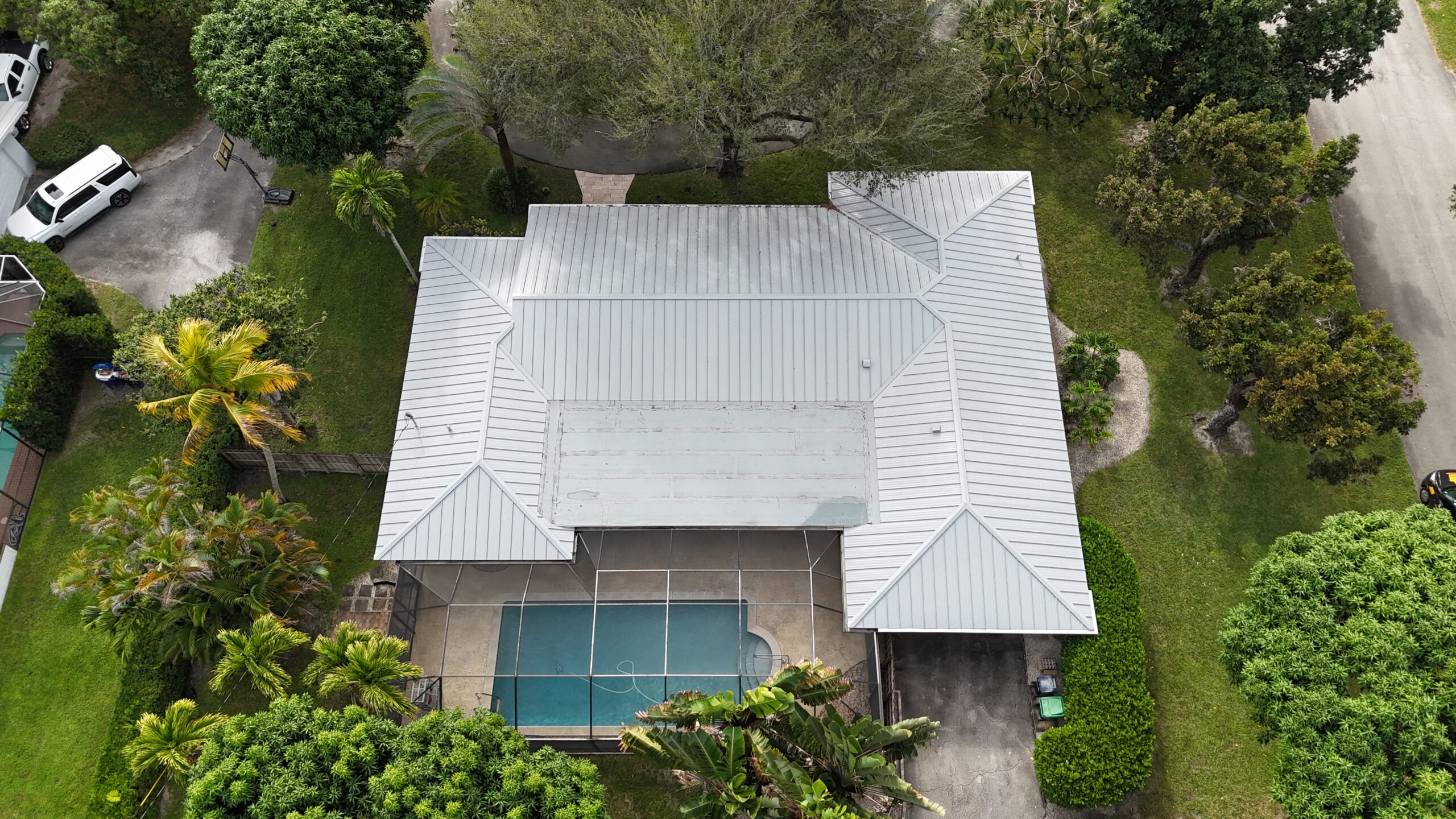
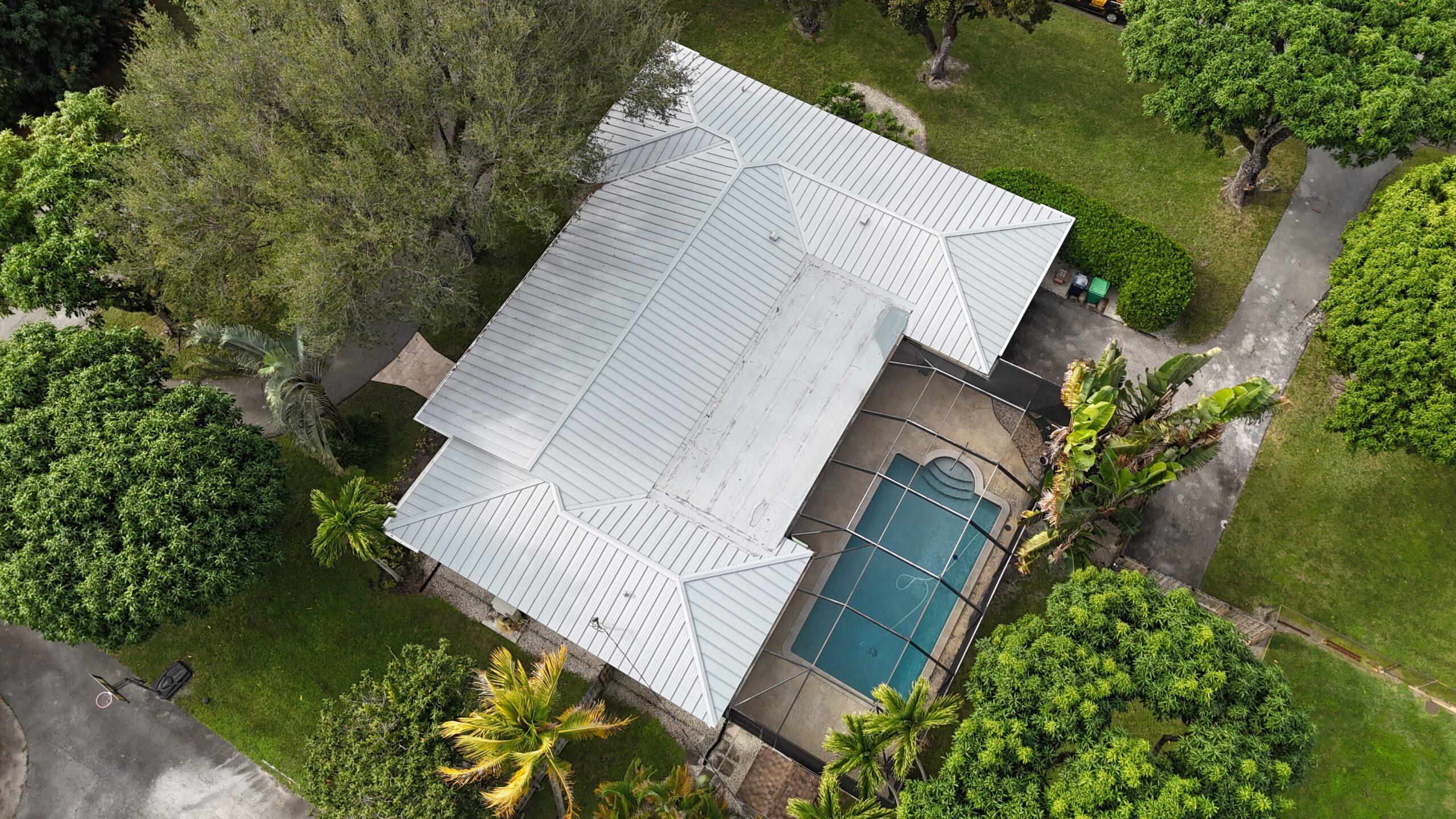
Standing-seam metal is the most common upgrade path for South Florida homeowners moving off shingles. The panels run from the eave to the ridge in one continuous piece — no horizontal seams where water or wind can find a weakness. That structural continuity is a meaningful hurricane advantage.
Stone-coated metal tile (Westlake / Unified Steel) carries a lifetime warranty with no named-storm clauses and no saltwater exclusion clauses per manufacturer warranty terms — compare that to some competitors whose warranties are voided if a named storm makes landfall in your county.
For homeowners weighing roofing options in South Florida, understanding these distinctions before signing a contract is essential. The cheapest per-square number on the quote sheet rarely reflects total cost of ownership over 20 or 30 years.
Side-by-Side Comparison
Metal Roof vs. Other Roofing Types: Which Lasts Longest in Florida?
When comparing roofing materials for Florida homes, four factors matter most: lifespan, wind resistance, insurance impact, and total cost of ownership. Here is how the major categories compare.
| Factor | Asphalt Shingle | Standing-Seam Metal | Concrete Tile |
|---|---|---|---|
| Avg. FL Lifespan | 12–15 yrs | 40–70 yrs | 30–50 yrs |
| Wind Resistance | Moderate | Excellent (clip system) | Good (poly-set foam installs) |
| Insurance Impact | Standard | Wind-mit reduction potential | Wind-mit reduction potential |
| Salt-Air Durability | Moderate | Excellent (with coastal finish) | Good |
| Maintenance | Regular inspection | Minimal after install | Periodic tile checks |
| Cost per Square | $750–$850 | $1,050–$1,300 | $1,000–$1,350 |
When concrete tile or asphalt shingle is a better fit
Metal roofing is not the universal answer. If your HOA requires a specific tile profile and Florida SB 293 does not apply to your situation, concrete or clay tile may be your required path. If your budget is constrained and you need the lowest possible upfront cost, shingles deliver that — just with the understanding that replacement will come sooner in the Florida climate.
Why It Matters Who Installs It
License Breadth Means Structural Issues Don’t Stall Your Project
A licensed contractor, not a lead aggregator.
Metal roofing in Miami-Dade frequently uncovers structural surprises: rotted decking, undersized hurricane straps, or framing that does not meet current code. When the contractor doing your roof also holds a Certified General Contractor license, those structural modifications — adding or upgrading hurricane straps, repairing decking, addressing code-driven structural scope — can be handled in-house under a single permit pull. You do not need a second contractor, a second permit, or a second schedule.
“In Miami-Dade, a metal roof install is rarely just a roof install. Decking condition, strap specs, and code compliance all come into play. Having the GC license means we handle all of it — one team, one permit, one point of accountability.”
Founder & President, Bigfoot Windows & Roofing
What We Install
The Metal Roofing Systems Bigfoot Recommends for Florida Homes
Bigfoot Windows & Roofing installs Englert or Metal Alliance standing-seam metal roofing, roll-formed on-site from 24-gauge Galvalume or aluminum with a multi-coat proprietary paint system. Panels are fabricated as one continuous piece from eave to ridge — no horizontal seams. The clip system uses the manufacturer’s approved clips, at the spacing its product approval specifies. That clip specification is load-tested and NOA-documented; knockoff clips are not.
For stone-coated metal tile, we use Westlake and Unified Steel products. Unified Steel carries VSH (Very Severe Hail) ratings and a lifetime warranty with no named-storm or saltwater exclusion clauses per manufacturer warranty terms — a meaningful distinction for coastal South Florida homeowners.
GAF shingle systems are available for homeowners who need the lower upfront cost of shingles. Our GAF Certified Plus certification means we can offer the System Plus warranty per GAF manufacturer terms: 50 years, non-prorated, covering shingles, labor, tear-off, and accessories. For standing seam, warranty terms come from the panel manufacturer on your project (Englert or Metal Alliance) and are listed on your proposal. Neither warranty claim changes the fundamental lifespan reality: metal simply lasts longer in Florida conditions.
Wondering about financing options for a new roof? PACE financing lets qualifying homeowners pay through their property tax bill rather than a lump sum, with no credit score impact and no prepayment penalty.
The Install Process
What to Expect: Metal Roof Installation in Miami-Dade
- Free estimate and scope review. We measure, assess decking condition, check strap specs, and confirm what the permit will require before any contract is signed.
- Permit pull. In Miami-Dade, a roofing permit is always required for a full replacement. We handle the permit application; you do not chase the building department.
- Tear-off and deck inspection. Once the existing roof is removed, the deck is inspected for rot, moisture damage, and structural issues. If hurricane straps need upgrade, our Certified General Contractor license covers that scope in the same permit.
- Underlayment installation. We install a peel-and-stick secondary water barrier. Under the 2024 Florida Building Code, full-deck peel-and-stick may qualify for a secondary water barrier discount on qualifying insurance policies — 30-lb felt does not.
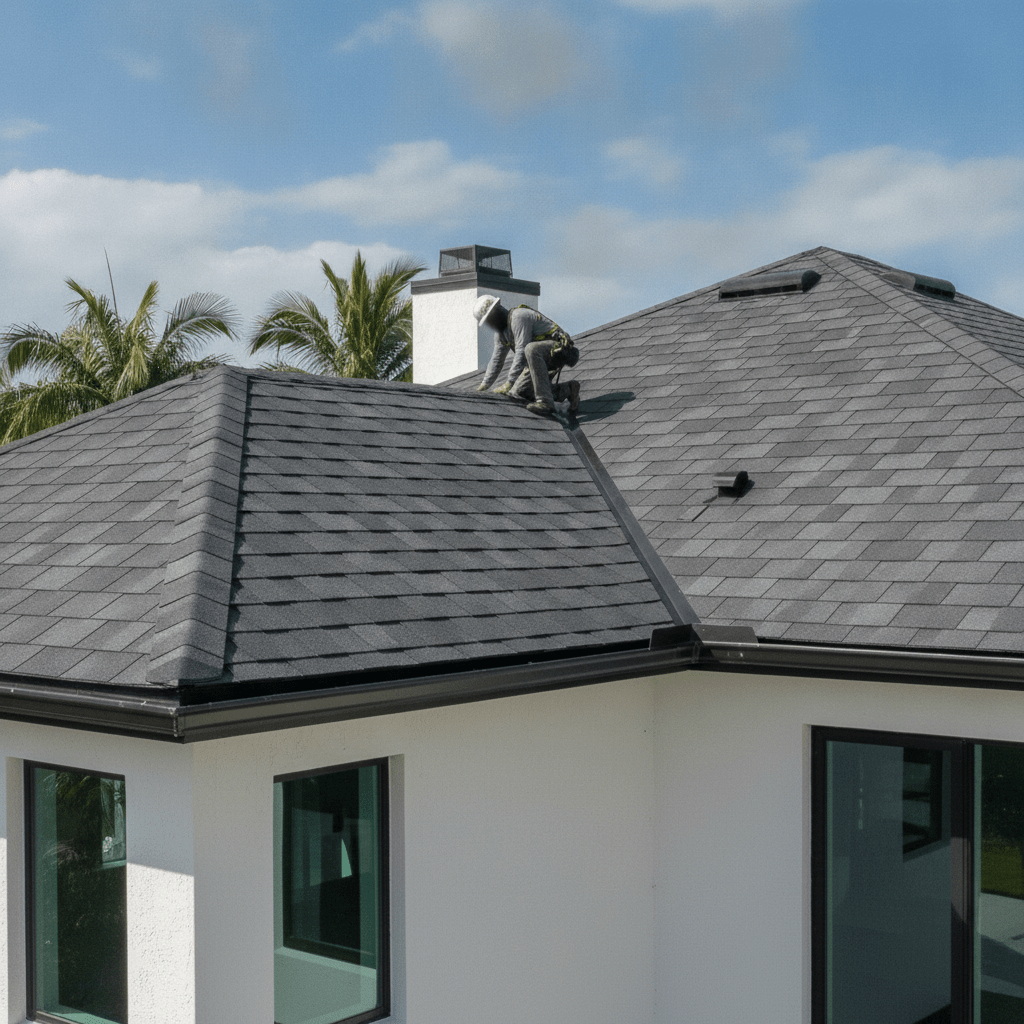
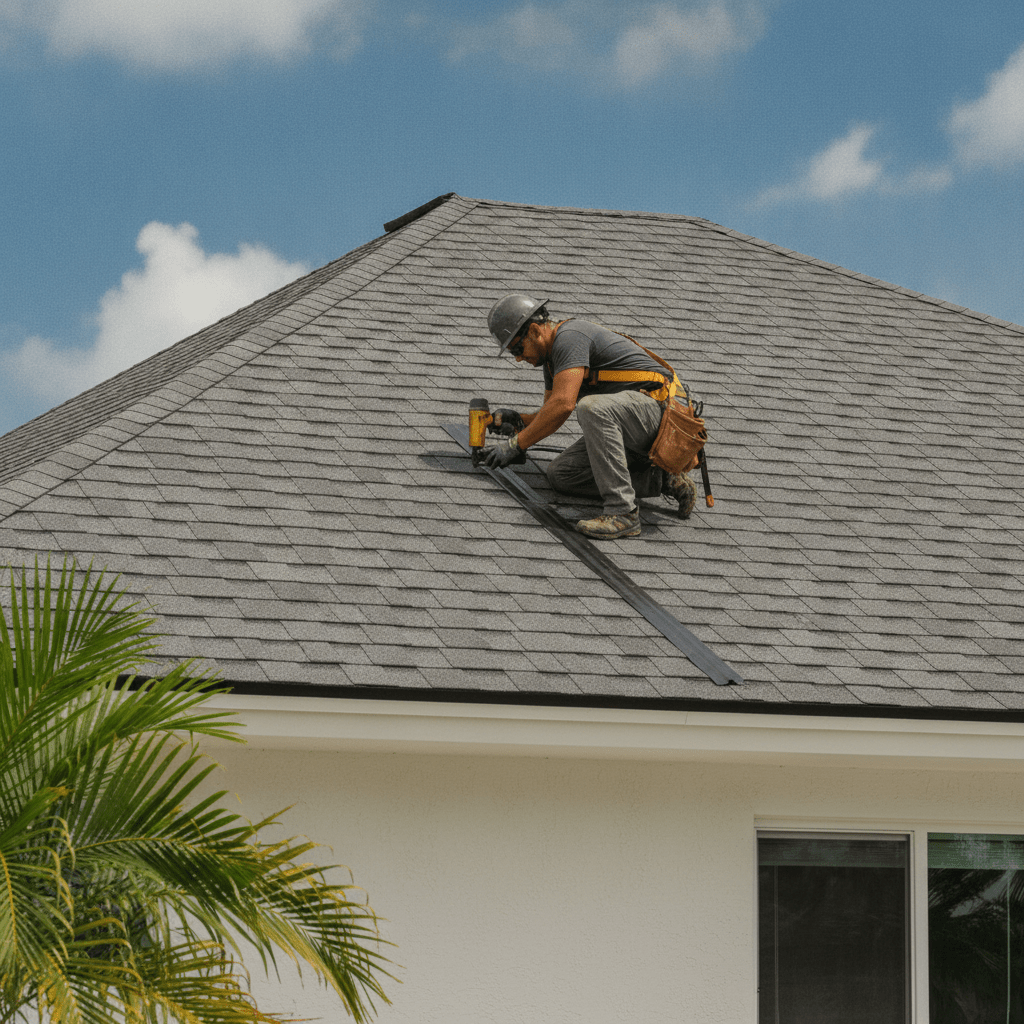
- Panel installation. Englert or Metal Alliance panels are roll-formed on-site to the exact length needed, installed clip-to-clip per the NOA specification.
- Final inspection. The building inspector closes the permit. You receive permit documentation, warranty paperwork, and a wind mitigation report to submit to your insurer.
Ready to stop replacing your roof every 12 years?
Get a roofing estimate online Call 786-886-2088
Schedule Your Free Estimate
Ready to get started? Request a free estimate — no phone call required.
Related Articles
Who We’re Not the Right Fit For
- Lowest-bid-only shoppers. Metal roofing costs more upfront than asphalt shingles. If the single deciding factor is the lowest number on the quote, we are probably not the right fit — and we will tell you that honestly rather than cut corners to win the bid.
- Projects outside Miami-Dade, Broward, and Palm Beach Counties. We serve South Florida. If your property is outside our service area, we would rather point you toward a qualified local contractor than stretch our team too thin.
- Homeowners who want decisions made for them without explanation. We walk every homeowner through the scope, the permit, and the cost drivers. If you prefer a contractor who just shows up and starts, that is a different operating style than ours.
- Emergency same-day installs. A permitted metal roof installation in Miami-Dade requires a permit pull and inspection schedule. If you need a roof on your home in 24 hours, we cannot safely and legally do that — no reputable contractor can.
Frequently Asked Questions
How long does a metal roof last in Florida?
A properly installed standing-seam metal roof in Florida typically lasts 40 to 70 years. Stone-coated metal tile carries a lifetime warranty. Both significantly outlast asphalt shingles, which average 12–15 years in South Florida’s heat and hurricane conditions. Actual longevity depends on clip system quality, underlayment, and installation workmanship — particularly in Miami-Dade’s HVHZ, where code compliance is stricter than the rest of the state.
How long does a roof last in Florida generally?
It depends on the material. Asphalt shingles average 12–15 years in South Florida. Concrete tile lasts 30–50 years. Metal roofing lasts 40–70 years or more. Clay tile can last 50+ years but requires structural support evaluation due to weight. Florida’s climate — intense UV, salt air, heavy rain cycles, and hurricane-force winds — accelerates wear on all materials compared to cooler, drier climates.
How long do tile roofs last in Florida?
Concrete tile roofs in Florida typically last 30–50 years. Clay tile can last 50 years or more. The tile itself is durable, but the underlying system — underlayment, mortar or foam, and fasteners — often needs attention before the tile itself fails. Citizens Insurance has flagged older tile roofs for non-renewal based on the age of the system, not just the tile surface. Regular inspections help identify underlayment issues before they become full replacements.
Are metal roofs good in Florida?
Yes — metal roofs are well-suited to Florida’s climate when installed correctly. Standing-seam systems with NOA-stamped clips perform well in high-wind events. They shed water efficiently, resist UV degradation better than shingles, and do not absorb moisture. In coastal areas, a Kynar-based or marine-grade finish prevents salt-air corrosion. The key qualifier is installation quality: non-compliant clips or unapproved underlayment will cause underperformance and may fail inspection.
How much does a new roof cost in Florida?
Cost varies by material and roof complexity. Rough ranges per square (100 sq ft installed): asphalt shingle $750–$850; standing-seam metal $1,050–$1,300; metal tile $1,175–$1,400; concrete tile $1,000–$1,350. Factors that push cost higher include roof pitch, decking replacement needs, permit complexity, and coastal finish requirements. PACE financing is available for qualifying homeowners — payments go through your property tax bill rather than a bank loan.
Can my HOA block me from installing a metal roof?
Under Florida SB 293, HOAs generally cannot prohibit homeowners from installing metal roofing or impact windows. The law limits HOA authority to restrict these improvements when they are otherwise permitted by local code. That said, HOAs may still regulate color and profile to maintain community aesthetics. If your HOA has raised objections, reviewing the specific language of SB 293 with your attorney is the right next step before assuming the HOA’s position is final.
Does a new metal roof lower my homeowners insurance premium?
A new metal roof can reduce your wind mitigation score, which many insurers use to calculate premium. The extent of the reduction depends on your insurer, your policy, and the results of a wind mitigation inspection. I have seen customers see significant premium reductions after installing a metal roof, adding a peel-and-stick secondary water barrier, and requesting a new wind mitigation inspection — but specific savings figures vary and we cannot guarantee any particular outcome for your policy.
Call Bigfoot Windows & Roofing at 786-886-2088 or Request a Free Estimate.