Florida Approved Metal Roofing | Bigfoot Windows & Roofing
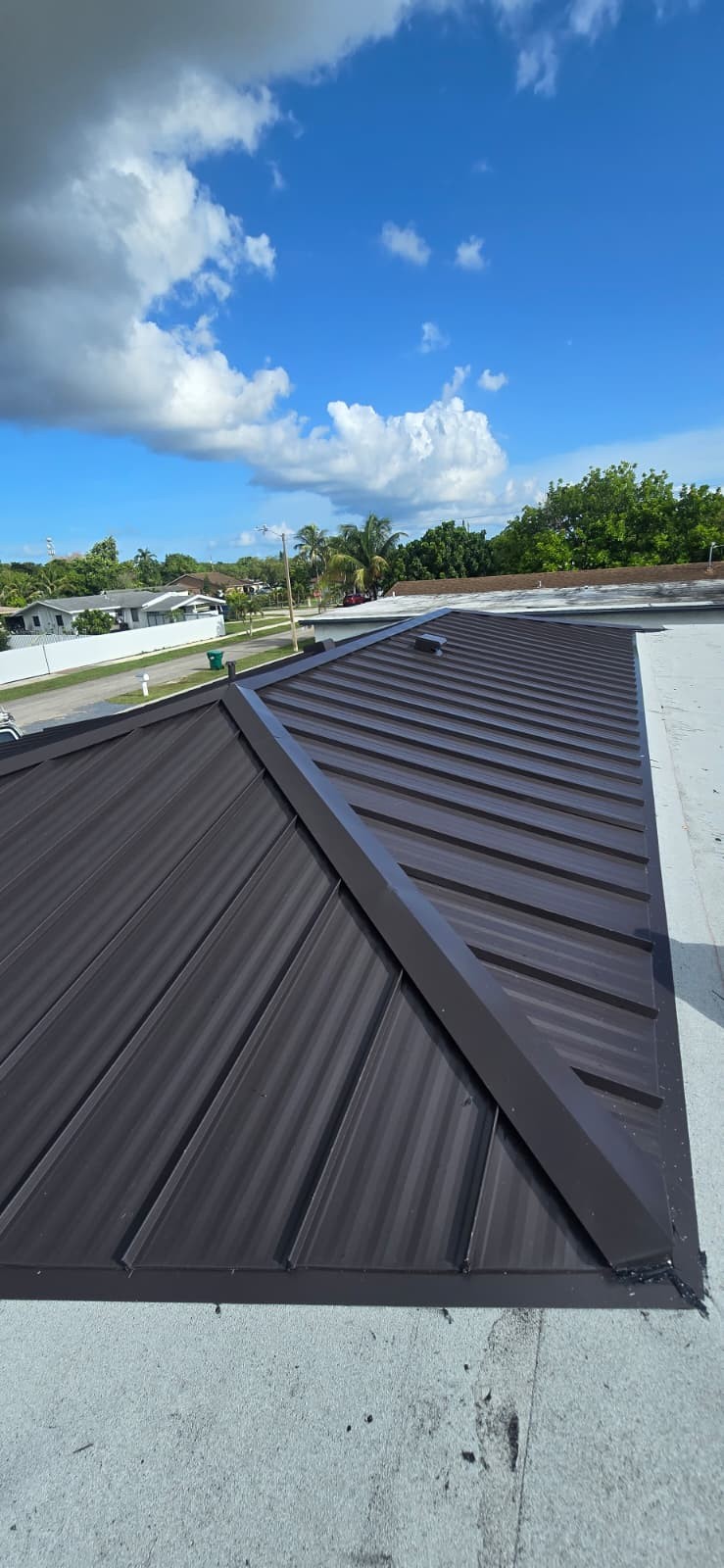
Florida-approved metal roofing means the system has passed mandatory third-party wind, water, and structural tests and holds either a Florida Product Approval (FL Number) or — for Miami-Dade and Broward — a Miami-Dade Notice of Acceptance (NOA). Without one of these credentials, a metal roof cannot be legally permitted or installed under the Florida Building Code anywhere in the state.
Updated August 2026
Key Takeaways
- Florida Product Approval (FL Number) is the statewide baseline; a Miami-Dade NOA is the higher bar required in the HVHZ.
- Standing seam and metal tile profiles can both qualify — but only when the specific tested system, clip, gauge, and underlayment match the approval document exactly.
- A Florida-approved metal roof qualifies for wind mitigation credits that can meaningfully reduce Citizens Property Insurance premiums — but actual savings depend on your insurer and inspection results.
- You can verify any product’s approval status free in 60 seconds using the Florida Building Commission Product Approval database at floridabuilding.org.
- Bigfoot installs Englert or Metal Alliance standing seam panels roll-formed on-site from 24-gauge Galvalume or aluminum — a system with active HVHZ-compliant approvals.
The Problem
Why “Florida-Approved” Is Not a Marketing Phrase — It’s a Legal Requirement
Homeowners in Miami-Dade and Broward face the strictest building codes in the United States. Getting the approval credentials wrong can mean a failed inspection, a rejected insurance claim, or a tear-off-and-redo at full cost.
Every year, South Florida homeowners sign contracts for metal roofing, the crew shows up, and the inspector fails the job — not because of shoddy installation, but because the product itself did not carry the correct approval for that jurisdiction. A roofing product can hold a statewide Florida Product Approval and still be ineligible for installation in Miami-Dade County without a separate Miami-Dade Notice of Acceptance. These are two distinct credential pathways, and confusing them is an expensive mistake.
The Florida Building Code 8th Edition (2023) requires that every roofing system — including all metal profiles — carry documented product approval before a permit can be issued. In the High-Velocity Hurricane Zone (HVHZ), which covers all of Miami-Dade and Broward counties, the standard is even more demanding: products must meet Miami-Dade’s own testing protocol, and only products listed in the Miami-Dade NOA database or covered by a Florida Product Approval that covers HVHZ use satisfy that requirement for HVHZ installations.
South Florida Context
HVHZ, Florida Building Code, and Why Miami-Dade Plays by Different Rules
The High-Velocity Hurricane Zone designation exists because Miami-Dade and Broward have a documented history of catastrophic wind damage that exceeds the risk modeled for most of Florida. After Hurricane Andrew in 1992 exposed critical weaknesses in roofing product performance, Miami-Dade adopted its own testing program that runs parallel to — and is stricter than — the Florida statewide system.
Under the statewide Florida Product Approval system administered by the Florida Building Commission, a product receives an FL Number after passing tests recognized by the FBC — including ASTM E1592 (structural performance for metal roof panels under uniform load), TAS 100 (wind uplift resistance), and TAS 110 (impact resistance where required). These tests are conducted by accredited third-party laboratories, and the results are submitted to the state. A product with a current Florida Product Approval (FL number) that covers HVHZ use is legal to install in Miami-Dade and Broward. A Miami-Dade NOA is an additional certification some products also carry; it is not required for the permit.
In the HVHZ, the Miami-Dade Building Department requires a Miami-Dade NOA or a Florida Product Approval that covers HVHZ use. An NOA is issued only after Miami-Dade’s Product Control Division reviews testing data, evaluates the full installation assembly (panel, clip, substrate, underlayment), and confirms the system meets HVHZ wind-uplift pressures. An NOA is not interchangeable with a statewide FL Number — they are separate documents, and Miami-Dade inspectors check the approval number on file (an NOA, or an FL number that covers HVHZ use).
If you are replacing a roof in Miami-Dade or Broward, you must confirm that the metal roofing system your contractor proposes holds an active NOA or a Florida Product Approval that covers HVHZ use — and that the approval covers the exact clip type, gauge, panel width, and underlayment your contractor intends to install. A product can hold an NOA for a 24-gauge manufacturer-approved clip system but not for a substitute or knockoff clip. That distinction alone determines whether your job passes or fails inspection.
How Approvals Actually Work
Florida Product Approval vs. Miami-Dade NOA: A Plain-English Breakdown
| Factor | Florida Product Approval (FL Number) | Miami-Dade NOA (Accepted, Not Required, in HVHZ) |
|---|---|---|
| Issuing authority | Florida Building Commission | Miami-Dade Product Control Division |
| Jurisdiction | Statewide (including HVHZ when it covers HVHZ use) | Miami-Dade & Broward (HVHZ) |
| Key test standards | ASTM E1592, TAS 100, ASTM E1646 | TAS 100, TAS 110, TAS 125, PA 201/203 |
| Assembly specificity | Panel + fastener pattern | Full system: panel + clip + substrate + underlayment |
| How to verify | floridabuilding.org (Product Approval search) | miamidade.gov (Product Control NOA search) |
| Can substitute for the other? | Yes, for the permit, when it covers HVHZ use | Distinct documents |
The practical implication: a contractor installing metal roofing in Miami-Dade who pulls up only the statewide FL Number and skips the NOA verification is cutting a corner that will likely surface at inspection. The Miami-Dade Building Department inspectors are specifically trained to check NOA compliance, including verifying that the clip spacing, substrate attachment method, and underlayment type on the job site match the tested assembly described in the NOA document itself.
Which Metal Roofing Profiles Can Qualify for HVHZ?
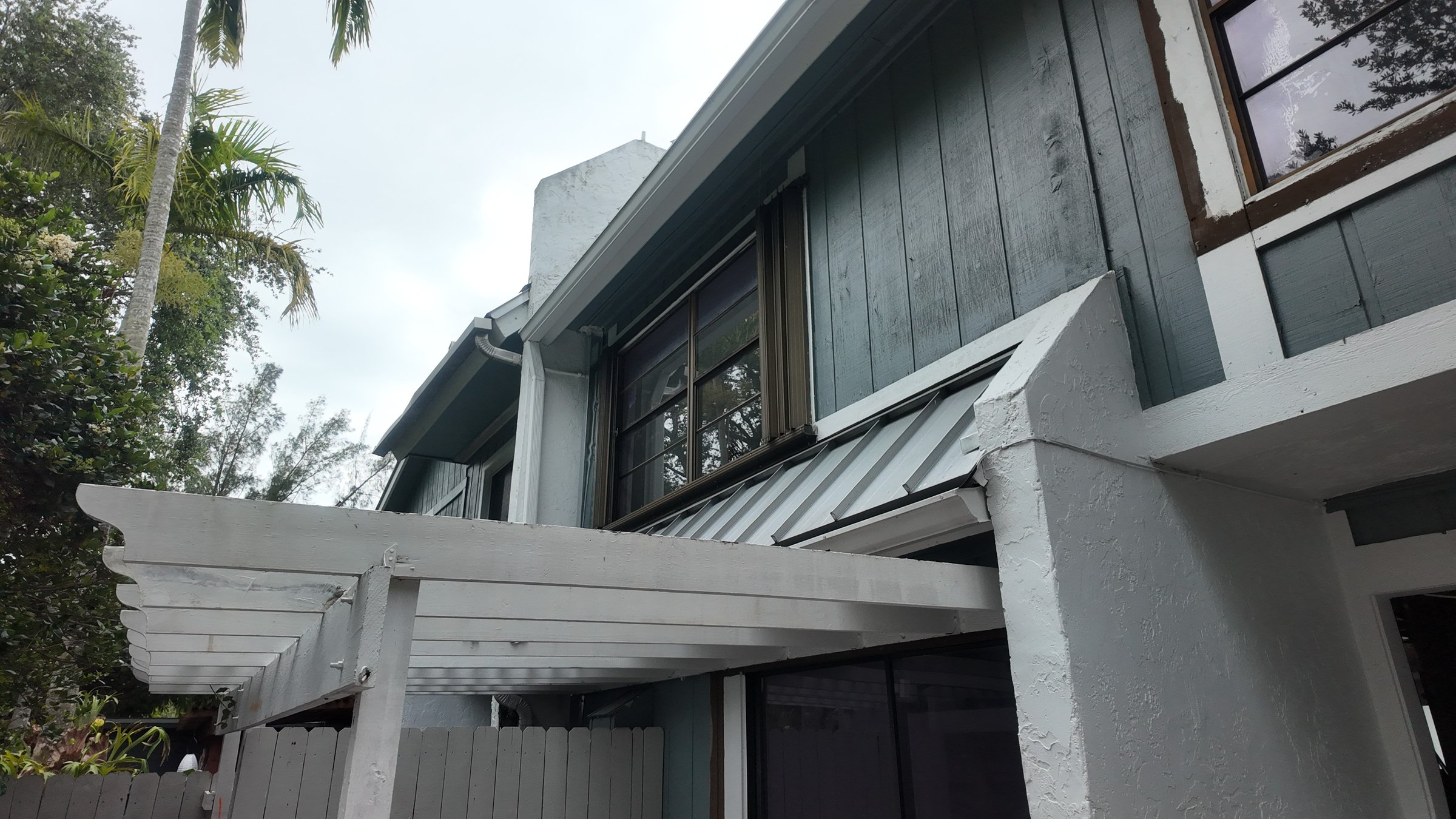
Three broad profile categories are used in South Florida residential metal roofing — each has distinct HVHZ qualification requirements:
| Profile | HVHZ Qualification Path | Common Issue |
|---|---|---|
| Standing seam (concealed fastener) | NOA or FL Number covering HVHZ use for full clip-and-panel assembly; manufacturer-approved clips required where specified | Knockoff clips void the NOA; nail-strip systems not suitable for HVHZ |
| Exposed fastener panels | Fewer NOA-approved systems exist; panel gauge and fastener pattern must exactly match the NOA or FL approval | Oil-canning and long-term fastener seal failure are common non-HVHZ issues |
| Metal tile (stone-coated) | NOA or FL Number depending on product; Westlake / Unified Steel VSH-rated systems available | Named-storm and saltwater exclusion clauses in some competitor warranties — read carefully |
For standing seam specifically, Bigfoot installs Englert or Metal Alliance panels roll-formed on-site from 24-gauge Galvalume or aluminum, using the Kaner multi-coat proprietary paint system. The clip system uses the manufacturer’s approved clips, at the spacing its product approval specifies — this specific assembly is what the approval documents cover. Substitute clips from a different supplier are not covered, and a Miami-Dade inspector will check clip stamps on the job. Panels run in one continuous piece from eave to ridge with no horizontal seams, which is a structural advantage in hurricane-force wind loading.
If you are exploring metal roofing options in Miami-Dade, confirm with your contractor which specific NOA number covers the exact assembly they plan to install — not just the brand name or panel profile.
Approval Verification
How to Look Up a Metal Roof’s Florida Approval Before You Sign a Contract
You do not need to take a contractor’s word for it. Both the statewide and Miami-Dade approval databases are free and publicly searchable.
For statewide Florida Product Approval (FL Number): Go to floridabuilding.org and select “Product Approval.” Search by product category (“Roofing > Metal”) or by the FL Number the contractor provides. Confirm the approval is active (not expired), and that the specific product model, gauge, and installation method match what is proposed for your job.
For Miami-Dade NOA: Go to the Miami-Dade Building Department’s Product Control section (miamidade.gov) and search by NOA number or manufacturer name. The NOA document will specify the tested assembly in detail — panel dimensions, clip type, clip spacing, substrate type, and required underlayment. Compare that specification line by line to your contractor’s proposal. Any deviation from the tested assembly means the approval does not apply to your installation.
What to ask your contractor in writing:
- What is the FL Number or NOA number for the metal roofing system you are installing?
- Does that NOA cover the exact clip, gauge, and underlayment you plan to use on my roof?
- Are you pulling the permit yourself, and will the permit list the NOA number?
A contractor who cannot immediately answer all three questions with specific document numbers is a warning sign.
Why It Matters Who Pulls the Permit
License Breadth and Structural Scope
A licensed contractor, not a lead aggregator — four active Florida licenses covering roofing, windows, doors, and general contracting.
Because Bigfoot holds a Certified General Contractor (CGC1531370) license in addition to the Certified Roofing Contractor (CCC1333168) license, the company can handle structural scope that often surfaces during a metal roof replacement — things like hurricane strap upgrades, decking repairs that expose framing deficiencies, and code-driven structural modifications — without subcontracting those items to a separate crew. That means one permit, one point of accountability, and no scope gaps between trades when structural issues are found mid-project.
“Every job we permit in Miami-Dade, we pull the NOA number ourselves and match it to the exact clip and panel assembly we are installing. If a knockoff clip shows up on my job site, the inspector catches it and my crew rips the roof off. I would rather catch it in my own material check than find out at inspection.”
President, Bigfoot Windows & Roofing
Product & Insurance
Will a Florida-Approved Metal Roof Lower My Homeowner’s Insurance?
A Florida-approved metal roof — particularly a standing seam system with a Miami-Dade NOA — can qualify for meaningful wind mitigation credits on your homeowner’s insurance policy. The credits are documented through a licensed wind mitigation inspection using the OIR-B1-1802 form, which captures the roof covering type, attachment method, roof deck attachment, and secondary water resistance (SWR) feature.
A full-deck peel-and-stick underlayment installation can qualify as an SWR feature on the wind mitigation form, which insurers may credit as a secondary water barrier discount on the hurricane portion of your premium. The actual credit varies by insurer and coverage zone. Confirm eligibility and amount with your carrier after your wind mitigation inspection is completed.
For Citizens Property Insurance policyholders specifically: Citizens has been non-renewing policies on homes with roofs 20 to 25 or more years old. A new metal roof with an active NOA and a current wind mitigation inspection report can stabilize your insurability with Citizens and may meaningfully reduce the hurricane-wind portion of your premium. I have seen customers go from very high annual premiums to significantly lower ones after combining a new metal roof with a wind mitigation inspection and policy shopping — but individual results vary widely, and I cannot promise a specific dollar reduction.
The GAF shingle system Bigfoot installs on qualifying jobs includes the GAF System Plus warranty (50-year non-prorated, covering shingles, labor, tear-off, and accessories) and access to the Wind Proven warranty with no maximum mph cap and a 15-year term that is not voided by named storms in a county. Bigfoot holds GAF Certified Plus certification. Warranty terms come from the panel manufacturer on your project (Englert or Metal Alliance) and are listed on your proposal. Westlake Unified Steel stone-coated metal tile carries a lifetime warranty with no named-storm, saltwater, or act-of-God exclusion clauses.
If you want to explore financing options for a new metal roof, Bigfoot works with PACE financing through Renew Financial — paid through your property tax bill, not a bank loan, with no credit score impact on the application. The My Safe Florida Home grant program also offers matching grant funding of up to $10,000 for qualifying wind-mitigation improvements. Learn more about roof financing options for South Florida homeowners.
The Process
How a Florida-Approved Metal Roof Gets Permitted and Installed in Miami-Dade
- Pre-proposal approval check: We confirm the specific NOA number for the proposed system and verify it covers the exact clip, gauge, panel width, and underlayment for your roof geometry before the proposal is finalized.
- Permit application: The permit application references the NOA number. Miami-Dade Building Department reviews the permit package, which includes the NOA documentation and the installation method statement.
- Material delivery and on-site roll-forming: For Englert or Metal Alliance standing seam, panels are roll-formed on-site to the exact length of each run — no horizontal seams, no site-cut waste. Manufacturer-approved clips are verified on delivery.
- Installation and clip inspection: Clips are installed at specified spacing. If a structural issue surfaces — rotted decking, inadequate hurricane strap connections, or framing damage — the Certified General Contractor license allows us to address it in-house without stopping the job for a separate GC sub.
- Final inspection: Miami-Dade inspector verifies the NOA number on the permit, checks clip stamps, reviews underlayment type, and confirms the assembly matches the tested system. A passing inspection closes the permit.
- Wind mitigation inspection (recommended post-installation): A licensed wind mitigation inspector documents the new roof system using OIR-B1-1802 so you can submit the report to your insurer and apply for any applicable premium credits.
If you are ready to get started, request a free estimate and we will confirm the applicable NOA for your address before we quote.
Questions about which metal roofing system is approved for your Miami-Dade or Broward address?
Who We’re Not the Right Fit For
- Homeowners who need only a basic shingle re-cover at the lowest possible price: Metal roofing requires a full permit, an assembly with a Miami-Dade NOA or a Florida Product Approval that covers HVHZ use, and on-site roll-forming for standing seam. If your primary goal is the cheapest possible covered roof with no regard for wind mitigation credentials, a basic shingle re-cover from a high-volume shingle-only shop will likely cost less. We are straightforward about that.
- Projects outside Miami-Dade, Broward, and Palm Beach counties: Bigfoot’s service area and permit relationships are concentrated in South Florida. We do not service Central or North Florida projects.
- Homeowners who want a flat or low-slope TPO roof only and no metal scope: We install TPO for flat roofing, but if the scope is purely a large commercial flat roof with no residential or mixed-slope component, a commercial roofing specialist may be a better match for that specific project type.
- Homeowners who want us to skip the permit: Every roof replacement in Miami-Dade requires a permit. We do not pull permits selectively or skip the NOA documentation step. If a contractor offers to “save you the permit fee,” that is a liability you will carry, not them.
Common Questions
Frequently Asked Questions
What does Florida-approved metal roofing mean and why does it matter in Miami-Dade?
Florida-approved metal roofing means the system has passed mandatory third-party structural, wind uplift, and water-infiltration tests and holds either a Florida Product Approval (FL Number) for non-HVHZ installations or, for HVHZ installations in Miami-Dade and Broward, a Miami-Dade Notice of Acceptance (NOA) or a Florida Product Approval that covers HVHZ use. Without the correct credential, a Miami-Dade permit cannot be issued and the installation is not code-compliant.
What is the difference between a Florida Product Approval and a Miami-Dade NOA for metal roofing?
A Florida Product Approval (FL Number) is issued by the Florida Building Commission and is valid statewide except in the HVHZ. A Miami-Dade NOA is issued by Miami-Dade’s Product Control Division after separate, stricter testing and covers the full installation assembly — panel, clip, gauge, substrate, and underlayment. A product with a current Florida Product Approval (FL number) that covers HVHZ use is legal to install in Miami-Dade and Broward. A Miami-Dade NOA is an additional certification some products also carry; it is not required for the permit.
Which metal roofing systems have a Miami-Dade NOA for high-velocity hurricane zones?
Standing seam concealed-fastener systems with manufacturer-approved clips, certain stone-coated metal tile systems (Westlake / Unified Steel VSH-rated lines), and select exposed-fastener panels with specific gauge and fastener-pattern documentation can hold active Miami-Dade NOAs. The NOA is product- and assembly-specific — the same panel brand with a different clip or gauge may not be covered. Always ask for the exact NOA number before signing a contract.
Will a Florida-approved metal roof lower my homeowner’s insurance in South Florida?
A new Florida-approved metal roof qualifies for wind mitigation credits documented through a licensed OIR-B1-1802 inspection, which can reduce the hurricane-wind portion of your premium. A full-deck peel-and-stick underlayment may also qualify as a secondary water barrier credit. Actual savings depend on your insurer, current coverage zone, and inspection results — no specific dollar reduction can be guaranteed without a completed wind mitigation inspection report.
How do I look up a metal roof’s FL Product Approval number before my contractor installs it?
Go to floridabuilding.org and use the Product Approval search tool. Filter by category (Roofing > Metal) or enter the FL Number your contractor provides. For Miami-Dade NOA verification, search the Miami-Dade Building Department’s Product Control database at miamidade.gov. Both databases are free and publicly accessible. Confirm the approval status is active and the listed assembly matches exactly what your contractor proposes to install.
What wind speed rating does metal roofing need to meet the Florida Building Code in Miami-Dade?
Miami-Dade’s HVHZ requires that roofing systems meet the design wind pressures calculated for the specific building, which are determined by roof geometry, mean roof height, and exposure category under the Florida Building Code. The NOA document lists the wind-uplift pressure ratings the tested assembly achieved. Your permit set will include a wind load calculation — the selected metal roof system’s NOA must meet or exceed those calculated pressures at every roof zone (field, edge, and corner).
Can I finance a new Florida-approved metal roof installation?
Yes. Bigfoot works with PACE financing through Renew Financial, which is repaid through your property tax bill rather than a bank loan. Applying does not affect your FICO credit score, and there is no prepayment penalty. The My Safe Florida Home grant program also offers up to $10,000 in matching grant funding for qualifying wind-mitigation improvements. For qualifying property owners, there may be tax benefits available — please consult your CPA.
Schedule Your Free Estimate
Ready to get started? Request a free estimate — no phone call required.
Related Reading
More South Florida Roofing Guides
Related Articles
Sources
- Florida Building Commission Product Approval database — floridabuilding.org
- Miami-Dade Product Control NOA database — miamidade.gov
- Florida Building Code 8th Edition (2023) — floridabuilding.org
- My Safe Florida Home grant program — mysafeflhome.com
- Renew Financial PACE eligibility — renewfinancial.com
- Florida OIR Wind Mitigation form OIR-B1-1802 — floir.com
Ready to verify your metal roofing approval options for your Miami-Dade or South Florida home?
Call Bigfoot Windows & Roofing at 786-886-2088 or request a free estimate — we confirm the applicable NOA before we quote.