Florida Roof Program Guide | Bigfoot Windows & Roofing
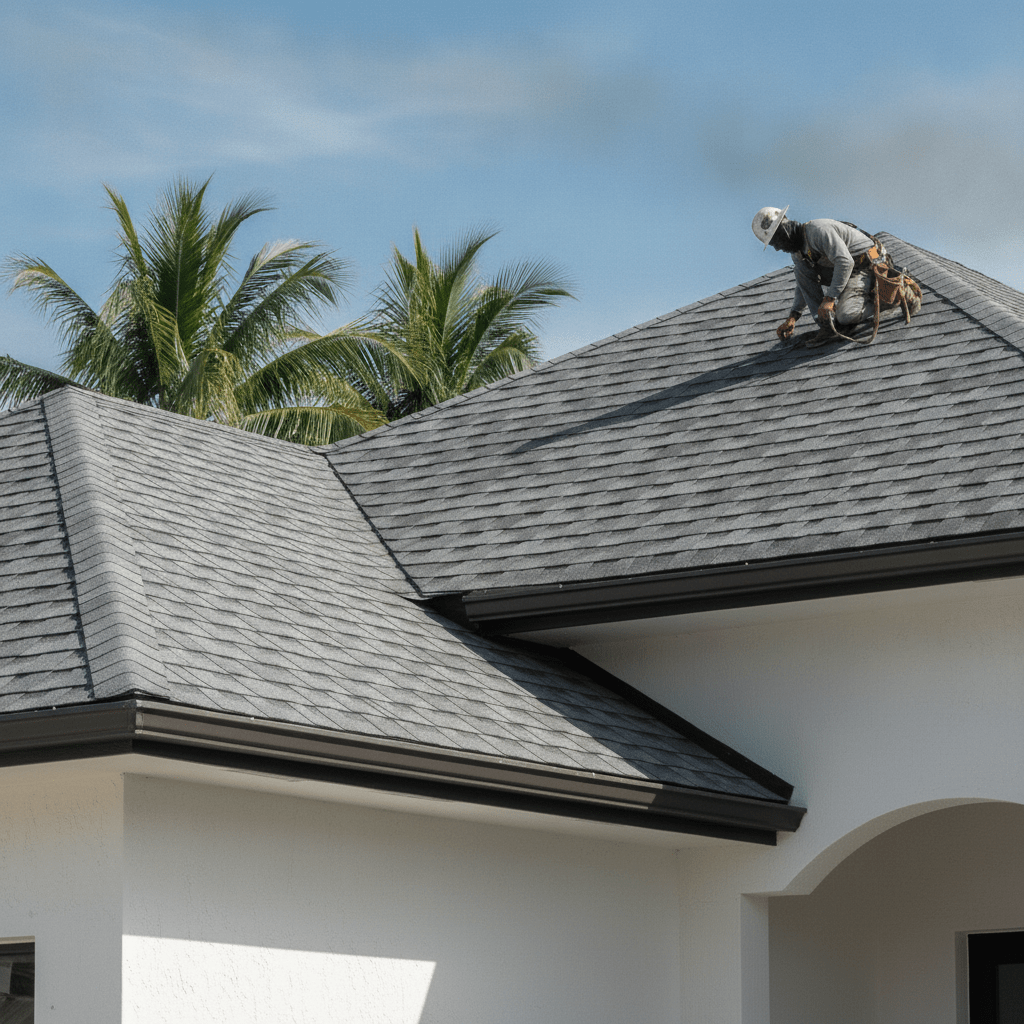
The primary Florida roof program available to homeowners today is the My Safe Florida Home Program. It offers a free wind mitigation inspection and, for eligible homeowners, a matching grant of up to $10,000 toward hurricane-hardening improvements including roof replacement. Miami-Dade and Broward homeowners can apply, but HVHZ requirements apply to all approved materials.
Updated September 2026
Key Takeaways
- The My Safe Florida Home Program offers up to $10,000 in matching grants for qualifying roof work.
- A free wind mitigation inspection is the required first step — results feed your OIR-B1-1802 form.
- Miami-Dade and Broward fall under HVHZ, which requires Florida Product Approval or Miami-Dade NOA for all roofing materials.
- Insurance premium reductions are possible after a qualifying roof replacement and wind mit report.
- Contractor credentials matter: verify your roofer holds a Certified Roofing Contractor license through DBPR before signing anything.
The Problem
Why Homeowners Are Confused About Florida Roof Programs
Old programs, discontinued grants, and conflicting contractor claims make this harder than it should be.
If you’ve searched “Florida roof program” recently, you’ve probably hit a wall of outdated information. Older programs — including a prior Florida Division of Emergency Management roof program tied to federal disaster relief — are no longer accepting applications. The My Safe Florida Home Program, which is funded through the state legislature and administered by the Florida Department of Financial Services, is the current active program. It has reopened and closed in funding cycles, so checking current availability at mysafeflhome.com is the only reliable way to confirm open enrollment.
The second major source of confusion is HVHZ. Miami-Dade and Broward counties sit inside the High-Velocity Hurricane Zone under Florida Building Code Chapter 15, the strictest residential building code in the United States. Not every roofing material approved elsewhere in Florida meets HVHZ standards — and installing a non-compliant product can cost you your grant, your permit, and potentially your insurance coverage.
Local Context
What HVHZ Means for Miami-Dade and Broward Homeowners
The rules here are stricter — and grant-eligible materials must meet the higher bar.
Miami-Dade and Broward counties operate under the High-Velocity Hurricane Zone provisions of the Florida Building Code. That means every roofing product — shingles, metal panels, tile — must carry either a Florida Product Approval (FL number) that expressly covers HVHZ use, or a Miami-Dade Notice of Acceptance (NOA). A product with a current Florida Product Approval covering HVHZ use is legal to install in Miami-Dade and Broward. A Miami-Dade NOA is an additional certification some products also carry; it is not required for the permit.
For the My Safe Florida Home Program, this matters because the approved contractor must document that installed materials meet code before the state releases grant funds. If your contractor uses a product that lacks HVHZ coverage, the grant can be clawed back or denied at final inspection. Always ask your contractor to confirm the FL number or NOA for any proposed material before work begins.
| County | HVHZ? | Approval Required | Permit Required? |
|---|---|---|---|
| Miami-Dade | Yes | FL# (HVHZ scope) or NOA | Yes — always |
| Broward | Yes | FL# (HVHZ scope) or NOA | Yes — always |
| Palm Beach | No | Florida Product Approval | Yes — always |
| Rest of Florida | No | Florida Product Approval | Yes — always |
How the Program Works
My Safe Florida Home Program: Step-by-Step for Roof Replacement
From free inspection to grant check — here is how the process unfolds.
Step 1: Apply and request a free wind mitigation inspection. The program offers a free inspection of your home by a state-approved inspector. The inspector evaluates your roof covering, roof deck attachment, roof-to-wall connections (hurricane straps), opening protection, and other factors that affect how your home performs in a hurricane.
Step 2: Receive your inspection report and OIR-B1-1802 form. The OIR-B1-1802 is Florida’s standard wind mitigation form. Insurers use it to calculate your premium discount. The program uses it to determine what improvements would generate the greatest mitigation benefit. In Miami-Dade, inspectors pay particular attention to roof deck attachment (nail size, spacing, penetration depth) and the presence or absence of secondary water barriers — because those two factors drive the largest insurance credits under Florida law.
Step 3: Receive a grant award letter and select an approved contractor. If your home qualifies for a grant, you receive an award letter specifying the approved scope of work and the grant amount. The program is structured as a dollar-for-dollar match — meaning, as a general estimate, a homeowner receiving the maximum grant would contribute a roughly equal amount toward the total project cost. Verify the exact match ratio and any project-cost caps with the program at mysafeflhome.com, as these terms can shift between funding cycles. You must use a contractor who is registered with the program and holds the appropriate Florida license.
Step 4: Complete the work and pass final inspection. Once work is done, the program’s inspector returns to verify the improvements match the approved scope and meet the Florida Building Code — including HVHZ requirements in Miami-Dade and Broward. Grant funds are released after this inspection passes.
Bigfoot Windows & Roofing holds a Certified Roofing Contractor license (CCC1333168) and a Certified General Contractor license (CGC1531370). That second license matters when a roof project also surfaces structural issues: if the inspector finds that hurricane straps are missing or inadequate, structural repairs — including strap upgrades — can be handled in-house under the same permit set rather than requiring a separate contractor and a separate mobilization. That is a structural advantage for homeowners pursuing grant-funded work, where timeline coordination directly affects fund disbursement.
Program Comparison
Florida Roof Program Options at a Glance
Understanding which programs are active, what they fund, and who qualifies.
| Program | Status | Max Benefit | Miami-Dade Eligible? | Roof Replacement? |
|---|---|---|---|---|
| My Safe Florida Home (MSFH) | Active (funding cycles) | $10,000 matching grant | Yes | Yes (when inspection-supported) |
| My Safe Florida Home — Free Inspection Only | Active | Free wind mit report | Yes | No — inspection only |
| PACE Financing (Renew Financial etc.) | Active — not a grant | Full project cost financed | Yes | Yes |
| Citizens Insurance Roof Discount (via wind mit) | Active — not a grant | Varies by OIR-B1-1802 result | Yes | No — premium reduction only |
| Prior FDEM Disaster Relief Roof Programs | Closed / Discontinued | N/A | N/A | N/A |
The My Safe Florida Home Program is the only active state grant program specifically for roof hardening. PACE financing is a separate tool — it is paid back through your property tax bill, not a bank loan — and it can be stacked with the grant in some cases. Note that PACE requires separate applications if you are combining roofing and window scopes.
If you’re a Citizens Insurance policyholder exploring financing options, a qualifying roof replacement combined with a new wind mitigation report can meaningfully reduce your annual premium. The exact reduction depends on the specific improvements documented on the OIR-B1-1802 form — inspectors and insurers, not contractors, control that calculation. We have seen homeowners in South Florida achieve significant premium reductions after a new roof, wind mitigation report, and policy review, though individual outcomes vary.
Contractor Credentials
How to Verify a Roofing Contractor for the Florida Roof Program
A licensed contractor, not a lead aggregator — here is what the license check looks like.
The My Safe Florida Home Program requires that approved contractors hold an active Florida roofing license. You can verify any contractor’s license at the Florida Department of Business and Professional Regulation (DBPR) at www2.myfloridalicense.com. Search by license number or business name. Look for: license type (Certified Roofing Contractor or Certified Residential Contractor), active status, and no open disciplinary actions.
“When a homeowner is chasing a state grant, the last thing they need is a permit delay because the contractor’s license doesn’t cover structural scope. We hold both the roofing and general contractor license — if we find missing hurricane straps during tear-off, we handle it in-house.”
Founder & President, Bigfoot Windows & Roofing
HVHZ-Approved Materials
Which Roofing Materials Qualify Under HVHZ and the Florida Roof Program?
Material choice determines whether your project passes HVHZ inspection and grant final review.
Not every roofing product sold in Florida meets HVHZ standards. Here is how the main categories break down for Miami-Dade and Broward homeowners pursuing grant-funded work:
GAF Architectural Shingles (peel-and-stick system): GAF’s Layer Lock shingle system, installed over a full-deck peel-and-stick underlayment, qualifies as a secondary water barrier for insurance purposes. The GAF Wind Proven warranty has no maximum mph cap and is not voided by named storms. Bigfoot Windows & Roofing is a GAF Certified contractor. Verify that the specific shingle product carries HVHZ-scope Florida Product Approval before ordering — not all GAF products carry it. Installed cost typically runs $750–$850 per square (per 100 sq ft) in South Florida, per Bigfoot’s 2026 pricing guidance.
Englert Standing Seam Metal: Englert panels are roll-formed on-site from 24-gauge C4 steel. The clip system — Englert-stamped 6-inch clips at ridge and eave, 2-inch clips in the field — allows thermal movement without oil canning or buckling. Panels run one continuous piece bottom-to-top, eliminating horizontal seams. Installed cost typically runs $1,050–$1,300 per square, per Bigfoot’s 2026 pricing guidance. Metal roofing in the right conditions lasts 40–50 years or more.
Westlake Concrete Tile: Westlake’s Saxony 900 flat tile and Barcelona barrel tile are popular in South Florida’s HOA communities. Poly-set foam adhesive attachment is rated to 180 mph in South Florida conditions. Installed cost typically runs in the range of $1,000–$1,350 per square, per Bigfoot’s 2026 pricing guidance — concrete tile sits at the lower end of that range, while clay and complex roof geometries push toward the upper end. Note that tile underlayment typically needs replacement every 20–25 years even when the tile itself remains intact.
For any material, confirm the FL number covers HVHZ use before work begins. Your contractor’s permit application will specify the approval document — if they can’t produce it on request, that is a warning sign.
Working With Bigfoot
How Bigfoot Handles Grant-Eligible Roof Replacements in Miami-Dade
From inspection coordination to final permit sign-off — what the process looks like on our end.
When a homeowner contacts us about the My Safe Florida Home Program, the first question we ask is whether they have already had their free wind mitigation inspection. If not, we walk them through the application process at mysafeflhome.com before discussing any specific product or scope.
Once the inspection report is in hand, we review it together. The OIR-B1-1802 tells us what the inspector found on roof deck attachment, secondary water barrier, roof-to-wall connection, and opening protection. That report shapes the scope — we don’t recommend work that the inspection doesn’t support, because the grant only covers improvements tied to documented deficiencies.
Permit submission follows scope agreement. Miami-Dade Building Department permit review typically takes two to six weeks for standard residential roof replacement projects. We track permit status and coordinate with the program’s final inspector — the homeowner doesn’t have to manage that handoff.
If tear-off reveals that hurricane straps are missing or undersized, Bigfoot handles strap upgrades in-house under the Certified General Contractor license (CGC1531370), allowing structural work to proceed under the same permit set. Homeowners do not need to hire a second contractor for structural scope that surfaces mid-project.
You can request a free estimate to start the conversation, or call Bigfoot Windows & Roofing directly at 786-886-2088.
Ready to Start the Wind Mitigation Process?
We’ll review your inspection report, confirm HVHZ-compliant materials, and handle permits and structural scope in-house — no second contractor needed.
Related Articles


Who We’re Not the Right Fit For
Being direct about fit saves everyone time. Here are situations where Bigfoot Windows & Roofing may not be your best match:
- You need the absolute lowest bid, no questions asked. We pull permits, use HVHZ-approved materials, and carry four active Florida licenses — that costs more than an unlicensed cash crew. If the only priority is the lowest number, we are not going to win that comparison.
- Your property is a commercial building or high-rise condominium. Our roofing work is focused on residential properties in Miami-Dade, Broward, and Palm Beach. Large commercial or multi-story projects are outside our primary scope.
- You want to skip the permit process. Every roof replacement we do is pulled with a permit. If you are looking for a contractor who will work without one, that is not us — and for a grant-funded project, a permit is non-negotiable regardless of who does the work.
- You already have a specific out-of-state or discontinued product in mind. We install the systems we have vetted for South Florida conditions — if you have a specific product we don’t carry, we’ll tell you that upfront rather than substitute something without your knowledge.
Common Questions
Frequently Asked Questions
What is the My Safe Florida Home Program and can Miami-Dade homeowners still apply?
The My Safe Florida Home Program is a state-funded grant program that offers up to $10,000 in matching funds for hurricane-hardening improvements — including roof replacement — on qualifying single-family homes. Miami-Dade homeowners are eligible. Funding opens and closes in cycles, so check current availability at mysafeflhome.com. Homes must be owner-occupied and site-built; verify current eligibility thresholds, including any insured-value limits, directly at mysafeflhome.com, as program criteria can change between funding cycles.
How much can I save on homeowners insurance by replacing my roof through a Florida roof program?
The savings depend on what the OIR-B1-1802 wind mitigation report documents after the work is done. A new roof with peel-and-stick underlayment (secondary water barrier) and verified hurricane strap connections can produce meaningful premium reductions with both Citizens Insurance and private carriers. The exact number is set by your insurer, not the contractor.
Does my Miami-Dade home qualify for a free wind mitigation inspection under the Florida roof program?
Yes. The My Safe Florida Home Program offers a free wind mitigation inspection to qualifying homeowners regardless of whether a grant is ultimately awarded. The inspection is conducted by a state-approved inspector and produces the OIR-B1-1802 form, which you can also submit to your insurer for a premium review. Apply at mysafeflhome.com to request the free inspection.
What roofing materials meet HVHZ requirements and also qualify for Florida state roof program grants?
Any roofing material with a Florida Product Approval (FL number) that expressly covers HVHZ use, or a Miami-Dade NOA, qualifies for permitted installation in Miami-Dade and Broward. Common HVHZ-approved options include GAF architectural shingles with peel-and-stick underlayment, Englert standing seam metal panels, and Westlake concrete tile with poly-set foam adhesive. Ask your contractor to confirm the specific approval document before materials are ordered.
How long does it take to receive a My Safe Florida Home grant after approval?
Timelines vary based on program funding cycles and inspection scheduling. After receiving a grant award letter, the work must be completed and pass a final inspection before funds are released. Miami-Dade permit review alone typically takes two to six weeks. From award letter to grant disbursement, homeowners should budget several months in total. Confirm current timelines directly with the program at mysafeflhome.com.
Can I use PACE financing alongside the My Safe Florida Home grant for my roof replacement?
In many cases, yes — PACE financing and the My Safe Florida Home grant can be used on the same project. PACE is repaid through your property tax bill, not a traditional loan, and has no credit score impact. The My Safe Florida Home grant is structured as a dollar-for-dollar match, so PACE could cover the owner’s matching portion. Note that if you are adding windows to the same project, PACE requires separate applications for roofing and window scopes.
Is Bigfoot Windows & Roofing an approved contractor for the My Safe Florida Home Program?
We hold the licenses required by the program — including a Certified Roofing Contractor license (CCC1333168) verified through DBPR. To confirm current program-contractor registration status, contact us directly at 786-886-2088 or check mysafeflhome.com for the current approved contractor list. License credentials are verifiable at www2.myfloridalicense.com.
Schedule Your Free Estimate
Ready to get started? Request a free estimate — no phone call required.
Sources
- My Safe Florida Home Program — mysafeflhome.com
- Florida DBPR License Verification — www2.myfloridalicense.com
- GAF WindProven Limited Wind Warranty — gaf.com
- Bigfoot Windows & Roofing — Roofing Warranty Florida: bigfootwindowsandroofing.com/roofing-warranty-florida-materials-workmanship/
- Bigfoot Windows & Roofing — Metal Roof Cost Florida: bigfootwindowsandroofing.com/metal-roof-cost-florida-pricing-guide/
Schedule Your Free Estimate
Ready to talk about your roof and the My Safe Florida Home Program? Request a free estimate — no phone call required.
Or call us directly: 786-886-2088