
Energy Efficient Impact Windows in Dade County | Bigfoot Windows & Roofing
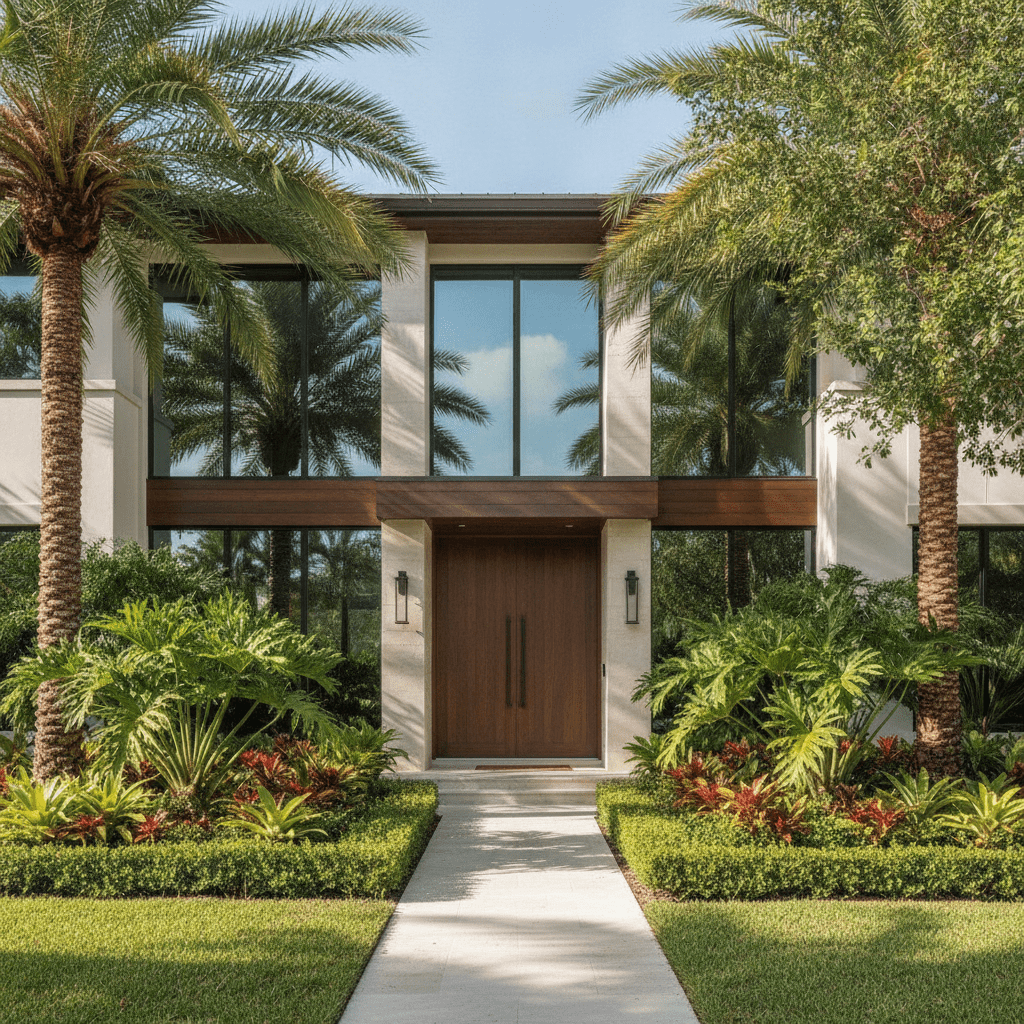
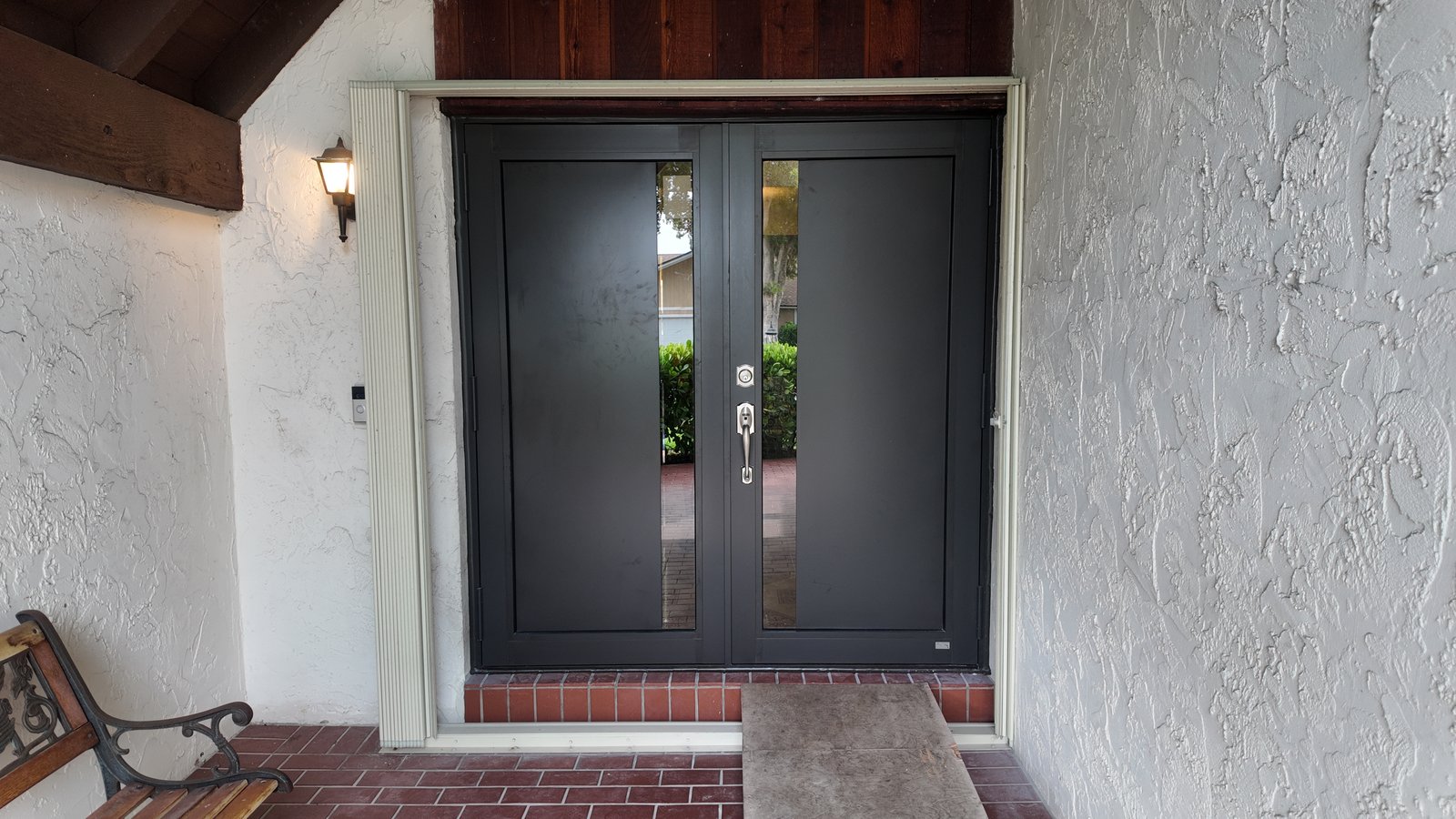
Yes — impact windows in Miami-Dade deliver meaningful energy efficiency gains alongside hurricane protection. The key is choosing the right Solar Heat Gain Coefficient (SHGC) and U-factor for South Florida’s climate zone, and confirming the product holds either a Florida Product Approval (FL number) or a Miami-Dade Notice of Acceptance (NOA) before purchase.
Updated September 2026
Key Takeaways
- Impact windows must meet HVHZ structural requirements AND Florida Energy Code efficiency minimums simultaneously in Dade County.
- Look for SHGC ≤ 0.25 and U-factor ≤ 0.50 for climate zone 1A (most of Miami-Dade).
- A Florida Product Approval (FL number) covering HVHZ use is sufficient for permitting; a Miami-Dade NOA is an additional certification, not a permit requirement.
- Low-E glass coatings, such as SB 70 or equivalent, block heat without meaningfully darkening the view.
- A new wind mitigation report after installation can support an insurance premium review — actual savings vary by policy and insurer.
The Problem
Why Miami-Dade Homeowners Get Confused About Impact Window Ratings
Two separate code systems. One window. Both have to pass.
Most homeowners shopping for impact windows in Dade County hear about Miami-Dade NOA ratings and HVHZ approval. Fewer know that the same window also has to clear Florida’s energy code before a permit can be issued. These are two distinct approval pathways, and they measure different things.
The structural side — tested under protocols including large missile impact, uniform load, and cyclic wind resistance — confirms the window can withstand hurricane-force wind-borne debris. The energy side — expressed as SHGC and U-factor — determines how much solar heat the glass lets through and how quickly heat moves through the frame itself. You need both. A window with a great NOA but poor SHGC will fail the energy code portion of plan review. A window with a great SHGC but no structural approval cannot be permitted in the HVHZ at all.
Local Context
What Makes Dade County Different From the Rest of Florida
HVHZ + Climate Zone 1A = the strictest residential window code path in the United States.
Miami-Dade and Broward counties operate inside the High-Velocity Hurricane Zone (HVHZ), the strictest residential building code jurisdiction in the United States per the Florida Building Code. That means every exterior window or door replacement requires a product with either a current Florida Product Approval (FL number) that specifically covers HVHZ use, or a Miami-Dade NOA issued by the Miami-Dade County Product Control Division. A product with a valid Florida Product Approval covering HVHZ is legal to install and permit — a Miami-Dade NOA is an additional certification some products also carry, but it is not required for the permit itself.
At the same time, most of Miami-Dade falls within IECC Climate Zone 1A — the hottest, most humid classification in the continental United States. The Florida Energy Code (adopted from IECC) sets maximum fenestration limits for this zone that are stricter than what most northern or central Florida jurisdictions enforce. Shopping for windows by hurricane rating alone, without checking SHGC and U-factor, is one of the most common and costly mistakes Dade County homeowners make.
Permit review by the Miami-Dade Building Department typically takes two to six weeks for standard residential window replacement projects. That review includes both the structural product approval check and the energy compliance documentation. Missing either piece delays the permit.
What the Ratings Actually Mean
SHGC, U-Factor, and Low-E Glass: A Plain-English Breakdown
Understanding these three numbers helps you compare bids — and avoid overpaying for the wrong glass.
Solar Heat Gain Coefficient (SHGC) measures how much of the sun’s heat passes through the glass into your home. It runs from 0 to 1. Lower is better in South Florida. For Climate Zone 1A, the Florida Energy Code requires a maximum SHGC of 0.25 for vertical fenestration in most residential configurations. Some product combinations allow up to 0.40 with a corresponding U-factor tradeoff — consult your permit set for the specific prescriptive path your project qualifies for.
U-factor measures the rate at which heat conducts through the entire window assembly — frame, glass, and edge — regardless of whether the sun is shining. Lower U-factor means better insulation. For Climate Zone 1A, the prescriptive energy code path sets a maximum U-factor of 0.50 for vertical windows. Thermally broken aluminum frames reduce U-factor compared to standard aluminum by interrupting the conductive metal path through the frame. This matters year-round in Miami-Dade, not just during summer afternoons.
Low-E coatings are microscopically thin metallic layers applied to one surface of the glass during manufacturing. They reflect infrared (heat) radiation while allowing visible light to pass through. In South Florida, we recommend SB 70 Low-E glass as the primary choice — it provides the strongest solar heat block and carries a dark green tint that most homeowners find acceptable.
Laminated interlayers — the structural component that makes a window impact-rated — do not meaningfully reduce a window’s SHGC or U-factor on their own. The energy performance comes from the glass composition and coating, not the interlayer. This is why two windows with identical structural approvals can have very different energy ratings depending on how the glass was specified.
| Rating | What it measures | Target for Dade County (Zone 1A) | Why it matters |
|---|---|---|---|
| SHGC | Solar heat admitted through glass | ≤ 0.25 (prescriptive path) | Directly reduces cooling load and AC runtime |
| U-factor | Total heat conduction through assembly | ≤ 0.50 | Affects comfort and energy bills year-round |
| VT (Visible Transmittance) | How much daylight passes through | No code minimum, but affects livability | Lower SHGC coatings can reduce daylight — choose balance |
| Air Leakage | Air infiltration through window assembly | ≤ 0.30 cfm/ft² (FBC requirement) | Affects humidity control and indoor air quality |
Comparison
Florida Product Approval vs. Miami-Dade NOA: What Dade County Homeowners Need to Verify
Two valid pathways. One common misconception.
| Approval Type | Issued By | Covers HVHZ? | Required for Permit? |
|---|---|---|---|
| Florida Product Approval (FL number) | Florida Building Commission | Yes, when FL# scope includes HVHZ | Yes — sufficient if HVHZ scope confirmed |
| Miami-Dade NOA | Miami-Dade County Product Control | Yes — NOA always covers HVHZ | Not required if FL# covers HVHZ |
| Neither | N/A | No | No — product cannot be permitted in HVHZ |
Before agreeing to any window purchase in Dade County, ask the contractor to show you the FL number or NOA number for the specific product and configuration proposed. The approval is tied to the exact product model, frame material, glass thickness, and installation method — not just the brand name. As a general rule, an approval document covers specific size ranges and configurations; a larger or differently oriented opening may require a separate review to confirm coverage — verify with your permit-pulling contractor.
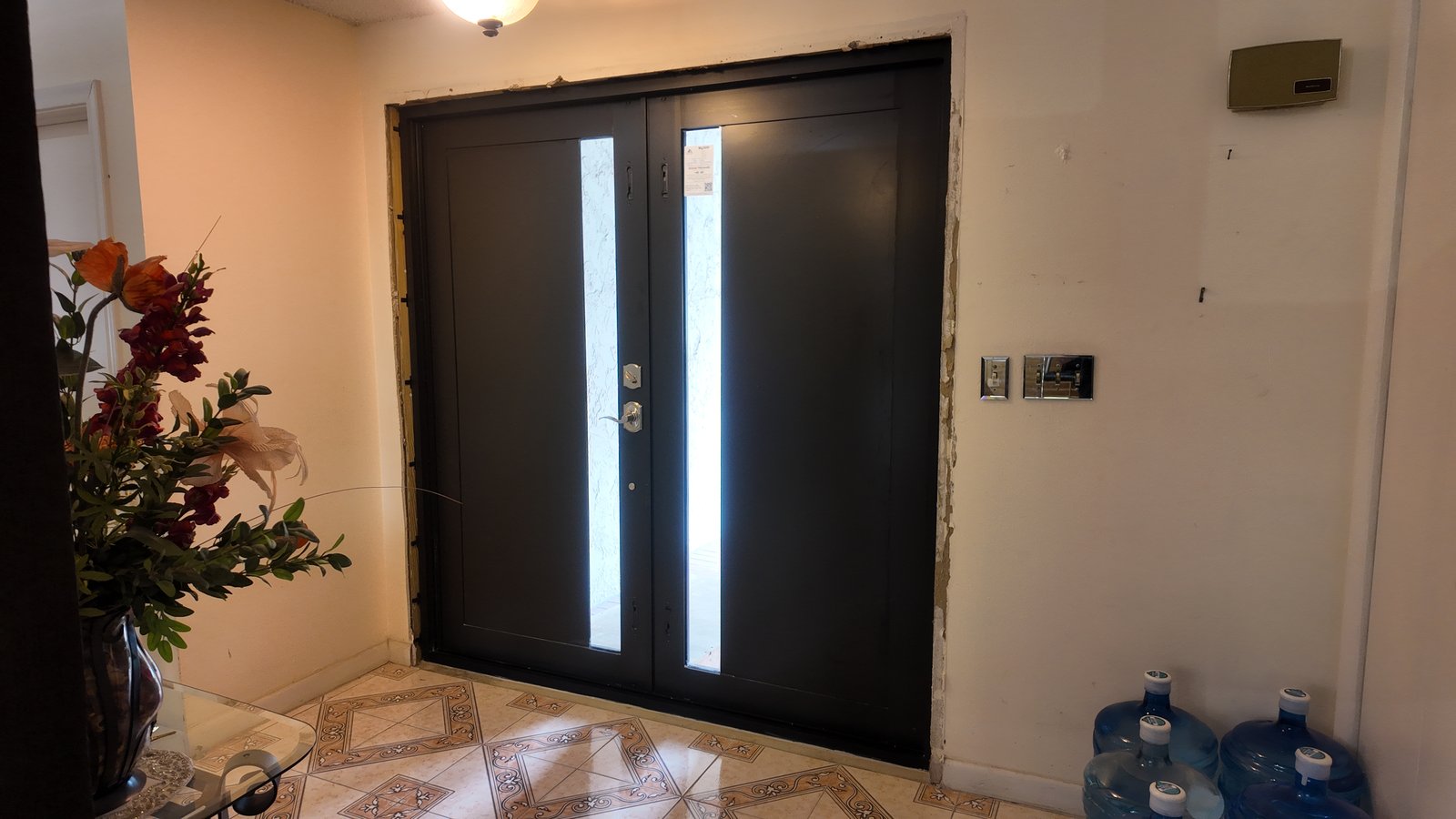
All Mr. Glass series carry a Florida Product Approval. The Mr. Glass 2500T thermally broken impact door also holds a Miami-Dade NOA. When Bigfoot quotes your project, we confirm the specific FL number or NOA for each opening before the contract is signed — not after.
When a standard (non-impact) window might be the better fit: If you are in an interior condominium corridor or a protected space that does not face wind-borne debris exposure under the code, a non-impact assembly with a storm shutter rated for the opening may be code-compliant at lower cost. Discuss your specific building and unit configuration with your permit-pulling contractor to determine the right approach for each opening.
Why License Breadth Matters Here
Structural Scope That Goes Beyond Glass and Glazing
A licensed contractor — not a lead aggregator — pulling your permit and handling what the inspector finds.
Impact window replacement in older Dade County homes often reveals structural conditions that require attention before the new window can be properly set: undersized headers, absent or corroded hurricane straps, or deteriorated rough openings. A contractor with only a glass and glazing license cannot legally address those conditions in the same permit set.
Bigfoot holds a Certified General Contractor license (CGC1531370) in addition to its Certified Specialty Contractor with a Glass & Glazing Specialty (SCC131153098). That license breadth means header resizing and hurricane strap upgrades can be addressed as structural scope under one permit as part of your impact window project — without coordinating a second contractor or opening a separate permit. This is a structural advantage grounded in license authority, not a marketing badge.
“In South Florida, the energy code and the hurricane code are not separate conversations. Every window we spec for a Dade County homeowner has to clear both — structural approval and energy compliance — before it ever goes on a permit application.”
President, Bigfoot Windows & Roofing
Product Guidance
What to Look for in an Energy-Efficient Impact Window for South Florida
Frame material, glass spec, and approval documentation — in that order.
Bigfoot installs aluminum-frame impact windows as our primary recommendation for Dade County. Aluminum is more time-tested in HVHZ heat, salt air, and UV exposure than vinyl. For homeowners near the water or in direct coastal exposure, aluminum’s dimensional stability over time is a meaningful advantage. Where energy efficiency is a priority, we specify thermally broken aluminum frames — a thermal barrier inserted through the middle of the frame interrupts the conductive metal path and lowers the assembly U-factor without changing the structural performance of the frame.
For glass, SB 70 Low-E is our standard recommendation for South Florida. It delivers the strongest solar heat block and meets the SHGC requirements for Climate Zone 1A without compromising visible light transmission to the point of making rooms feel dark.
On the Mr. Glass product line: the Series 200 (single hung) and Series 300 (horizontal roller) are the configurations we most commonly specify for Dade County residential projects. Both carry Florida Product Approval. For the Mr. Glass Series 350, confirm with your contractor that the series proposed covers your building’s design pressure requirements — not all residential series are rated for mid-rise or high-rise applications.
If you are replacing windows in a coastal exposure zone, confirm the finish specification required for your location with your contractor — some manufacturer warranties exclude certain finishes in high-salt environments.
Learn more about impact window options and specifications for South Florida homes, or explore financing options if you are weighing how to fund a full-house replacement. For Miami-Dade-specific permit and service context, visit our Miami-Dade service page.
Incentives & Process
Financial Incentives Available to Dade County Homeowners
Programs exist — but they have eligibility gates and funding limits.
The My Safe Florida Home program offers grants of up to $10,000 for qualifying homeowners who upgrade to impact windows or other hurricane protection measures. Funding is appropriated by the Florida Legislature and released in rounds — availability changes. Check mysafeflhome.com for current open enrollment status and income eligibility requirements before planning your project timeline around it.
FPL (Florida Power & Light) periodically offers rebates for energy-efficiency upgrades. Fenestration rebates — meaning windows and doors — have varied in availability. As of publication, FPL’s residential rebate catalog should be checked directly at FPL’s website for current offerings. Do not plan a project budget around an assumed rebate without confirming eligibility in writing.
PACE financing (Property Assessed Clean Energy) is available through programs such as Renew Financial and allows homeowners to finance impact windows through their property tax bill rather than a traditional loan. Rates and monthly payments vary by program, property, and term — confirm current rates directly with your PACE provider before budgeting. If you are also replacing your roof, confirm with your PACE provider whether roofing and window scopes can be combined into a single application or require separate applications, as program rules vary.
Wind mitigation report: After installing impact windows, a licensed wind mitigation inspector can issue an updated report that documents the new opening protections. Submitting that report to your homeowner’s insurance carrier may support a premium reduction — but actual savings depend on your specific policy, insurer, and the prior inspection values. Savings vary and are not guaranteed.
| Program | Maximum Benefit | Key Eligibility Gate | Status Check |
|---|---|---|---|
| My Safe Florida Home | Up to $10,000 grant | Income limits; primary residence; funded rounds | mysafeflhome.com |
| FPL Rebates | Varies by program year | FPL service territory; product eligibility | fpl.com (check current offers) |
| PACE Financing | Covers full project cost | Property equity; confirm scope rules with provider | Available year-round |
| Wind Mit Insurance Review | Premium reduction (varies) | New inspection; carrier cooperation | Post-install, request new inspection |
Ready to verify which impact windows qualify for both HVHZ approval and Dade County energy code in one product?
Related Articles


Who We’re Not the Right Fit For
- Buyers who want vinyl frames: Bigfoot recommends aluminum for Dade County’s HVHZ climate. If a vinyl-frame impact window is a firm requirement, we are not the right fit — and we will tell you that upfront rather than propose a product we do not stand behind in this environment.
- Commercial high-rise projects: Our primary residential service scope covers single-family homes, duplexes, and low-rise residential buildings. High-rise condominium projects above a threshold that requires a design professional’s stamped drawings and a specialized commercial glazing contractor are outside our standard scope.
- Homeowners who need work done in under two weeks: We cannot guarantee installation within two weeks due to county permitting, material delivery, and inspection scheduling requirements in Miami-Dade. If your timeline is shorter than the permit process allows, we cannot responsibly commit to it.
- Projects requiring no permit: Every window and door replacement in Miami-Dade requires a permit. If a contractor tells you they can do the job without pulling one, that is a code violation risk you would carry as the property owner. We pull permits on every project — if that is not what you are looking for, we are not the right contractor for you.
Frequently Asked Questions
Do impact windows in Miami-Dade also improve energy efficiency, or only hurricane protection?
Impact windows improve both. The laminated glass interlayer provides hurricane protection; Low-E coatings and thermally broken frames reduce solar heat gain and conductive heat transfer. In Dade County, all replacement windows must meet Florida Energy Code minimums for SHGC and U-factor in addition to HVHZ structural approval — a code-compliant impact window delivers hurricane protection and measurable energy efficiency simultaneously.
What SHGC and U-factor ratings should I look for in impact windows for South Florida?
For Climate Zone 1A (most of Miami-Dade), the Florida Energy Code prescriptive path requires a maximum SHGC of 0.25 and a maximum U-factor of 0.50 for vertical windows. Some configurations allow higher SHGC with a corresponding U-factor tradeoff. Confirm the specific compliance path with your permit-pulling contractor, because the right numbers depend on your project’s glazing area relative to floor area.
Are energy efficient impact windows required by the Florida Building Code in Dade County?
Yes. Any permitted window replacement in Miami-Dade must satisfy both the HVHZ structural requirements of the Florida Building Code and the Florida Energy Code’s fenestration limits. You cannot simply install the most hurricane-resistant window available and ignore SHGC — both paths must be satisfied before a permit is issued. This applies to single-window replacements as well as whole-house projects.
Will installing impact windows lower my Florida homeowners insurance premium?
Possibly, but savings are not guaranteed. After installation, a licensed wind mitigation inspector can document the new opening protections. Submitting an updated wind mitigation report to your insurer may support a premium reduction. Actual savings depend on your current policy, your carrier’s rating structure, and the prior wind mitigation values. Some homeowners see meaningful reductions; others see modest changes. Get a post-installation inspection and let the inspector’s findings guide the conversation with your insurer.
Do I need a permit in Miami-Dade County to replace windows with energy efficient impact windows?
Yes — every window and door replacement in Miami-Dade requires a permit, regardless of scope. This applies even if you are replacing a single window. The permit process includes both a structural product approval check (FL number or NOA) and energy compliance documentation. Miami-Dade Building Department review typically takes two to six weeks. Any contractor who tells you a permit is not required for a window replacement in Miami-Dade is either mistaken or cutting corners.
What is the difference between a Florida Product Approval and a Miami-Dade NOA for impact windows?
A Florida Product Approval (FL number) is issued by the Florida Building Commission and covers products for use statewide, including HVHZ when the scope explicitly includes it. A Miami-Dade NOA is issued by Miami-Dade County’s Product Control Division and always covers HVHZ. Both are valid paths for permitting in Dade County. A Miami-Dade NOA is not required if the product holds a current Florida Product Approval that covers HVHZ use — you do not need both.
Can I get financial help to pay for energy efficient impact windows in Dade County?
Several programs may help. My Safe Florida Home offers grants up to $10,000 for qualifying homeowners — funding is released in rounds, so check mysafeflhome.com for current availability. FPL periodically offers fenestration rebates — confirm current eligibility directly with FPL. PACE financing allows you to finance the project through your property tax bill with no upfront payment; rates vary by program and property, so confirm current terms directly with your PACE provider before budgeting. A new wind mitigation report post-install may also support an insurance premium review.
Schedule Your Free Estimate
Ready to get started? Request a free estimate — no phone call required.
Sources
- Florida Product Approval and HVHZ requirements — bigfootwindowsandroofing.com/impact-windows-miami-dade/
- My Safe Florida Home program — mysafeflhome.com
- Miami-Dade County Product Control — miamidade.gov
- Impact window cost and product guidance — bigfootwindowsandroofing.com/impact-windows-cost-south-florida/
- PACE financing guidance — bigfootwindowsandroofing.com/impact-door-installation-cost/
Get an estimate for energy-efficient HVHZ-approved impact windows in Miami-Dade.
Call Bigfoot Windows & Roofing at 786-886-2088 or request a free estimate online.