
Roof Leak Repair Cost in South Florida | Bigfoot Windows & Roofing
Key Takeaways
- Minor shingle repairs in South Florida typically run $350–$900; mid-range flat roof repairs $600–$2,500; structural or full-section repairs $3,000–$12,000+.
- Miami-Dade and Broward HVHZ rules can require a permit even for small repairs — skipping one risks failed inspections and insurance claim denial.
- Florida Building Code Section 1511 thresholds can convert a patch job into a partial or full re-roof, dramatically changing cost.
- Active leaks during hurricane season interact with Citizens Insurance timelines in ways most homeowners don’t anticipate — act fast and document everything.
- Flat/low-slope roofs (TPO, modified bitumen) have different cost drivers than pitched shingle roofs — material, access, and ponding water all affect price.
The Homeowner Problem
An Active Leak Is a Clock, Not a Maintenance Item
Every hour water enters your attic, the repair scope — and the bill — grows.
Repairing an active roof leak in South Florida typically costs $350–$900 for minor shingle or flashing repairs, $600–$2,500 for flat roof patches, and $1,500–$12,000+ for section repairs involving decking replacement or code-triggered re-roofing. Those ranges exist because South Florida is not like Atlanta: you’re dealing with 90-percent humidity, daily afternoon storms from June through November, salt-air corrosion in coastal zones, and the strictest building code in the United States. A leak that looks like a $400 flashing fix can reveal rotted decking, failed underlayment, or a code-driven re-roof requirement once a contractor pulls back the shingles.
This guide answers the real question homeowners are searching for: how much will it actually cost to fix my active roof leak? — with enough specificity that you can evaluate estimates honestly before you sign anything.
South Florida Context
Why Miami-Dade and Broward Change the Repair Math
Miami-Dade and Broward Counties fall entirely within the High-Velocity Hurricane Zone (HVHZ) — the most demanding wind-load and construction standard in the country. That has direct cost consequences for roof repair and replacement:
- Permit threshold is lower. Many repairs that would be permit-exempt in Palm Beach County require a permit and inspection in Miami-Dade. This adds $150–$500 in permit fees and several days to the timeline.
- Materials must carry Miami-Dade NOA or Florida Product Approval. You cannot legally install non-approved materials in the HVHZ, which limits cheap-fix options.
- Florida Building Code Section 1511 re-roofing trigger. If the repair area exceeds certain thresholds relative to the total roof surface (generally interpreted as more than 25% of total roof area in a 12-month period in HVHZ), the county may require a full re-roof to current code standards. A $1,500 patch can become a $15,000 project if the inspector determines the threshold is crossed.
- Citizens Insurance and private carrier timelines. Florida carriers, including Citizens, have specific claim-filing windows. An active leak during hurricane season may be covered under a wind-damage claim — but only if you document the damage before emergency repairs are made. Temporary tarping is typically reimbursable; permanent repairs done before an adjuster visits may complicate your claim.
Cost Breakdown
What Roof Leak Repairs Actually Cost in South Florida
Ranges depend on roof type, damage extent, permit requirements, and whether structural work is needed.
The cost of repairing an active roof leak in Miami-Dade, Broward, or Palm Beach County is driven by four variables: the roof system type, the extent of damage, permit and inspection requirements, and whether the decking or structure underneath is affected. Here is an honest range table:
| Repair Type | Typical Cost Range | Permit Usually Required? | Key Cost Driver |
|---|---|---|---|
| Shingle patch / flashing repair | $350 – $900 | Sometimes (HVHZ) | Access, shingle match, flashing material |
| Flat roof (TPO / modified bitumen) patch | $600 – $2,500 | Yes (most cases) | Membrane type, ponding water, seam failure extent |
| Section repair with decking replacement | $1,500 – $5,500 | Yes | Square footage of rotted deck + labor intensity |
| Full section re-roof (FBC 1511 trigger) | $4,000 – $12,000+ | Yes | Code upgrade requirements, material spec, size |
| Emergency tarping (FBC emergency provision) | $300 – $800 | No (temporary only) | Roof pitch, access, tarp size |
These are South Florida market ranges as of mid-2026. Prices vary by contractor, material availability, and whether hurricane-season demand surges are active. A contractor who quotes below the low end of these ranges without inspecting the deck is almost certainly excluding something.
For context on how full roof replacement pricing works, see our guide to roofing systems and costs — understanding the full-replacement baseline helps you evaluate whether a repair is cost-effective or just delaying the inevitable.
Flat vs. Pitched Roof Repair
Cost Drivers Differ by Roof System
Flat and low-slope roofs are extremely common on South Florida homes — especially in Miami-Dade, where mid-century ranch-style and concrete block construction dominates. The repair cost logic is different from pitched shingle roofs:
| Factor | Pitched Shingle Roof | Flat / Low-Slope Roof (TPO, Mod-Bit) |
|---|---|---|
| Leak source identification | Usually visible — missing shingles, cracked flashing | Harder — water travels before entering; ponding obscures origin |
| Material cost per sq ft repaired | $3 – $8 (shingle + underlayment) | $6 – $18 (membrane + adhesive or heat-weld) |
| Deck damage likelihood | Moderate — depends on slope and drainage | Higher — ponding water accelerates deck rot |
| Permit requirement (Miami-Dade) | Often required even for small patches | Almost always required; system-specific NOA or FPA needed |
| Risk of FBC 1511 re-roof trigger | Present if multiple areas are affected | Higher — flat roof systems degrade more uniformly |
Why License Breadth Matters Here
A Roof Contractor. A General Contractor. Both, In One.
Licensed contractor, not a lead aggregator.
One reason roof leak repair scopes grow unexpectedly: the contractor doing the roofing is not authorized — or not equipped — to address structural damage beneath the deck. When water has been entering your attic for weeks in South Florida humidity, what looks like a roofing problem often involves structural modifications, hurricane strap inspection, or rotted framing that requires a contractor with broader license authority to handle legally.
Darryl Henry Rosenbaum holds four active Florida licenses, which means a single point of accountability for roofing, structural, and general scope — without needing to subcontract structural findings to a separate licensed party. If the repair uncovers something deeper, the scope can be addressed under one contract and one permit.
“An active leak is never just a roofing problem until we prove it is. We scope the deck, the structure, and the drainage path before we quote — because that’s the only way the number we give you is real.”
Founder & President, Bigfoot Windows & Roofing
Roofing Materials & Systems
Which Repair Materials Are Used — and Why It Affects Cost
Not all repair materials are equal, and in the HVHZ, not all are legal. Here is how material selection affects what you pay:
- GAF shingle systems: When repairing a shingle roof, matching the existing system matters. If the roof is a GAF System Plus installation, the underlayment and shingle spec must be maintained to preserve the warranty. Peel-and-stick underlayment is now permitted direct-to-deck under the 2024 Florida Building Code (FBC Section 1507) — and a full-deck installation qualifies for secondary water barrier status, which may be considered in Citizens Insurance wind mitigation rating — confirm current requirements with your insurer or a licensed wind mitigation inspector.
- Englert or Metal Alliance / metal standing seam: Metal roof repairs typically involve re-seaming or panel replacement. Because Englert or Metal Alliance panels run one continuous piece from eave to ridge, a localized failure often means pulling a full panel — labor-intensive but structurally cleaner than patchwork.
- TPO and modified bitumen (flat roofs): Patches must be heat-welded or cold-applied using system-matched membrane. Mismatched products fail within months in South Florida UV. Always confirm the contractor is using the same membrane brand and thickness as the existing system.
- Westlake / concrete tile: Tile repairs involve removing broken tiles, inspecting and replacing the underlayment beneath, and re-setting with Poly Set foam adhesive (Miami-Dade NOA-approved for high-wind applications — confirm applicable NOA for your tile system) or mechanical fasteners. A single cracked tile that has allowed water in for months may require more underlayment replacement than the tile cost itself.
If you are financing a repair or a full replacement triggered by code, Bigfoot offers PACE financing options — paid through your property tax bill, not a separate bank loan.
The Repair Process
How a Permitted Roof Leak Repair Works in Miami-Dade
- Inspection and damage documentation. Before any work begins, photograph everything. If there is any chance of an insurance claim, this step protects you. An honest contractor scopes the deck, not just the surface.
- Permit application (when required). In Miami-Dade HVHZ, most repairs require a permit. The contractor pulls it — not you. Budget $150–$500 in permit fees and 3–7 business days for approval on standard repairs.
- Emergency tarping if needed. Under Florida Building Code emergency provisions, temporary tarping can be installed without a permit to stop active water intrusion. This is NOT a permanent repair and will not satisfy an insurance adjuster for final claim settlement.
- Repair execution. Work is performed to HVHZ specification: NOA-approved or Florida Product Approval-listed materials, correct fastener patterns, and documented underlayment.
- Final inspection. The county inspector signs off. This is your proof the repair was done to code — critical if you ever file a claim or sell the home.
Active leak? Don’t wait for the next storm.
Schedule Your Free Estimate
Ready to get started? Request a free estimate — no phone call required.
Or call us directly: 786-886-2088
Related Reading
More Roofing Guidance for South Florida Homeowners
Related Articles
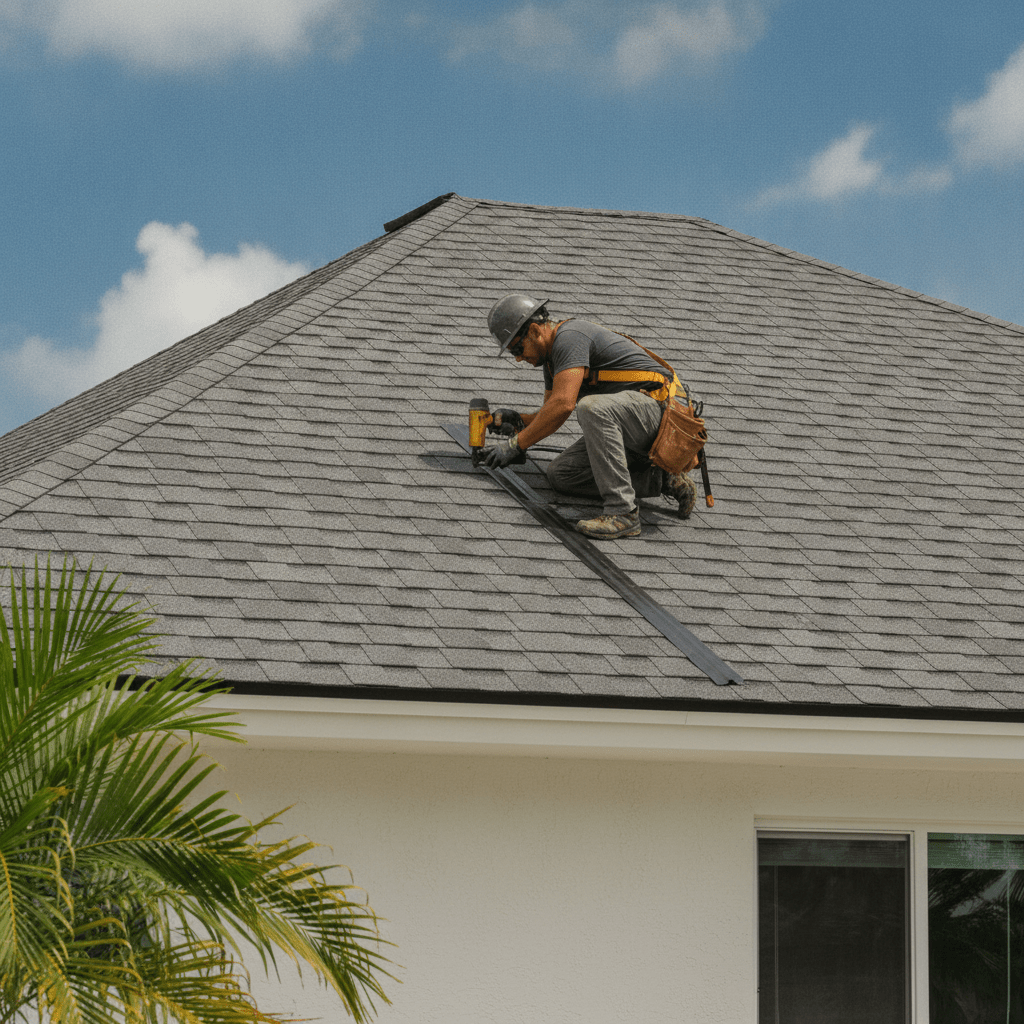
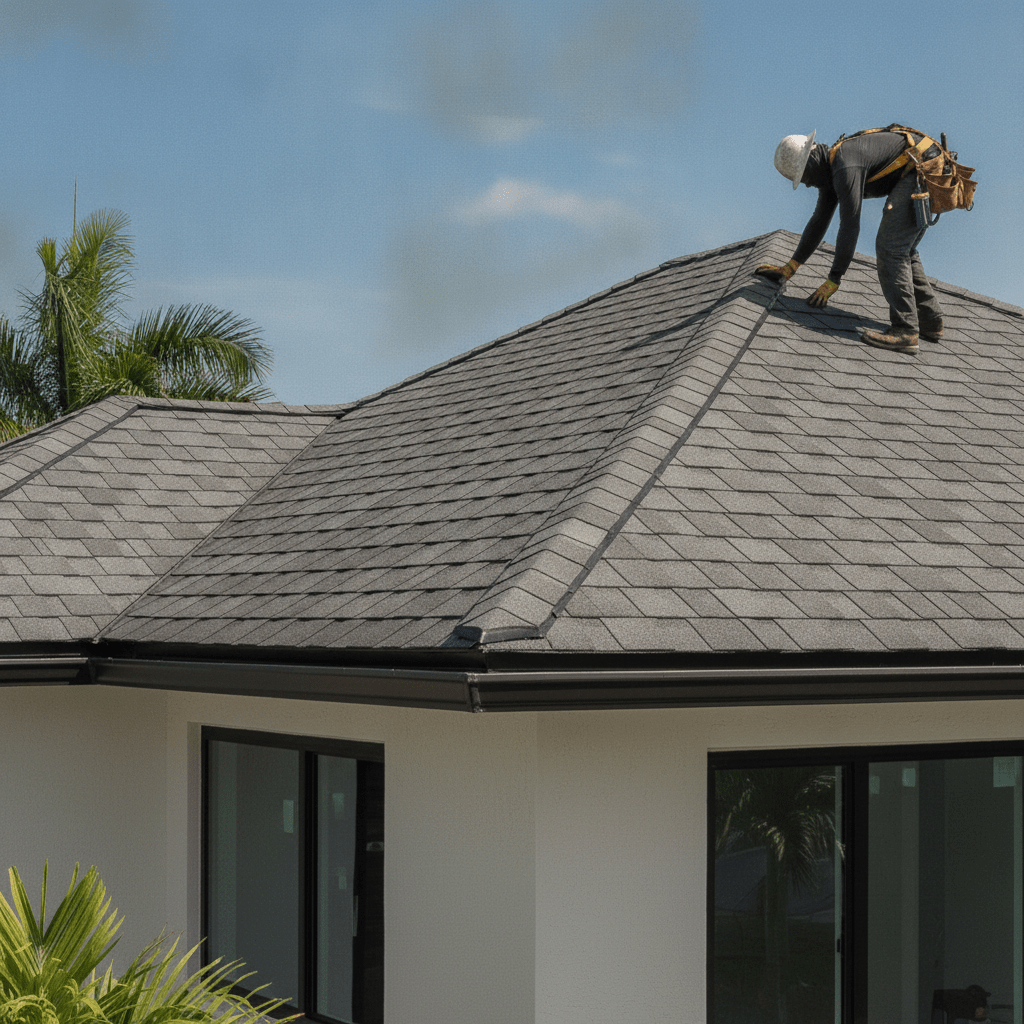
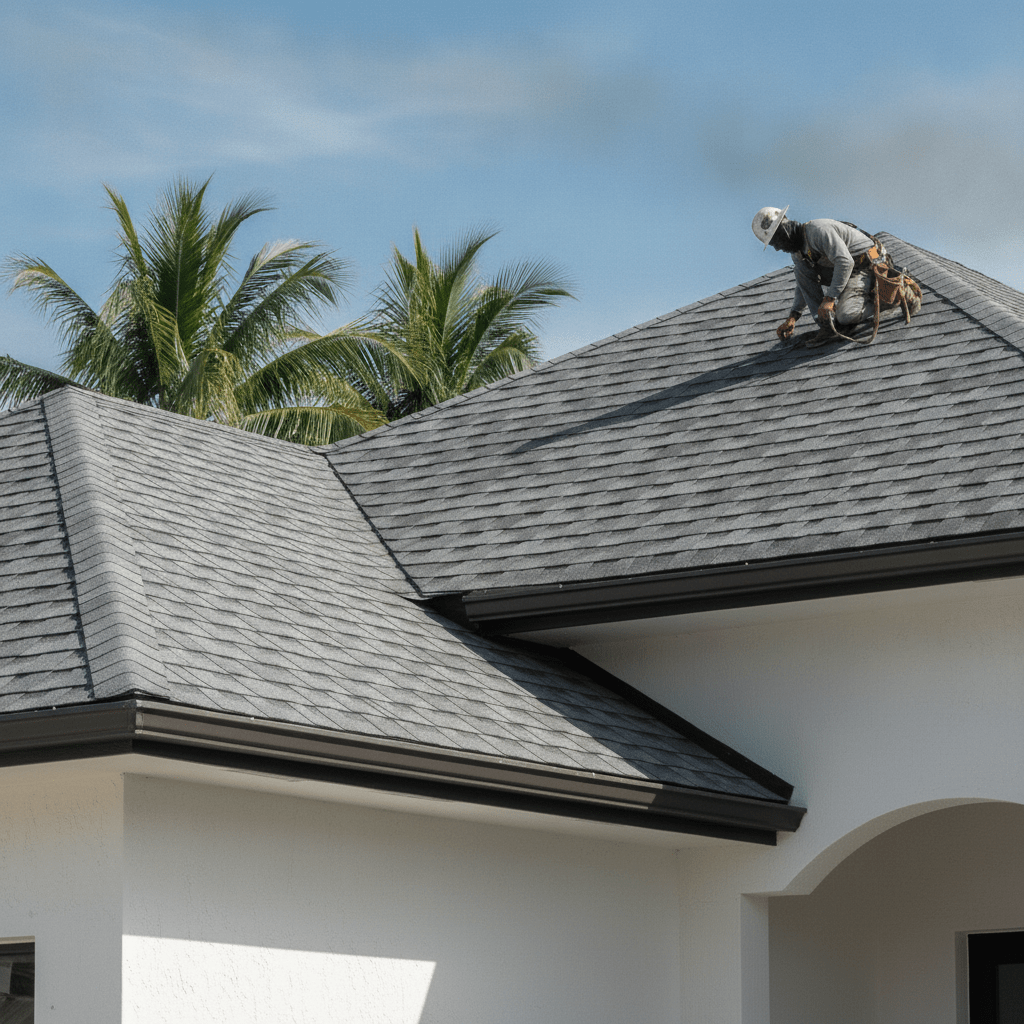
Who We’re Not the Right Fit For
- Homeowners who need only a quick patch with no permit pulled. If you want the cheapest possible temporary fix with no documentation and no permit, that is not how Bigfoot operates in the HVHZ — and a contractor who offers that is putting you at risk with your insurer and your local building department.
- Projects outside Miami-Dade, Broward, and Palm Beach Counties. We are a South Florida contractor. If your property is in Monroe County or further north, we are not currently the right geographic fit.
- Homeowners who need a same-day repair without an inspection. We scope the deck before we quote. If speed matters more than accuracy, another contractor may say yes faster — but you may be paying for the wrong repair.
- Buyers primarily seeking the lowest bid. Our pricing reflects permitted, HVHZ-compliant, warrantied work. If the lowest number is the only decision factor, we are unlikely to win that comparison — and that is an honest answer.
Frequently Asked Questions
How much does it cost to fix a roof leak in Miami-Dade County?
Most minor shingle or flashing repairs in Miami-Dade run $350–$900. Flat roof patches (TPO or modified bitumen) typically cost $600–$2,500. If the decking underneath is rotted or the repair triggers the Florida Building Code Section 1511 re-roof threshold, costs can reach $4,000–$12,000 or more. HVHZ permit fees add $150–$500. Any quote below these ranges that does not include a deck inspection warrants close scrutiny.
Will my Florida homeowners insurance cover an active roof leak repair?
It depends on the cause. Wind-driven damage during a named storm or severe weather event is generally covered. Gradual deterioration or maintenance neglect typically is not. Document the damage with photos and video before any work begins. Citizens Insurance and most Florida private carriers require you to report the claim promptly — delays can affect eligibility. Emergency tarping is usually reimbursable; permanent repairs completed before an adjuster visits may complicate the claim settlement.
Do I need a permit to repair a roof leak in Miami-Dade?
In most cases, yes. Miami-Dade and Broward are within the HVHZ, where permit requirements are stricter than the rest of Florida. Even small shingle patch repairs often require a permit and inspection. Emergency tarping under Florida Building Code emergency provisions is an exception — but a tarp is not a permanent repair. Your contractor pulls the permit; confirm it before work starts and request the inspection result when complete.
How long can I wait to fix a roof leak before it causes
Ready to get started? Get a free, no-pressure estimate from a licensed South Florida contractor.
Do you need a permit for How much will it cost to repair the active roof leak? in Miami-Dade or Broward?
Yes. Miami-Dade and Broward require a permit for re-roofing and most roof repairs. A licensed roofing contractor pulls the permit and schedules the required inspections as part of the project.
Does financing typically cover How much will it cost to repair the active roof leak??
Financing options may be available depending on the scope and your lender. Ask your contractor what programs apply to your specific project before you sign anything.
How long does a roofing project like this take?
Most single-family roof replacements in South Florida are completed in 1-3 days once materials are on site and permits are pulled, though structural or deck repair work can extend that timeline.