Key Takeaways
- Florida law makes it a felony for contractors to operate without a valid DBPR license on jobs over $500.
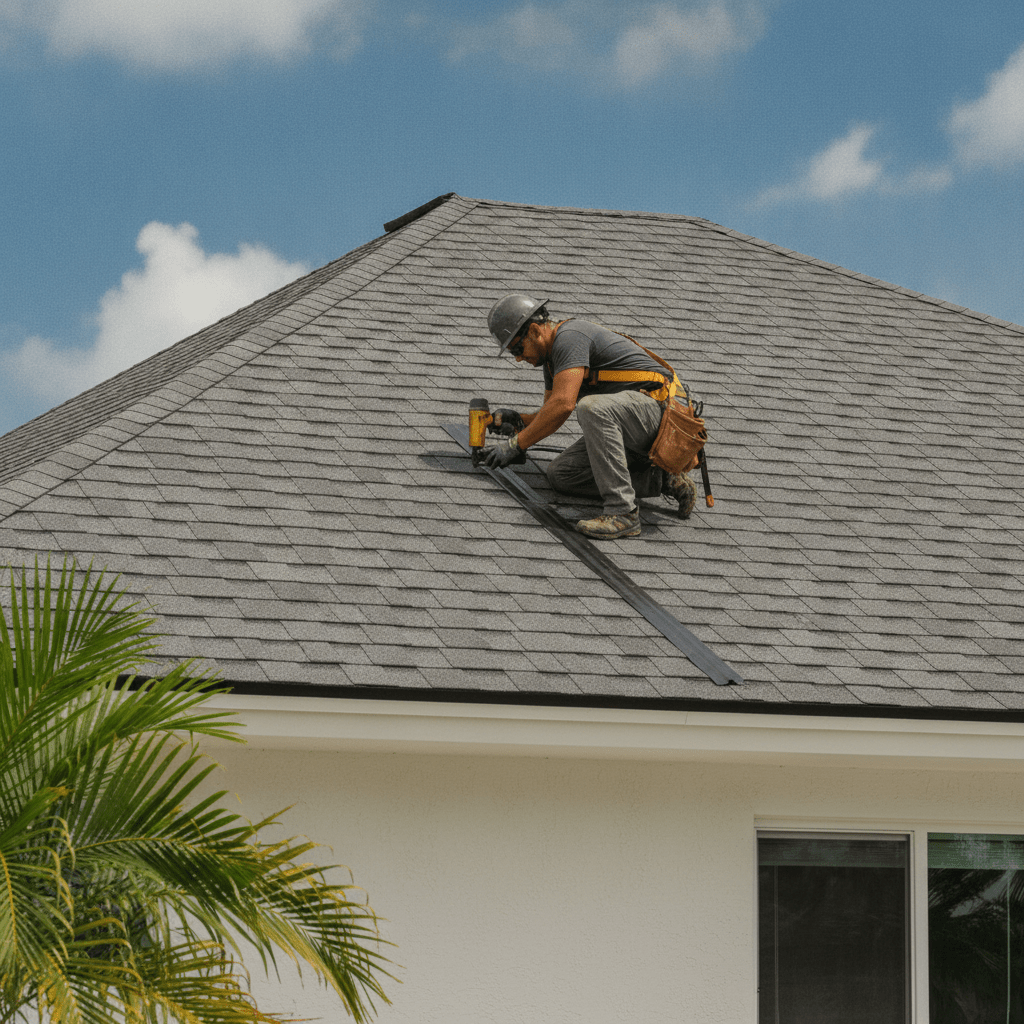
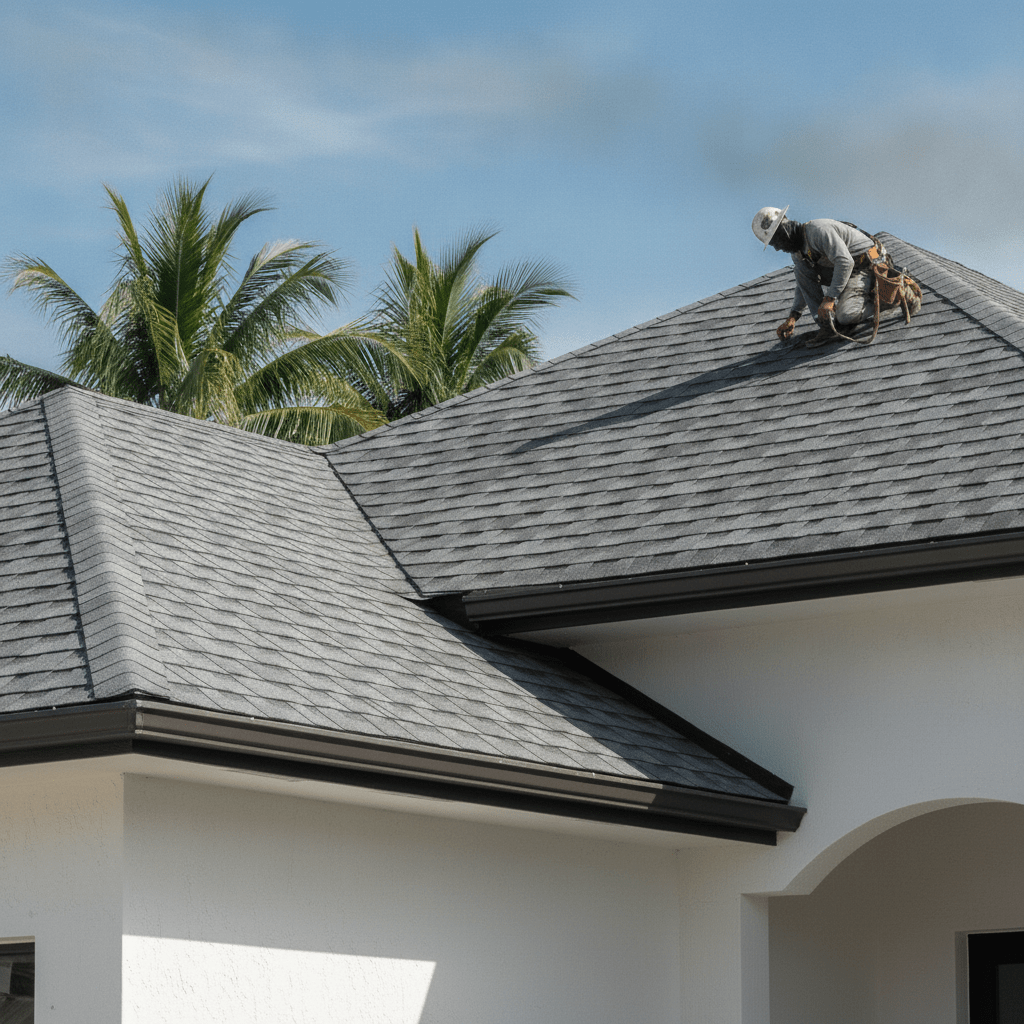
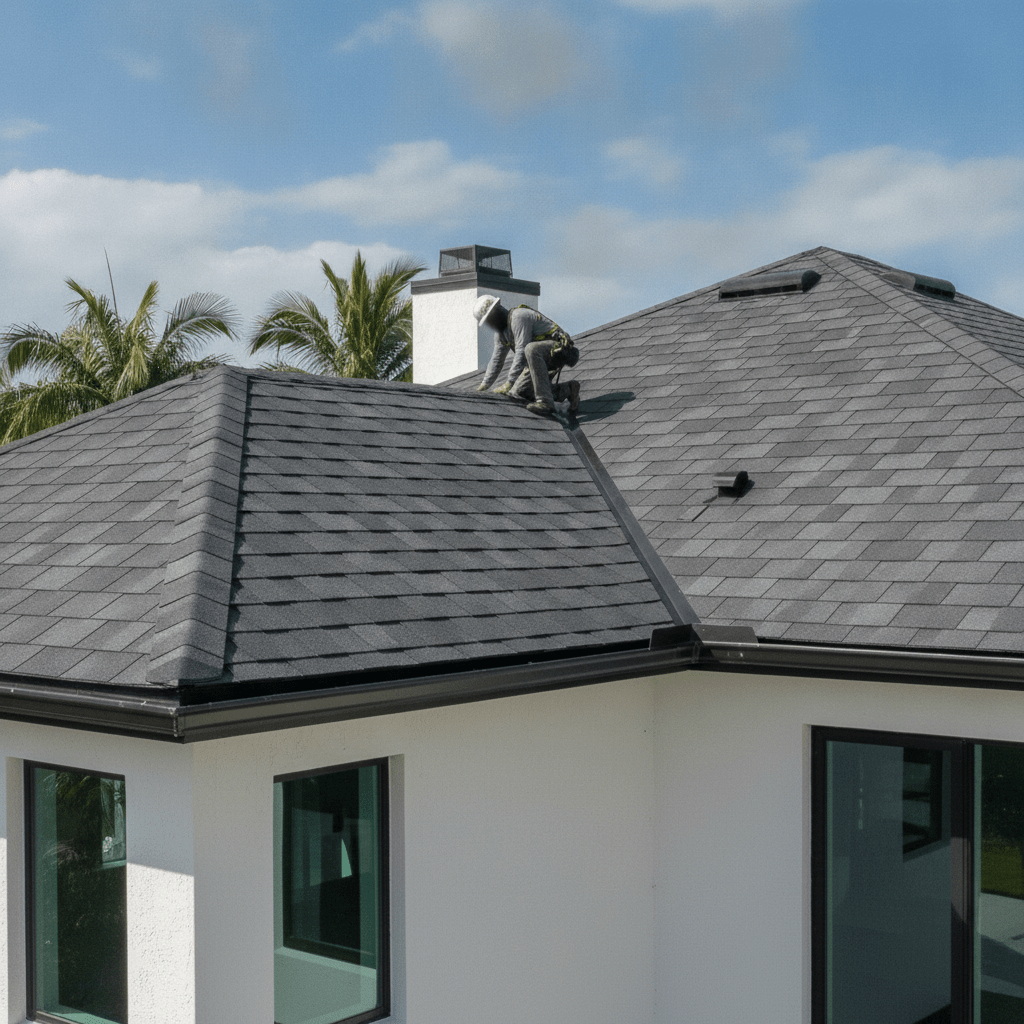
- Unlicensed roofing work in South Florida often conceals structural hazards: severed rafters, floating tie beams, and missing hurricane straps.
- Homeowners can be held liable for injuries on-site and left unable to sell or insure a home with unpermitted work.
- You can verify any Florida contractor license in under two minutes at the DBPR online portal — no account required.
- A licensed roofing contractor carries worker’s comp and general liability; an unlicensed one leaves those costs with you.
The Real Risk
Why Unlicensed Contractor Work Costs More to Fix Than to Prevent
What looks like savings at signing can become a five-figure correction bill after the next inspection — or the next storm.
Every year in South Florida, homeowners discover that the “deal” they got on roofing, windows, or a structural addition was done by someone working without a valid Florida contractor license. The dollar signs look good upfront. The aftermath — attorney fees, re-permitting, structural demolition, and insurance claim denials — rarely does.
The problem is not just legal exposure. Unlicensed work on roofing, structural tie beams, or impact-window frames creates physical hazards that a licensed inspector will flag the moment you try to sell, refinance, or file a claim. In Miami-Dade and Broward, where the High-Velocity Hurricane Zone (HVHZ) building code is among the strictest in the country, those hazards are not cosmetic — they are structural.
This article walks you through the red flags, the legal exposure, the hidden structural damage patterns we see most often, and exactly how to verify a license before you sign anything.
South Florida Context
Why Miami-Dade and Broward Are High-Risk Markets for Unlicensed Work
South Florida’s construction boom — driven by post-storm insurance replacements, property flips, and insurance-motivated roof replacements — creates ideal conditions for unlicensed operators. They follow the storm damage, quote fast, and collect deposits before inspectors show up.
Miami-Dade and Broward sit inside the HVHZ. Every roofing assembly, every window buck, every structural modification must meet Florida Building Code Chapter 16 wind-load requirements. An unlicensed roofer who has never pulled a permit in HVHZ has likely never had those standards verified on their work — ever.
Separately, Citizens Property Insurance has been non-renewing policies on homes with roofs 20 years or older. When homeowners rush to replace their roofs to keep coverage, unlicensed crews advertise prices that licensed contractors cannot match — because licensed contractors are paying for insurance, bonding, DBPR fees, continuing education, and permit fees that unlicensed ones skip entirely.
Red Flags and Verification
Six Red Flags That a Contractor May Not Be Licensed
None of these flags alone is definitive proof of an unlicensed operator, but a contractor who hits two or more of the following warrants a verification check before you proceed.
| # | Red Flag | Why It Matters |
|---|---|---|
| 1 | No license number on the written quote or contract | Florida law requires license numbers on all contracts. Absence often signals no license exists. |
| 2 | Quote is 30–40% below every other bidder | Licensed contractors carry overhead (insurance, permits, DBPR fees) that unlicensed ones skip. |
| 3 | Requests full payment upfront before work begins | Deposits over 10% before material delivery can violate Florida Statute 489.126. |
| 4 | Cannot name the permit they plan to pull | Any roofing job over $500 in Florida requires a permit. No permit = no inspection = no record. |
| 5 | Works under a company name you cannot verify at DBPR | License is held by a named individual or qualifier, not just a trade name. |
| 6 | Refuses to provide proof of general liability and worker’s comp | Without those policies, an on-site injury may become your financial liability as the property owner. |
How to Verify a Florida Contractor License in Under Two Minutes
The Florida Department of Business and Professional Regulation (DBPR) maintains a public license search at myfloridalicense.com. You do not need an account. Search by the contractor’s name or license number. The result will show the license type, qualifier name, and current status.
What to look for:
- License type: For roofing, confirm you see “Certified Roofing Contractor” or “Registered Roofing Contractor.” A general handyman license does not cover structural roofing work.
- Qualifier name: The license is held by a person, not the company. Confirm the qualifier’s name matches who you are dealing with.
- Status: The listing should show an active, current license — not expired, null and void, or delinquent.
- County registration: Registered (vs. Certified) contractors may be limited to specific counties. Certified contractors can work statewide.
For roofing specifically, also ask for the contractor’s roofing scope of work and confirm they can pull the permit themselves — not hand the permit responsibility to an unlicensed sub.
Structural Damage Patterns
Hidden Structural Hazards Left by Unlicensed Roofing Work
These are real damage categories we encounter when called in after unlicensed work. They are not hypothetical.
| Hazard Type | What Unlicensed Crews Do | Consequence |
|---|---|---|
| Severed or notched rafters | Cut into rafters for clearance without engineering sign-off | Roof structure loses load capacity; fails under hurricane wind uplift |
| Floating tie beams | Tie beams left unanchored or improperly spliced | Wall-to-roof connection fails; structural collapse risk |
| Missing hurricane straps | Re-roof without installing required strap connectors | Fails Miami-Dade wind-mit inspection; insurance non-renewal |
| Concrete spalling / exposed rebar | Core holes cut in tie beams without patching | Rebar corrodes; tie beam structural integrity degrades over years |
| Untreated wood on raw concrete block | Lumber placed directly on CMU without pressure treatment or sill plate | Rapid rot; termite entry point; fails moisture inspection |
| Impact window frame failures | Window bucks installed without proper fastener pattern or spacing | Window fails Miami-Dade wind pressure test; NOA void; insurance denial |
When a new impact window is installed without the correct buck fastener pattern, the window frame may look fine for years — until a Category 3 wind event loads the opening and the frame pulls away from the rough opening. At that point, the homeowner discovers the window manufacturer’s NOA required an installation method the installer never followed.
Correcting that kind of work requires removing and re-installing the window, re-permitting, re-inspection, and in some cases repairing the structural rough opening — all at the homeowner’s cost.
License & Credentials
What Licensed Means in Florida — and Why It Is Not Just a Checkbox
A licensed contractor, not a lead aggregator or referral network.
Florida’s DBPR licensing system for contractors is not just a registration fee. To hold a Certified Roofing Contractor license, a contractor must pass a state examination, carry active general liability and worker’s compensation insurance, complete continuing education, and renew on a two-year cycle. If a license lapses, the contractor is legally prohibited from pulling a permit or signing a contract for roofing work.
Holding a Certified General Contractor license in addition to a roofing license means structural scope — hurricane straps, tie beam repairs, framing corrections, and code-driven structural modifications — can be handled under a single, coherent permit rather than subcontracted to a party you never interviewed. That coherent scope accountability is a structural advantage when work crosses trade lines, as roofing work in South Florida often does.
“Every job we touch gets a permit. Not because it is required — because it is the only way you know the work was actually inspected.”
Roofing Material Verification
Does the Material Match the Permit? A Key Post-Installation Check
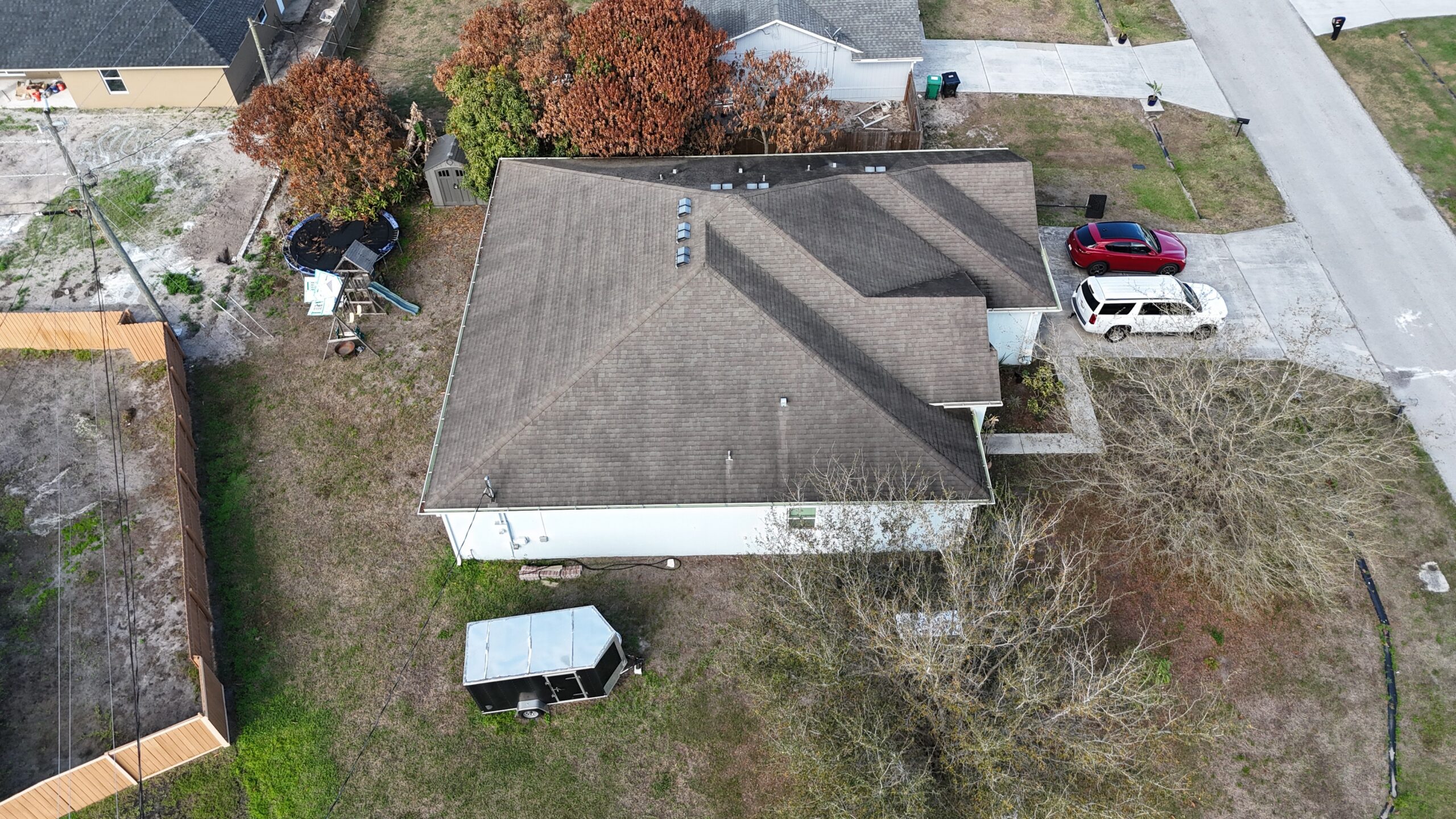
Even when a homeowner suspects something went wrong, they often do not know where to start. One concrete step: pull the permit from your county’s building department portal and compare the approved material (shingle type, underlayment spec, fastener pattern) against what is on your roof.
Common mismatches on unlicensed or low-quality jobs:
- Permit says 30-lb felt underlayment; peel-and-stick was required under current Florida Building Code for secondary water barrier eligibility.
- Permit says six-nail fastener pattern; actual installation used four nails per shingle, voiding wind warranty.
- No permit on file at all — meaning no inspection was ever performed.
For homeowners considering a new roofing installation, the permit record is your baseline proof that work was performed to code. If a prior owner used an unlicensed contractor and no permit exists, the current homeowner inherits the liability for bringing that work up to code.
Your Verification Process
Four Steps Before You Sign Any Florida Roofing Contract
- Search the DBPR portal — myfloridalicense.com — and confirm the license type, qualifier name, and active status match the contractor in front of you.
- Request certificates of insurance — general liability and worker’s compensation — naming your address as the job site. Verify they are current, not expired PDFs from a prior policy period.
- Confirm the permit number and inspection type — ask specifically which inspection the county will perform and at what stage of the job. A contractor who cannot answer this has likely not pulled the permit yet.
- Get the NOA or Florida Product Approval number for every material being installed. For roofing in Miami-Dade, materials must carry a Miami-Dade NOA or a Florida Product Approval that covers HVHZ use. An unlicensed crew will rarely know this number exists.
Concerned about prior roofing work on your home? A licensed inspection can tell you whether existing work meets Florida Building Code — before your next storm or insurance renewal.
Who We’re Not the Right Fit For
- Homeowners needing the lowest possible price, full stop. A licensed roofing contractor in South Florida carries permit fees, insurance premiums, and inspection costs. If the only criterion is price, an unlicensed crew will always underbid us — and that is a risk we will not compete on.
- Investors doing a quick cosmetic flip with no permit intent. Every job we do gets permitted. If you need work done without a building permit, we are not the right contractor for that project.
- Projects outside Miami-Dade, Broward, and Palm Beach counties. We are focused on South Florida. A homeowner in Central or North Florida would be better served by a licensed contractor operating in their local inspection jurisdiction.
- Emergency patch-only jobs with no follow-up scope. We are structured for permitted replacements and full-scope work. Emergency tarping and small patch-only calls fall outside our typical project scope.
Frequently Asked Questions
What happens if I hire an unlicensed contractor in Florida?
You may be liable for any injuries that occur on your property, you lose the right to file an insurance claim for defective work, and you can be required to bring the work up to code at your own cost — even if you paid someone else to do it. The contractor can also face criminal penalties under Florida Statute 489.127, including fines and felony charges for repeat offenses.
Do I have to pay an unlicensed contractor in Florida?
Under Florida Statute 489.128, contracts with unlicensed contractors are unenforceable. That means an unlicensed contractor generally cannot sue you in court to collect payment. However, this does not automatically mean you get your deposit back — recovering those funds may still require legal action on your part.
Am I liable if an unlicensed contractor is injured on my property?
Potentially, yes. If the contractor does not carry worker’s compensation insurance — which unlicensed contractors typically do not — your homeowner’s insurance may be exposed to injury claims. Some policies exclude coverage when unlicensed workers are used. Consult your insurance carrier before allowing any contractor on your property without verifying their coverage.
Can subcontractors put a lien on my home if I used an unlicensed contractor?
Yes. Florida’s construction lien law (Chapter 713) allows suppliers and subcontractors who were not paid by the contractor you hired to place a lien on your property — even if you paid the contractor in full. Using an unlicensed contractor does not protect you from supplier liens. Always request a Notice to Owner waiver before final payment.
How do I check whether a Florida contractor is licensed?
Go to myfloridalicense.com and use the free public license search. Enter the contractor’s name or license number. Confirm the license type matches the scope of work (roofing jobs require a Certified or Registered Roofing Contractor license), the qualifier name matches who you are dealing with, and the license status is active. This takes under two minutes and costs nothing.
What are the red flags that a contractor is unlicensed?
Key red flags: no license number on the written quote or contract; price that is 30–40% below every other bidder; request for full payment before work begins; inability to name the permit they will pull; refusal to provide proof of insurance. Any one of these warrants a DBPR license check before you sign or pay anything.
Does hiring a licensed contractor guarantee the work passes inspection?
Not automatically, but it dramatically improves your odds. A licensed contractor is accountable to the DBPR — their license can be suspended or revoked for deficient work. Unlicensed operators have no such accountability. Licensed contractors also know the specific Miami-Dade or Broward inspection standards their work will be measured against, because passing those inspections is part of their ongoing business.
Sources
- Florida Statute 489.127 — Unlicensed Contracting Penalties (Florida Legislature)
- Florida Statute 489.128 — Enforceability of Contracts by Unlicensed Contractors (Florida Legislature)
- Florida Statute 713 — Construction Lien Law (Florida Legislature)
- Florida Department of Business and Professional Regulation (DBPR) — License Verification Portal: myfloridalicense.com
- Florida Building Code, 8th Edition — Chapter 16, Structural Design / Wind Loads
- Miami-Dade County Notice of Acceptance (NOA) Program — Building Code Compliance Office

Have questions about roofing or window work on your South Florida home? Talk to a contractor who pulls permits, carries insurance, and holds four active DBPR licenses.